Internal Disputes Plague Nepal's Old Political Parties After Election Defeat
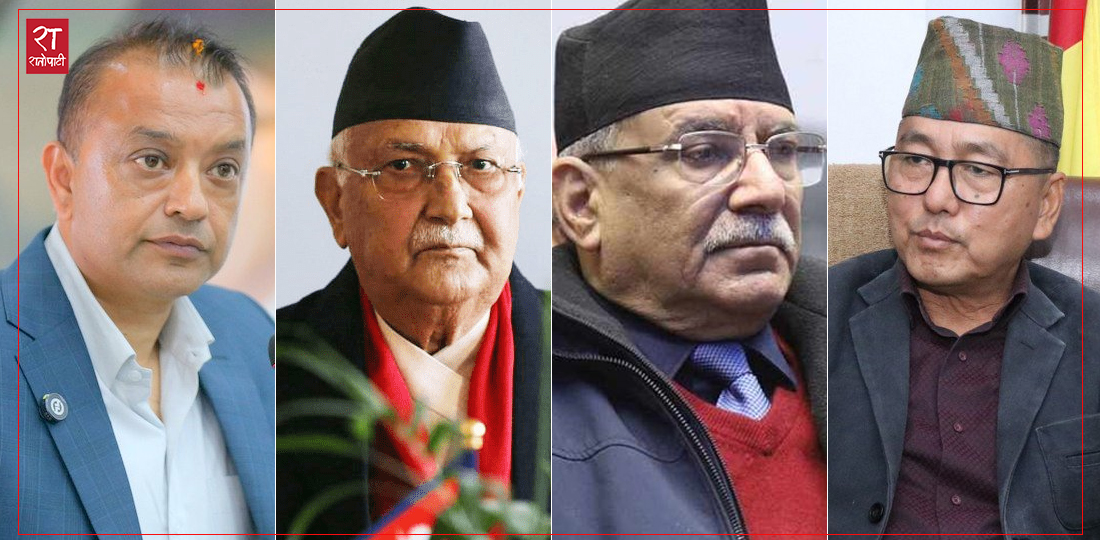
Kathmandu. Internal disputes have intensified in the old four parties after an unexpected defeat in the House of Representatives elections held on Falgun 21. The disputes that began before the elections in the Nepali Congress, CPN-UML, Communist Party of Nepal, and Rastriya Prajatantra Party have further escalated in recent days.
Political analyst Dr. Bheshraj Ghimire states that the internal disputes within the old democratic parties could put democracy itself at risk. Ghimire advises the parties – Nepali Congress, CPN-UML, Communist Party of Nepal, and RPP – which are set to remain in opposition for five years, to strengthen their organizations during this period.
"Parties that will be in opposition for the next five years, Nepali Congress and CPN-UML, should strengthen their organizations. Go to the people. Support them in their joys and sorrows. Do not do bad things yourselves. If the government does bad things, criticize them in a legal manner," Dr. Ghimire told Ratopati. "But it is a tragedy for democracy that parties like Congress, UML, and Maoist are fighting amongst themselves to the point of erasing their very existence."
Leaders of Congress, UML, Communist Party of Nepal, and RPP also admit to internal disputes within their parties. Nepali Congress spokesperson Devraj Chalise says there are disputes within the party and efforts are being made to resolve them within the framework of the party's statute. "There seems to be a dispute between a special and a regular general convention within the party. The leadership and party colleagues are trying to resolve it within the framework of the statute," he said.
CPN-UML publicity coordinator Min Bahadur Shahi admitted to internal disputes and urged to inquire with General Secretary Shankar Pokharel about them. When contacted for a reaction on the disputes within UML, he said, "What should I say about the disputes within the party? Ask the General Secretary."
RPP spokesperson Mohan Shrestha admitted to disputes regarding the general convention within the party. He said, "There are some friends who are creating disputes regarding the general convention. It is not as big a dispute as it appears outside."
- Dispute over Regular and Special General Convention in Congress
The internal disputes within the Nepali Congress, which began after the Janji movement on Bhadra 23 and 24, have further intensified after the House of Representatives elections. The dispute, which intensified in the last week of Poush when then-General Secretaries Gagan Thapa and Bishwaprakash Sharma, in disagreement with then-President Sher Bahadur Deuba and the Central Working Committee, held a special general convention to elect a new leadership, has now reached its peak.

The committee led by Gagan Thapa, who became president through the special general convention, has received official recognition from the Election Commission and the Supreme Court.
The Nepali Congress, which had two factions until the special general convention, now clearly has three factions. The establishment faction led by President Thapa, who came to leadership through the special general convention, the group led by former President Sher Bahadur Deuba, and the faction led by Dr. Shekhar Koirala are actively seen as three factions within the Congress.

The Deuba group and Shekhar group have stated that the responsibility of keeping the party united or not lies with the president and the committee formed through the special general convention, after holding meetings and drawing conclusions.
The Deuba group has stated that the leadership selected through the special general convention cannot hold the 15th general convention with the respectful participation of the entire party structure, and therefore, a common structure should be formed through consensus for a unified general convention.
In the 11-point conclusion issued by then-acting President Purna Bahadur Khadka after the meeting held on Jestha 15 and 16 at Hotel Smart in Dhumbaraahi, it is stated, "The leadership selected through the so-called special general convention, which was held with the participation of only one faction's representatives, cannot ensure the respectful participation of the entire party structure in the upcoming 15th general convention, and fair elections will be held through that convention. Therefore, we draw the attention of all concerned to the need for common structures through consensus for the grand unified general convention of the party."
That group believes that party unity and the operation of party unity campaigns at all levels should be conducted in accordance with the statute amended by the 14th general convention for party unity and the construction of a strong and capable Congress. The conclusion of the meeting holds the leaders who organized and led the special general convention responsible for the defeat in the Falgun 21 elections.
_olx4mwwkfb_amb3xUJZUE.jpg)
The Shekhar group, through a meeting held in Kathmandu on Jestha 17, concluded that party unity could not be maintained due to the special general convention and that the entire responsibility for uniting the party lies with the president.
Congress spokesperson Devraj Chalise admits that the responsibility of integrating dissenting opinions lies with the establishment and that efforts are being made to reconcile them while keeping the party's statute in mind. He said, "The responsibility of integrating dissenting opinions lies with the establishment. We are doing that work."
He stated that for all these things to align, discussions must be held keeping the framework of the statute in mind. However, leaders from the non-establishment side say that there has been no meaningful effort from the establishment side to unite the party.

CPN-UML
There is a strong voice for transformation and generational change within the CPN-UML after its weak performance (25 seats) in the House of Representatives elections. Leaders and cadres have started raising their voices for leadership change after being reduced to the third largest party.
Chairman KP Sharma Oli was arrested on Chaitra 14 based on the report of the Janji Movement Investigation Commission led by Gauribahadur Karki. Released by court order, he returned home after undergoing surgery for gallstones and hernia. However, he has not yet recovered, due to which the CPN-UML has not been able to review the Falgun 21 elections.
While the Secretariat meeting conducted a general review of the elections, the UML has been stating that an objective review will be conducted through the Central Committee.
During this time, the youth wing within the party has internally concluded that the leadership is weak for the shameful results in the elections and that the party cannot be run by Oli anymore.
Some young generations within the UML have even launched a signature campaign to pressure the leadership to hold a 'Special General Convention', stating that generational change is essential to save the party.
While facing public criticism, Chairman Oli is not positive about the aspirations of the youth. If he has to step down from leadership, Chairman Oli intends to hand over the leadership to his trusted confidants.


"Whatever voices have been raised regarding generational change, leadership transfer, etc., have not been raised in the formal forums of the party," said UML Secretary Bhanubhakta Dhakal. "If those issues are raised in the upcoming meeting, they will be discussed naturally."
Although Dhakal said this, the youth generation believes that a review only by the Central Committee and Secretariat is not enough, given that the UML has reached its weakest state in history in the last elections, and they advocate for the reorganization of all party committees.
"The time for generational change has come in the party," said Kamal Joshi, deputy secretary-general of ANNFSU close to UML. "A review only by the current Central Committee is not enough. We need to move forward in a new way."
Joshi and others have put forward a 15-point reform proposal, advancing the debate on organizational restructuring and policy transformation within the UML. The concept paper named 'Next Gen UML' presents a framework for making the party suitable for the new generation, people-oriented, and accountable.
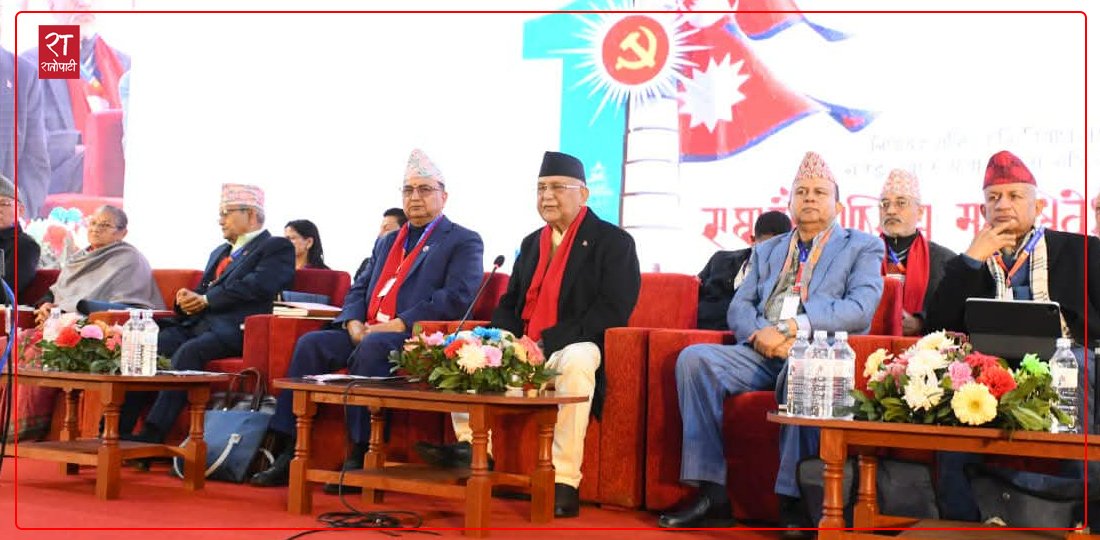
Intellectuals like Gajendra Thapaliya, Upendra Shahi, and Kamal Joshi, who are advocating for a special general convention, have published proposals for party rejuvenation. The concept paper prioritizes three bases for party revival: generational change, reconnecting with the people, and reconnecting with the grassroots.
According to the proposal, a culture of open debate and review should be institutionalized within the party, decision-making processes should be made more transparent, and a system for regularly receiving suggestions from civil society and cadres should be developed.
The proposal includes a limit of a maximum of two terms for leadership from the center to the local levels, mandatory accountability of leadership after electoral defeat, selection of leadership through direct voting by cadres, and the implementation of a primary system for candidate selection.
The proposal also includes building a 'pyramid style' organization to prevent the party structure from becoming bloated, 'lateral entry' to bring in skilled individuals to the party, mandatory background checks before assigning responsibilities, and the distribution of responsibilities based on subject matter expertise.
The concept paper proposes the idea of 'zero full-time cadres' within the party, suggesting that leaders and cadres must be affiliated with a profession or business. This is interpreted as a reform linked to self-reliance and a professional political culture.
While the debate on generational change is ongoing within the party, UML Vice Chairman Bishnu Poudel, Deputy General Secretary Yogesh Bhattarai, former Vice Chairman Surendra Pandey, and others have also stood in favor of party restructuring. As the pressure from the youth increases, General Secretary Shankar Pokharel has also started speaking in favor of party restructuring in a subdued tone. After Chairman Oli, Pokharel himself is aiming to seize leadership.
"To quell the opposition, Shankar Pokharel is trying to become chairman as per Oli's design," said a UML official. "But those in favor of generational change understand this."

Youth leaders demanding leadership change and party transformation in UML also held a renaissance gathering in Kathmandu. In the gathering, influential young leaders including central members concluded that an alternative to the current Chairman KP Sharma Oli must be found.
Former central member Ramesh Poudel, former chairman of ANNFSU Sujan Kadariya, chairman of the Intellectual Council Gajendra Thapaliya, deputy secretary-general of Youth Association Upendra Shahi, and others claimed that internal democracy within the party has ended.
The gathering determined that the current leadership's style of functioning and weaknesses were primarily responsible for the party's recent electoral defeat. Approximately 130 leaders and cadres, including central members Jhapta Rawal, Naresh Rokaya, and Samik Badal, participated in the gathering.

Two Main Disputes in Communist Party of Nepal (CPN)
There are mainly two disputes in the Communist Party of Nepal (CPN): one regarding the seniority of leaders and the other regarding leadership transfer.
Two factions are also seen among the youth regarding leadership transfer. The first faction is in favor of leadership transfer by reorganizing the party through a general convention and establishing rules and procedures. Madhav Sapkota, Yuvraj Dulal, Saral Sahayatri Poudel, and others are in this faction.

The other faction appears to be in favor of immediate generational change. Former chairmen of ANNFSU Krantikari Lekhnath Neupane, Ranjit Tamang, youth leader Yuvraj Chaulagain, and others are in this faction.
Pushpa Kamal Dahal 'Prachanda', the coordinator of the CPN, formed after the Janji movement by the merger of various 25 components including the former CPN (Maoist Centre), CPN (Unified Socialist), etc., presented a preliminary review of the electoral defeat at the Central Work Coordination Committee meeting held on Chaitra 19 after the elections. Expressing their views on that report, youth leaders expressed dissatisfaction, stating that the leadership has not learned its lesson despite the major blow to the party from the Janji movement and the election results. Youth leaders were particularly angered by the formation of a 45-member Work Coordination Committee that included old and senior leaders.
There is also dissatisfaction among the youth in the CPN regarding the non-formation of the Central Committee and Secretariat as per the party's statute. According to the interim statute of the CPN, there is a provision for a 601-member Central Committee.

Another main dispute in the CPN is the seniority of leaders. Leaders expressed dissatisfaction with the division of work in the coordination committee meeting, which lasted for 26 days and concluded on Jestha 15. Among those who expressed dissatisfaction were leaders like Jhalanath Khanal and Bamdev Gautam. Dr. Bhim Rawal, however, did not attend the meeting after expressing dissatisfaction with seniority and division of work.
Rawal, who left after giving a three-to-four-minute oral statement on the first day of the meeting, did not participate in any subsequent meetings.
In the 45-member Central Coordination Committee, Coordinator Prachanda is in the first position, Co-coordinator Madhav Nepal is second, former Prime Minister Jhalanath Khanal is third, Bamdev Gautam is fourth, and Narayan Kaji Shrestha is sixth. According to those leaders, leaders from the former UML protested the placement of Rawal in the sixth position. Subsequently, the seniority of only five people was finalized, and the names of other leaders were arranged alphabetically.
Leaders say there is widespread dissatisfaction with that. Although Rawal claimed the sixth position, his seniority could not be finalized as others protested.

Dispute in RPP too
There is also a dispute in the Rastriya Prajatantra Party (RPP). The dispute that existed before the elections has intensified recently. There are mainly 3 disputes between RPP Chairman Rajendra Lingden and General Secretary Dhawal Shamsher Rana. The dispute in RPP has escalated because Chairman Lingden did not accept the proposals put forward by General Secretary Rana's group: to set a date for the general convention to complete the convention as per the statute, to withdraw decisions related to expulsions and actions that were against the statute, to maintain balance in the election committee and observer team to conduct the convention impartially and smoothly, and to form a dispute resolution committee including two former chairmen for effective party operation.
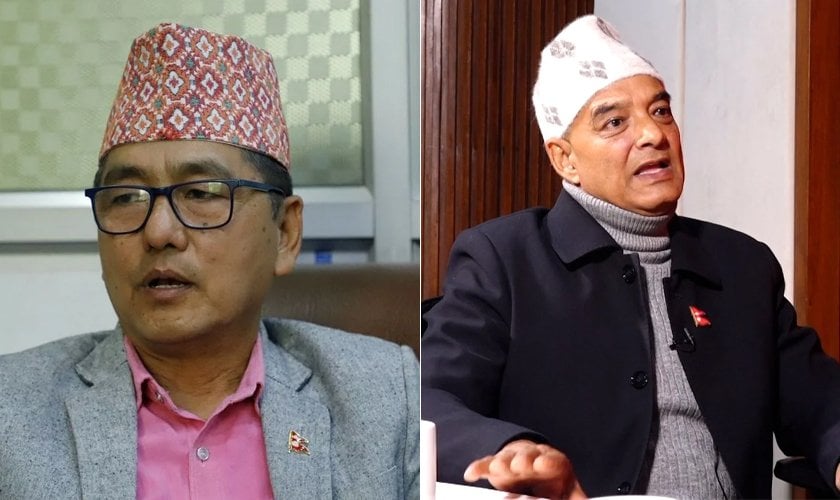
The dispute, which flared up after Chairman Lingden removed the chairman of the disciplinary committee, Navraj Subedi, and appointed Roshan Karki, has now reached a point where the party may or may not remain united.
As Lingden started proceeding unilaterally, senior Vice Chairman Vikram Pandey, Vice Chairman Mukundshyam Giri, General Secretaries Dr. Rana and Kunti Shahi have been openly engaged in parallel activities. Former Chairman Dr. Prakash Chandra Lohani is also against Lingden.
RPP spokesperson Mohan Shrestha admitted that there is a dispute within the party. However, he stated that the dispute is not as big as it appears or as claimed by the opposition.
"The minimum criterion required for a general convention in the party is the district convention. The friends who are talking about the general convention have not even held district conventions in their districts," said spokesperson Shrestha. "Local committees have not been convened. Therefore, I don't think this is a very big dispute."
However, General Secretary Rana says that the problem has arisen because Chairman Lingden did not agree to hold the general convention by Jestha. "Let's set the date for the general convention and proceed to the convention. The past situation cannot be reversed. This is a situation of shame that the RPP has never faced. It is becoming difficult for cadres to stay in the RPP. Many people are thinking of leaving the party, and some are leaving," General Secretary Rana said in an interview with Ratopati some time ago. "To stop all this, let's change the leadership, let's move forward. For that, let the cadres exercise their voting rights."

However, no meaningful initiative seems to have been taken to resolve the dispute within the RPP. Cadres appear disappointed due to personality clashes, factional stances, and working styles among the leaders.
This specific news has been automatically translated by AI. As a result, there may be some inaccuracies or language errors.