Chandra Prasad Dhakal Concludes Term as FNCCI President, Reflects on Challenges and Achievements


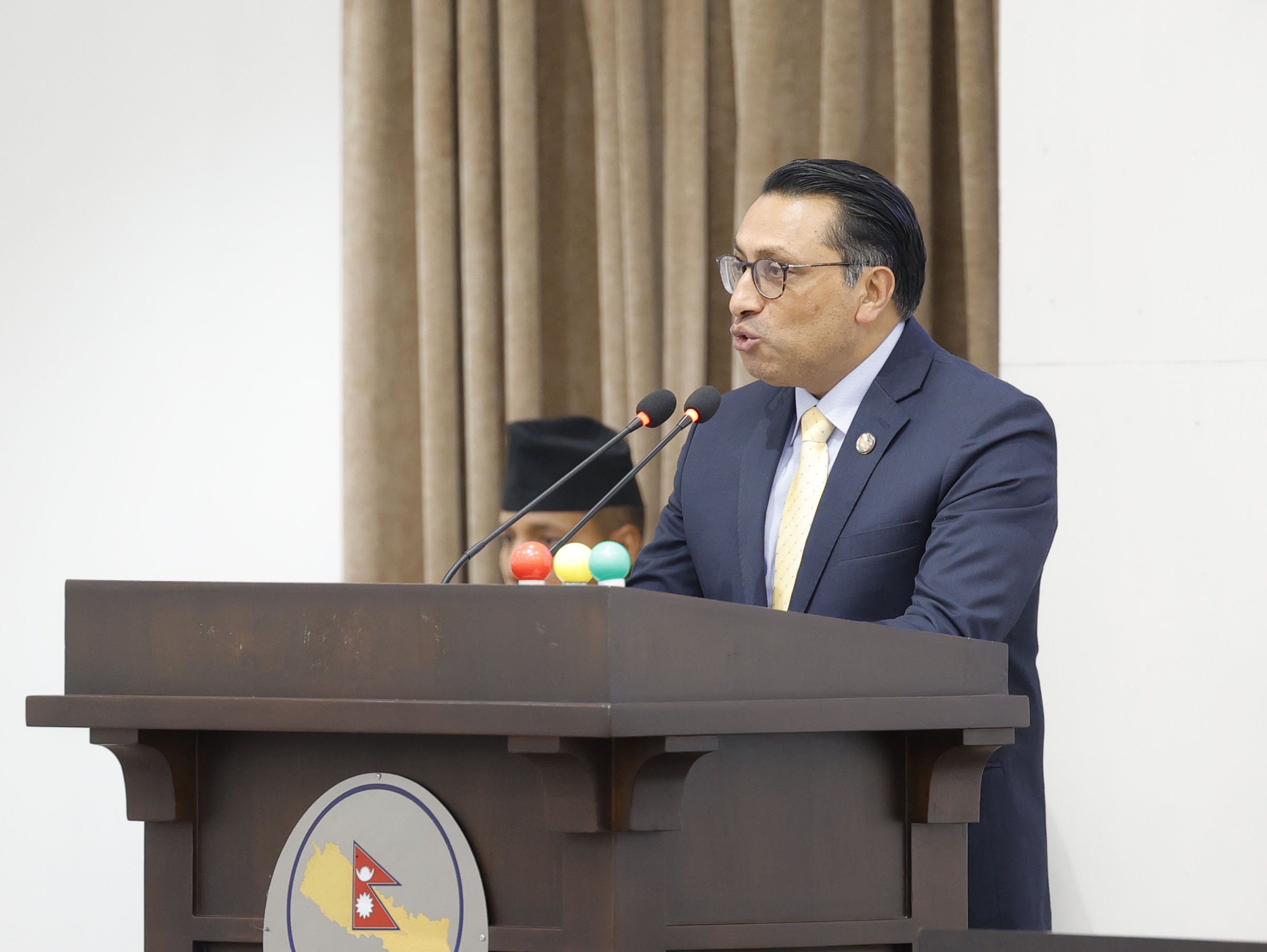
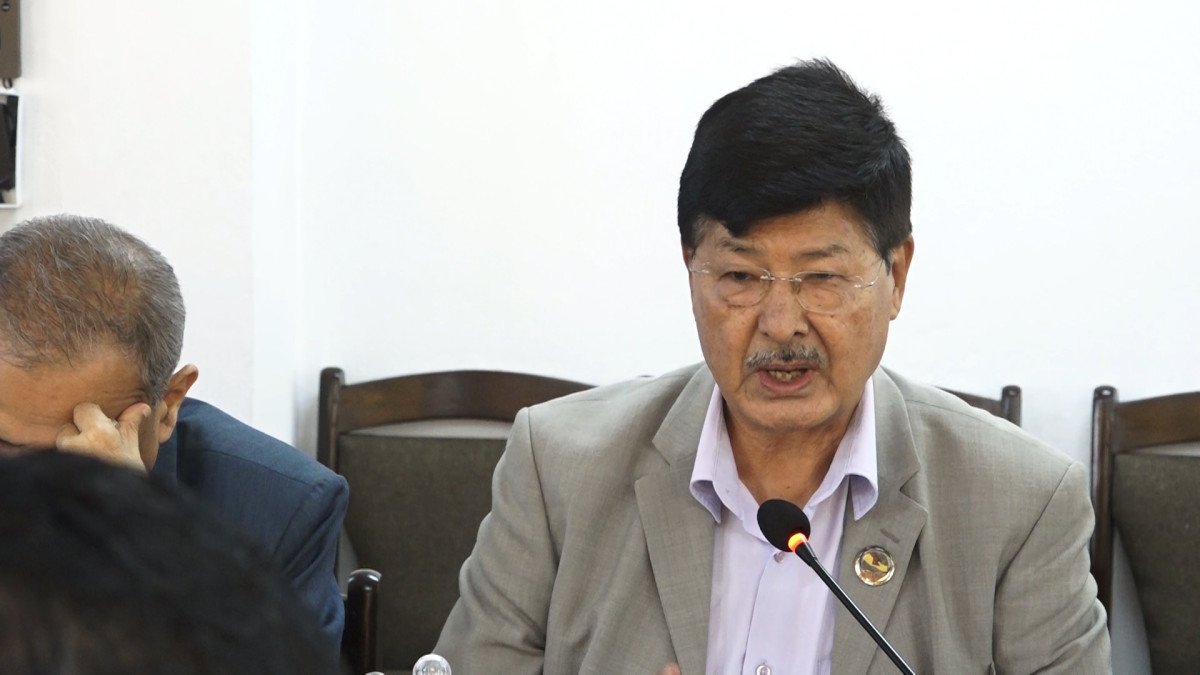
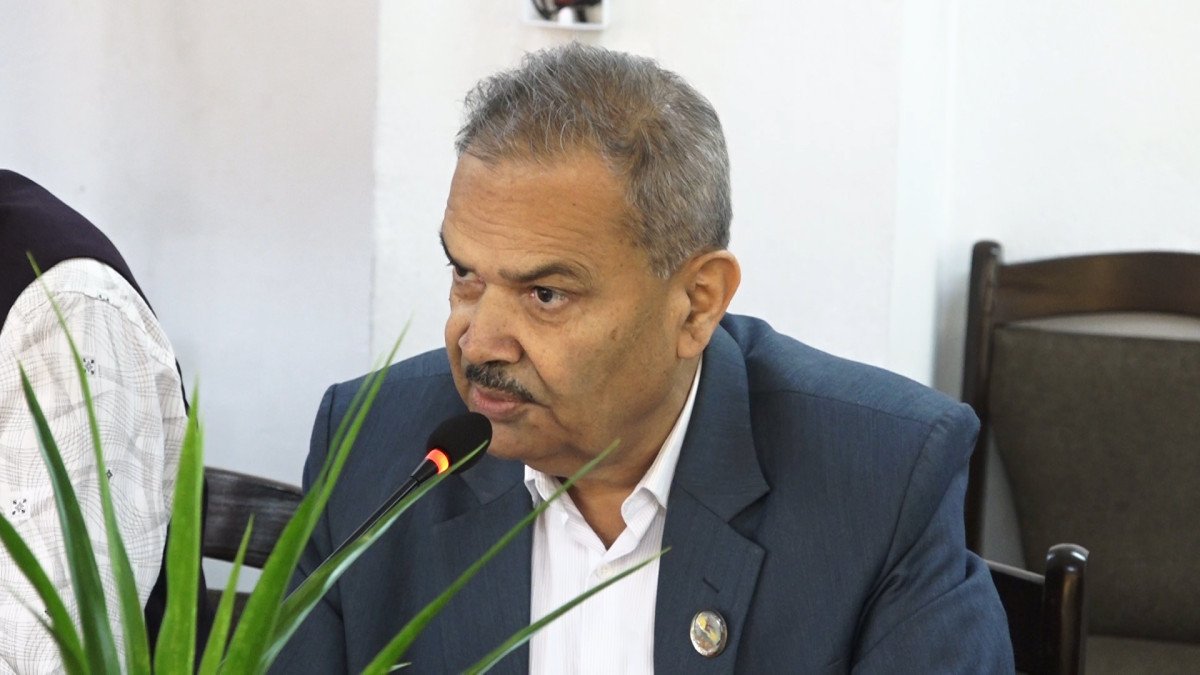
Kathmandu. Chandra Prasad Dhakal is bidding farewell after completing his three-year term as the President of the Federation of Nepalese Chambers of Commerce and Industry (FNCCI). The 60th General Assembly of the FNCCI is currently underway in the capital, and as of the preparation of this news, the counting of votes for office bearers other than the president and central members is in progress. In his address at the inaugural session of the annual general assembly in his capacity as president, Dhakal shared his experiences of facing numerous economic crises during his tenure.
He recounted how the Nepalese industry and business sector have been negatively impacted by various internal factors, including the effects of the Russia-Ukraine war on an economy just recovering from the COVID-19 pandemic, and domestic political instability. He stated that in such a situation, solutions were adopted through collaboration and partnership between the state and the private sector. Recalling the contribution of the FNCCI, the umbrella organization of Nepal's private sector, which is nearly six decades old, to the country's economic development, he advocated for meaningful cooperation between the government and the private sector in nation-building and national prosperity. In a conversation focused on this subject as he steps down from the leadership of the organization:
How do you reflect on your tenure as you step down from the leadership of the Federation of Nepalese Chambers of Commerce and Industry?
When I took over the responsibility as the President of FNCCI, the country's economy was going through a challenging phase. The impact of the COVID-19 pandemic was being felt in our economy. The Russia-Ukraine war was affecting supply chains worldwide. Bank interest rates had reached high points. There was a liquidity crunch in financial institutions. Political instability had become a perennial problem. The issue of changing policies and priorities with every government was equally significant.
Therefore, in such a situation, I took on the responsibility of FNCCI with the duty to boost the morale of the private sector and keep economic activities vibrant. When I took office, I said that the private sector should now operate not with traditional thinking and style, but with modern thinking and style. That's why during my tenure, we prioritized creating an investment-friendly environment, identifying and working to remove policy obstacles, and establishing the fact that the government and the private sector are complementary to each other. We established the principle of not just offering suggestions through formal channels, but of presenting meaningful and objective suggestions by prioritizing dialogue.
First, we presented arguments and facts on why these laws that hinder investment and economic development need to be reformed and amended. We followed up continuously. Because of this, we have achieved encouraging success in creating a private sector-friendly environment and enacting private sector-friendly laws. I have spent a fertile period of my life at FNCCI, and with the support, cooperation, and aspirations of my fellow industrialists and businesspersons from across the country, I became the president.
Now the country has a stable government. I am confident that the new government will prioritize economic prosperity in line with the aspirations of the entire private sector and the Nepali people, and will advance policies that encourage investors and industrialists and businesspersons, making the private sector a partner in it.
What are the memorable achievements during your tenure in freeing the private sector from policy and legal complexities?
We had the responsibility to take factual and objective initiatives. As the economy was being affected by national and international factors, we also had the responsibility to take meaningful and result-oriented initiatives. I had pledged to strategize by visiting wherever necessary – the government, parliamentary committees, ministries, departments – to pursue meaningful initiatives, and we worked accordingly. This process has continued from the beginning of our tenure until today. We raised our voice for the representation of the private sector in the policy-making process.
The third executive committee meeting of FNCCI held in Dhorpatan, Baglung, decided to organize a comprehensive national economic debate program. Its main objective was to focus all political parties and stakeholders on economic issues and bring uniformity to the economic agenda. Through that debate program, we succeeded in bringing together political parties, regulatory bodies, and the private sector.
Subsequently, the government formed a High-Level Economic Reform Suggestion Commission under the leadership of former secretary Rameshwar Khanal, with representation from the private sector. Khanal became the Finance Minister in the interim government and initiated some reformative work in a short period. That commission has recommended reforms in more than 30 laws to create an investment-friendly environment. I consider this a significant achievement during my tenure.
The government had announced an investment summit, but I personally advocated to the then government that an investment summit without legal reforms would not be very fruitful, and urged them to reform these specific laws, creating an environment to convey this message to the foreign investors attending the summit. This was done.
What was the relationship or cooperation like between the government and the private sector during your tenure?
After I became the President of FNCCI, we developed the concept of government-private sector cooperation and partnership. As FNCCI is the umbrella organization of the private sector, the government had formally invited and discussed matters in the past. However, we placed more emphasis on policy-level reforms. During my tenure, there has been the most significant reform in private sector-friendly acts and laws in history, which you can research.
We made efforts to convey to the state the contribution of the private sector to the economy, employment, and revenue. Let me recall one incident: the then government had proposed bringing the private sector under the purview of the Commission for Investigation of Abuse of Authority. Through FNCCI, we engaged in dialogue with various parliamentary committees, the Prime Minister's Office, the Ministry of Finance, the Ministry of Industry, leaders and whips of various political parties, officials including the Chief Secretary and secretaries, and constitutional bodies, and convinced them that this was neither appropriate nor necessary. As a result, the proposal was postponed. This provided great relief in preserving the investment environment at that time. Through such advocacy, we have proven that the mindset of the private sector always asking and the government always giving is not the case, and it further proves the necessity of cooperation and partnership between the state and the private sector, in my opinion.
There is a narrative that there are no investment opportunities in Nepal and no conducive environment for work. As the President of FNCCI, how do you view this?
I have repeatedly stated publicly that Nepal is full of opportunities. I have never agreed with the notion that nothing can be done here, no investment can be found, and no opportunities exist. We have also made efforts through FNCCI to break such a false narrative. As a result of these efforts, we have formed a public company with a capital of 10 billion rupees. Led by me, Nepal Development Public Limited Company, formed by collecting small capital from Nepalis within and outside the country, will invest in large infrastructure, manufacturing industries, and startups. It has already started its work. The reason we did this is to provide an example that large projects can also be built through the mobilization of domestic capital.
Similarly, we have been establishing units within FNCCI to support women entrepreneurs, youth and startups, and small and medium enterprises, respectively. The number of women entrepreneurs is increasing across the country, and FNCCI has been supporting startups through the Startup Forum by collaborating with the government and startup entrepreneurs. We have also succeeded in advocating for and bringing about a startup policy.
Interactions and discussions with entrepreneurs and businesspersons from various countries have intensified to attract foreign investment. FNCCI is also advocating for legal and policy reforms to create an environment for foreign investment. Another priority of the private sector is employment. We are making efforts to conduct market surveys and develop curricula on how to provide employment to more youth in the country and what kind of manpower is needed for that. We are publicly stating that we will cooperate with the government for technical and skill-based education.
In the movement on Bhadra 23 and 24, youth raised employment as a main issue. However, due to infiltration into the movement, companies and industries providing employment were set on fire. Private residences of industrialists and businesspersons, along with industries and businesses, were also set on fire. The private sector suffered a loss of over 84 billion rupees. Nevertheless, we did not lose heart and made efforts to rise again, believing that it is also our responsibility to rebuild this country from the ashes.
Immediately after that movement, at a program we organized, we highlighted the need for the Private Sector Protection and Promotion Strategy (PSPP) for peace, stability, and prosperity. We prepared a concept paper and submitted it to the government, stating that the government should create the necessary business environment for the private sector, which is a creator of employment, producer of goods, service provider, and revenue collector. The newly formed government has decided to implement that concept. The government's commitment and decision to accept and implement that concept have boosted the morale of the private sector. For this, I want to thank the government.
Your view used to be that there was no investment environment in the country due to a lack of political stability. However, this time a new government with a single majority has been formed. What are the expectations of the private sector?
Legal stability and a stable government are always necessary for investment. Countries where the government is stable, laws are stable for a long time, and there is no political instability or conflict, have experienced and achieved rapid economic development.
Now, I believe stability has begun here as well. There is a government formed by a party with a single majority in parliament, and the cabinet includes experts and young individuals. There are young MPs with the capacity to make quick decisions. The government has approved and started implementing 100 action plans immediately after its formation. The government has sent a message of being private sector-friendly and investor-friendly by abolishing the Revenue Investigation Department. We believe that such reforms will gradually continue. Many things will be improved by implementing the recommendations of the High-Level Economic Reform Suggestion Commission led by Rameshwar Khanal. We are optimistic.
Finally, the issue of amending the FNCCI's bylaws was under discussion for a long time but was not resolved. You resolved it through consensus. What methods should the incoming leadership adopt when working on such long-term important issues?
The unanimous amendment of the FNCCI's bylaws is an unforgettable achievement of my tenure. It was an issue where committees would be formed, but disputes would arise, and it wouldn't reach a conclusion. I brought it to a conclusion with unanimous agreement. At the beginning of my tenure, I had announced the provision to elect the president through direct election after amending the bylaws. Accordingly, we amended the bylaws unanimously, taking into account the opinions and suggestions of all colleagues and, in some cases, convincing them.
Now, the provision of the senior vice president automatically becoming the president will be removed. From the next term, the president will be elected directly. This change in the bylaws will make the president more responsible and accountable to the members.
Another point is that district and municipal chambers of commerce and industry felt their presence within FNCCI was weak, and there were sentiments that FNCCI did not give them enough 'space'. Considering the 50 percent voting weight of district and municipal chambers, we have made a provision for two vice presidents from district and municipal chambers in the bylaws. To increase women's participation in FNCCI, we have included the provision for a women vice president.
We have succeeded in amending the bylaws with many such positive provisions. I would also like to thank all the office bearers and colleagues of the Central Executive Committee in this regard.
In the future as well, I will utilize my experience and capabilities for the development of entrepreneurship within Nepal, the creation of employment, and the overall economic progress of the country. I want to thank all the former presidents of FNCCI who supported me in making my tenure successful, the office bearers and members who worked with my team, as well as the Government of Nepal, regulatory bodies, diplomatic missions, donor agencies, and media friends who cooperated with FNCCI.
This specific news has been automatically translated by AI. As a result, there may be some inaccuracies or language errors.