President Issues Ordinance, Paving Way for Chief Justice Appointment

Kathmandu. With the issuance of the ordinance related to the Constitutional Council by President Ram Chandra Paudel, the path for recommending the appointment of the Chief Justice of the Supreme Court has been opened. Although the Judicial Council had recommended the names of six Supreme Court justices for the post of Chief Justice, the process had been stalled for a long time.
With the issuance of the ordinance by the President, the way for appointing the Chief Justice of the Supreme Court, justices, and officials of constitutional bodies is now open according to the convenience of Prime Minister Balen Shah.
After Chief Justice Prakashman Singh Raut retired on Chaitra 18 due to reaching the age limit of 65, the names of Kumar Regmi, Hari Prasad Phuyal, Dr. Manoj Kumar Sharma, Dr. Nahakul Subedi, and Til Prasad Shrestha, along with the senior-most justice of the Supreme Court, Sapana Pradhan Malla, were sent by the Judicial Council to the secretariat of the Constitutional Council for the post of Chief Justice. After Raut's retirement, Sapana Pradhan Malla is currently the acting Chief Justice.
According to Article 129, Sub-article 3 of the Constitution, a person who has worked as a Supreme Court justice for at least three years is eligible for appointment to the post of Chief Justice. In accordance with this sub-article, the Council has recommended the names of all justices who have completed three years of service.

In the past, the Constitutional Council used to recommend the appointment of the Chief Justice based on seniority among the names sent in this manner. So far, the government has not appointed a Chief Justice by bypassing seniority. It has become a matter of interest whether the Constitutional Council will select the Chief Justice of the Supreme Court based on seniority or proceed with appointing someone else from the six recommended individuals.
Constitutional expert and senior advocate Dr. Bhimarjun Acharya stated that according to the constitution, the Constitutional Council can appoint anyone from the six individuals sent by the Judicial Council as Chief Justice. He argued that all justices who have worked for three years in the Supreme Court are eligible for appointment as Chief Justice, as their names have been recommended by the Judicial Council.
_9us4krmWmJ.jpg)
"While past Constitutional Councils have consistently recommended appointments of Chief Justice based on seniority, this time the Constitutional Council can recommend a Chief Justice from among the six eligible individuals as per the constitution," said senior advocate Acharya. "There is no obstacle for the Constitutional Council to recommend any one person as Chief Justice in this manner according to the constitution."
Senior advocate Raju Chapagain stated that the tradition of appointing the Chief Justice of the Supreme Court based on seniority should be continued. "All the proposed six justices are eligible," he said. "However, if the Constitutional Council bypasses seniority and eligibility to appoint a Chief Justice, the dignity of the judiciary will be diminished."
He argued that if the Chief Justice is to be appointed by bypassing seniority, there must be a strong basis for it. "For example, in cases of lack of work efficiency, improper conduct, and impeachment proceedings in parliament, it is permissible to recommend an appointment outside of seniority," he said. "If a senior justice who has no blemishes and whose eligibility and capability are unquestioned is overlooked and a Chief Justice is appointed, it will lead to state interference in the judiciary."
He stated that the provision for appointing the Chief Justice and officials of constitutional bodies with the consent of all was made to keep the Constitutional Council in check and balance, but the past and present governments have been amending the law related to the Constitutional Council to appoint individuals favorable to them, which he considers wrong.
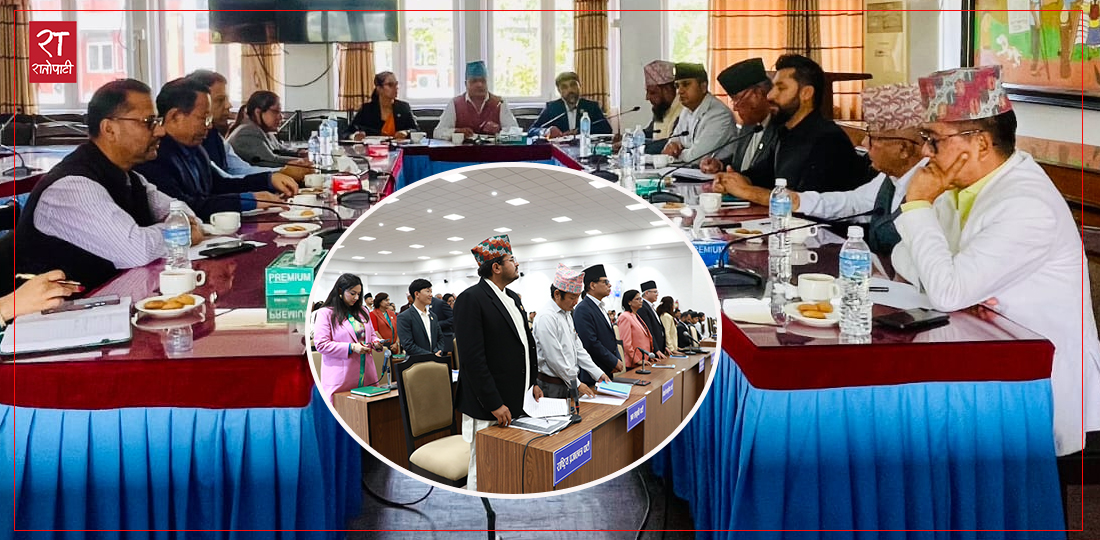
Constitutionally, the Constitutional Council has a provision for six office bearers. The Prime Minister chairs the council, and the Chief Justice, Speaker, Chairperson of the National Assembly, Deputy Speaker, and the Leader of the Opposition are members. However, for a meeting to be quorate, four members need to be present. This provision is included in Section 6, Sub-section (4) of the ordinance. Clarification (c) of Section 6, Sub-section (5) of the ordinance states that a decision of the Council shall be considered valid if the chairperson and at least two members are present in a meeting where the chairperson and at least three members are present.

Now, according to the ordinance, when all six office bearers, including the chairperson (Prime Minister) and five members, are present, it will be an even number, and if the votes are tied on any proposal, the chairperson's vote will be decisive. In other words, the majority will be in favor of the side the chairperson agrees with. According to the ordinance, it has become easier for the Prime Minister, who chairs the Constitutional Council, to make decisions according to his interests.
In the absence of a Chief Justice, when the Constitutional Council recommends a candidate for the post of Chief Justice, the Minister for Law and Parliamentary Affairs also serves as a member of the Council. In a meeting of the Constitutional Council to recommend a candidate for the post of Chief Justice, with the Prime Minister Balen, Speaker DP Aryal, and Law Minister Sobita Gautam, three members from the ruling party will be present, allowing the government to make decisions favorable to it.
Article 129 of the Constitution contains provisions regarding the appointment and qualifications of the Chief Justice and justices of the Supreme Court of Nepal. According to Sub-article 2 of this provision, the Chief Justice and other justices of the Supreme Court shall be appointed by the President on the recommendation of the Judicial Council and the Constitutional Council. Before being appointed by the President, the proposed name must be approved by the parliamentary hearing committee.
If the Chief Justice is appointed based on seniority, Sapana Pradhan Malla, who is currently the acting Chief Justice, will become the Chief Justice. If she becomes Chief Justice, Malla's tenure will extend until Kartik 30, 2085. She was appointed a justice of the Supreme Court on Shrawan 17, 2073.
After Sapana Pradhan Malla, Kumar Regmi will become the Chief Justice based on seniority. Appointed as a justice of the Supreme Court on Baishakh 6, 2076, he will lead the judiciary for approximately three years if he becomes Chief Justice.

According to the order of seniority, Justice Hari Prasad Phuyal will also become the Chief Justice of the Supreme Court. If he becomes Chief Justice according to the order of seniority, Phuyal's tenure will be four years. Appointed as a justice of the Supreme Court on Baishakh 6, 2076, if Phuyal becomes Chief Justice according to the order of seniority, he will lead the judiciary from Bhadra 22, 2088, to Ashwin 19, 2092.
After Phuyal, Justice Nahakul Subedi is in the order of seniority to become Chief Justice. Appointed as a justice of the Supreme Court on Baishakh 6, 2076, if Subedi becomes Chief Justice according to the order of seniority, he will lead the judiciary from Ashwin 20, 2092, to Asar 7, 2093.
Previously, the Supreme Court had interpreted that "seniority and eligibility" should be the main basis for appointment. In the case of Advocate Achyut Prasad Kharel versus the Constitutional Council, during the process of appointing a new Chief Justice after the retirement of then-Chief Justice Vishwanath Upadhyay, a writ was filed alleging an attempt to bypass seniority. After hearing the writ, the special bench of the Supreme Court interpreted the constitution and stated, "Seniority should not be ignored in the appointment to the post of Chief Justice. If a junior is to be appointed by leaving out a senior justice, the objective basis and reason for it must be clear."
This specific news has been automatically translated by AI. As a result, there may be some inaccuracies or language errors.