West Bengal Election Analysis: Factors Behind BJP's Rise and TMC's Challenges


Kolkata. While covering the West Bengal Assembly elections, I heard a common complaint from people - the high-handedness of local leaders and workers of the Trinamool Congress (TMC) has increased significantly.
People openly stated that it was difficult to get any new work done without the consent of party workers.
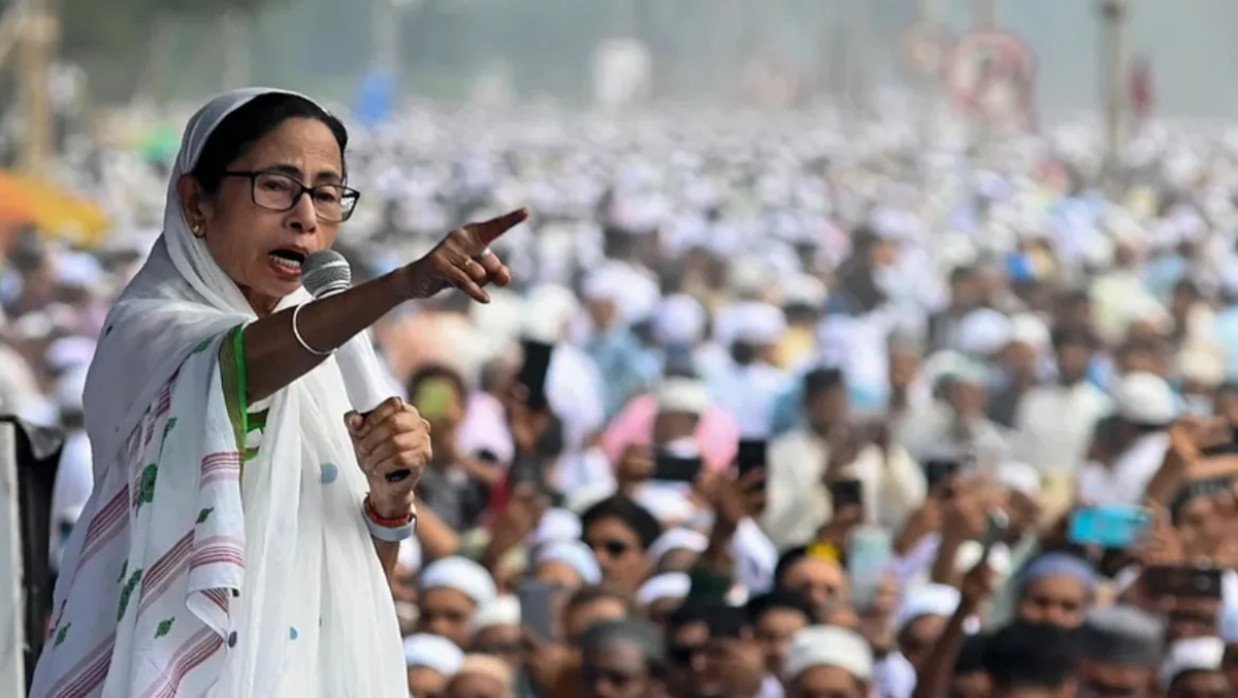
Despite this, those who argued in favor of the TMC claimed that residents of rural West Bengal, Muslims, and women were with Mamata.
In such a situation, they believed that even with an anti-incumbency wave, Mamata would win this election. However, the election results clearly show that people have brought about a change.

In fact, the BJP had already laid the foundation for change in the 2021 Assembly elections. In the previous Assembly elections, the BJP had emerged as the main opposition party in Bengal. Its journey, which started from three seats, reached 77 seats. In this context, the BJP was not an outsider party for Bengal.
For example, in the 2021 Assembly elections, BJP's Ananda May Barman defeated Trinamool Congress's Rajan Sundas by more than 70,000 votes from the Matigara-Naxalbari Assembly constituency. This is a reserved seat for Scheduled Castes. This time too, Ananda May Barman seems to be indicating a similar margin of victory against the TMC.
This is the same Naxalbari area from where extremist left-wing leaders started an armed movement in 1967. That movement had attracted laborers, landless people, Dalits, tribals, and the exploited from many states. The BJP's victory in Naxalbari was seen as a sign of change in West Bengal, and five years later, that change truly happened.
1. Anti-incumbency wave or polarization of Hindu votes
In the Dum Dum Uttar Assembly constituency, a female voter told me about the TMC, 'The police only listen to Mamata's loyalists. We have to file complaints against Mamata's loyalists. The goondaism has increased so much that nothing is possible without their consent. We need change, and only the BJP can bring about this change now. If the Congress and CPM were in this situation, I would definitely consider them.'
Sougata Roy, a Lok Sabha MP from TMC, told BBC Hindi, 'It is very normal to have an anti-incumbency wave after 15 years of rule, but a major reason for this is also the consolidation of Hindu voters towards the BJP, which has caused us losses.'
Himadri Chatterjee, a political science professor at the University of Calcutta, says that those who attribute BJP's victory to the polarization of Hindu votes do not understand Bengal's politics well.
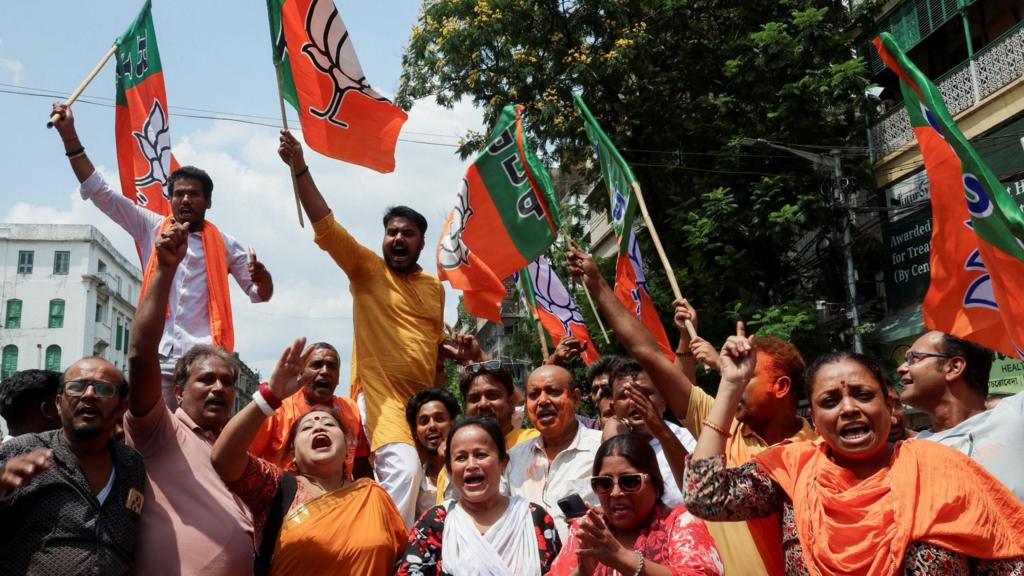
Professor Chatterjee says, 'The BJP's victory should be seen not as a polarization of Hindu votes, but as a consolidation of anti-TMC votes. The Congress could have brought the anti-TMC vote to its side, but it remained politically inactive. The BJP did not achieve this victory suddenly. The BJP has been increasing its vote share since 2014. Looking at the Assembly elections from 2016 to 2026, both the BJP's vote share and seats have increased. Even in the last Lok Sabha elections, although the BJP got fewer seats, its vote share did not decrease.'
Professor Chatterjee adds, 'There was dissatisfaction among the people towards Mamata Banerjee's government in West Bengal. People saw the BJP as a party that could challenge Mamata. The public wanted to defeat Mamata, so they voted for the BJP. Those who are talking about religious polarization, I want to give them some facts - there has been no communal riot in Bengal since 1950.'
'Political parties here have certainly played a role in this. Bengal is a state affected by partition, yet there has been no Hindu versus Muslim politics here. It is not that the people of Bengal do not know the BJP. In such a situation, it would be ridiculous to say that those who voted for the BJP in Bengal are communal.'
Senior journalist Prasun Acharya says, 'We did not anticipate the kind of results that came. There was definitely an anti-incumbency wave against Mamata, but this victory is not just due to the anti-incumbency wave. People were very fed up with Mamata's local leaders and supporters, but the BJP also benefited from the consolidation of Hindu votes this time. I think the position of the opposition in Bengal will be very weak in the coming days, and the TMC may split. All the councilors and local leaders of TMC will join the BJP for their own benefit. Many MLAs and leaders will join the BJP out of fear of investigative agencies.'
2. Role of SIR
The think tank Saper Institute has conducted an in-depth analysis of SIR (Special Intensive Revision) data in West Bengal.
Sabir Ahmed, Director of Saper Institute, says that looking at these election results, the impact of SIR is clearly visible.
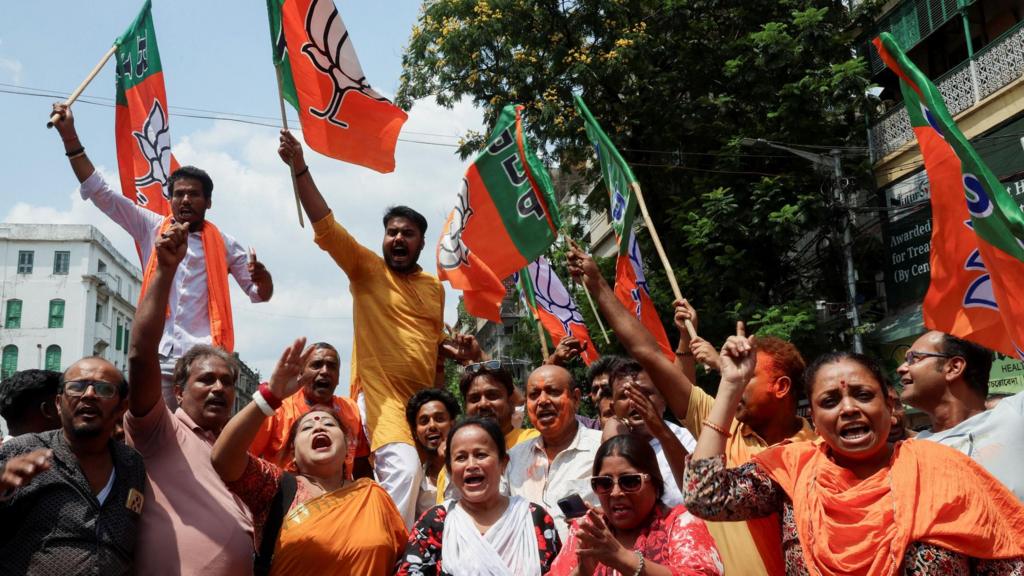
Ahmed says, 'In this election, about 3.1 million people did not vote. The margin of victory and defeat in many seats will not be large. In such a situation, SIR also played a significant role in the BJP's victory.'
Ahmed adds, 'There has also been religious polarization in this Bengal election. Polarization is clearly visible in urban areas. Fear was instilled in people's minds that minorities would become the majority.'
3. Weak Left Front and Congress
In the West Bengal Assembly elections, the presence of only two parties - TMC and BJP - was clearly visible.
The Congress and CPI (M) were nowhere to be seen on the ground.
There was a general understanding among people that the Congress and CPI (M) could not defeat the TMC. Therefore, the anti-TMC votes went into the BJP's kitty.
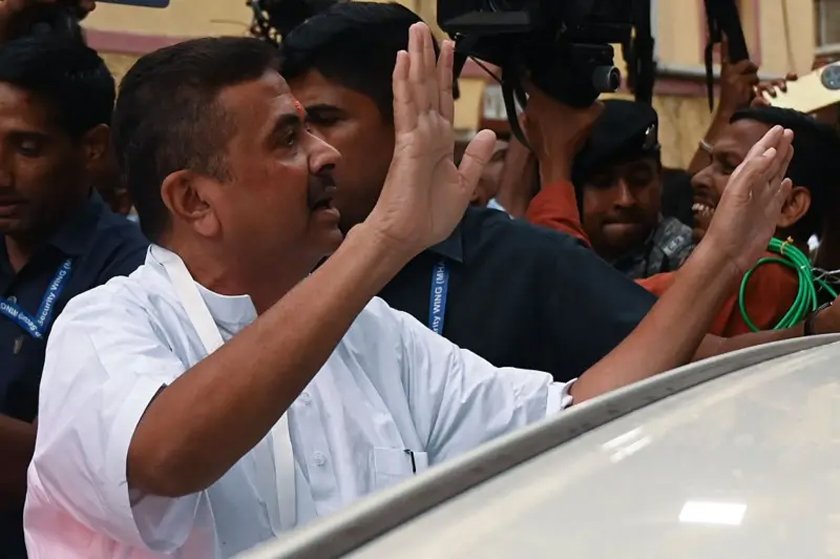
The condition of the Congress is such that the West Bengal state president Subhankar Sarkar is running in fourth place in the Shrirampur Assembly constituency. Priyanka Gandhi, a Congress leader, did not even hold a single rally in West Bengal.
Abhijit Majumdar, son of Charu Majumdar, the initiator of the Naxalbari movement, and a politburo member of CPI (ML), says that although the result was not surprising for him, he did not expect such a victory for the BJP.
Abhijit Majumdar says, 'There is no doubt that there was general dissatisfaction among the people against the Mamata Banerjee government, and the Left parties could not capitalize on this dissatisfaction.'
This time, the Congress and Left parties were contesting elections separately. In such a situation, instead of splitting the anti-TMC vote, it got concentrated towards the BJP.
During Rahul Gandhi's rally in the Shrirampur Assembly constituency, I myself felt that when Rahul attacked Mamata, the crowd welcomed it with applause. But when he criticized Prime Minister Modi, the crowd's reaction was very subdued. This means the anti-incumbency wave was clearly visible.
4. Division of Muslim votes?
Election result analyst Partha Das wrote on X, 'The TMC did not lose power because of the polarization of Hindu votes in favor of the BJP. Rather, the main reason for this is the severe division of Muslim votes. For example, one can look at the results of the first phase in the Tehatta Assembly constituency. The BJP is getting only three percent of the votes, while the Left is getting 34 percent of the votes. This is an area with almost 90 percent Muslim population. Therefore, ultimately the BJP will win this seat.'
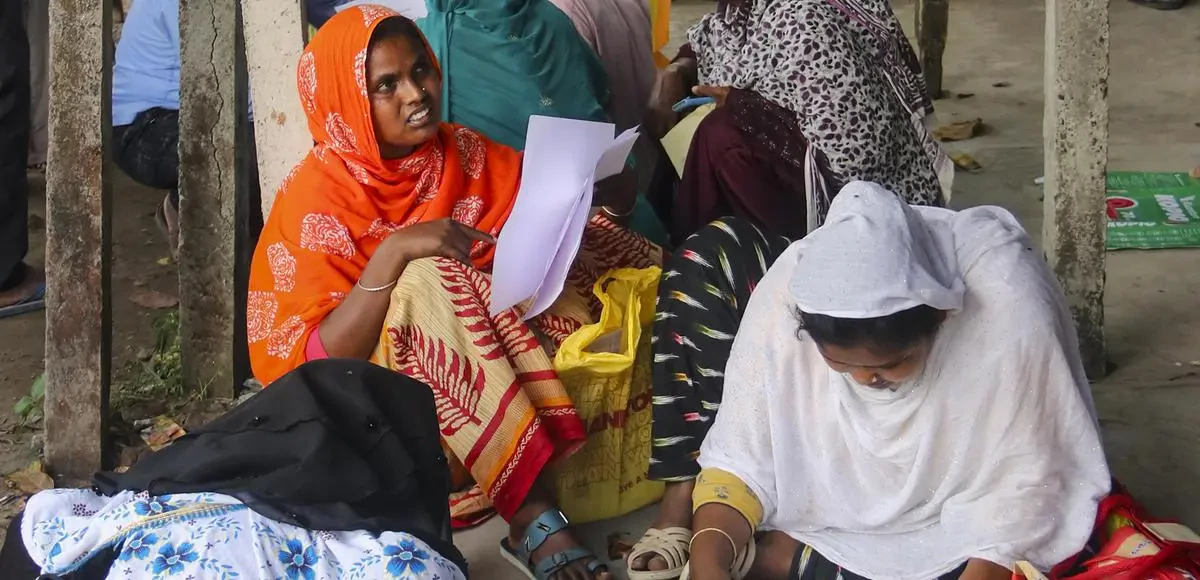
Abhijit Majumdar also says, 'Hindu polarization has occurred, but Muslim votes have been divided. The main reason for the division of Muslim votes is the TMC's exploitation of Muslim votes. For the last two elections, Mamata had been taking Muslim votes by showing the fear of the BJP. But this time, Muslims voted independently. The fact that ISF and Humayun Kabir's party got seats clearly shows that Muslim votes have been divided.'
However, Abdul Matin, a political science professor at Jadavpur University, does not agree with the idea of division in Muslim votes.
Professor Matin says, 'This is about making Muslims the villains. Muslims voted for strong candidates of ISF, and in some seats, for Humayun Kabir's party. Owaisi's party did not even get a thousand votes. In such a situation, we cannot say that Muslim votes were divided.'
Professor Matin adds, 'Mamata had adopted the path of Hindutva to defeat Hindutva politics in West Bengal. Mamata did not allow protests against the Waqf Bill. Muslims cannot vote for Mamata for life due to the fear of the BJP. If 70 percent of Hindu votes go to a single party, what is left? Despite this, I cannot definitively say that the Hindu votes that went to the BJP were communal. A large part of it may be communal, but the remaining votes were also against Mamata's misgovernance.'
In 2016, the BJP won only 3 seats, while in 2021, it won 77 seats. In the 2016 West Bengal Assembly elections, the BJP's vote share was around 10 percent.
In the 2019 Lok Sabha elections, the BJP's vote share crossed the 40 percent mark. The BJP received 38.1 percent of the votes in the 2021 Assembly elections. This time, the BJP's vote share is expected to cross 45 percent.
This specific news has been automatically translated by AI. As a result, there may be some inaccuracies or language errors.