Nepal and India Clash Over Lipulekh Dispute Amidst New Government Formation

Kathmandu. The 'Lipulekh dispute', which flares up from time to time, has once again pitted Nepal and India against each other.
Amidst the curiosity of 'What will be the foreign and neighborhood policy of the new government?' with the formation of a new government led by the Rastriya Swatantra Party (RSP), this problem has resurfaced.
Although Nepal has already issued a new 'chuchche' map incorporating the Lipulekh, Limpiyadhura, and Kalapani areas, India has not abandoned its claim over that land. Not only that, India has agreed with another neighboring country, China, to make Lipulekh a trade route. When the two countries agreed to use that land, they did not engage in any dialogue or discussion with the Nepali side.

Against this backdrop, India's Ministry of External Affairs issued a statement on April 30, announcing the 2026 Kailash Mansarovar Yatra. In coordination with the Chinese government, India is planning to operate this religious journey from June to August.
Ratopati published a news report on Sunday titled 'Lipulekh Dispute: Spice when in opposition, silence when in government!' questioning the silence of the government led by Balendra Shah three days after India announced the yatra. Just a few hours after the news was published, the Ministry of Foreign Affairs clarified the government's 'stand' on Lipulekh.
In the stance made public by the Ministry of Foreign Affairs, it was clearly stated that the government remains firm that the Limpiyadhura, Lipulekh, and Kalapani areas east of the Mahakali River, according to the Sugauli Treaty of 1816, are Nepal's territory.

The ministry clarified that Nepal has been continuously urging India not to undertake any activities such as road construction, trade, or pilgrimage in the area concerning the yatra planned via Nepali territory Lipulekh, and that China has also been officially informed about this.
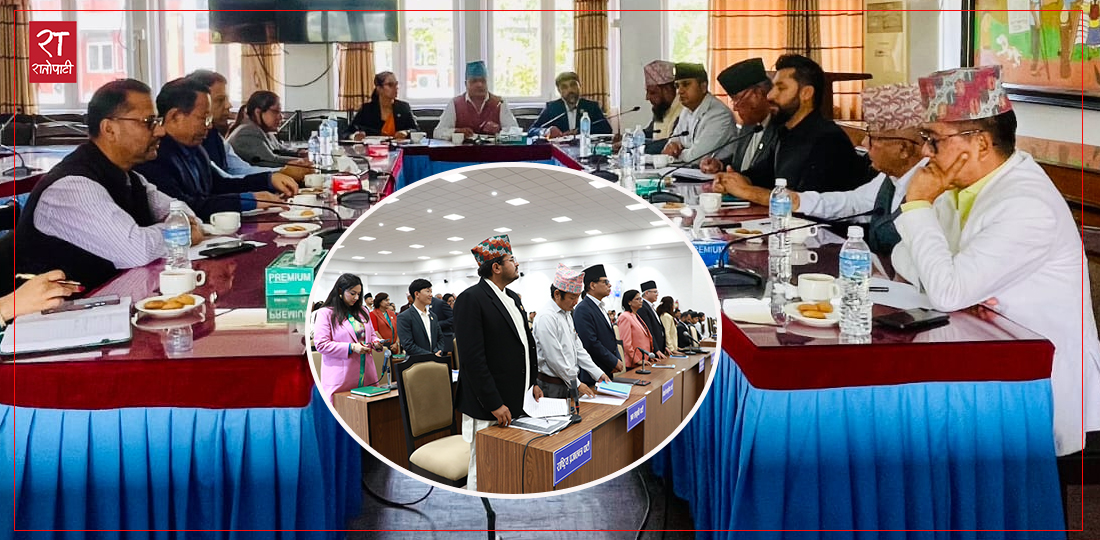
Minister of Education and government spokesperson, Basanta Pokharel, further clarified the same. Responding to questions from journalists while announcing the cabinet's decisions on Monday, Minister Pokharel clarified that Lipulekh and other disputed areas are Nepal's land and the government is committed to resolving this through diplomatic means.
Minister Pokharel informed that the Ministry of Foreign Affairs had already issued its note on border disputes, and in response to that note, the Indian government has also expressed its intention to find a solution through open cooperation and dialogue. 'The solution will be sought through cooperation between the two countries,' said Minister Pokharel.

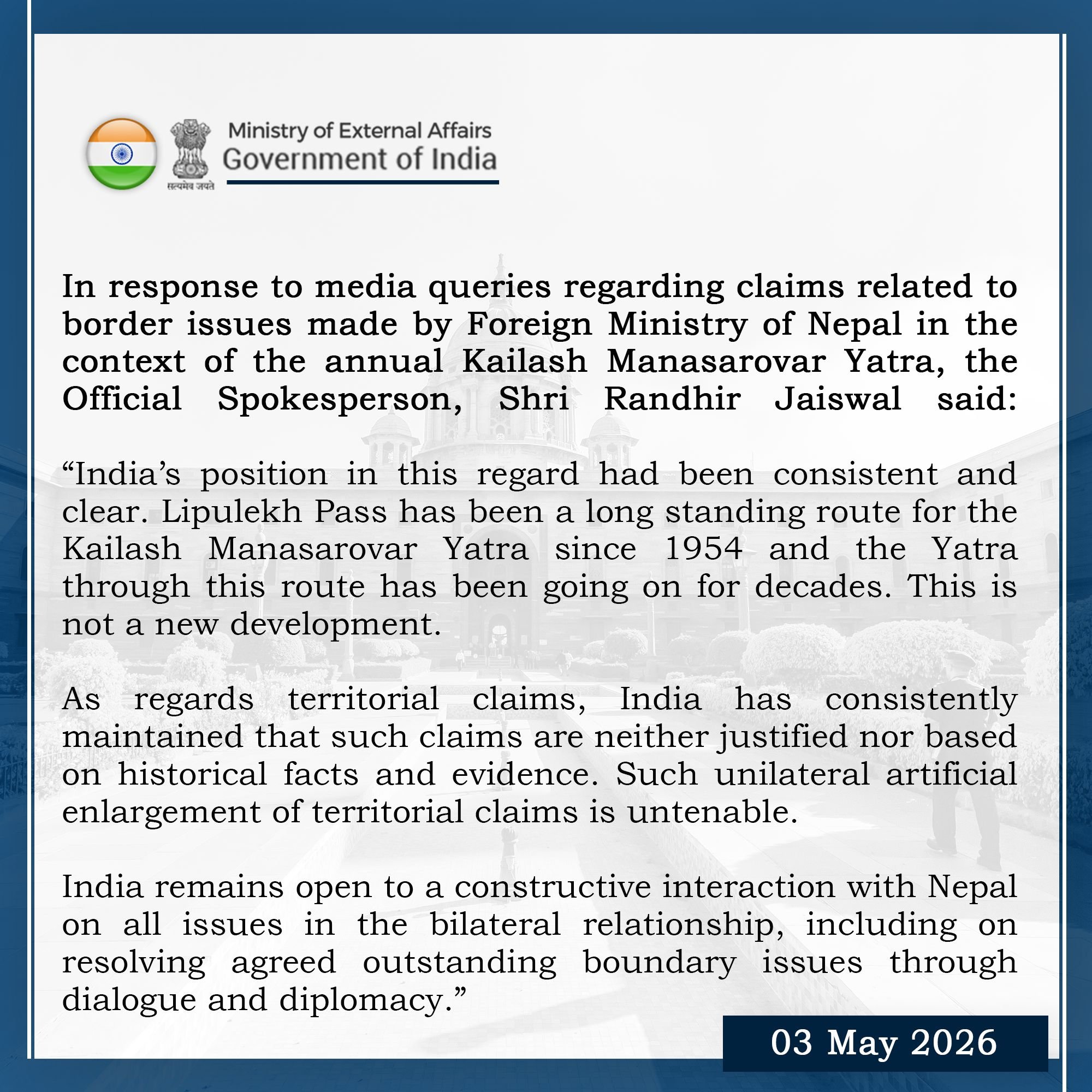
India reacted immediately on Sunday, shortly after the Ministry of Foreign Affairs clarified the issues related to Lipulekh. India reiterated that its stance on the border claims raised by Nepal is clear and consistent.
On Sunday night, Indian Ministry of External Affairs spokesperson Randhir Jaiswal claimed that the Lipulekh pass has been used for the Kailash Mansarovar Yatra since 1954 and that this is not a new development.
'India considers such territorial claims to be unfounded based on historical facts and evidence. Unilaterally expanding territorial claims is not practically acceptable,' the Indian side stated in its statement. Furthermore, India indicated its readiness for constructive dialogue on all issues within the bilateral relations with Nepal. India believes that pending border issues can be resolved through diplomatic means.
- How to solve now?
According to border expert Buddhinarayan Shrestha, the best option is to make diplomatic efforts to establish a tri-junction point of all three countries (Nepal, India, and China) in the Lipulekh, Limpiyadhura, and Kalapani areas based on diplomatic art. According to him, this will resolve the Lipulekh dispute through diplomatic means rather than 'confrontation'.
For this, discussions on this agenda can be held during Prime Minister Balen Shah's upcoming visit to India, according to Shrestha. 'To establish a tri-junction point, first, discussions should be held between the two countries, and then, after discussing with China as well, China, India, and Nepal should jointly establish a tri-junction point in Limpiyadhura. This could be the solution to the problem,' Shrestha suggested.
Similarly, on Monday, seven former ambassadors also appealed to the government to adopt a sensitive and effective foreign policy. They expressed confidence that the new government will strive to elevate the relationship between the two countries, which has been developing on the basis of Panchsheel, to new heights.
'As Lipulekh, Kalapani, and Limpiyadhura are integral parts of Nepal, we express our belief that friendly nations China and India will be sensitive to Nepal's sovereignty and, while appreciating the statement issued by the Government of Nepal, we also draw the government's attention to immediately take diplomatic initiatives to protect its sovereign borders,' stated former ambassadors Rajeshwar Acharya, Mahendra Pandey, Tank Karki, Mahesh Maskey, Leelamani Poudel, Vishnu Pukar Shrestha, and Krishna Prasad Oli in a joint statement.
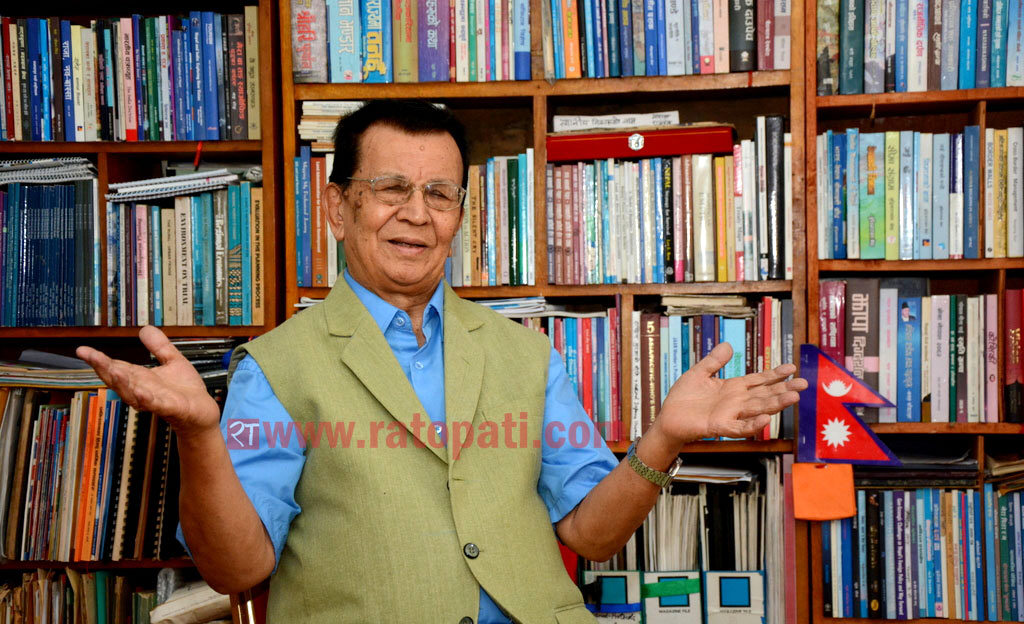
Mahesh Maskey, former ambassador to China, states that Nepal should conduct diplomatic talks with both India and China, backed by historical evidence, to resolve the border dispute of Lipulekh, Kalapani, and Limpiyadhura. He insists that it is essential to engage in serious dialogue with both neighbors based on Sugauli Treaty-era maps and evidence brought out by Dr. Pitambar Sharma and others.

He said, 'Nepal has seriously failed in diplomatic initiatives with China on this matter. China had requested an official 'diplomatic note' from Nepal's Ministry of Foreign Affairs regarding this. For that, the Foreign Ministry also formed a committee under the leadership of Suryanath Upadhyay, but its report was neither made public nor was an official 'note' sent to China based on it.'
Maskey stated that in the agreement between India and China in 1954 regarding Tibet, China accepted 'Lipulekh' as India's trade route. Since that agreement has not been revoked to date, India is making agreements with China based on it.
He asserted that until Nepal pressures China to revoke the 1954 agreement by sending a 'diplomatic note' with concrete evidence, China will continue to evade by saying, 'You should align with India.'
He said, 'Therefore, to end the tendency of this issue being discussed periodically and then fading away, the media and citizens should question the government: How many documents have been exchanged with China on this matter so far? What claims did Nepal present in writing, and what was China's response?'
He expressed confidence that the real solution to this problem will emerge only when Nepal stands firm on its claims with evidence and has the courage to go to international courts if necessary.
Retired Lieutenant General of the Indian Army, Shaukin Chauhan, states that the most fundamental issue is whether the two countries want to resolve this problem or not. According to him, both countries do not even want to have serious discussions on this matter.
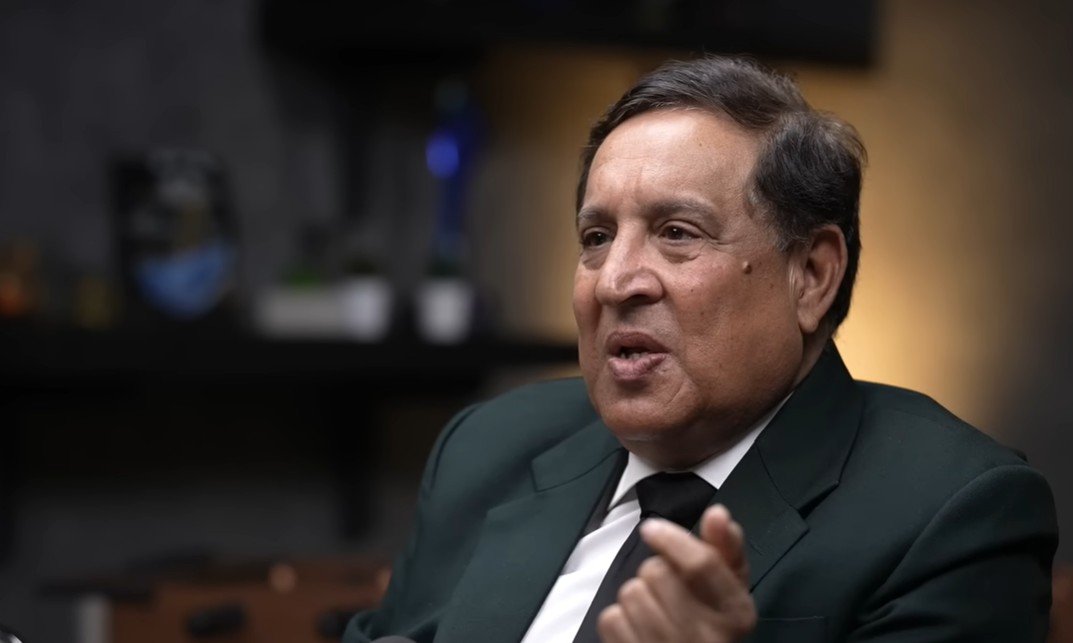
He said, 'Both countries say let's talk about this later. When I was in service, I was posted in various embassies, and no one wants to talk about this issue. They just say let's talk later.'
'There is no way this problem cannot be solved if the two countries sit down to talk about it. In fact, at one time, Lipulekh was a 'tri-junction'. For centuries, India traded with Tibet through Lipulekh. It is written in history that India trades with Tibet through Lipulekh. But I don't understand why it is being exacerbated as a problem now,' he added.
He suggests that the two countries should sit down and resolve this issue. He also advises against bringing diplomatic discussions into public disputes or debates.
- Festering Wound
The Lipulekh dispute is not new. For years, both Nepal and India have been claiming this land in their own ways. Recently, the issue became more contentious after the then Prime Minister KP Sharma Oli issued a map including Lipulekh.
Nepal claims that based on the Sugauli Treaty of 1816, all areas including Limpiyadhura, Kalapani, and Lipulekh, which fall east of the Mahakali River, are Nepal's territory.

Lipulekh is located in the north-west of Nepal. It borders India, Nepal, and China. India considers this area part of Uttarakhand.
In November 2019, India divided Jammu and Kashmir into two union territories and also issued a new map. These areas were also included in that map.
Nepal strongly objected to this, stating that Kalapani is its territory and India should correct its map. Five months later, in May 2020, tensions between the two countries escalated again over Lipulekh.
Subsequently, on June 18, 2020, Nepal amended its constitution and updated the country's political map. After the amendment, three strategically important areas - Lipulekh, Kalapani, and Limpiyadhura - were included in Nepal's map.
However, it has been observed that while the Indian side always states it is open to dialogue through diplomatic channels to resolve the Lipulekh problem, it is not ready to sit for dialogue. Former ambassador Vijaykant Karna argues that the path to resolving the Lipulekh problem is almost closed.
_o0o64izVgv.jpg)
'It's like a lock has been put on the door and the key thrown away,' Karna told Ratopati, 'In my opinion, there will be no negotiation and no talks on this.'
Karna claimed that there is no room for talks and argued that other countries do not put maps in their constitutions as Nepal has done. 'Have you heard of anyone putting a map in their constitution?' he asked, adding, 'If it has to be done, the map should be removed by amending the constitution.' Karna also stated that establishing Lipulekh as a tri-junction point is not possible.
This specific news has been automatically translated by AI. As a result, there may be some inaccuracies or language errors.