Gokul Baskota Supports Government's Stance on Lipulek Dispute, Awaits PM Balen Shah's India Visit

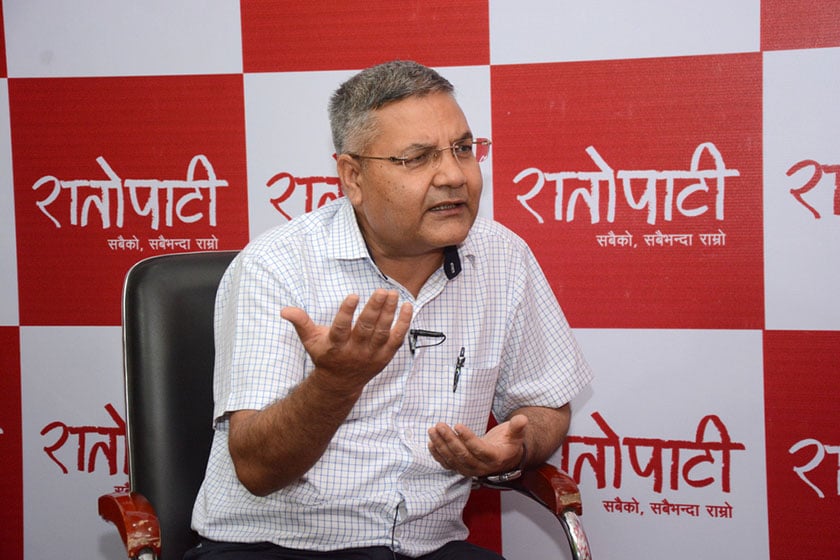
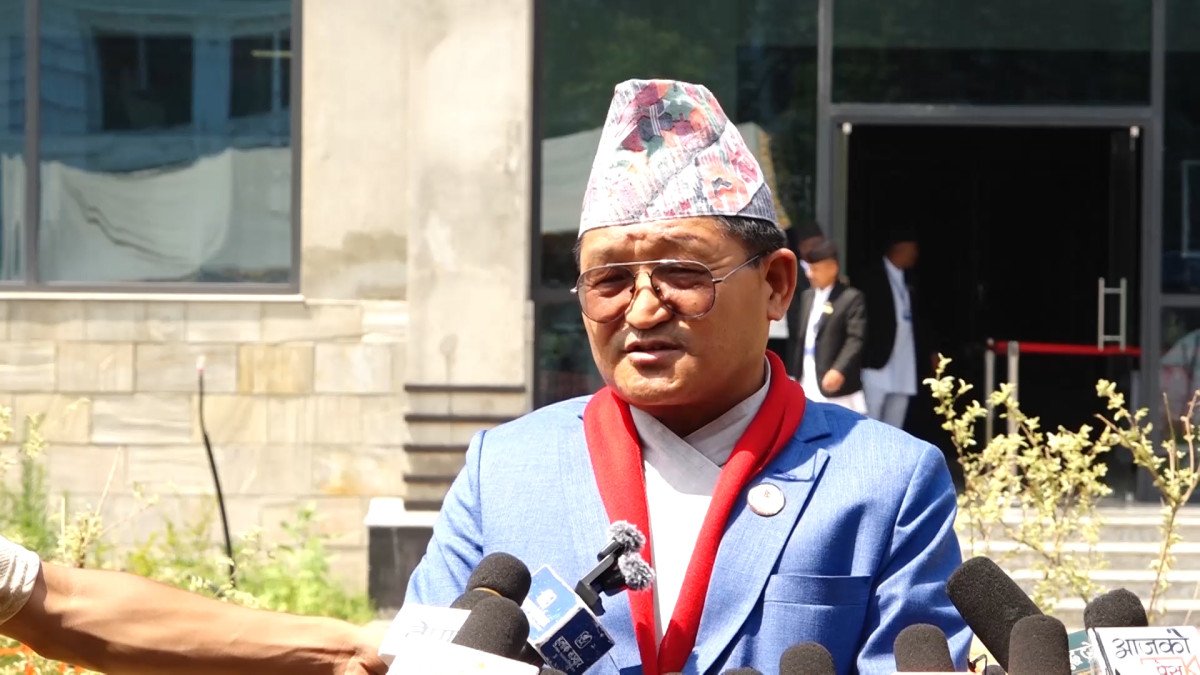
Kathmandu. Influential leader of CPN-UML Gokul Baskota has supported the current government's stance on the Lipulek border dispute. He expressed his views on social media, commenting on the reactions of neighboring countries and Nepal's diplomatic efforts.
Baskota stated that the debate over who said what or didn't say what in diplomacy has little meaning, as neighboring countries might reiterate old points or China might say 'this is not our problem.' He emphasized the need for concrete, result-oriented diplomacy rather than verbal sparring.
Baskota views the upcoming India visit of Prime Minister Balendra Shah (Balen), who has cultivated an image as a supporter of 'Greater Nepal,' as significant. He believes the crucial aspect will be how Prime Minister Balen presents Nepal's border stance during his India visit and what results it yields.
Baskota mentioned that he is very eager and awaiting the results of the Prime Minister's India visit.
Nepal's Ministry of Foreign Affairs had issued a statement on Sunday saying, 'The Government of Nepal has been continuously urging the Government of India not to undertake any activities such as road construction or expansion, border trade, and transportation in this area.'
Regarding this, Indian Ministry of External Affairs spokesperson Randhir Jaiswal said, 'India's stance on this matter has always been clear and consistent. Lipulekh Pass has been the old route for the Kailash Mansarovar Yatra since 1954, and travel has been happening through this route for decades. This is not a new issue.'
'As far as claims related to the border are concerned, India has always stated that such claims are not correct and are not based on history or evidence. Thus, unilaterally and artificially increasing border claims is not acceptable.'
The Indian Ministry of External Affairs stated, 'India is ready for positive dialogue on all issues with Nepal, including resolving pending issues related to the border through dialogue and diplomacy.'
- What is the dispute?
Nepal claims that Limpiyadhura, Kalapani, and Lipulek, which fall east of the Mahakali River based on the Sugauli Treaty of 1816, are all Nepali territory.
Lipulek is located in the northwest of Nepal. It borders India, Nepal, and China. India considers this area part of Uttarakhand.
In November 2019, India divided Jammu and Kashmir into two union territories and also issued a new map. These areas were also included in that map.
Nepal strongly objected to this, stating that Kalapani is its territory and India should correct its map. Five months later, in May 2020, tensions flared again between the two countries over Lipulek.
Subsequently, on June 18, 2020, Nepal amended its constitution and updated the country's political map. After the amendment, the strategically important three areas of Lipulek, Kalapani, and Limpiyadhura were included in Nepal's map.
This specific news has been automatically translated by AI. As a result, there may be some inaccuracies or language errors.