Iran Proposes 14-Point Peace Plan to US Amidst Tensions


In a diplomatic move aimed at permanently ending the war that has exposed the limitations of American military dominance and shaken the global economy, Iran has put forward a new 14-point proposal to the United States.
Tehran, which sent the previous proposal through mediator Pakistan, stated on Saturday that US President Donald Trump was studying the new proposal. However, he expressed doubt about reaching an agreement with Iran.
Tehran had sent the proposal to Pakistan on Thursday night. A ceasefire agreement between the two sides was reached through Pakistan's initiative. According to the Iranian news agency Tasnim, this 14-point plan was prepared in response to America's nine-point plan.
Although weeks have passed since the ceasefire began on April 8, a peace agreement has not yet been reached between Washington and Tehran. Tehran wants a permanent end to the war. However, Trump has set a condition that Iran must first end the effective blockade of the Strait of Hormuz. About one-fifth of the world's total oil and gas exports pass through this waterway. The US President has also made Iran's nuclear capability a 'red line'.
After America and Israel attacked Iran on February 28, Iran responded by imposing an undeclared blockade on the waterway. Despite the ceasefire agreement, the naval blockade imposed by the Trump administration on Iranian ports has further escalated tensions.
The exchange of attacks, seizures, and detentions of each other's ships by America and Iran also continues. This indicates that a naval war is still ongoing in the Strait of Hormuz.
So, what is the new proposal and will President Trump accept it?
- What is Iran's 14-point proposal to end the war?
According to reports from Iranian media, Tehran's new proposal came in response to Washington's nine-point peace proposal, which primarily demanded a two-month ceasefire.
However, in its latest peace proposal, Iran has stated that it wants to focus on ending the war rather than extending the ceasefire. It seeks to resolve all issues within 30 days.
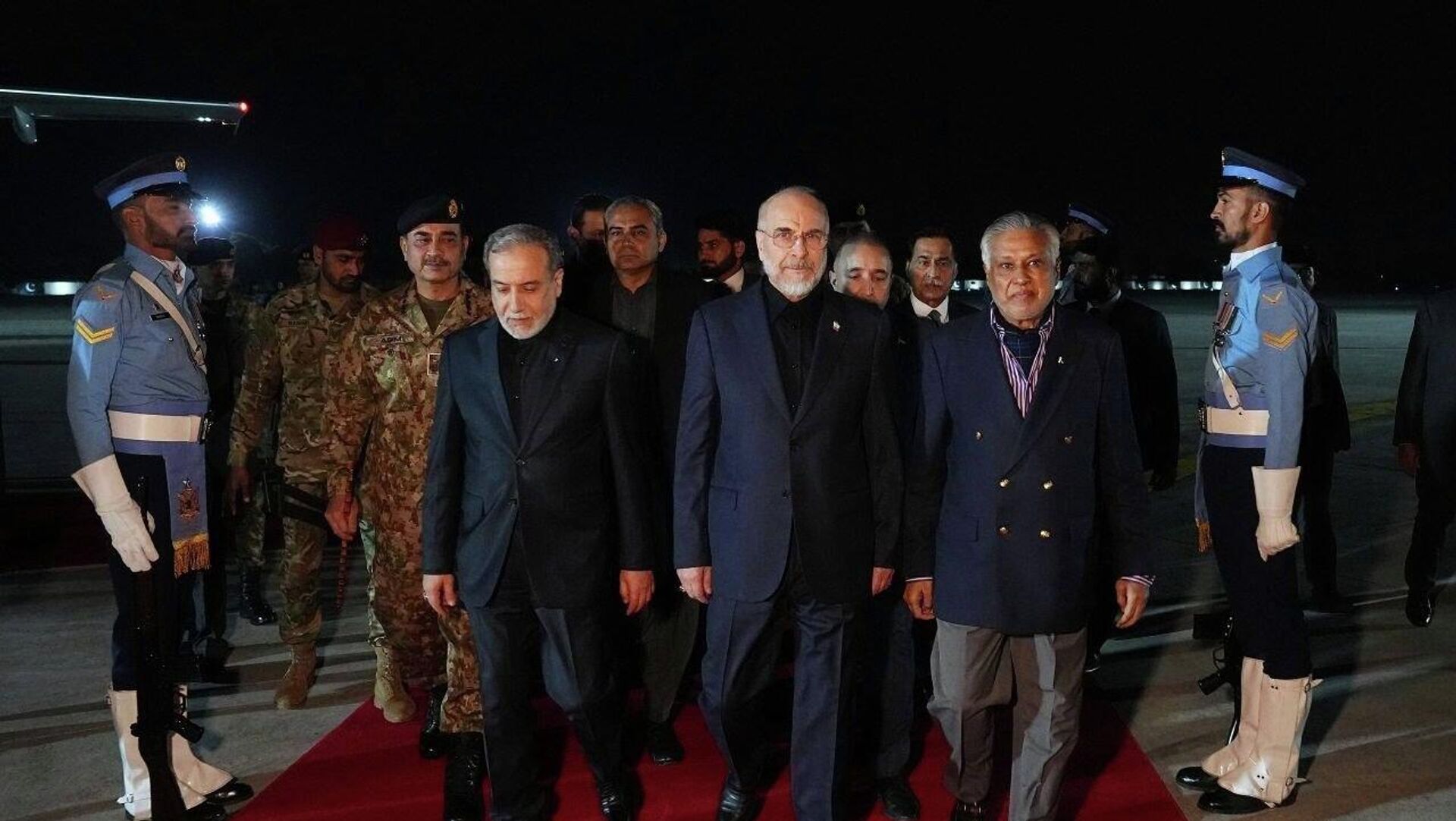
The new proposal includes guarantees against future attacks, withdrawal of US forces from Iran's vicinity, release of billions of dollars worth of frozen Iranian assets, and removal of sanctions. It also demands war reparations, an end to all hostilities including in Lebanon, and a new mechanism for the Strait of Hormuz.
Having faced attacks from America and Israel last June, Iran seeks guarantees against future attacks. Previously, Israel had launched a campaign to destroy Iran's nuclear sites, targeting Iranian nuclear scientists.
As a signatory to the Nuclear Non-Proliferation Treaty (NPT), Tehran also wants its right to enrich uranium to be guaranteed. However, Trump has made nuclear issues a red line. Iran wants to see decades-old sanctions, which have crippled its economy, lifted as part of any agreement. Issues of passage through the waterway and war reparations are other complex negotiation points.
According to a report by Iran's national broadcaster IRIB, Deputy Foreign Minister Kazem Gharibabadi stated after submitting the proposal that the ball is now in America's court to choose the path of diplomacy or continue with the confrontational approach.
Paul Musgrave, an associate professor at Georgetown University in Qatar, said that Iran has slightly softened its proposal. He told Al Jazeera that news reports indicate some flexibility in the proposal. This could mean that the Iranian side may have dropped the precondition that the US must lift the distant blockade on Iranian passage in the Strait of Hormuz.
'Besides this, the proposal is said to include many things such as maintaining Iran's sovereign capacity to enrich uranium, its nuclear program, and a 'control mechanism' for ship passage in the Strait of Hormuz,' he added.

According to Musgrave, America and Iran are still far apart on two major issues: uranium enrichment and the transfer of highly enriched uranium. He stated that President Trump remains firm on Iran surrendering its nuclear capabilities.
Kenneth Katzman, a senior fellow at the non-profit Soufan Center in New York, said that Iran's distrust of Trump is the biggest obstacle. He said, 'The difference on nuclear issues is actually not that big anymore. It is still significant but can be reduced. The main problem is that Iran does not trust Trump and the US at all and does not want to move forward with full discussions until this blockade is lifted.'
Katzman believes this problem could fuel American attacks. He says the problem lies there because Trump knows he must break Iran's control over the waterway. According to Katzman, although both sides are frustrated, there is no possibility of anyone abandoning the talks in the near future.
- How did America respond?
Trump said he is reviewing Iran's proposal. However, he warned that Washington could resume attacks if Tehran misbehaves.
Speaking to reporters in Florida before boarding Air Force One on Saturday, Trump confirmed he had been briefed on the 'concept of a deal'. Despite the diplomatic openness, the president, in his characteristic blunt style, spoke about the possibility of the conflict resuming after the ceasefire.

When asked if the attacks would resume, Trump said it was possible if Iran did anything bad. Trump added that America is in a 'very good position' and claimed that Iran, being devastated by months of conflict and naval blockade, is in a hurry to reach a deal.
Trita Parsi of the Quincy Institute for Responsible Statecraft told Al Jazeera that the economic cost of the blockade on Iranian ports is higher than the White House estimates. He argues that the extensive strategic damage to the US is perhaps even more significant.
In a post on Truth Social late Saturday, Trump said it was hard to imagine the Iranian proposal being acceptable. He stated that Iran has 'not yet paid a high enough price' for its actions over the past 47 years for humanity and the world.
According to Musgrave of Georgetown University, Trump appears to have rejected the new Iranian proposal without reading it or being informed about it.
- What were the previous peace proposals to end the conflict?
Iran's latest proposal comes amidst a fragile three-week ceasefire that took effect on April 8. This has halted the US-Israel war on Iran.
The day before the ceasefire, Iran had proposed a 10-point peace plan, according to state news agency IRNA. This included an end to regional conflicts, protocols for safe passage through the Strait of Hormuz, lifting of sanctions, and reconstruction.
Trump had called Iran's 10-point plan a significant proposal but not good enough.

Iran's proposal on April 7 was in response to a 15-point plan prepared by America on March 25. Washington's plan included a one-month ceasefire while talks were ongoing between the two sides on the condition of ending the war through Pakistan.
According to Israel's Channel 12, the plan included dismantling Iran's nuclear facilities in Natanz, Isfahan, and Fordo, and a permanent commitment that Iran would never build nuclear weapons. It also included Iran's commitment to transfer its already enriched uranium stockpile to the International Atomic Energy Agency (IAEA) and allow UN monitors to oversee all aspects of the country's remaining nuclear infrastructure. The plan also included reopening the Strait of Hormuz, lifting all sanctions on Iran, and ending the UN mechanism that allows for the reimposition of sanctions.
However, Iran rejected this plan. Stating that a temporary ceasefire would give America and Israel time to regroup and launch further attacks, Iran proposed its 10-point plan in return.
- What is the current situation?
Despite the ceasefire, the Islamic Revolutionary Guard Corps (IRGC) stated on Saturday that it is fully prepared to return to war, citing a lack of commitment from America to previous treaties.
In a post on X on Sunday, the IRGC's intelligence unit stated that there is only one way to understand this. It mentioned that Trump has to choose between an impossible military action or a bad deal with Iran, and America's options are narrowing.
The stalemate is further complicated by the technical obstacles to reopening the Strait of Hormuz, including the presence of Iranian naval mines. Since the war began on February 28, Tehran's closure of the waterway has led to an increase in global oil and gas prices.

The oil and gas crisis has worsened since America imposed a blockade on all Iranian ports on April 13 to pressure Iran to reopen the waterway. On Friday at 08:08 GMT, the international benchmark Brent crude reached $111.29 per barrel. Before the war, its price was around $65.
Tensions have further escalated after Trump recently described the US naval blockade as a very profitable trade.
Speaking at an event in Florida on Saturday, Trump said that they had seized cargo and oil, calling it a very profitable trade. 'Who would have thought we would be like pirates, but we are not playing games,' he said.
Tehran's foreign ministry seized on these remarks, calling it a condemnable admission of piracy.
Parsi of the Quincy Institute told Al Jazeera that the US naval blockade on Iran has backfired on Trump and is making the situation worse. He stated that the blockade can be continued despite ongoing negotiations.
Parsi noted that the blockade has nothing to do with the Iranians coming to the negotiating table. He says it only serves to hinder diplomatic progress.
He argues that before imposing the blockade, Trump had already secured his biggest advantage through diplomacy. 'As soon as he succeeded in bringing about a ceasefire, the primary pressure on him, the war and the resulting increase in gas prices, was removed. If he had used the time to his advantage by staying in that scenario, he would have been in a much stronger position than the Iranians. Because the Iranians could not get what they primarily wanted, which was the lifting of sanctions,' said Parsi.
Instead, by imposing the blockade, Trump removed more oil from the market. Parsi stated that the price of oil is higher during the ceasefire than during the war, and all these economic indicators clearly show that the situation is worsening for Trump due to the blockade.
However, Trump is exploring options, including establishing a naval coalition called the Maritime Freedom Construct (MFC) to restore freedom of passage in the Strait of Hormuz to resolve the oil crisis.
According to reports from US media, the main tasks of this naval coalition will be to share intelligence among member nations, coordinate diplomatic efforts, and enforce sanctions to manage ship traffic through the waterway.
This specific news has been automatically translated by AI. As a result, there may be some inaccuracies or language errors.