Economy Faces Challenges Amidst Policy Uncertainty, Says Industry Leader

_moTIuDlrFY.jpg)
Viratanagar. Nepal's economy is going through a difficult phase. On one hand, industries are not operating at full capacity due to lack of demand in the market, and on the other hand, investors are in a 'wait and see' mode due to policy uncertainty.
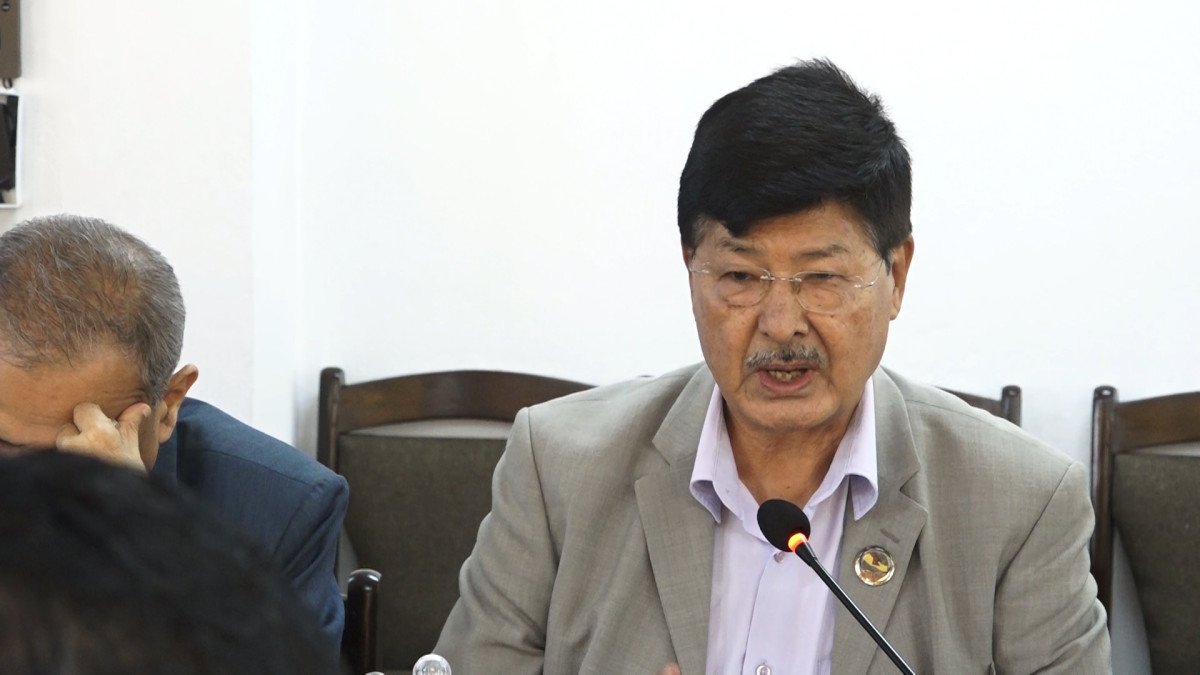
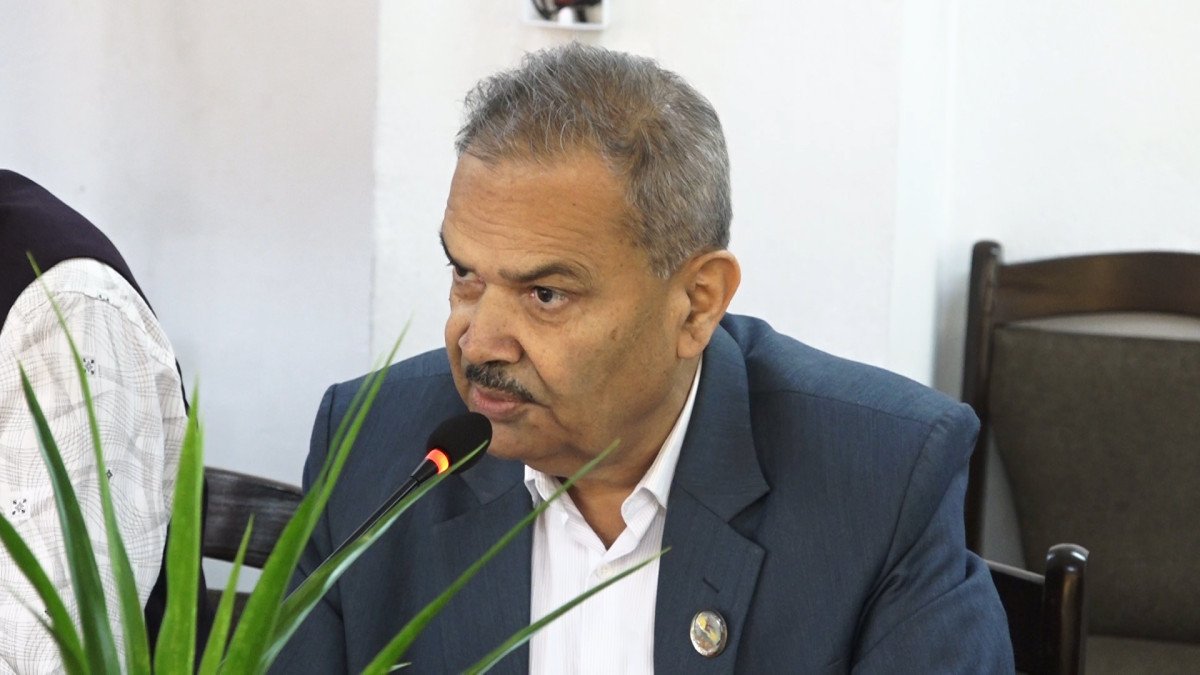
In this situation, the upcoming election of the Federation of Nepalese Chambers of Commerce and Industry (FNCCI) is expected to bring new enthusiasm to the private sector. Avinash Bohora, a candidate for the executive member post in the new FNCCI executive committee, is an established and successful industrialist from the Koshi Province.
A detailed conversation with him on the country's current economic crisis, the impact of global geopolitics, and the role FNCCI should play:
You have filed your candidacy for the executive member post. What is the election fervor like, and why are you running?
- The FNCCI election is not just about obtaining a position; it is also an opportunity to amplify the voice of the entire private sector. Currently, industrialists and businesspersons across the country are facing a severe economic crisis. In such a situation, FNCCI needs a strong and professional leadership that can communicate with the government in clear terms. I have filed my candidacy with the objective of utilizing my long experience in the industry and trade sector to contribute to the country's economic policy-making through FNCCI. My main goal is to convey the sentiments of industrialists from Koshi Province and the entire country to the center.
The country currently has a two-thirds majority government. How do industrialists and businesspersons view this? Has it brought enthusiasm to the private sector?
- Politically, having a two-thirds majority government is a positive thing. We have long been demanding a stable government and policy stability. With a stable government, policies are expected not to change frequently.
However, political stability alone is not enough; it must also yield economic results. The current situation in the industrial sector is very challenging. This is not a problem that has appeared overnight; it is a chain of problems that have been accumulating for a long time. The government has set a target of 7% economic growth, but to achieve that target, capital investment must increase by at least 25%. This is not possible without taking the private sector into confidence.
To what extent has the escalating conflict in West Asia affected Nepal's private and industrial sectors?
- Nepal's economy is heavily dependent on imports and foreign revenue. Even minor fluctuations in external countries significantly impact our market. Similar to the impact of COVID, the effects of the current war are gradually becoming visible. The rise in the prices of petroleum products and gas has increased transportation and production costs.
In the coming year, this could lead to a shortage in fertilizer production, posing a challenge to food security. On the other hand, the prices of goods like plastic granules used in packing materials and adhesives used in industrial production have skyrocketed. Due to the disruption of the supply chain caused by the war, import-dependent countries like Nepal are facing further hardship.
Recently, the government appears to be acting somewhat aggressively, with crackdowns on businesspersons at times and policy tightening at others. How has this affected the investment climate?
- We welcome the steps the government takes for good governance, but the process must be just. There should be thorough investigation into any matter first, and action should be taken only if someone is found guilty. However, being publicized as guilty and subjected to crackdowns even before an investigation is conducted lowers the morale of investors. We also held discussions with Rabi Lamichhane, the chairman of the Rastriya Swatantra Party, today. He has urged the private sector to work without fear. He mentioned that some pain is natural during reforms, but we want that pain not to reach a point where industries have to shut down. The state should play a parental role towards the private sector.
What is your opinion on the MRP labeling on imported goods and the strictness regarding bringing goods worth more than one hundred rupees across the border?
- Regarding MRP, the government's decision seems to have come in haste. This is not practical, especially for perishable goods. The government needs to make this more scientific and systematic. As for the strictness of one hundred rupees at the border, it should be viewed from two perspectives. Bringing a small amount of goods for domestic use is a normal human aspect. However, the practice of bringing goods commercially under this guise and undermining the local market must be stopped. Commercial imports should be encouraged through legal channels, and unauthorized trade should be strictly controlled. We expect the upcoming budget to clarify this further.
It is said that industries in Koshi Province, especially in Biratnagar, are operating at less than 50% capacity. What is the main reason for this recession?
- This problem is not limited to Biratnagar alone; it is nationwide. Consumption in the market has dropped sharply. Unless there is demand in the market, industries cannot increase production. Currently, there is liquidity in banks, but credit flow is not happening. The main reason for this is the strict regulation related to working capital loans. Entrepreneurs are not getting adequate loans, and even those who do are hesitant to invest due to high interest rates. The circulation of money in the market has stopped.
You mentioned that for the economy to be dynamic, capital must circulate. What role do you see the real estate sector playing in this?
- The real estate sector has a significant contribution to Nepal's economy. Currently, a large amount of capital is held up in real estate. The slowdown in real estate transactions has also affected the construction sector, cement, steel, and employment for laborers. The government should relax policies related to land plotting and real estate transactions for some time. If the money stuck there comes into the banking system and the market, the economy will regain momentum. Money should circulate, not stagnate.
Let's change the subject. In the changed circumstances, what role do you think FNCCI should play now? What are your priorities?
- FNCCI's main job is to be a bridge between the government and the private sector. My first priority will be policy advocacy. I will strive to ensure that the real voice of the private sector is addressed when the government formulates the budget and monetary policy. Second, Nepal needs to be promoted as a safe destination in the global market to attract foreign investment. Third, the problems of small and medium-sized enterprises must be given equal importance. I will be active in resolving issues related to electricity tariffs, labor problems, and tax disputes to create an environment where industries can produce at 100% capacity.
What should be the role of industrialists and businesspersons?
- The times are tough now, but we should not be discouraged. Opportunities lie within crises. We must unite and present our problems to the state. I seek your support and cooperation in making FNCCI a dignified and strong institution. I pledge to always fight for your rights and interests as your representative.
This specific news has been automatically translated by AI. As a result, there may be some inaccuracies or language errors.