India and China Agree to Use Nepali Land for Trade Route, India Announces Kailash Mansarovar Yatra

Kathmandu. India and China have agreed to use Nepali land as a trade route, and following this agreement, India's Ministry of External Affairs has announced the Kailash Mansarovar Yatra for 2026.
With India's announcement, the issues of Lipulekh, Limpiyadhura, and Kalapani have resurfaced.

China's coordination has led India to plan this religious journey from June to August. Although India's Ministry of External Affairs made such an announcement on April 30, the Nepali side has remained silent on the issue of using Nepali land.
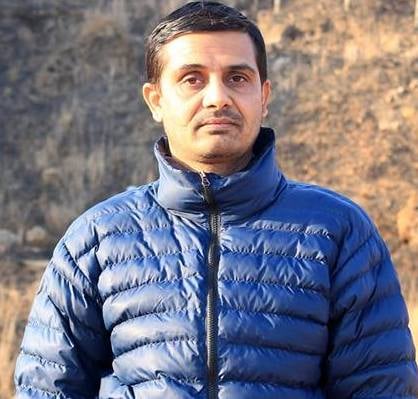
Pradip Gyawali, a leader of the UML and former Foreign Minister, states that the current government's silence on India opening the Kailash Mansarovar religious journey is unacceptable.
_agHMR5oB6V.jpg)
“In the past, when border issues arose, the government's stance was publicly announced, and it was the same when we were in government,” says former Foreign Minister Gyawali, “The current government cannot remain silent on this matter.”
Gyawali warned that if the current government does not publicly state its diplomatic stance in accordance with past principles, border encroachment could increase.
“We must maintain the same principles and stances we have held since 2015, and the government must clearly state its position and pursue diplomatic initiatives,” Gyawali told Ratopati. “Because this silence raises many other questions and can further strengthen border encroachment, the government must clarify this.”
When asked about the Kailash Mansarovar Yatra, Lok Bahadur Poudel Chhetri, spokesperson for the Ministry of Foreign Affairs, stated that nothing would be said on the matter at present.
Experts in diplomatic affairs, however, suggest that Nepal should not remain silent on such forceful actions by neighbors on Nepali land but should seek solutions through diplomatic channels.
Former Ambassador to India, Nilambar Acharya, recalls that an agreement was reached to resolve disputes between Nepal and India through dialogue.
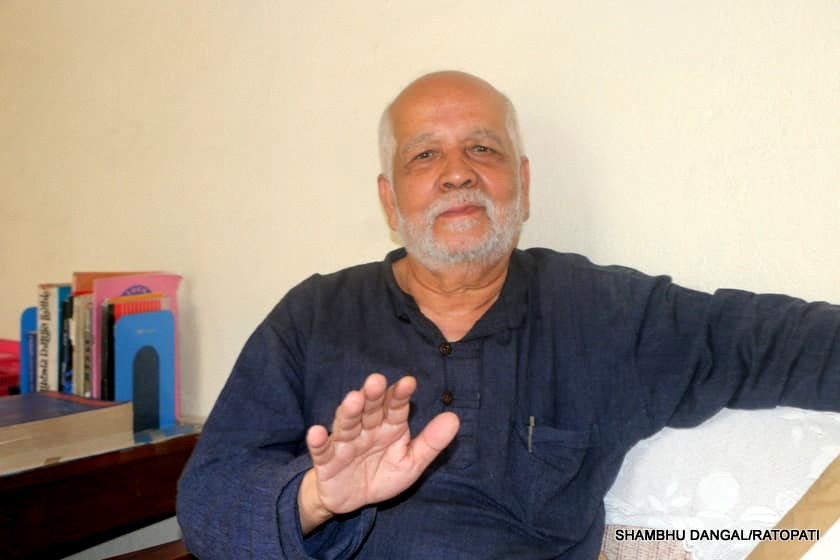
“A mechanism has also been formed for this,” Acharya told Ratopati. “Therefore, Nepal should be able to state that our land should not be used without our consent.”
He mentioned that past governments used to inform neighbors through diplomatic notes, and the current government should also use diplomatic skills this time.
“The government cannot remain silent; it must adopt peaceful diplomacy,” Acharya said. “We must take initiative to protect our interests. Others will not protect our interests.”
According to India's Ministry of External Affairs, two routes have been designated for the Kailash Mansarovar Yatra this year. Ten groups of 50 people each will travel via the Lipulekh pass in Uttarakhand state, and another ten groups of 50 people each will travel via the Nathula pass in Sikkim state.

The Indian side claims that a total of one thousand pilgrims will visit Kailash Mansarovar this year through these two different routes.
For this, India has opened online applications through its website for those wishing to participate in the yatra.
Most recently, on August 18, 2025, during Chinese Foreign Minister Wang Yi's visit to India, both countries agreed to open the Lipulekh pass. Surprisingly, agreements to open and use the border have been made without informing Nepal about the Nepali land of Lipulekh.
When news broke that India and China had agreed to open the Lipulekh pass during the tenure of former Prime Minister KP Sharma Oli, the then Nepali government sent a diplomatic note to India expressing its reservations. However, it is reported that Nepal has not yet sent such a note to China.
_mzSJm6J3YP.jpg)
Instead, Chinese officials have been dismissing the Lipulekh issue as a matter between Nepal and India, stating that it is an internal affair of the two countries. “This is a matter between Nepal and India. We are ready to accept whatever is decided by the two countries,” a Chinese embassy official told Ratopati, commenting on China's stance.
Lipulekh was discussed a year ago as well, around the time Prime Minister KP Sharma Oli was about to visit China. At that time, the current Prime Minister Balen Shah was the Mayor of Kathmandu Metropolitan City. On the same day as Oli's visit to China, the current Prime Minister Balen Shah expressed concern about the Lipulekh border. He had then requested Prime Minister Oli not to forget to remind China that the area belongs to Nepal.
“Best wishes for your visit to China, Prime Minister. The agreement between India and China to resume trade through Nepal's Lipulekh pass is an encroachment on our sovereignty,” Balen Shah had written on social media. “Do not forget to remind China that it is ours.”

Seven months after making such a request to the then Prime Minister, Shah himself has become the powerful Prime Minister of the country. Shah, who is trying to express his views through peaceful diplomacy, is preparing to visit India in the near future.
At such a time, there is growing curiosity about what stance Prime Minister Balen Shah will take in resolving the Lipulekh issue, or whether he will remain silent.
Former Ambassador to China, Tanka Karki, believes that the government should present its evidence and take initiative to resolve the issue of the Mansarovar Yatra opened by India via Lipulekh and the dispute over the territory.

“If Lipulekh and Kalapani are ours, we must make public all the evidence we have and raise the issue with the international community through diplomatic channels,” says former Ambassador Karki. “The solution to this is diplomacy.”
Karki states that in Nepal, sensitive issues often lead to mere stunts, causing problems to become entangled rather than resolved. “We have no other option. We must try to make them understand the language of reason, not the language of power. Stunts alone are not enough,” Karki told Ratopati. “When India and China agreed to open the Lipulekh pass, we also sent a diplomatic note. Therefore, we should have been able to present our evidence in the relevant places. But we remained silent. Silence is not enough.”
Former Ambassador Karki also said that Prime Minister Balen Shah should raise the issue during his upcoming visit to India.
“We have heard that the Prime Minister is going to visit India. If the visit takes place, the issue must be raised,” Karki said, adding that the issue of Lipulekh and Kalapani is not just a matter of an individual or a party, but a stance of the entire nation.
“This stance must be carried forward by any government that comes into power. However, the relationship with India and China is not determined by a single issue,” he said. “But this issue needs to be resolved somewhere.”
Karki mentioned that India itself has acknowledged the dispute in Lipulekh since 1996. “Therefore, we must state that we should not proceed with force now. The government must move forward with its preparations and processes without any inferiority complex,” Karki said, emphasizing the need to improve the tendency of the Nepali side to raise issues and then abandon them.
Border expert Buddhinarayan Shrestha attributes the failure to resolve the Lipulekh-Kalapani border issue to Nepal's sluggish diplomacy. “Because even though Nepal issued a new map, it was not officially sent to China, India, or the United Nations,” Shrestha said.
- A tri-border point must be established: Buddhinarayan Shrestha, Border Expert
The Lipulekh-Kalapani border issue has not been resolved due to Nepal's sluggish diplomacy. This is because, even after Nepal issued a new map, it was not officially sent to China, India, or the United Nations.
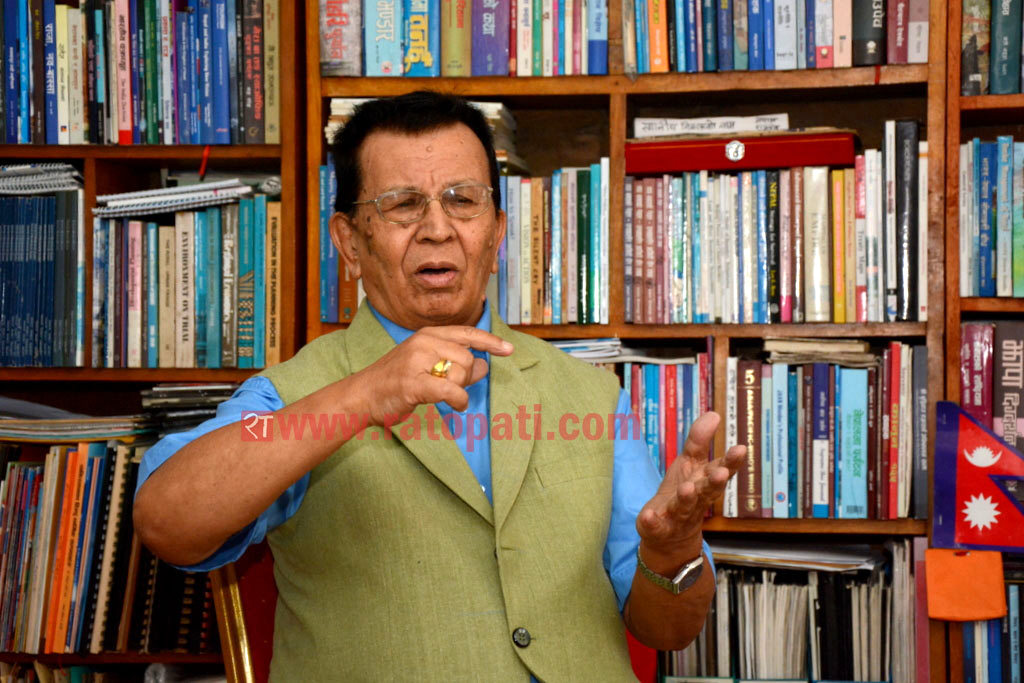
If diplomatic efforts had been made by sending a closing letter along with Nepal's map, stating,
This specific news has been automatically translated by AI. As a result, there may be some inaccuracies or language errors.