Indigenous Communities in Makwanpur Face Challenges to Traditional Livelihoods


Hetauda. A river flows near the house, but the Bote community of Makwanpur cannot cast nets. Amresh is next to the house, but the Vankarai cannot make and sell their traditional broom profession. Chepang community has Churei in dowry, but it does not bear fruit. These are the problems of the indigenous, marginalized, and endangered communities of Makwanpur, whose customary practices are linked to water and forests.< p>
These communities know the problems, but except for the leaders, the members are unaware of the causes. Leaders understand that communities that have coexisted with nature for generations, with a deep connection to rivers, forests, and mountains, are now under double pressure from the changing face of development, the harshness of conservation policies, and the effects of climate change.< p>
Their traditional knowledge, lifestyles passed down through generations, cultural practices, and livelihoods are gradually weakening.< p>
Indigenous Culture and Struggle< p>
Makwanpur is rich in biodiversity and cultural diversity as it is a confluence of the Terai, Chure, and Mahabharat ranges. In this geography, indigenous communities like Chepang, Bote, Tamang, and Vankarai have developed their own unique lifestyles, cultures, and practices connected to natural resources. While the Bote community living on the riverbanks is connected to the river, the Chepang, Tamang, and Vankarai communities living in the forest areas are connected to the forest, land, and seasonal cycles.< p>
River and Bote Relationship Breaking< p>
The traditional occupation of the Bote community was based on fishing, boating, ferrying across the river, and utilizing resources along the riverbanks. These activities connected to the river were not only their source of income but also the center of their rituals, culture, and community identity. Many rituals from birth to death included cultural practices connected to fish and rivers.< p>
Kanchhimaya Bote says, "Previously, the river sustained our homes. Life was easy by fishing, boating, and using resources along the riverbanks. Now the river is in front of us, but we cannot make a living from it." She states that the Bote community's generations-old occupation is in crisis due to strict regulations on national parks, conservation areas, and the use of riverine resources.< p>
"We are forced to seek labor, brick kilns, temporary employment, and alternative sources of income because we are not allowed to cast nets in the river, fishing is prohibited, and access to forest areas is limited," she said. "Without fish, our rituals are disrupted. Our lives from birth to death rituals are connected to the river and fish. Being away from the river means being away from our identity." Her voice carries not only economic distress but also anxiety about existence.< p>
Challenges Increased for Chepang Due to Changing Climate< p>
The plight of the Chepang community, living in the western part of Makwanpur, is similar. The Chepang community, one of Nepal's most marginalized indigenous communities, relies on khoriya farming, collection of tubers, churee, beekeeping, forest products, and local skills.< p>
According to Constituent Assembly member Govindaram Chepang, the tradition of giving a churee tree as dowry for a daughter's marriage is still alive in some places among the Chepang community. He says, "Churee is not just a tree for our community; it is a property connected to the life cycle. Its fruits were eaten, oil was extracted from its seeds, it provided fodder for animals, was used for beekeeping, and for household needs. Giving churee to a daughter meant giving her the basis of life." However, he mentions that in recent years, churee has started bearing less fruit, flowers do not set seeds, and the fruiting cycle has become irregular. According to the experiences of local elders, the disruption of the climate cycle has brought about changes in the life cycle of plants.< p>
Climate change is gradually weakening this foundation. The rainy season is becoming uncertain, sometimes causing landslides and soil erosion due to excessive rainfall, and at other times, fields remain fallow due to prolonged lack of rain. Many springs in the hills are drying up. Reduced grazing land has made animal husbandry difficult, and forest fires and deforestation have reduced the availability of forest products.< p>
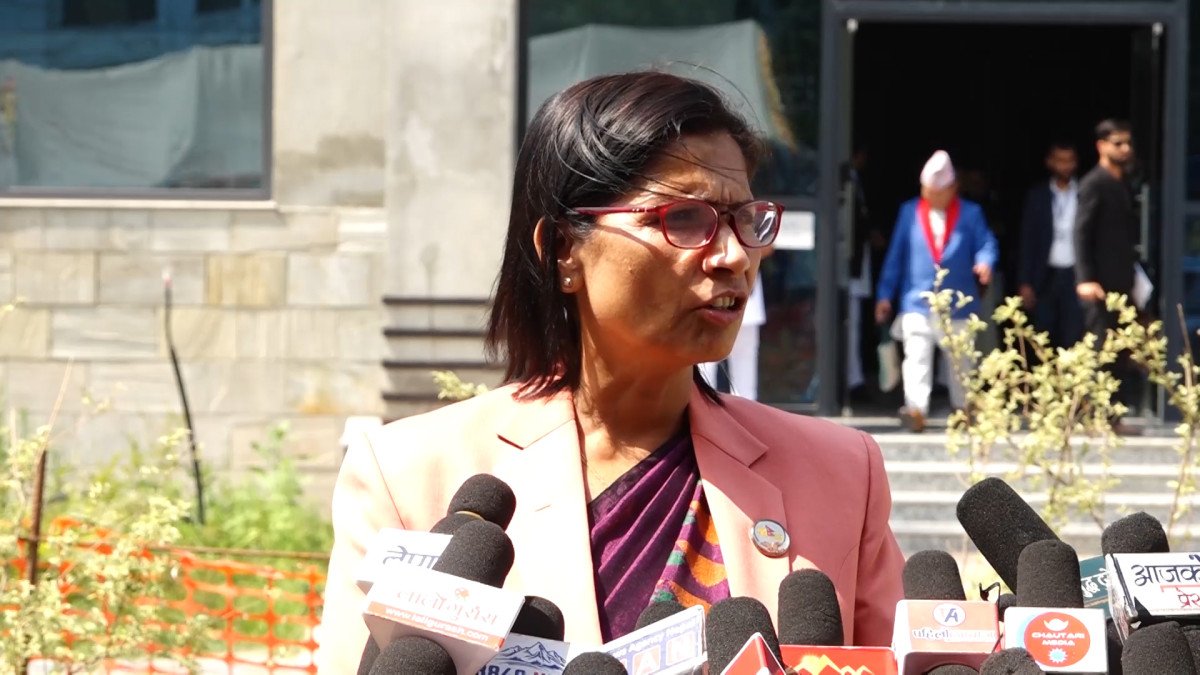
Manahari Rural Municipality Vice-Chairperson Sita Pulami Tamang says, "Previously, we could plan farming by observing nature's signs. Now, the weather is unreliable. It doesn't rain when seeds are sown, hail falls when crops are about to ripen, sometimes there is drought, and sometimes floods. This challenges our knowledge system." According to her, even the local government faces problems in implementing effective agricultural programs. The impact of the changing climate is not limited to agricultural production.< p>
Traditional food systems, community labor exchange, local festivals, rituals, and cultural practices connected to nature are also being affected. According to her and the leaders, it used to be easy to predict the weather cycle. Knowledge of when to transplant, when to harvest, and when to collect fodder has been passed down through generations. But now, that traditional weather knowledge system itself is becoming unstable.< p>
Forest in Memory of Vankarai< p>
The Vankarai community is one of Nepal's smallest and most historic indigenous communities. This community, which used to live a nomadic life in the forests, lived in sync with the forest's cycle. Temporary shelters made of banana leaves and natural materials, tuber-based diets, herbal treatment systems, amazing knowledge of identifying plants, and balanced use of forest resources were an integral part of their lifestyle.< p>
Today, they are gradually settling in permanent settlements. Although there have been some positive changes in terms of education, health, housing, and social access, their traditional knowledge and practices are disappearing. Suntali Vankarai, from the Vankarai community, says, "We were born in the forest, grew up in the forest, and learned life in the forest. Now we are in settlements, we have houses, and some facilities have come, but our hearts still remain in the forest. As that relationship with the forest weakens, it feels like something within us is lost."< p>
Suntali said that earlier, the knowledge of which herb to use for which disease, which tuber to collect in which season, and which plant was edible and which was medicinal was passed down within the community. Now, as the new generation moves towards school and market-oriented life, that knowledge transfer is weakening.< p>
Not Just Culture, Customary Practices< p>
According to Nimi Sherpa, former central president of the Federation of Indigenous Women, it is not enough to understand the customary practices of indigenous communities merely as traditions or cultural practices. These practices play three important roles. First, they form the basis of livelihood. Second, they preserve cultural identity and social continuity. Third, they make practical contributions to sustainable natural resource management and climate adaptation.< p>
President Sherpa says, "The khoriya farming system of the Chepang community cannot be seen merely as traditional farming. It is knowledge connected to biodiversity, local seed conservation, and multi-cropping systems. The river management practices of the Bote community are practices of coexistence with aquatic systems. The forest knowledge of the Vankarai community is a living repository of medicinal plant conservation."< p>
These practices are now under two types of pressure simultaneously: climate change on one hand, and policy imbalance on the other. "Irregular rainfall has disrupted the farming cycle. Long droughts have dried up water sources. Forest fires and deforestation have reduced forest resources. The decline in plant and herb production has weakened traditional treatment systems. Reduced grazing land has affected animal husbandry. The impact of all this is directly on the lives and knowledge systems of the community," she said.< p>
Rights Given by International Treaties Not Enacted into Law Cause Problems< p>
Former Deputy Secretary of the Ministry of Forests and Environment and forest and environment expert Dr. Sindhu Dhungana said that although international treaties and the constitution give special rights to indigenous communities for land and livelihood, the enactment of laws applicable to all in Nepal has affected communities that depend on forests and rivers for their livelihoods.< p>
He said, "The effects of climate are universal and equal, but communities whose lives depend on forests and rivers face problems when they do not get rights in them. Although the customary practices of indigenous peoples do not cause destruction and promote conservation, there is no uniformity in the implementation of laws. They should be provided with special rights." According to him, the problem arises because the term indigenous peoples is not mentioned in the law, and livelihood problems occur during the implementation of conservation policies.< p>
Dr. Dhungana mentioned that while the effects of climate change are noted for indigenous peoples worldwide, Nepal faces policy issues. According to him, although the customary practices of indigenous peoples do not affect biodiversity, this community faces hardship due to the inability to arrange special rights, and he stated that he is advocating for this community internationally.< p>
The conflict is increasing as legal provisions implemented for conservation begin to affect the daily lives of local communities. He states that especially the National Parks and Wildlife Conservation Act 2029 and the Forest Act 2076 impose various restrictions on communities traditionally dependent on forests and rivers.< p>
Growing Distance Between Conservation Policy and Community< p>
Bishnu Bahadur Shahi, Senior Vice-President of the Federation of Community Forestry Users Nepal, said that according to a 2020 study on biodiversity conservation, 80 percent of the contribution comes from indigenous peoples and local communities. However, in Nepal, the Forest Act and National Parks Act have been formulated in such a way that they affect the customary practices and even displacement of these communities, causing problems. According to the provisions of these acts, it is prohibited to collect any forest products, including tubers and herbs, from forests within or near national parks, and fishing in rivers is also prohibited.< p>
According to Vice-President Shahi, the conflict is increasing as legal provisions implemented for conservation begin to affect the daily lives of local communities. He said, "Especially the National Parks and Wildlife Conservation Act 2029 and the Forest Act 2076 impose various restrictions on communities traditionally dependent on forests and rivers." According to him, after the implementation of these acts, restrictions on activities such as collecting grass, fodder, and fishing have directly affected the livelihoods of communities like Bote.< p>
Policies implemented in Nepal in the name of forest conservation, national park management, and watershed conservation have played an important role in preserving biodiversity. However, the issue that the implementation of these policies has seriously affected the traditional lifestyles and access of local indigenous communities is also being raised equally. For the Bote community of Makwanpur, the river is no longer just a natural resource but an area of rules and prohibitions.< p>
Local youth Umesh Rai from Manahari-7, Makwanpur, said, "We can no longer freely use resources like grass and fodder and fish from the river for our daily needs as we used to; it has become difficult to make a daily living." The little farming they do is destroyed by wildlife. Even when going to collect grass and fodder, they lose their lives due to wildlife attacks, and they have no other place to go.< p>
Alternative Practices and Changing Lives< p>
Despite these challenges, indigenous communities are not entirely inactive. They are trying to adapt to the changing circumstances. The Chepang community is now gradually shifting towards beekeeping, goat farming, vegetable farming, and cash crops. Although traditional khoriya farming is declining, efforts are being made to utilize opportunities from community forests in new ways. Some members of the Vankarai community are trying to engage in soap production, small enterprises, handicrafts, and local markets. While this has oriented them towards cash income, the practice of traditional forest knowledge is gradually weakening.< p>
Potential of Local Knowledge and Adaptation< p>
However, some positive practices still exist. Local seed conservation, community forest management, organic farming, rainwater harvesting systems, and traditional weather signaling systems are still practiced in some communities, according to Bagmati Province Assembly member and International President of the Federation of Community Forest Users, Bharti Pathak. She mentioned that the customary practices of indigenous peoples have the potential to reduce external dependency and increase local adaptation capacity.< p>
She stated that efforts to integrate local knowledge systems with modern science are increasing globally, and this can be utilized. However, these practices have not yet been sufficiently institutionalized in policies and plans.< p>
Nevertheless, the voices of all indigenous peoples are common: existence, identity, and rights. Kanchhimaya Bote says, "Don't force us to go abroad. We have our own identity. Without the river, not only we, but our rituals are also incomplete." Mangale Chepang's experience is deeper, "Earlier, the forest was our life; now we need permission even in the forest. There is no predictable weather for farming. Where do we go? Where do we keep our knowledge and traditions?"< p>
Suntali Vankarai, from the Vankarai community, says emotionally again, "When away from the forest, the body survives, but the heart still remains in the forest. After that relationship breaks, it feels like something is lost within."< p>
According to Constituent Assembly member Govindaram Chepang, the customary practices of indigenous communities are not just cultural heritage; they are also practical bases for climate solutions. He says, "If we ignore indigenous knowledge, land rights, and traditional practices, no conservation program can be sustainable. Conservation is not just about saving forests; it is also about preserving the relationship between humans and nature."< p>
According to him, the need now is not just conservation, but coexistence, recognition of rights, and respect for traditional knowledge. The disappearance of the customary practices of indigenous communities is not just the loss of a lifestyle. It is also the loss of a knowledge system based on coexistence with nature, local methods of biodiversity conservation, and unique practices of climate adaptation.< p>
This is the common story of Nepal's 59 indigenous communities: a deep connection with nature, the challenge of a changing climate, and an unbalanced dialogue with modern policies. If the knowledge and practices of these communities cannot be preserved, not just an occupation, but a civilization, an experience, and a history connected to nature will be in crisis.< p>
But now this relationship is weakening. It is difficult to find tubers in the forest, and fish in the river. The pattern of river flow has changed. In some places, floods have increased erosion, and in others, long dry spells have caused tributaries to dry up. Forest fires have increased, water sources have decreased, rainfall has become irregular, and the farming cycle has become unstable. The biggest impact of this is on those communities whose lives are directly connected to nature.< p>
The livelihoods of many of Nepal's 59 listed indigenous communities are based on natural resources. Agriculture, animal husbandry, forest products, river-lake resources, seasonal migration, handicrafts, and traditional knowledge systems are the backbone of their lives. For these communities, customary practices are not just rituals or cultural practices; they are also local, practical, and time-tested knowledge systems for natural resource management, biodiversity conservation, and climate adaptation. But now this system is in crisis.< p>
According to the 2078 census, the Chepang community, with a total population of 77,914 in Bagmati Province, about 98 percent of whom are concentrated in Chitwan, Makwanpur, and Dhading. Although the Chepang community constitutes 0.29 percent nationally, they have a significant presence in Bagmati. The Bote community has a total population of 10,397. This community is mainly concentrated in the Chitwan, Makwanpur, and Nawalparasi regions. Their customary practice is fishing and casting nets. Meanwhile, the Vankarai community, with the smallest population in Nepal, also has a lifestyle based on the forest.< p>
< p>
This specific news has been automatically translated by AI. As a result, there may be some inaccuracies or language errors.