Nepal and China Sign Agreement for Kalanki-Basundhara Road Expansion


Kathmandu. The expansion process of the long-uncertain Kalanki–Basundhara section of the Kathmandu Ring Road is finally set to gain momentum. The path for construction has opened with the formal agreement between the Government of Nepal and the Chinese side for the expansion of this section.
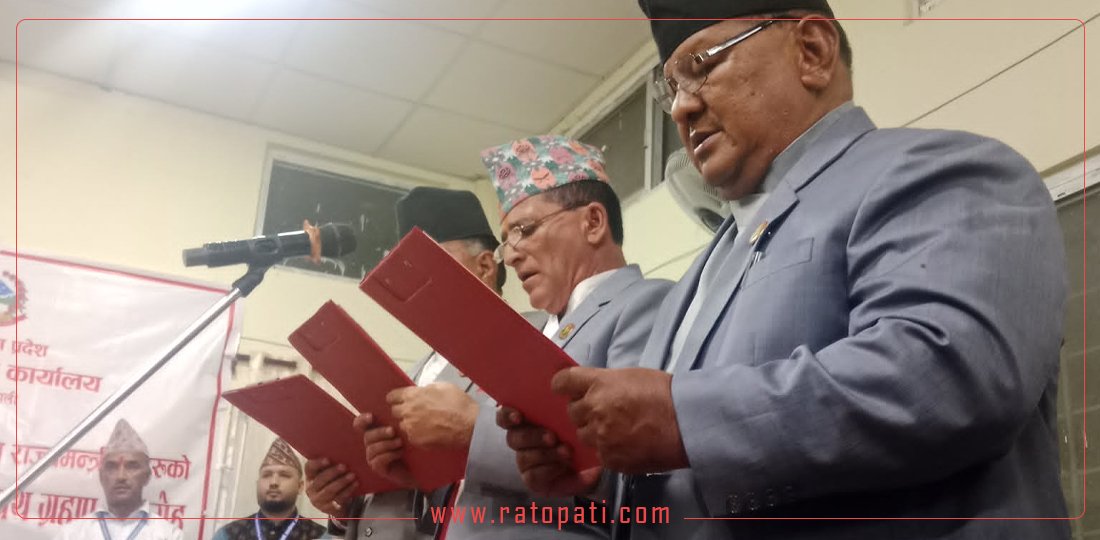
On Wednesday, the Minister for Physical Infrastructure and Transport and Urban Development, Sunil Lamsal, and the Chinese Ambassador to Nepal, Zhang Maoming, signed the agreement document.
According to the agreement, the second phase of the Ring Road expansion will involve the construction of an 8.2-kilometer road and bridges from Kalanki to Basundhara. The Chinese government will provide approximately 11 billion rupees in grants for this project.
Although the government had decided on tax exemptions last February, the agreement process was delayed due to elections and government changes. The first phase, started in 2019, completed the road expansion from Koteshwor to Kalanki, after which China agreed to expand the second section. However, the expansion was delayed due to reasons like COVID-19. The second section expansion process has now moved forward after approximately 7 years.
Why the delay?
Former Secretary of the Ministry of Physical Infrastructure and Transport, Keshav Kumar Sharma, clarified that the delay in the Ring Road expansion was a result of regular administrative processes.
Former Secretary Sharma stated that the Ring Road expansion work has been in process for a long time and has now reached the implementation stage. "It was all in the process," Sharma said, "They contracted the detailed design, the estimate was made after the design came, and now the implementation agreement has been made. This is a regular process that started with the grant assistance agreement with the Ministry of Finance and proceeded through feasibility and design."
According to Arjun Prasad Aryal, Deputy Director General of the Department of Roads' Development Assistance Implementation Division, technical work will now proceed with the agreement. The Chinese company has already prepared the preliminary design. They will now submit the detailed survey and design for approval to the Department of Roads.
Sharma mentioned that administrative and political instability had some impact on the delay in expansion work. Specifically, he stated that proposals for tax exemptions or other facilities had to be sent to the Council of Ministers, and such proposals would become inactive due to government changes or dissolution of parliament.
"When the previously submitted cabinet is dissolved, the files are returned, and they have to be sent again through another process," he explained the reason for the delay, adding, "It only took some time due to technical and administrative reasons like files being returned and having to be resubmitted during movements and political changes."
He claimed that the current progress in the expansion work, which China had held back for a long time, is due to the completion of technical and administrative preparations, not any special political signal.
What is the next process?
According to Arjun Prasad Aryal, Deputy Director General of the Department of Roads' Development Assistance Implementation Division, technical work will now proceed with the agreement. The Chinese company has already prepared the preliminary design. They will now submit the detailed survey and design for approval to the Department of Roads.
"The department will provide necessary comments on the design submitted by them, and the design will be approved after improvements based on those comments," Aryal said. The tendering process will only proceed after the design is approved.
Since this project is being built with Chinese grants, the entire responsibility of selecting the contractor will lie with the Chinese side. Aryal informed that the Chinese side will select the contractor through its own process and proceed with the construction work. He stated that the tendering process and the time required will become clearer during the design approval stage.
What structures will be built?
The 8.2-kilometer section is designed by Chinese state-owned companies CCECC First Highway Consultants and Xian Fangzhou Engineering Consulting Co., Ltd. It will be expanded to eight lanes according to China's urban road standards.
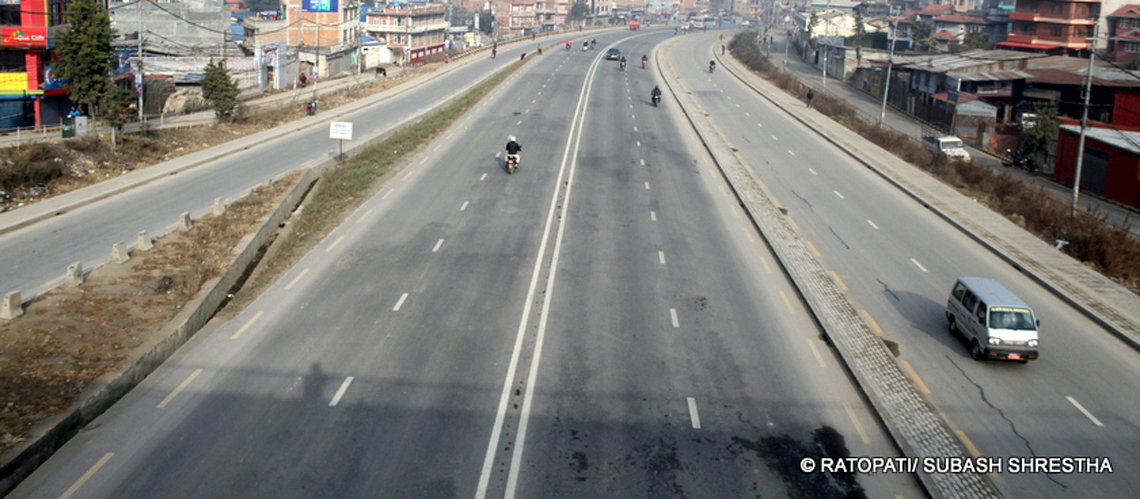
Although a long time has passed since the completion of the first phase of the Ring Road (Koteshwor–Kalanki) expansion, the delay in starting the second phase has led to increasing traffic jams and dust problems in the area. With this agreement, hope has arisen that the residents of the valley will soon get a convenient road.
Additionally, a 16-meter-long bridge will be constructed over the Syuchatar stream near Kalanki, and a 64-meter bridge over the Bishnumati River. Thirteen culverts and four disability-friendly overpasses will also be built. These bridges will be constructed between Sitapaila–Swayambhu, Dhungedhara–Balaju, Balaju–Machhapokhari, and Samakhushi–Basundhara Chowk.
To facilitate traffic management, an overpass 560 meters long will be constructed from Machhapokhari to Baspark. The design includes 11 intersections and 22 bus stops for vehicle and passenger diversions. The total width of the road will be 38.5 meters, with 2.75-meter footpaths on both sides, four lanes in each direction, and a three-meter section in the middle for planting trees and managing electricity and internet wires.
When will the work start?
Deputy Director General Aryal stated that there is a possibility of work starting within the current fiscal year (by next June). He said, "Since the process has already started, it won't take much longer. There is still a possibility of work starting by June."
Although a long time has passed since the completion of the first phase of the Ring Road (Koteshwor–Kalanki) expansion, the delay in starting the second phase has led to increasing traffic jams and dust problems in the area. With this agreement, hope has arisen that the residents of the valley will soon get a convenient road.
China started the Koteshwor–Kalanki section (10.39 kilometers) in 2069 BS. This road, expanded to eight lanes, was completed in 2075 BS with a grant of approximately 5 billion rupees from China, for which the government had provided overall tax exemptions.
The government has also granted tax exemptions for the Kalanki–Basundhara section. Last February 12, the Council of Ministers decided to grant customs duty exemption on construction materials.
Furthermore, the third section of the Ring Road, Maharajgunj–Koteshwor, is being expanded by the Government of Nepal itself. The Department of Roads, Kathmandu, is currently expanding the road from Maharajgunj to Chappal Karkhana. The department has stated that a budget of 510 million rupees has been sent to the National Planning Commission for agreement for the expansion of an additional approximately 900-meter road section from Chappal Karkhana to Dhobi Khola.
This specific news has been automatically translated by AI. As a result, there may be some inaccuracies or language errors.