Parents Flood Complaint Center with Pleas to Recover Overcharged School Fees

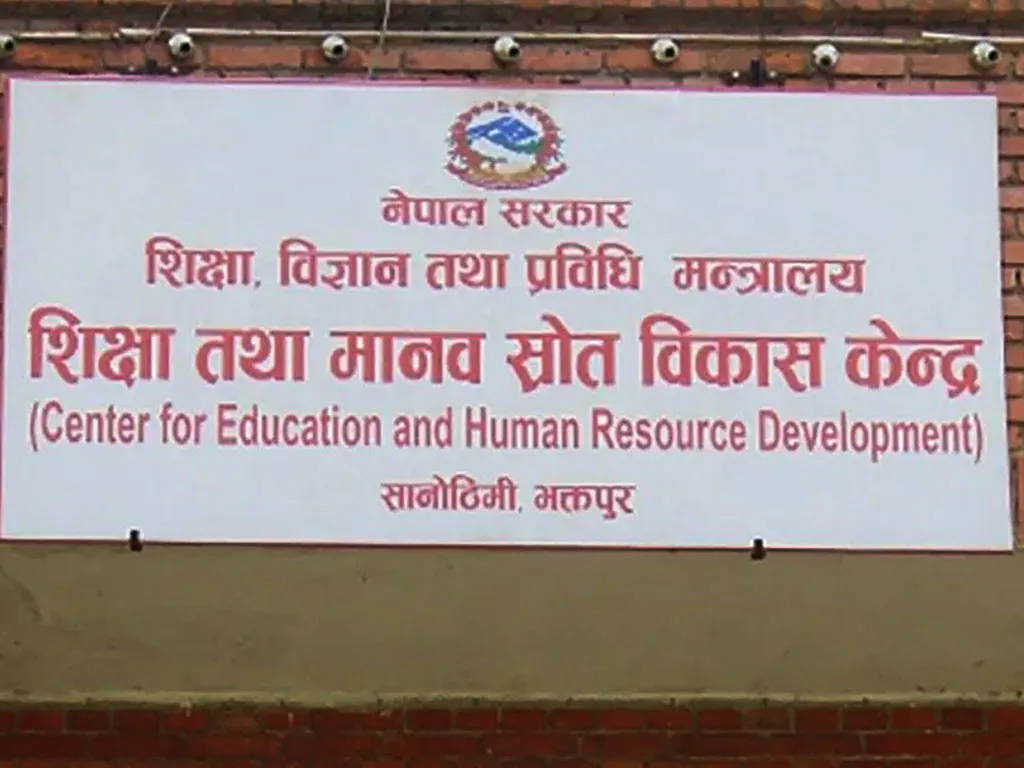
Kathmandu. "Sir, Namaste. The directive from the Nepal government to refund amounts from schools charging excessive fees is appropriate, but private schools are refusing to refund even when we request them. This needs to be addressed directly from the center," such complaints are received every minute, not every day, at the help desk established under the Ministry of Education, Science and Technology, within the Education and Human Resource Development Center.
Following the ministry's directive to refund fees collected illegally by private schools, parents have started lodging regular complaints. Nim Prakash Singh Rathour, director of the center and head of the help desk set up at the Education and Human Resource Development Center in Sano Thimi, Bhaktapur, receives calls every minute, not every day, on his mobile number 9851214638. Director Rathour, who is also the information officer of the center, stated that complaints regarding student admission fees and various other issues are regularly received through different channels.
Director Rathour mentioned that even if not explicitly called admission fees, private schools are charging excessive amounts under the guise of annual fees, and suggestions have been made to amend the legal provision allowing schools to collect an amount equivalent to two months' fees as annual fees.
"Monthly fees are also expensive. On top of that, the provision to collect annual fees equivalent to two months' fees is breaking our backs," said Director Rathour, relaying parents' complaints, adding, "Efforts should be made to amend the law."
Complainants have also demanded that the central government directly intervene, as local levels are not paying attention to fee standards and the ministry's directives. According to Director Rathour, complaints about fees being charged in community schools have also started surfacing recently.
On March 22, the ministry had requested all relevant local levels to initiate legal proceedings to refund admission fees collected illegally and any fees beyond those stipulated by the Institutional School Fee Determination Criteria Directive, 2072. The ministry had warned that schools arbitrarily charging fees and refusing to refund them could face action under the Education Act, 2028, and other legal provisions.
He stated that admit cards for the Grade 12 examinations were withheld for non-payment of fees, and in Lalitpur, a private school had instructed a teacher to cut a student's hair, and the admit card was withheld for not complying with this instruction. The issue was resolved after a phone call, according to Director Rathour.
According to him, so far, 50 phone calls have resulted in complaints ranging up to three thousand, 100 emails, 300 SMS, and 70 Viber messages with evidence like bills for excessive fees. Rathour stated that complaints/grievances received by the help desk have been submitted to the Director General of the center for policy-level resolution, and issues that can be resolved immediately have been handled by him.
Although the government directed the new academic session to begin on April 15, most private schools have already admitted students before that. While education is supposed to be free up to the secondary level in community schools, parents are being charged amounts under the name of financial support fees. However, the support from government schools is negligible compared to private ones.
Herambaraj Kandel, principal of Bishwo Niketan Secondary School in Kathmandu, said that due to the government's low budget, they collect a minimum of Rs 1,400 to Rs 2,900 as financial support fees from parents for the entire year for classes 1 to 8 to provide quality education. He mentioned that scholarships are provided to around 100 underprivileged students.
RB Katwal, general secretary of the Private and Residential Schools Organization (PABSON), asserted that private schools generally charge only the fees approved by the local level according to the standards, adding that they have no objection to refunding fees collected before the academic session begins.
"We have been instructing our member schools to comply with the government's directives and existing laws. We found that even when information was sent to parents to come and collect refunds from some large schools that admit students before the academic session starts, parents did not come," said General Secretary Katwal. "Since there is a high student turnout in such schools, parents worry about losing their seats if they get a refund after admission. Therefore, for those who have already been admitted, a practical solution has been found to adjust the refund against the monthly fees to be paid, rather than a direct refund."
General Secretary Katwal clarified that studies are underway regarding some schools charging excessive amounts under various headings, and they will coordinate and cooperate with government bodies in this regard. Rule 146 of the Education Regulations, 2059 (as amended) outlines the fees and deposits that schools can collect. According to this clause, schools can collect monthly tuition fees, annual fees for sports, extracurricular activities, laboratory, maintenance, library, and first aid not exceeding the amount of two months' tuition fees, and admission fees not exceeding the monthly tuition fee of the class for which the student is admitted, payable once upon first admission.
Similarly, the regulations allow for collecting examination fees, computer fees, transfer certificate fees, special training (Judo, Martial Arts, Swimming, Singing, Dancing) fees, accommodation fees, transportation fees, and meal fees under various categories.
Rule 147 of the regulations stipulates that the maximum fees a school can charge students, based on the school's classification, must be published by the respective Education Development and Coordination Unit three months before the start of the academic session. The school management committee, in consultation with the executive committee of the Teacher-Parent Association, must submit the proposed fees within the prescribed maximum fee limit to the coordination unit two months before the start of the academic session. The unit will examine the proposal and publish the fee rates. A central committee, chaired by the Director General of the center, has been established for fee management and monitoring.
This specific news has been automatically translated by AI. As a result, there may be some inaccuracies or language errors.