Nepal Govt. Seeks Presidential Approval for Controversial Constitutional Council Ordinance Amidst Parliament Session Prorogation


Kathmandu. The government, nearing a two-thirds majority, has prorogued the parliamentary session and recommended the President issue an ordinance related to the Constitutional Council.
A cabinet meeting held on Monday decided to suspend the parliamentary session, which had already been convened by the President, and introduce ordinances concerning the Constitutional Council and cooperatives.
The primary reason cited for the government introducing the Constitutional Council ordinance is Prime Minister Balendra Shah's perceived minority position within the council. This ordinance allows for the appointment of officials to various constitutional commissions with the presence of the council's chairman and two members. In simpler terms, it appears to enable decisions favorable to the government through recommendations from the Chief Justice of the Supreme Court.
The cabinet recommended to President Ramchandra Paudel the issuance of the 'Constitutional Council (Functions, Duties, Rights, and Procedures) (First Amendment) Ordinance, 2083'. The ordinance also addresses the quorum, stipulating that the opinion given by the majority of the attending members will be decisive.
The ordinance provides for appointments to be recommended by a body comprising the Prime Minister, Speaker, Deputy Speaker, National Assembly Chairman, and Chief Justice. Previously, after the People's Movement of Bhadra 23 and 24, the Sushila Karki-led government had also recommended an ordinance for appointing officials to constitutional commissions, but President Ramchandra Paudel had rejected it.
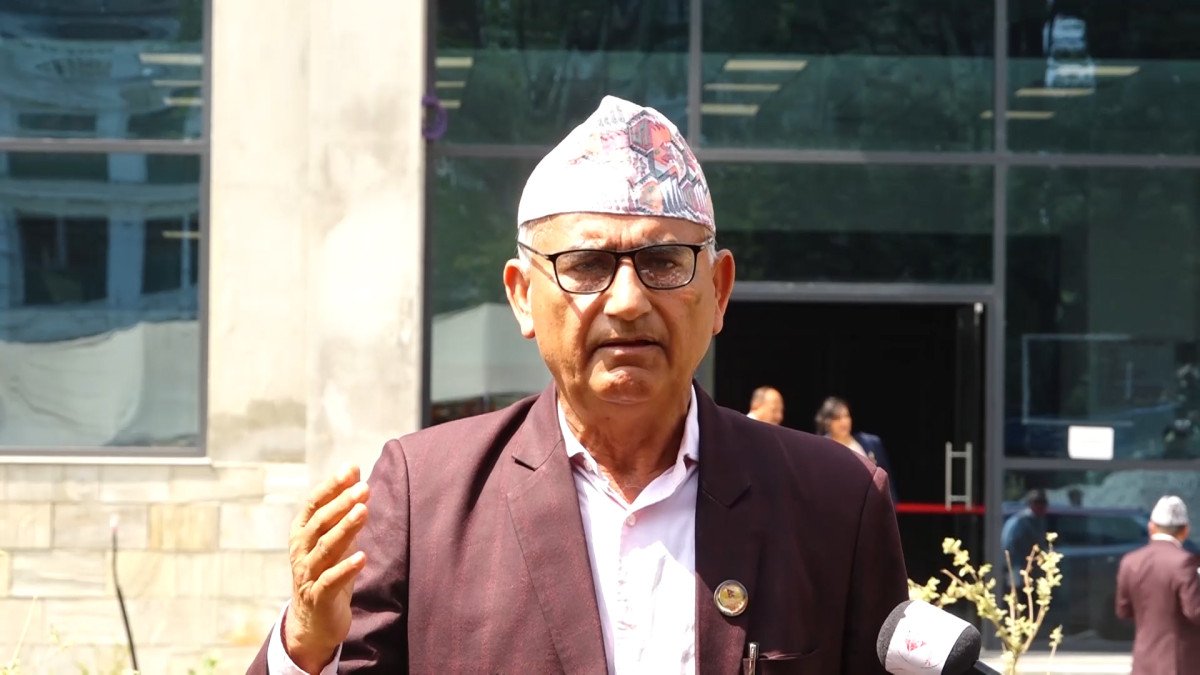
According to senior advocate Surendra Bhandari, a government with a two-thirds majority had no need to introduce an ordinance. He stated that the government has adopted an autocratic style, believing it can make any decision it wishes through ordinances, even with a two-thirds majority. He noted that Balendra Shah is now continuing the policies previously adopted by KP Sharma Oli, Sher Bahadur Deuba, and Pushpa Kamal Dahal 'Prachanda' through the strength of ordinances.
Former Prime Minister KP Sharma Oli appointed 52 constitutional officials through an ordinance. Bhandari suggests that Prime Minister Balendra Shah is now attempting to create a similar environment for appointing commission officials through an ordinance. He points out that both the controversy surrounding the appointment of 52 constitutional officials and the ordinance on political parties issued during the split of the UML were advanced through ordinances. He believes that the current situation has arisen partly because the court has not been able to provide clear interpretations or establish precedents regarding those appointments.
What does Article 114 of the Constitution say about ordinances?
Article 114 of the Constitution of Nepal deals with ordinances. It provides for the issuance of ordinances when 'immediate action is necessary' during periods when both houses of the Federal Parliament are not in session. Ordinances issued by the President upon the recommendation of the Council of Ministers become inactive within 60 days of the commencement of the Federal Parliament session.
For some years now, ruling parties have been misusing the constitutional provision and utilizing ordinances, which have the force of law, for their own benefit.
This specific news has been automatically translated by AI. As a result, there may be some inaccuracies or language errors.