Malaria Cases Surge in Sudurpashchim Province, Threatening Elimination Goals

Kanchapur. The graph of malaria in Sudurpashchim Province has started to rise again. With the infection increasing just as the goal of elimination was within reach, it has added serious concern and challenges to the health sector. Although Nepal has set a goal to reduce local malaria to zero by 2030, the current situation in Sudurpashchim shows that achieving this target is challenging.
According to the data from the Sudurpashchim Province Health Directorate, a total of 387 people have been confirmed with malaria across the province. Among them, 373 are imported and 14 are local (indigenous) cases. This indicates that the main source of malaria in the province remains external (imported), but experts say the appearance of local infections is a more concerning aspect.
According to Hemraj Joshi, Vector Control Officer at the Sudurpashchim Province Health Directorate in Rajpur, Doti, 15 local malaria patients have recently been found in various local levels of the province. Local infections have been seen in Ganyapdhura Rural Municipality-5 and Parshuram Municipality-2 of Dadeldhura, Melauli Municipality-2 and Pancheshwar Rural Municipality-2 of Baitadi, Belauri Municipality-2 of Kanchapur, and Kailari Rural Municipality-2 of Kailali.
District-wise, the highest number of malaria patients are in Kailali with 204, followed by 57 in Kanchapur, 51 in Achham, 31 in Doti, 22 in Bajura, 12 in Dadeldhura, eight in Baitadi, and two in Darchula.
“The high number of malaria cases in the border districts of Kailali and Kanchapur shows that the open border with India is a major risk,” said Officer Joshi. “According to World Health Organization (WHO) standards, a country or region receives malaria elimination certification only if local malaria remains zero for three consecutive years. The resurgence in Sudurpashchim, when we were close to that goal, has created a problem.”
In terms of species, malaria infection is becoming more complex. According to available details, the highest number of patients, 328, are affected by 'Plasmodium vivax' in Sudurpashchim. There are 54 patients affected by 'Plasmodium falciparum', which is considered the most dangerous and fatal.
Three patients affected by 'Plasmodium ovale' have been seen. “Patients infected with this parasite are rarely found,” said Officer Joshi. “They are mostly found in African countries; the appearance of these cases in Sudurpashchim suggests these patients may have come from African countries.”
'Plasmodium mixed infection' has been seen in two patients. When more than one malaria parasite attacks simultaneously, it is called a 'mixed' infection.
There are multidimensional reasons behind the resurgence of malaria in Sudurpashchim. “The inability to identify imported malaria in time, difficulties in conducting effective control programs due to limited state resources, and the expansion of mosquito habitats to the Himalayan region due to climate change are the main reasons,” said Officer Joshi.
According to Dr. Khagendra Bam, Director of the Sudurpashchim Province Health Directorate, imported malaria is mostly seen in security personnel who went to African countries on United Nations peacekeeping missions and workers returning after seasonal work in various cities in India.
He stated that the risk of malaria is increasing due to the failure to identify imported malaria in time, the inability to conduct intensive malaria elimination activities due to limited state resources, the presence of mosquitoes in the Terai, hills, and now Himalayan districts due to climate change, and the inability to use state-of-the-art tools for mosquito control.
“Despite the challenges, we have intensified initiatives for malaria control. An entomology laboratory is in operation in Sudurpashchim, where mosquito studies and insect research are being conducted continuously,” he said. “Research on the effectiveness of insecticides is underway; in addition, capacity building of health workers, strengthening of surveillance systems, strategy implementation, and public awareness programs are being conducted.”
According to health experts, the priority should now be strict surveillance of imported cases, strengthening health checks at borders, active case finding at the local level, and expanding public awareness. Additionally, considering the effects of climate change, it is necessary to use modern technology for mosquito control.
Furthermore, health workers say that awareness at the citizen level is extremely important. Parmanand Bhatta, head of the Shuklaphanta Health Branch in Kanchapur, says that regular use of mosquito nets, removing stagnant water, avoiding mosquito bites, and getting immediate health check-ups if fever occurs can contribute significantly to malaria control.
“The fact that Sudurpashchim Province is moving towards risk again after being close to the malaria elimination goal should be taken as a challenge,” he said. “If effective steps are taken in time, it is possible to achieve the goal of a malaria-free Nepal, but if there is a delay, the current situation could turn into a major health crisis.”
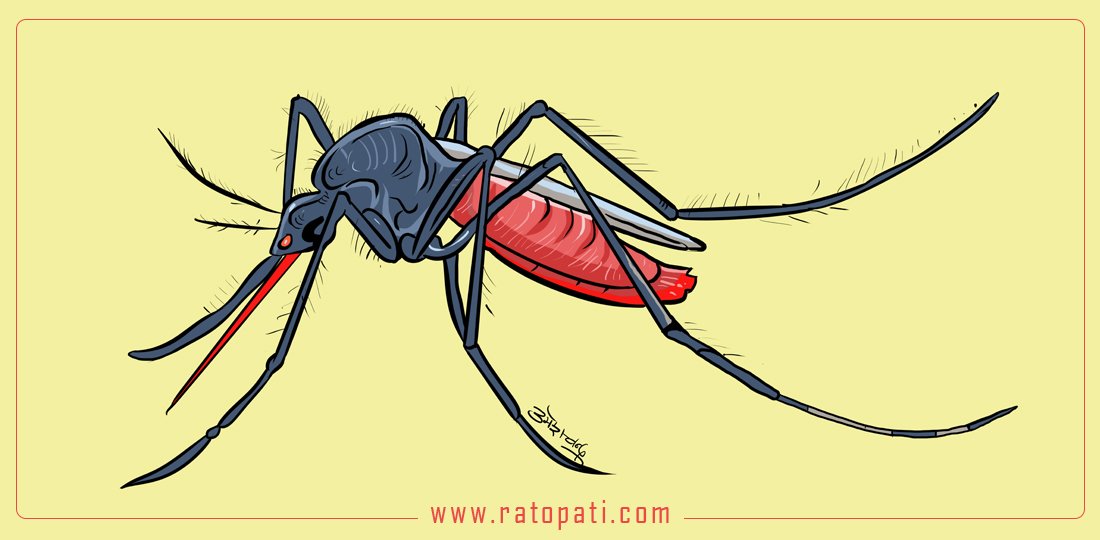
Malaria is a type of communicable disease caused by parasites transmitted mainly through the bite of infected 'Anopheles' mosquitoes. According to the Epidemiology and Disease Control Division, Nepal is in a state of moving towards malaria elimination. In the last 10 years, the number of local malaria patients has decreased by about 90 percent.
Currently, the number of annual local malaria patients is limited to less than 50 percent. However, there is a challenge to bring this to zero. The number of malaria patients across the country is 1,164, of which 39 are local and 1,124 are infected with imported malaria. Meanwhile, World Malaria Day 2026 is being celebrated today. The slogan for this year's Malaria Day is 'Ending Malaria is Our Resolve: We Are Capable, There Is No Other Option'.
This specific news has been automatically translated by AI. As a result, there may be some inaccuracies or language errors.