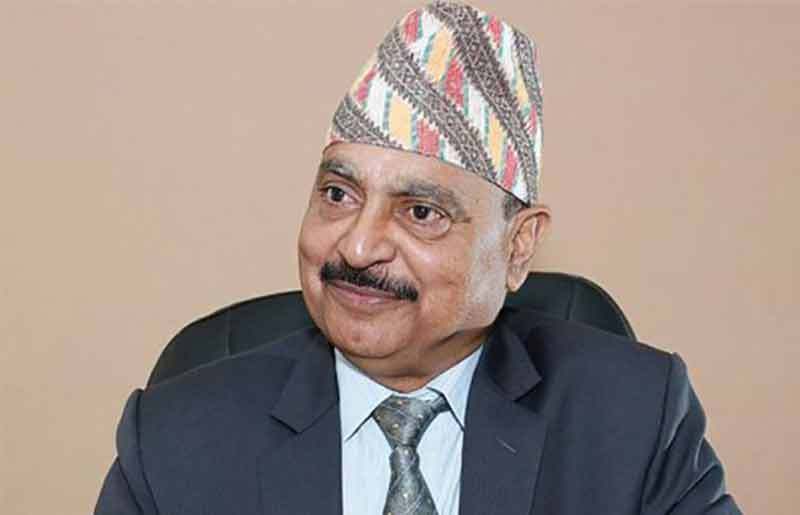
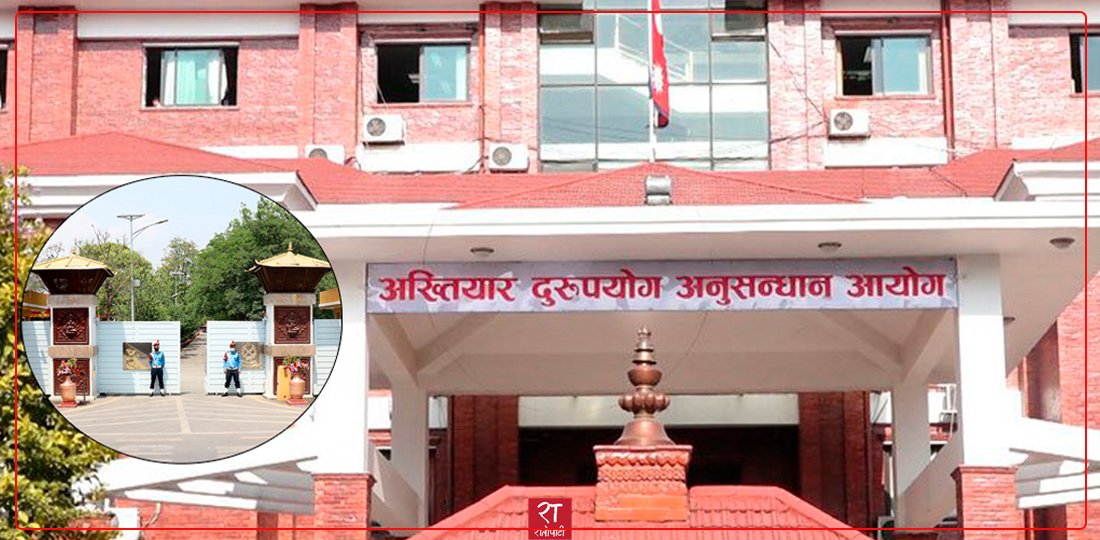
Prime Minister Balen Shah's 'Marathon' Style: A Shift in Governance at Singha Durbar


Kathmandu. Prime Minister Balendra (Balen) Shah, who assumed the role of the country's executive head on Chaitra 13, has adopted a working style entirely different from his predecessors.
Since taking office, he has made Singha Durbar, the country's main administrative center, the hub of his operations rather than the official residence in Baluwatar. For nearly three weeks, Prime Minister Shah has been conducting meetings and administrative tasks in a 'marathon' style at Singha Durbar.
While past prime ministers were often criticized for letting Singha Durbar stagnate by operating from Baluwatar, the Prime Minister's Office is now buzzing with activity, injecting new life into administrative functions.
Prime Minister Shah typically arrives at Singha Durbar by 8:45 AM and remains busy with ministry and secretariat work until 5:30 PM. He has established a strict rule at the Prime Minister's Office: no political gossip.
According to his secretariat, the office focuses solely on monitoring, supervising, and coordinating ministry tasks. Since becoming Prime Minister, he has not attended any public or inaugural events, except for one formal Nepal Army program.
'The main goal now is to make the government successful and deliver results,' says a member of the secretariat. 'To that end, the Prime Minister is prioritizing gathering progress reports from all ministries and coordinating efforts.'
Balen's Marathon Dialogue
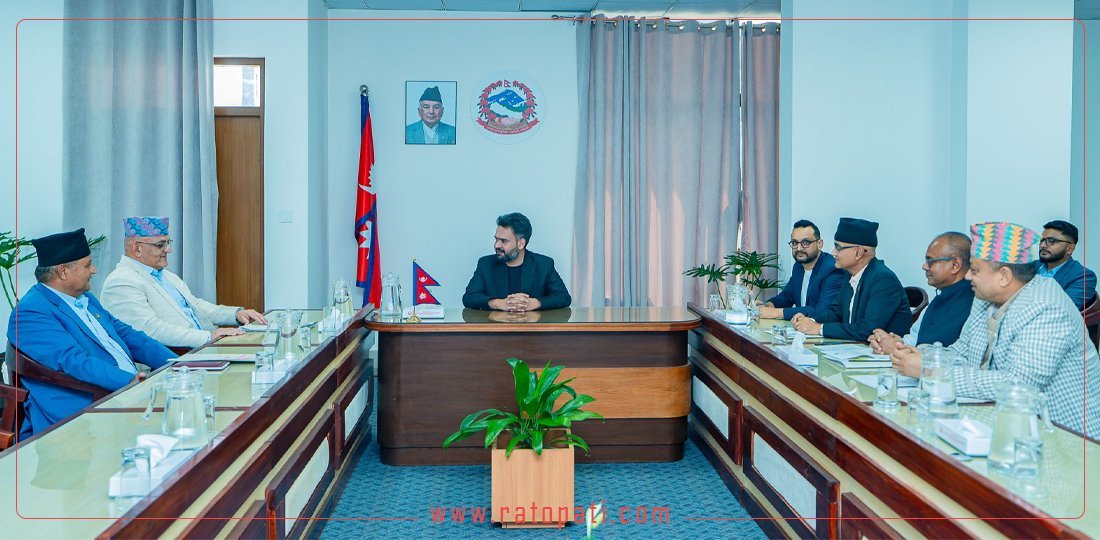
Prime Minister Shah has held separate group meetings with direct and proportional representation members of the House of Representatives from all seven provinces to understand budget formulation and local issues. He held marathon discussions with lawmakers from all provinces between Chaitra 16 and 30.
Chaitra 16: Meetings with lawmakers from Koshi and Karnali provinces.
Chaitra 17: Discussions with Sudurpashchim province lawmakers regarding local demands and issues.
Chaitra 18: A 3-hour discussion with 30 lawmakers from Madhesh province regarding the budget and short-term plans.
Chaitra 20: Dialogue with Gandaki province lawmakers.
Chaitra 24: Discussions with Lumbini province lawmakers, where prioritizing Tilaurakot in Kapilvastu as a 'Smart Heritage City' was highlighted.
Chaitra 30: Meetings with Bagmati province lawmakers to collect issues from their constituencies.
Baishakh 3: A collective discussion with Chief Ministers of five provinces. He consulted with them to resolve issues related to federalism implementation and provincial challenges.
Representatives of 17 Nations in One Place
On Chaitra 25, Prime Minister Shah held a collective meeting with ambassadors and heads of diplomatic missions from over 17 countries based in Nepal. Diplomatic experts have hailed this collective meeting with representatives from nations including India, China, the US, and the UK as an excellent example of time management. By saving the time that would have been spent on individual meetings, he clearly articulated Nepal's national priorities and foreign policy all at once.
Silent in Parliament, Difficult to Meet
Senior RSP leader Shah, who became Prime Minister with the support of nearly two-thirds of the House of Representatives, saw the first session of Parliament end without him speaking a single word. In the past, it was customary for the Prime Minister to address the nation and the people at the beginning of the first parliamentary session, but Balen broke that tradition.
In the six meetings held during the first 9 days of the new Parliament, lawmakers raised contemporary issues to draw the government's attention. In some cases, lawmakers demanded answers from Prime Minister Shah himself, which he ignored.
However, political researcher Dobhan Rai and other civil society leaders have criticized this. Although the government was formed on the foundation of the Gen-Z movement, leaders of that generation are opposing Balen's silent style.
'The public needs not just technical solutions, but also the psychological support of leadership,' says Bam. 'In a democratic system, the state should be run by democratic values and practices rather than a leader's personal style. It is your duty to address the nation through Parliament.'
Gen-Z leader Raksha Bam has criticized the Prime Minister for not speaking in Parliament since the first session. Addressing the Prime Minister, she stated that it is his primary responsibility to thank the public after winning the election and to address the country while embracing new changes. Respecting the Prime Minister's personal style of 'less talk, more work,' she argued that in a democracy, systems and practices are greater than individual temperament.
'The public needs not just technical solutions, but also the psychological support of leadership,' says Bam. 'In a democratic system, the state should be run by democratic values and practices rather than a leader's personal style. It is your duty to address the nation through Parliament.'
Urging the Prime Minister to improve his 'limited style,' she said, 'If you think you can run the government solely based on your personal style, then turn back from the first step. This excellent opportunity provided by the last general election cannot be achieved by confining it to narrow thinking.'
_pi9c6dspfq_hDB5gFCG0t.jpg)
Former Administrator Says, 'In the Past We Talked, Balen Showed It'
Past prime ministers preferred to run the government from their residence in Baluwatar and rarely visited Singha Durbar. But Balen has made Singha Durbar his 'command center.' A former Chief Secretary interprets this as a centralization of 'core functions.' 'A successful administrator or leader must be able to distinguish between their 'core' and 'non-core' work. Balen Shah is doing exactly that,' says the former Chief Secretary. 'In the past, prime ministers used to get bogged down meeting party workers, attending inaugurations, and minor public events. But the current Prime Minister putting aside those auxiliary tasks to spend time from 10 to 5 at Singha Durbar on policy discussions, diplomatic relations, and mobilizing the bureaucracy is the most positive aspect.'
He describes the collective meeting with ambassadors and heads of diplomatic missions in Nepal as 'diplomatic maturity.' 'Meeting ambassadors one by one would waste time and risk sending different messages. Clarifying national priorities all at once through a collective meeting is an excellent example of time management,' he said. The former Chief Secretary believes this has sent a message to the international community that Nepal has a 'single voice' in foreign relations.
The direct impact of the Prime Minister being present in the office every day and busy with marathon meetings is felt by the bureaucracy. 'When the head of the house starts sitting in the office to look at files and problems, ministers and secretaries are also pressured to be conscious of their responsibilities. The Prime Minister's regular presence at Singha Durbar has mobilized the stagnant bureaucracy,' he added.
Responding to questions about not addressing Parliament and the nation, he says, 'We have an old disease of making big speeches and distributing assurances before starting work. But the current Prime Minister seems to have chosen silence, saying he will show results through work first and speak only then. This is a type of 'action-oriented' leadership style. The public wants delivery rather than speeches, which the activity at Singha Durbar is signaling.'
Stating that the Prime Minister has made Singha Durbar the real center of executive power, he said, 'Free from the encirclement of party people, this intensive discussion with government mechanisms and elected representatives is bound to yield concrete results sooner or later. If this style continues, it will prove to be a benchmark in Nepal's administrative history.'
Singha Durbar's activity is very good but there must be accountability - Leelamani Paudyal
After observing the trend of the Prime Minister being active in ministry operations from Singha Durbar but distancing himself from Parliament and public dialogue, former Chief Secretary Leelamani Paudyal has commented on it as a 'mixed practice.'
Former Chief Secretary Paudyal considers the Prime Minister's regular visits to Singha Durbar and taking administrative leadership from the office as an extremely positive step. According to him, it is necessary for system improvement that the Prime Minister works from Singha Durbar, the main administrative center of the state, rather than spending time on external formal and trivial programs. Paudyal says, 'I have always said that the Prime Minister should come to the office at 10 AM and focus on solving ministry problems instead of getting involved in external programs. The Prime Minister should monitor which work is stuck where and where the problems are, take progress reports over the phone, and set priorities from the office itself.'
While praising the administrative activity, Paudyal has raised serious questions about the Prime Minister not addressing Parliament for a long time and not giving a message to the nation. He maintains that in a parliamentary democracy, accountability to Parliament is the Prime Minister's first duty.
Paudyal has also taken the marathon meetings the Prime Minister is currently holding with lawmakers, heads of diplomatic missions, and Chief Ministers positively. He believes this will help in understanding the problems of elected representatives and the grassroots level. He argues that such discussions will play a supportive role in implementing government policies and programs.
While praising the administrative activity, Paudyal has raised serious questions about the Prime Minister not addressing Parliament for a long time and not giving a message to the nation. He maintains that in a parliamentary democracy, accountability to Parliament is the Prime Minister's first duty.
According to Paudyal, it is unnatural for a Prime Minister chosen by Parliament not to speak in Parliament. He says, 'Working from the office is one aspect, but not communicating with citizens, not coming into public discourse, and not addressing Parliament does not align with democratic character.'
'While continuing administrative reform efforts from Singha Durbar, the Prime Minister should also give equal priority to dialogue with the public through Parliament and public forums. The effectiveness of the government is seen only through the balance between administrative activity and democratic dialogue,' suggests Paudyal.
_fiho8rpe5u_aixxTyi2qh.jpg)
New Blood Circulated in State Administration - Trital
Former administrator Sharada Prasad Trital, who has worked as a secretary in various ministries, believes that the 'Singha Durbar-centered' working style adopted by Shah after assuming the Prime Minister's responsibility has circulated new blood in the state administration. He says that Balen breaking the tradition of past prime ministers preferring to run the government from Baluwatar and making Singha Durbar the main hub for performance holds great significance for administrative reform.
'In our country, there was a distortion where the Prime Minister would not come to Singha Durbar and would approve files from Baluwatar, which caused Singha Durbar to stagnate,' says Trital. 'The first message of the Prime Minister sitting in Singha Durbar all day and holding marathon meetings is that the executive head is 'on duty.' This forces the bureaucracy and ministers to sit in their offices and be responsible. Only when the Prime Minister remains in the office can he directly feel the problems of the employees and the pace of work.'
Trital describes the collective and individual meetings the Prime Minister is holding with elected and proportional members of the House of Representatives, ambassadors, and Chief Ministers as collaborative leadership. 'Listening to proportional and directly elected lawmakers together reflects respect for Parliament. Similarly, regular dialogue with Chief Ministers helps untie the knots seen in the implementation of federalism. These meetings should not just be formalities but a medium for taking feedback,' he adds.
_ri0f023flf_QZZ74jQm9W.jpg)
Trital views the curiosity arising about not addressing Parliament and not giving a message to the nation differently. He says, 'We have a trend of making long speeches and distributing big dreams as soon as one becomes Prime Minister. But Balen seems to have adopted a style of 'I will set the rhythm of work first and then speak.' Speaking in Parliament is necessary; that is a democratic practice. But preparing and speaking so that results are visible is more mature than speaking in a hurry. Currently, he is running the government through his presence rather than by speaking.'
Trital's analysis is that the regular meetings at the Prime Minister's office have created pressure on secretaries and other high-ranking officials regarding performance. He says, 'When the Prime Minister himself directly communicates with employees and stakeholders, middlemen become weak. This supports good governance. However, the purpose of these meetings should not be limited to conversation but should be transformed into the implementation process.'
Trital adds, 'The speed at which Balen Shah has made Singha Durbar active is commendable. But this enthusiasm should not be for just a few weeks. He must also create a mechanism to immediately translate the conclusions drawn from this marathon meeting at Singha Durbar into policies and programs. It doesn't matter if the address to the nation is delayed, but administrative decisions must be fast and transparent.'
This specific news has been automatically translated by AI. As a result, there may be some inaccuracies or language errors.