Nepal Government Establishes High-Level Judicial Commission to Investigate Assets of Public Officials


Kathmandu. The government has formed a high-level judicial commission to investigate the assets of individuals who have held public office from the year 2062/063 to the present. In the first phase, the commission will probe the assets of high-ranking political, administrative, and public officials from 2062/063 to 2082.
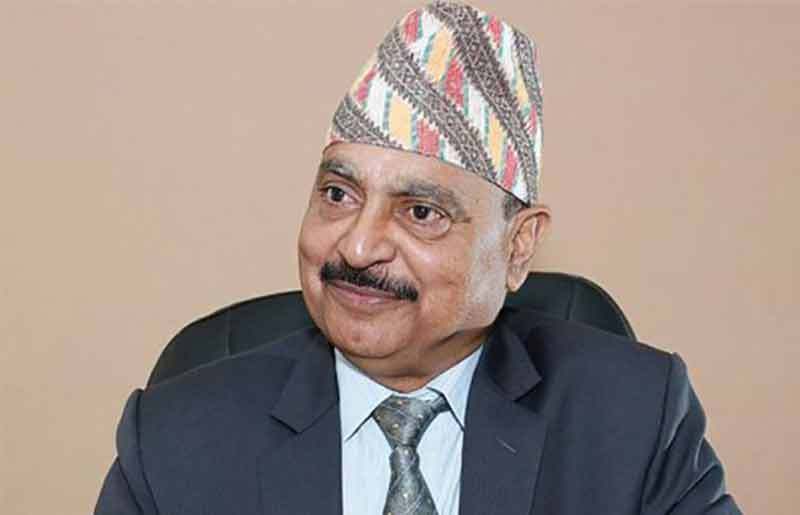
The government has decided to form a five-member commission led by former Supreme Court Justice Rajendra Singh Bhandari. The commission includes retired Appellate Court judges Purushottam Parajuli and Chandiraj Dhakal. Former Nepal Police DIG Ganesh KC and Chartered Accountant Prakash Lamsal have been appointed as members of the commission.
The commission will examine the assets of key political figures and high-ranking officials who held public office from 2082/83 back to 2062/63. In the second phase, the assets of those who held high positions and public office from 2048 to 2062/063 will be investigated.
Individuals under investigation will be required to submit full details of movable and immovable property held in their name and the names of their family members (spouse and children) within a specified timeframe.
The commission will also require the disclosure of assets held by relatives. The collected information will undergo detailed analysis, and the commission will have the same jurisdiction as previous inquiry commissions.
Advocate Ananta Raj Luintel states that any public official receiving salary, allowances, or benefits from the state treasury falls under the commission's purview. He explained the legal process, jurisdiction, and effectiveness of the asset investigation. According to him, it is generally accepted that an employee or official can save up to 30 percent of their salary. 'If it is seen that assets have increased through the purchase of shares, gold, or real estate from those savings in accordance with the law, it is considered legal,' he said. 'However, if it is found that assets were acquired illegally, the commission can recommend criminal prosecution.'
Commission's Role is Fact-Finding Only
The inquiry commission itself cannot pass sentences; it is a body solely for fact-finding. Based on the commission's report and recommendations, the competent authority will file a case in court. Legal provisions dictate that punishment and asset forfeiture occur only if the court delivers a verdict and finds the individual guilty. Like the past Mallik, Lamsal, Rayamajhi, and Karki commissions, the scope of this asset investigation commission is limited to investigating and presenting facts.
Assets of Relatives Also Under Scrutiny
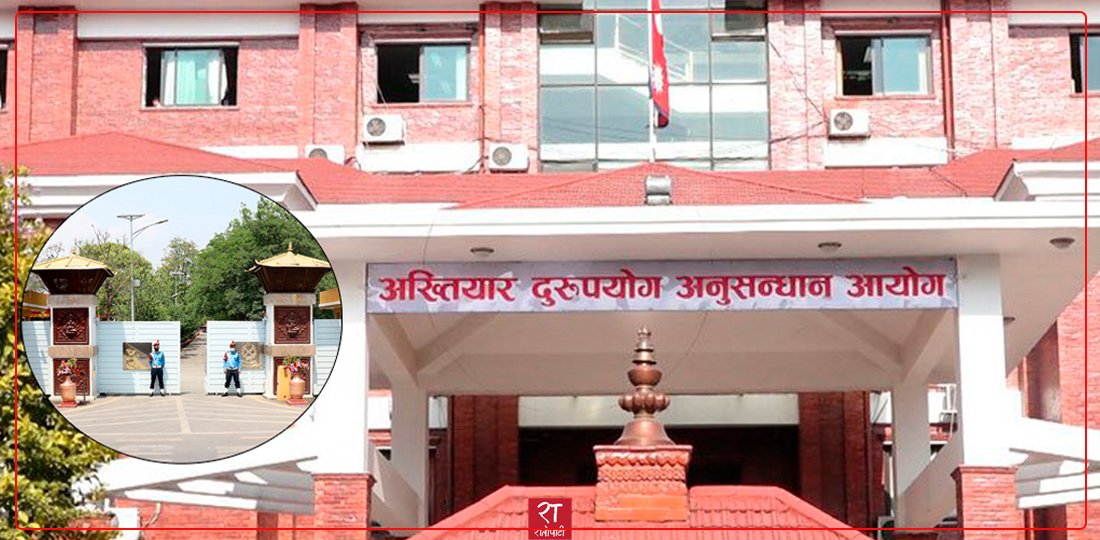
If there is suspicion that relatives' names are being used to hide assets, the commission can request details of those relatives as well. During criminal investigations, if clues are found that assets have been hidden in the name of relatives within three generations or others, they can be investigated, says Advocate Luintel.
If proven by evidence, cases can be filed against them as well. Currently, the Commission for the Investigation of Abuse of Authority (CIAA) is filing cases against other family members alongside the main defendant in cases of illicit wealth accumulation.
What Happens to Judges?
Advocate Luintel notes that the scope of the asset investigation committee includes not only politicians and bureaucrats but also judges. Recalling that the Lamsal Commission had also investigated judges' assets in the past, he said, 'In the case of judges, if unusual assets are found, the commission sends a recommendation to the Judicial Council for further investigation.'
According to the principle of judicial independence, rather than the police or the CIAA directly investigating a judge, the process will proceed through the Judicial Council. Everyone who falls under the definition of a public official and receives benefits from the state treasury will come under the scope of the inquiry.
Who Holds Public Office and How Does It Work?
The Prevention of Corruption Act, 2059, stipulates that individuals in public office must not acquire illegal assets. If they are found to have acquired assets contrary to the law and are living an unusual lifestyle, it is considered illegal wealth accumulation, and corruption charges can be filed.
Section 'G' of the Prevention of Corruption Act, 2059, defines a public servant as a person holding a public office. It mentions a person holding a position where they are authorized to exercise public authority or perform duties as per the constitution, prevailing laws, or the decisions, orders, or agreements of relevant bodies or officials.
It also includes individuals appointed, nominated, or elected to receive remuneration or other financial benefits from any government fund. Furthermore, it includes individuals who take an oath before the President, Government of Nepal, Provincial Government, or Local Level, or those who receive salary, allowances, or remuneration from the Government of Nepal, Provincial Government, or Local Level bodies or public institutions as per agreements or conditions.
This law cannot be applied to individuals not in public office, but if they are found to have unusual assets, they can be investigated for money laundering, provided there is evidence that they have committed other crimes.
Information Collection and Verification
The commission will collect details of land and houses from the Land Revenue Office for individuals under investigation. It will also collect details of bank accounts, transaction records, share investment details from the Nepal Stock Exchange, vehicle details, and investigate the source of investments in any industry or business.
The most important phase is when the commission compares the individual's legal income (salary, allowances, agricultural income, ancestral property, rent, etc.) with the assets they have acquired. If assets exceed legal income and the source cannot be explained, it is considered 'illegal'.
Similarly, if the source of assets is not disclosed or appears suspicious, the individual is summoned to the commission for questioning. They are given an opportunity to prove the source of their assets. Chartered accountants, banking experts, or engineers are consulted to understand complex financial transactions.
Two Former Judges Recommended for Action by Lamsal Commission Now on Asset Investigation Committee
The Office of the Prime Minister and Council of Ministers, based on a decision by the then-government in 2058, formed a Judicial Inquiry Commission for Asset Investigation chaired by then-Supreme Court Justice Bhairav Prasad Lamsal to investigate high-ranking officials.
That inquiry committee had recommended the prosecution of political party leaders, ministers, members of parliament, and judges for illicit wealth accumulation. The Deuba government had formed the Judicial Inquiry Commission on Falgun 20, 2058, to 'investigate the assets of those in government service after 2047'.
According to the notice published in the Gazette on Falgun 24, the commission led by sitting Supreme Court Justice Bhairav Lamsal included former judges Udaya Raj Upadhyaya and Gyaindra Bahadur Shrestha as members. Among the 13 people recommended for action by the Lamsal Commission for illicit wealth, retired Appellate Court judges Purushottam Parajuli and Chandiraj Dhakal, who are currently on the asset investigation committee, were among those recommended for action.
The government had sent the Lamsal Commission's recommendations to the Judicial Council for implementation. The Judicial Council, however, only cautioned then-judges Parajuli and Dhakal based on the Lamsal Commission's report; 11 other judges were also cautioned and released.
According to Judicial Council sources, a standard was set at that time. Sources stated that the Judicial Council decided not to take action against judges who had earned up to 20 million rupees, opting only to caution them.
This specific news has been automatically translated by AI. As a result, there may be some inaccuracies or language errors.