Raghunandan Maru: FNCCI Needs to Evolve Beyond Traditional Methods to Support Businesses
_lpnajDvvRC.jpg)
The upcoming election of the Federation of Nepalese Chambers of Commerce and Industry (FNCCI), the largest umbrella organization of the private sector in Nepal, has drawn the attention of industrialists and businesspeople across the country. At a time when the nation is grappling with extreme economic stagnation, disappointing capital expenditure, and policy instability, there is widespread concern about the kind of leadership that will emerge for the federation.
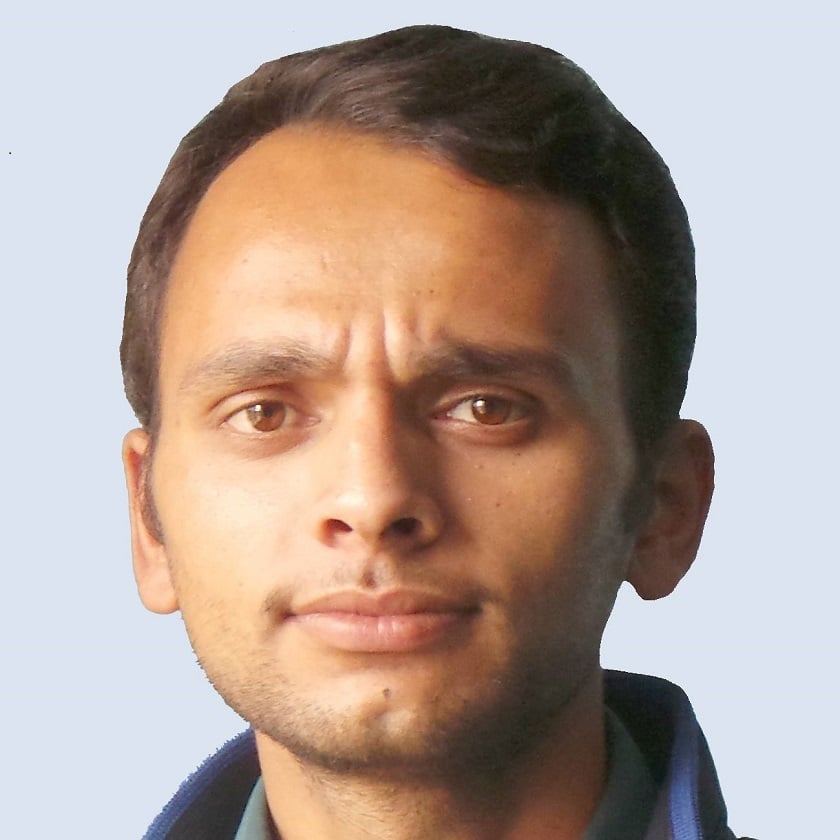
Voices are being raised to elevate the federation from its traditional ways and develop it into a tech-friendly mechanism capable of policy advocacy and addressing the immediate problems of businesspeople. In this context, Raghunandan Maru has emerged as a candidate for the central executive committee member from the commodity category.
He is the president of the Cement Manufacturers Association of Nepal. Active in the mining industry for the past four and a half decades and in cement production for two and a half decades, Maru's family was the first from Nepal's private sector to enter mining extraction.
Presented here is a conversation with candidate Maru, focusing on the federation's election agenda, the prospects and challenges of the cement industry, administrative hurdles, and the overall investment climate of the country:
- You are a candidate for the central member of the FNCCI from the commodity category. What is the rationale behind your candidacy, and what are your main agendas?
Particularly in recent times, we have felt a growing sense of dissatisfaction among industrialists and businesspeople toward their umbrella organization, the FNCCI.
My first priority is to address this dissatisfaction and establish the federation as a true bridge for industrialists and businesspeople. When engaging in policy debates with the government, the federation must play a strong role as an economic driver.
Secondly, the federation cannot be run in the traditional style anymore. My objective is to move it forward in an innovative and creative manner.
_RvbsZJmGbk.jpg)
- You mentioned making the federation innovative and creative; what are your main action plans for this?
There are a few key tasks. First, the daily administrative and managerial work of the federation must be fully digitized. Currently, industrialists and businesspeople have many complaints and problems.
It is necessary to develop a system where these complaints are given high priority, reach the heads of relevant committees or sub-committees immediately, and are addressed rapidly. Our main agenda is to ensure that businesspeople's problems are heard in a timely manner as soon as they are raised.
You are the president of the Cement Manufacturers Association of Nepal. As a leader of a commodity association, you are already advocating for policies with the government. What will be the difference between your work after being elected as an FNCCI central member and what you are doing now?
When I am the president of the Cement Manufacturers Association, I only represent the cement sector. But after reaching the federation, the scope becomes wider. It will represent not just cement, but the entire productive sector, such as steel, pipes, and all other commodities.
The main basis for any country's economic development and GDP is industrial and commercial development. Currently, there is plenty of liquidity in the market, but no one is motivated to set up new industries. In such a difficult situation, the role of the federation is very important in boosting the morale of all industrialists and for policy reforms, which I can perform more effectively after going there.
- You are contesting the election from Shiv Ghimire's panel in the commodity category. What are the grounds for believing that your team can deliver well for the benefit of businesspeople in this competitive atmosphere?
Our respected Shiv Ghimire has built this team after a long time, ensuring equal and meaningful representation from every sector. It includes representatives from the manufacturing sector, forest products, agriculture, dairy, financial sector, and foreign trade.
We have a clear vision and agenda. We are very clear about which direction to take the federation and how to drive it. We believe that a balanced team with representation from all can deliver good results.
- The structure of the federation has three different wings: district-city, commodity, and associate. In some cases, there is a lack of coordination between these bodies. The election system is also according to that. How much need is there for reform in this system?
This is a structure that has been in place since the inception of the federation. This structure is working in its own way. However, if it is necessary to increase its effectiveness according to the demands of the time, it can be reviewed periodically.
- It seems that in the federation election, there is a situation of competing by announcing panels like political parties. There is also a practice of looking at competition in terms of victory and defeat. How appropriate do you consider the practice of forming panels to contest elections in the private sector's umbrella organization?
Contesting an election is a democratic process. I don't think there is anything wrong with it. If leadership cannot be selected through mutual consensus, there is no alternative to an election. As for forming a panel, it is done so that it is easier to work after reaching leadership tomorrow and to move forward together with colleagues who have the same vision.
Even if someone is elected from one panel and someone else from another, they will have to work as one team tomorrow. Therefore, I don't think that just because we contest elections by forming panels, there will be constant disagreements later. After the election, everyone should happily accept the results and work unitedly.
- Let's talk about the country's overall economic situation and investment climate. A new government has been formed with a single-party majority; how do you evaluate the initial work and policy decisions taken by this government as a representative of the private sector?
The private sector is very encouraged by the initial steps of the newly formed government. We are very optimistic. The government has initiated the process of amending or repealing some unnecessary acts and regulations.
Efforts have been made to reduce procedural complexities through an online system at the Office of the Company Registrar. In the past, there was a cumbersome system where one had to carry a file and run around to see which official's table it had reached, and keep writing notes. If it becomes possible to track files online now, it will also significantly reduce corruption.
Today, those who want to open an industry have to wait two to three years just to get a license, have to manage land ceilings, and obtain forest usage rights. If the government effectively implements a 'single window system', the country's economy can take a big leap. The economic growth targets set by the government sound ambitious but are not impossible, but for that, the implementation aspect must be very strong.
- There is sufficient liquidity in banks now, and interest rates have also decreased. In the past, businesspeople said interest rates were expensive, but why is the demand for loans and new investment not increasing even when interest rates are falling?
The main reason for this is administrative hassle and policy instability. There are so many complexities added at every stage from the process of obtaining a license to operating an industry that people are afraid to invest. Discretionary power is kept in acts and rules by saying 'may be done', which leads to delays in work.
Another important thing is the security of investment. There is a fear among businesspeople: 'If I invest in an industry today, will the state's policy change tomorrow and my investment sink?' Unless there is a guarantee of investment security, no matter how much interest rates fall, new investment will not come. For this, a concrete policy and a stable government are required.
- You raised the issue of investment security. Is the main reason for businesspeople feeling insecure the social or political situation, or policy instability?
The main obstacle is policy instability. On one hand, we talk about a liberal economy, but in practice, our policies and rules are so control-oriented that we are tied up from all sides. We fully agree that industrialists and businesspeople should be regulated and that tax evasion should not be allowed. But in the name of regulation, a control-oriented mechanism should not be created to stall files.
The situation where one has to wait for months for a simple task, and businesspeople have to follow up on which ministry and which table the file has reached instead of focusing on their production and market, must be eradicated. Not just minimized, such a trend must be completely eradicated.
- The cement industry is a sector fully connected to mining. What are the main legal and practical problems that the cement industry is facing regarding mining extraction, use of forest areas, and land acquisition?
My family has been involved in the mining sector for the past 45 years and in the cement industry for 25 years. The main problem is that about 90 percent of Nepal's mines fall within forest areas. The Department of Mines and Geology gives a license for extraction, but work cannot be done until forest usage rights are obtained.
To obtain usage rights, one has to go through the Area Forest Office, Division Forest Office, Department of Forests, Ministry of Forests, and finally the Council of Ministers. Even if there is public land with only two trees within your mining area, you have to run around with files for two years for its approval.
Similarly, another big obstacle is the land ceiling. A mining industry needs a thousand to twelve hundred ropanis of land. But due to the land ceiling law, we are forced to buy land by setting up ten to fifteen different companies for a single industry.
This is not the right practice at all. The government could just make a clear legal provision that the land ceiling will not apply to land required for the mining industry. These and such impractical policies and rules should be immediately repealed or amended.
- How are international conflicts, such as the war in West Asia, affecting the production cost of Nepal's productive sector, especially the cement industry?
International conflicts have had a very bad impact on our industry. The cost of raw materials required for cement production has increased sharply. The price of coal has increased. Due to the rise in diesel prices, the cost of extracting and transporting limestone from mines has increased. The price of bags used for cement packing has skyrocketed even more.
The price of petrochemical granules used to make bags has increased from $900 per ton to $1150. Because of this, the cost of bags alone has increased by 70 percent. For all these reasons, the overall production cost of cement has increased significantly, but it is difficult to adjust the price because there is no demand in the market.
_pF66fiPYpL.jpg)
- What do you see as the solution to the decline in market demand and the inability of cement industries to operate at full capacity?
The installed capacity of the cement industry in Nepal has reached about 20 million tons annually, but our internal consumption is barely 8 million tons. The only solution to this is for the government to increase capital expenditure.
A large budget of the federal and provincial governments has not been able to be spent on infrastructure construction. If the government spends the capital budget on large infrastructure including roads, the demand for construction materials will automatically increase and industries can operate at full capacity.
Infrastructure is the backbone of the country's economy. Today, because we do not have a good road network, transportation costs are extremely expensive. Even though the distance from Simikot to Kohalpur or Khandbari to Biratnagar is short, it takes all day due to bad roads. Until we build expressways like India and increase connectivity, our production costs will not decrease.
- There is a narrative that it is not possible to compete with neighboring countries China and India in the world market due to our small economy and production costs. How true is this?
Certainly, our costs are a bit expensive right now. But it is not that we cannot compete in the world market. Our main problem is high logistics costs and administrative hassles. If we build infrastructure and reduce transportation costs, we can compete with any market in the world.
If Vietnam can export coffee and Mongolia can export cashmere, why can't Nepal? The quality of our cement is extremely good, and we have already started exporting cement to India.
In the past, we were world-renowned for exporting garments, carpets, and pashmina. But when the government's policy instability and skewed vision fell upon them, those industries migrated to countries like Bangladesh. The government must change its perspective on looking at industries.
The belief must be established that the government is not there to earn itself, but to create a favorable environment for the private sector to earn and to facilitate it. If this happens, we can definitely become a strong competitor in the international market.
- Finally, what suggestions would you like to give to the government regarding policy formulation?
A new government has been formed, and we are very optimistic. It is the demand of mine and all industrialists and businesspeople that the government should maintain policy stability, completely remove administrative hassles, and truly create a business-friendly environment. We are ready to support the government in the campaign of nation-building.
This specific news has been automatically translated by AI. As a result, there may be some inaccuracies or language errors.