CPN-UML Leader Attributes Election Defeat to Rise of Gen Z and Shifting Voter Psychology


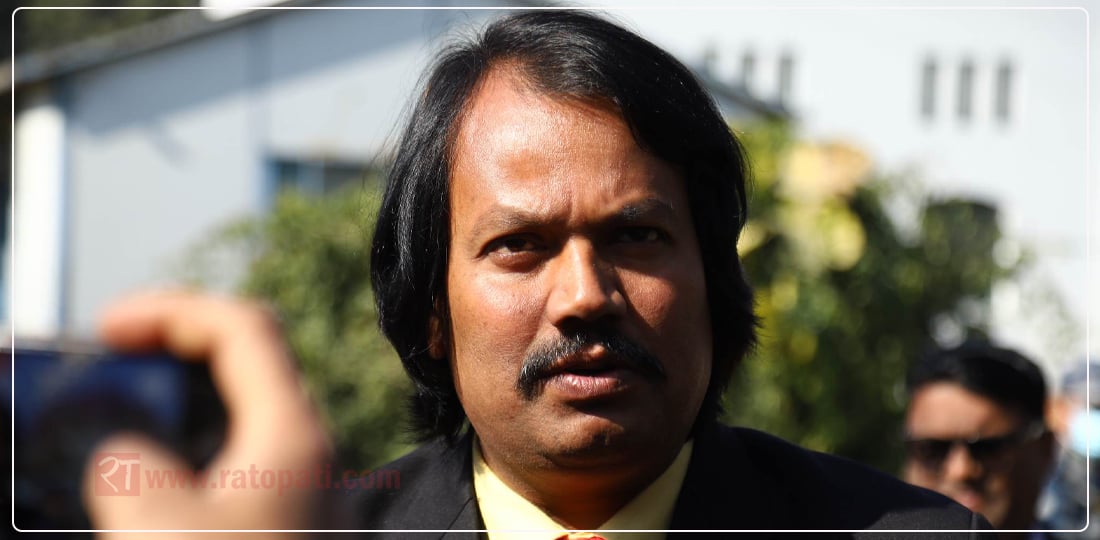
Kathmandu. Leader Mohan Prakash Siwakoti has identified the rise of the new generation (Gen Z) and their evolving psychology as the primary reasons behind the CPN-UML's defeat and declining public support in the election held on Falgun 21.
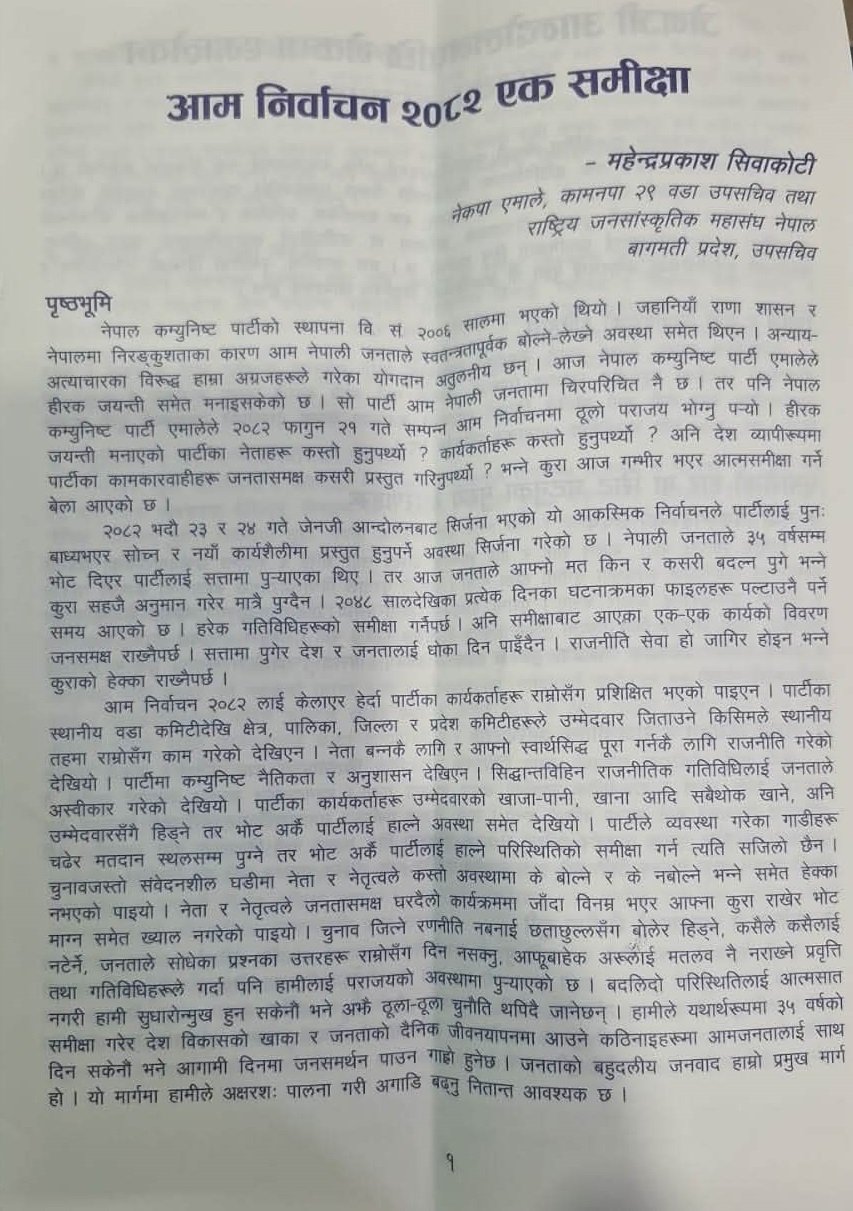
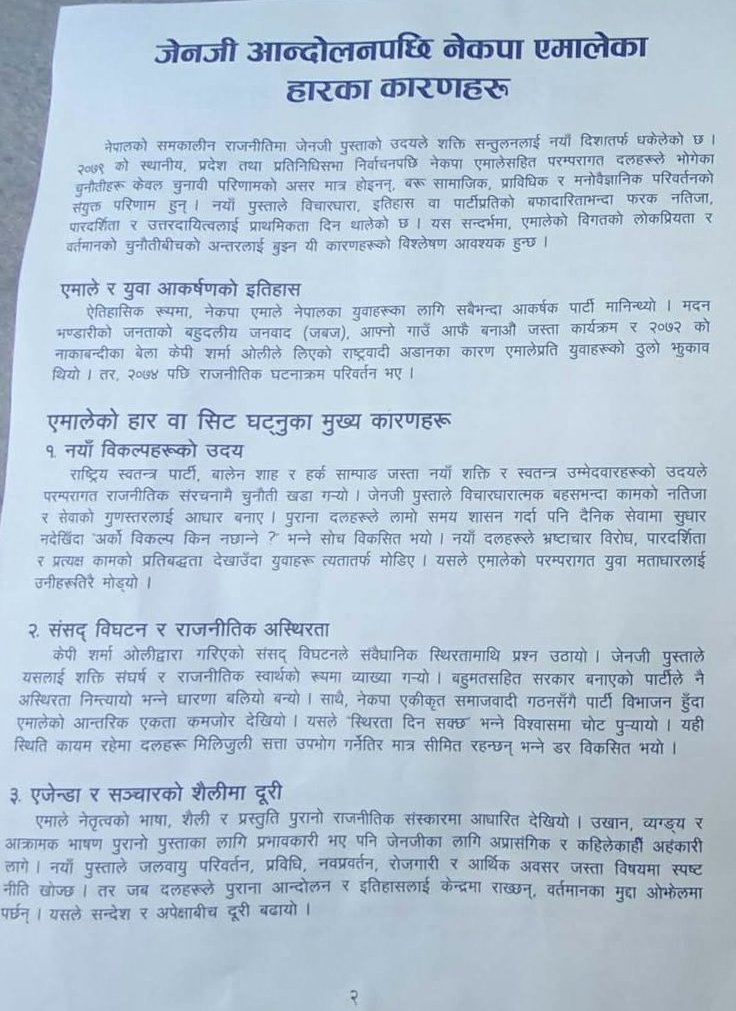
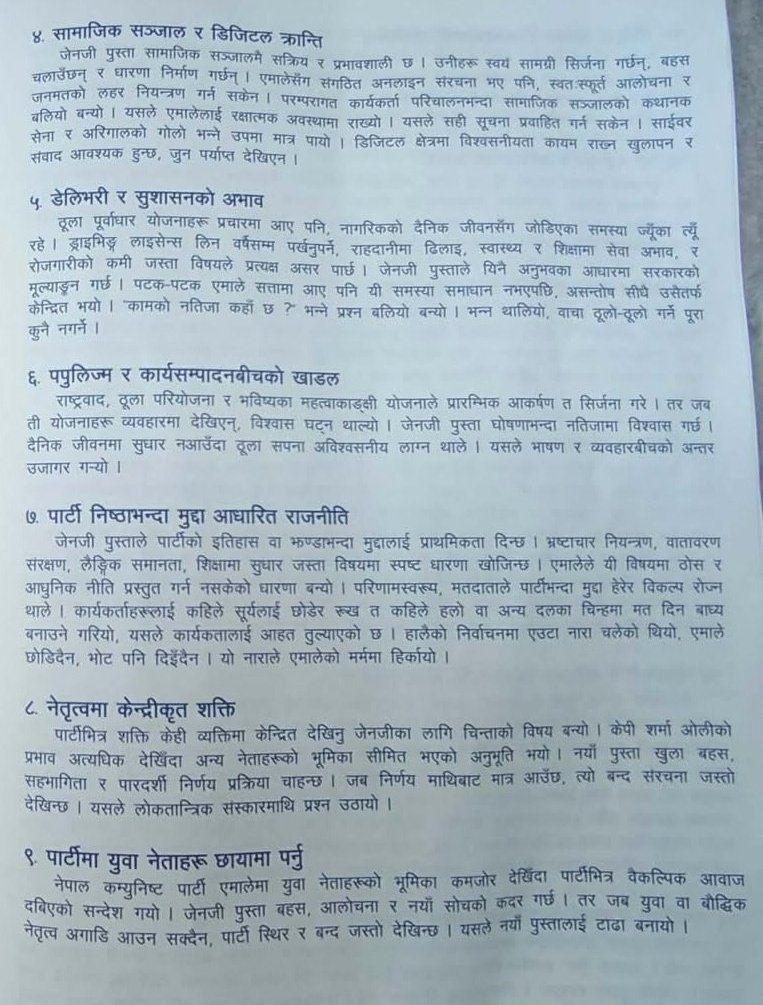
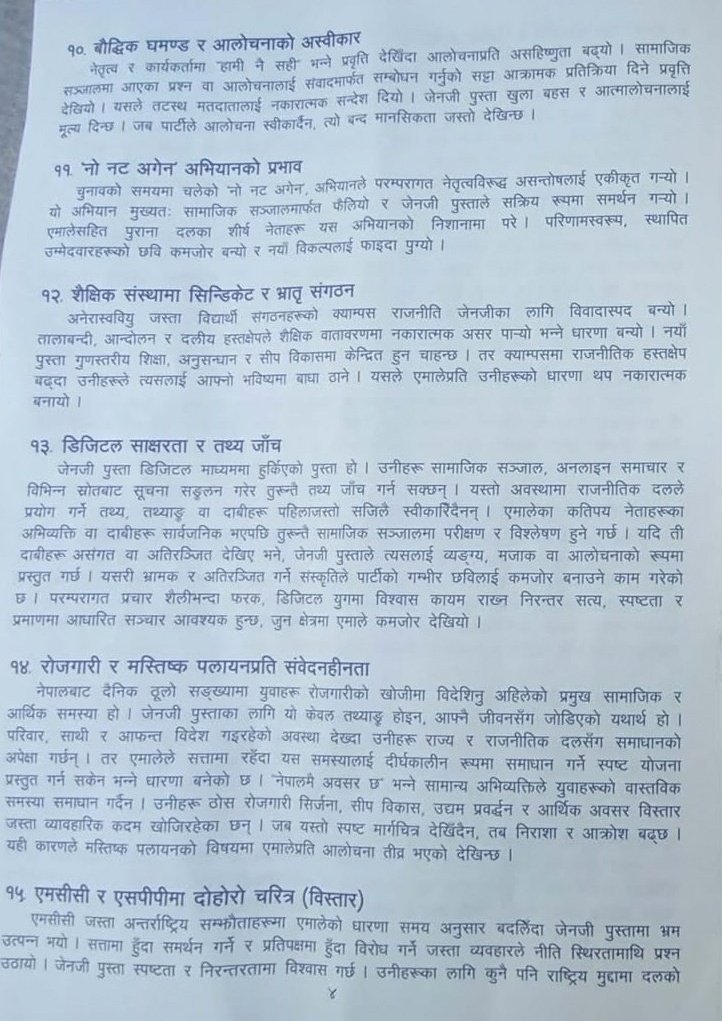
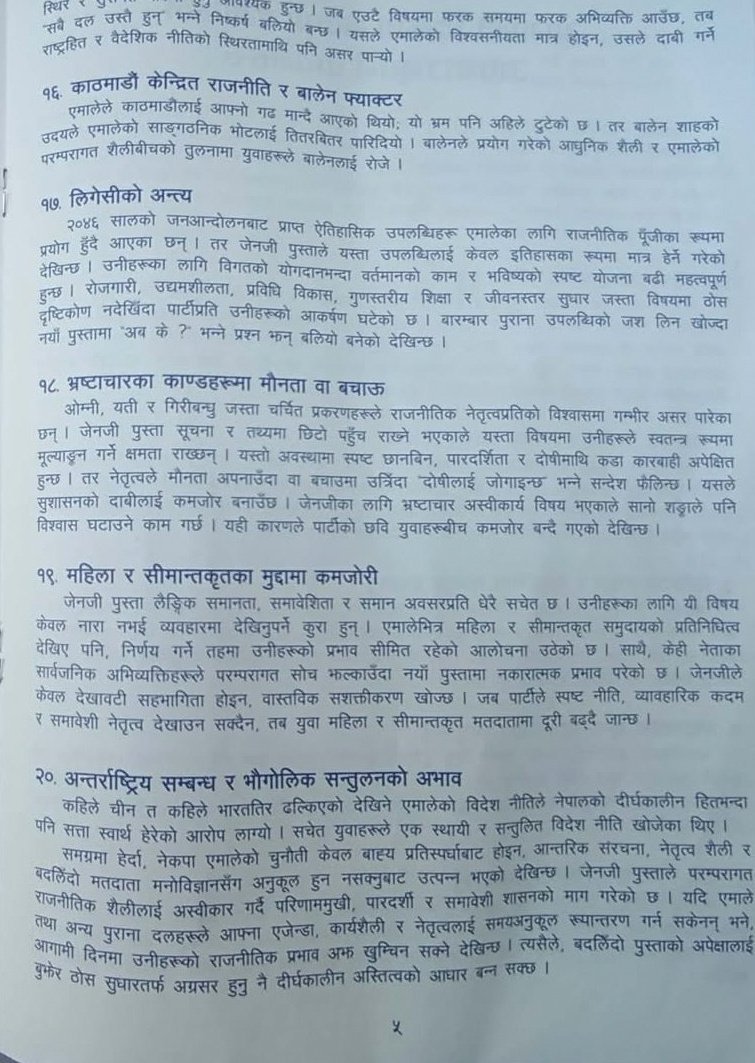
During a meeting of the UML's mass organizations on Wednesday, he distributed a pamphlet at the office premises outlining 20 key reasons for the defeat, arguing that the influence of the Gen Z generation in contemporary politics has pushed the balance of power in a new direction.
According to his analysis, the challenge faced by traditional parties, including the UML, in the election is not merely a result of the polls but a combined outcome of social, technological, and psychological shifts.
Siwakoti concludes that the new generation has begun to prioritize work results, transparency, and accountability over ideology, history, or party loyalty.
The pamphlet notes that the emergence of new forces and candidates like the Rastriya Swatantra Party, Balen Shah, and Harka Sampang has posed a major challenge to traditional political structures. He believes that the youth generation has been attracted to new alternatives because traditional parties failed to improve citizens' daily lives and service delivery despite long periods in power.
Similarly, the perception that the dissolution of parliament by party chairman KP Sharma Oli was viewed by the new generation as a power struggle and political self-interest, leading to political instability, is also considered a major reason for the defeat. Furthermore, it is acknowledged that the internal unity of the UML appeared weak, damaging the belief that the party could provide stability.
The CPN-UML won only 25 seats in the House of Representatives election.
Correction: The name has been corrected from the previous mention of Mohan Prakash Siwakoti. *
This specific news has been automatically translated by AI. As a result, there may be some inaccuracies or language errors.


_sCLDfWVnnm.jpg)