Chinese-Nepali Joint Venture Selected to Operate Nepal's First Modern Tunnel Road


After a long wait, the company to operate and manage Nepal's first modern Nagdhunga-Sisnekhola Tunnel Road has been finalized.
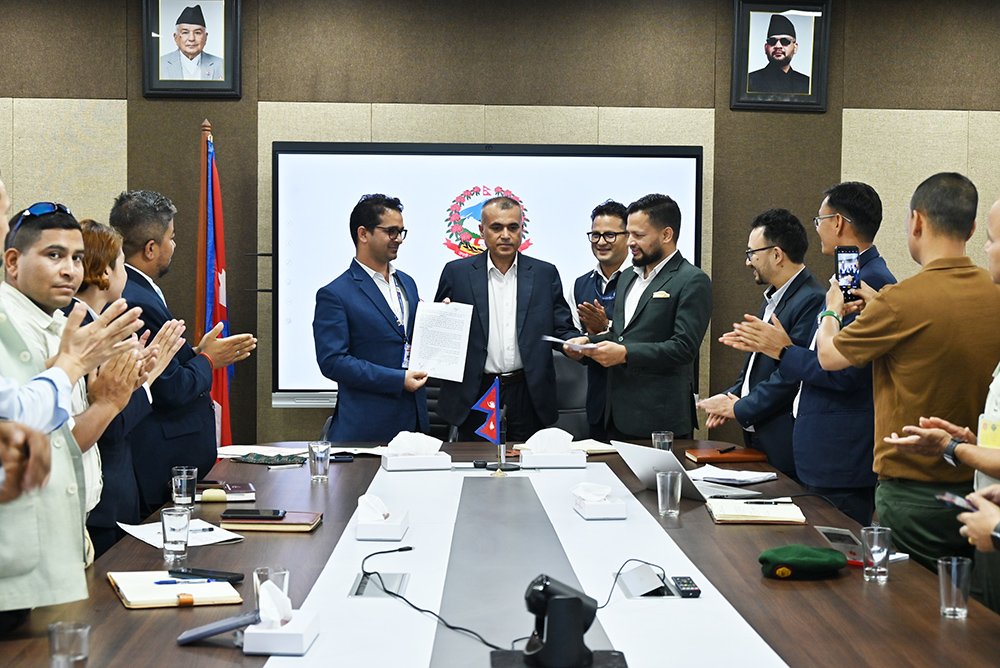
The project has awarded the operation responsibility for 5 years to the Chinese company 'Chongqing Yujin Road and Bridge Development' and the Nepali company 'ART Construction' (Yujin-ART JV), which submitted the lowest bid.
According to Soujanya Nepal, Project Chief, the joint venture secured the contract for 1.104 billion rupees, which is 40 percent less than the cost estimate prepared by the government. The project issued a notice of intent on Monday, inviting the selected company for contract signing within a week.
Since the process to select the service provider for the tunnel operation began, there were discussions that the donor agency, the Government of Japan, insisted that a Chinese company should not be given the responsibility. However, due to the provision in the Procurement Act stating that 'the lowest bidder wins the contract,' the joint venture of the Chinese and Nepali companies (Yujin-ART JV) ultimately received this responsibility.
Ten companies participated in the selection process. Among them, 7 companies were successful in the technical evaluation. Among the 6 Chinese companies and 1 Indian company (all in JV with Nepali companies) in the financial competition, Yujin-ART JV was awarded the operation responsibility.
When will it be operational?
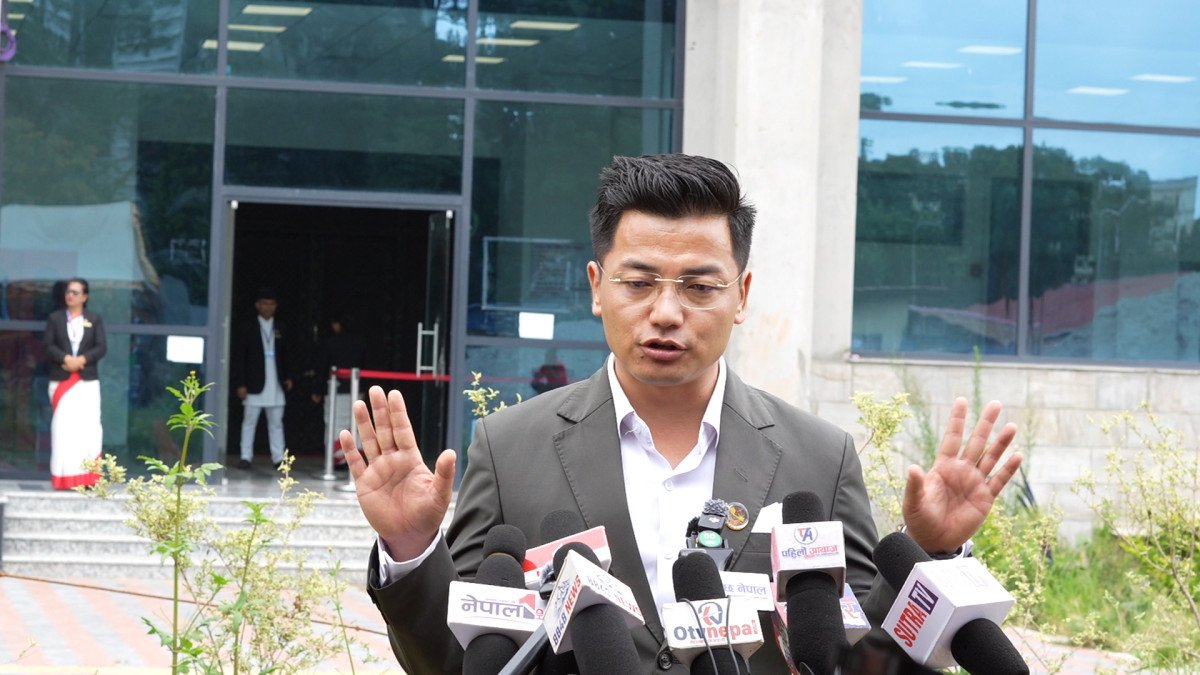
According to Project Director Nepal, the condition is that the tunnel must be fully operational within three months of signing the agreement. 'We are preparing to conduct trial operations of the tunnel by the end of next Baisakh,' he said, 'The company taking over the operation will decide how long the tunnel will run on a trial basis.'
Approximately 150 personnel will be mobilized for the tunnel operation, who will receive 2 months of specialized training. The selected company will be responsible for tunnel maintenance, traffic management, emergency rescue, and toll collection. The operating expenses will be borne by the government, and the collected toll revenue must be deposited daily into the account of the Road Board Nepal.
The government has already set the fees for using this tunnel.
How much will the toll be for whom?
The Road Board claims that users will save up to 70 percent in costs by using the tunnel, as the fees were determined based on scientific study.
Accordingly, for cars, vans, jeeps, pickups, and microbuses, the toll is set at 65 rupees when entering Kathmandu and 60 rupees when exiting. Similarly, for minibuses, mini-trucks, and tippers, the entry fee per trip is set at 115 rupees and 80 rupees for exiting. The fee for buses and trucks entering Kathmandu is set at 260 rupees and 200 rupees for exiting.
For heavy lorry vehicles, the fee is set at 600 rupees for entering Kathmandu and 250 rupees for exiting.
Which vehicles are prohibited from entering?
According to the 'Nagdhunga-Sisnekhola Tunnel Road Operation Directive, 2081' issued on the 25th of Chaitra, pedestrians, two-wheelers (motorcycles), three-wheelers, and non-motorized vehicles are prohibited from entering the tunnel. Likewise, vehicles carrying highly flammable substances (petrol, diesel, gas) and explosives will not be allowed to use the tunnel.
The physical progress of this tunnel, which began construction on Kartik 6, 2076 BS, has currently reached 98 percent. The tunnel was constructed by the Japanese company Hazama Ando Corporation. The project involves a concessional loan of 16 billion from Japan and an investment of 6 billion from the Government of Nepal. The process for an additional loan of 5.5 billion is underway at the Ministry of Finance. The project stated that landslide management work on the Dhading side will be completed by this Baisakh.
This specific news has been automatically translated by AI. As a result, there may be some inaccuracies or language errors.
_iL3K2wYemS.jpg)