Nearly 40% of Ballots from Federal Parliament Election to be Destroyed


Kathmandu. Approximately 40 percent of the ballot papers used in the House of Representatives election held on Falgun 21 are set to be shredded.
Since 59 percent of the votes were cast in the House of Representatives election, 40 percent of the ballots printed for both the First-Past-the-Post (FPTP) and Proportional Representation (PR) electoral systems remained unused. For the election, there were a total of 18,903,669 voters, and the Commission had the Election Materials Education Center print ballots exceeding the voter count by seven percent for both systems.
The Commission had printed a total of 40,114,300 ballots—20,323,000 for FPTP and 20,843,000 for PR—and transported them to the respective constituencies.
According to the Commission, 11,168,032 votes were cast under the FPTP system, of which 10,509,017 (94.55 percent) were deemed valid. Similarly, 11,280,617 votes were cast under the PR system, with 10,835,025 (96.05 percent) declared valid.
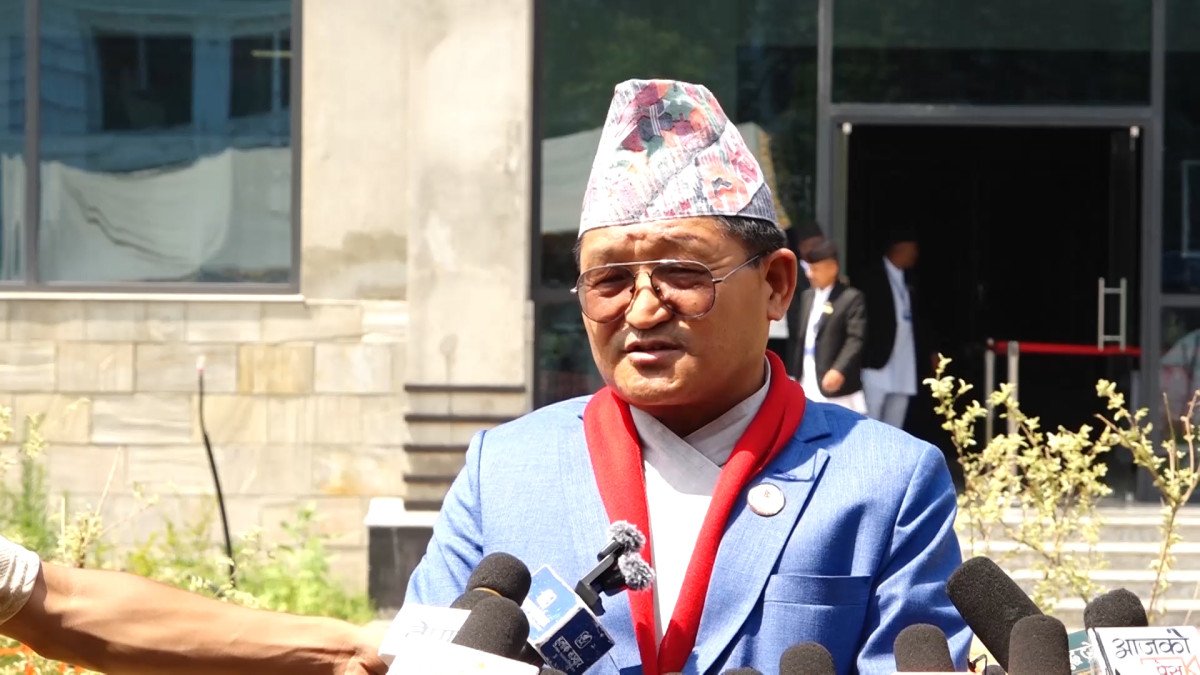
Commission Spokesperson Narayan Prasad Bhattarai stated that, following the usual practice of printing more ballots than the number of voters, the unused ballots out of the 40,114,300 printed this time will proceed to the shredding process in the respective districts as per legal provisions.
In response to concerns raised by some regarding whether the printing of more ballots than voters could lead to misuse or question the impartiality of the election, Spokesperson Bhattarai said, "Doubts can be raised, but there is no doubt about the impartiality of the election. We have submitted our report to the President, and since no formal query has been raised by any party or side, it is not appropriate to harbor any suspicion based on the premise that ballots were wasted."
Yadunath Poudel, Managing Director of Janak Shiksha Samagri Kendra Limited, stated that in addition to textbook printing and regular work, recognizing the national responsibility, 1.3 million ballots were printed daily as per the Commission's mandate and handed over securely and on time. He also mentioned that the ballot printing work helped the center cover its losses.
The 'Rules for Shredding Government Documents, 2027 (First Amendment, 2070)' define shredding as "the act of canceling documents in government offices in such a way that the content written on them cannot be read, understood, or utilized in any way, and the term also includes the act of burning such documents in fire."
According to those laws, the head of the respective office has the authority to order the shredding of documents that have reached the end of their term at any time, provided that "no loss or damage is caused to the Government of Nepal and the documents are deemed appropriate for shredding after the work is completed." The law also states that documents to be shredded can be sold through auction.
The law classifies documents for shredding three months after the work is completed. "Documents related to any construction work, agreements, contracts, or grants, except for map and design-related data, shall be shredded after the completion of the work, after being audited if required, and after the final settlement, or after the completion of the related work if an audit is not required. It is stated that documents of archival value for the nation should never be shredded."
In the elections for the House of Representatives and Provincial Assemblies held in BS 2079, the Commission printed four crore ballots for each, and approximately 62 percent voting occurred, leaving the remaining ballots unused.
This specific news has been automatically translated by AI. As a result, there may be some inaccuracies or language errors.