Speculation Rises Over Vehicle Rationing in Nepal Amid Fuel Price Hikes and Supply Rumors

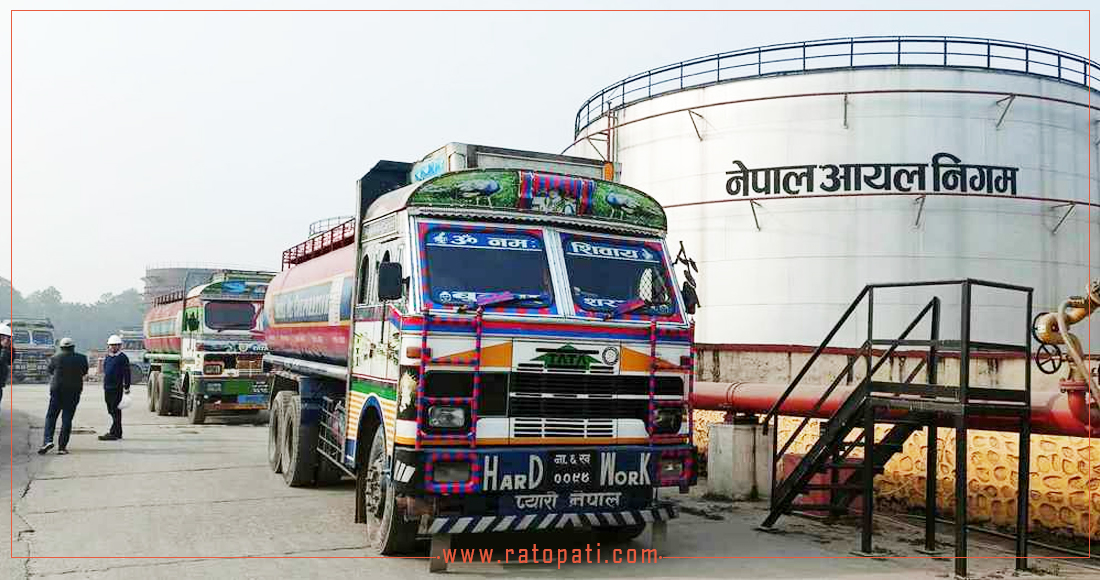
Kathmandu. Amid rising petroleum prices and rumors of shortages, discussions about imposing odd-even restrictions on vehicle operation have begun in the Nepali market. This topic is currently gaining traction across social media and various media outlets.
However, no official body has made any announcement regarding this matter so far. The official body authorized to impose odd-even restrictions on transport is the Department of Transport Management. But Director Srikanta Yadav states that the department has not yet made any decision concerning this.
According to him, while discussions have taken place about potentially implementing odd-even restrictions if supply issues arise due to the conflict in West Asia, no such decision has been finalized. "Discussions are ongoing, but no concrete decision has been made," said Director Yadav.
On the other hand, the Nepal Oil Corporation (NOC), which holds the primary responsibility for importing and distributing petroleum products in Nepal, has stated that there are currently no issues with the supply system. NOC Spokesperson Manoj Thakur confirms that despite the increased import prices, there are no supply problems at present.
"The supply of all petroleum products is currently regular. We are facing financial pressure because the prices have not been increased in line with the hike received from India. Other than that, there is no issue with the supply right now."
Where Did the Odd-Even Rumor Originate?
Following various rumors concerning the price and supply of petroleum products, NOC Executive Director Dr. Chandika Bhatta gave interviews to various media outlets regarding supply management and market conditions to dispel these rumors. During one such interview, he explained the odd-even vehicle restriction system as a potential means to reduce consumption.
Bhatta expressed a similar sentiment in an interview with Ratopati. He expressed similar views elsewhere too. The rumor that the odd-even system is being implemented in the market stems from this discussion.
NOC Spokesperson Thakur states that there is no justification in claiming that odd-even restrictions have been imposed based solely on the Executive Director saying that the odd-even system 'could be an option' in case of a shortage. He also mentioned that they are not the official decision-making body.
"He only said that if the war escalates and problems are foreseen in the supply system, this option can be considered. The decision rests with the Government of Nepal and the Department of Transport Management, not with us. This needs to be understood," says Spokesperson Thakur.
Is a Shortage Possible?
The main reason for the current apprehension regarding a shortage of petroleum products is the ongoing conflict in West Asia. India, Nepal's sole exporter, sources nearly 45 percent of its petroleum supplies from that region.
The suspicion of a petroleum shortage arises from the recent attacks on refineries in that region and the disruption seen in the main oil transit route, the 'Strait of Hormuz'. However, Iran is currently allowing Indian vessels passage through this strait, which falls within its sphere of influence.
Furthermore, India has indicated that it has already started sourcing petroleum products through alternative routes to mitigate the current issues. Therefore, stakeholders suggest that a major problem due to supply alone is unlikely.
Despite this, the possibility of a fuel shortage in Nepal in the near future cannot be entirely ruled out. The reason for this is the price.
On March 15, India sent revised prices to Nepal, increasing diesel by 54 rupees and petrol by 30 rupees. However, the NOC only increased the price of diesel by 10 rupees and petrol by 15 rupees. Due to this decision, the NOC is currently incurring a daily loss of over 4 billion rupees.
Under this situation, the corporation's accumulated profit is nearing zero. If this continues, the daily losses could lead to problems in making payments to IOC (Indian Oil Corporation). In such a scenario, IOC might reduce the export volume, which could lead to a petroleum shortage in Nepal.
The price increase in the international market has not stopped even after the 15th. It is almost certain that the price list received at the end of March will push prices even higher. Stakeholders suggest that if the prices cannot be increased or if the government cannot provide sufficient subsidy, a shortage might become visible.
Currently, elections have concluded in the country, but a new government has not yet been formed. With an interim government in place, the NOC appears to be waiting for the new government to decide on pricing. The NOC is preparing to make pricing decisions based on whatever the new government decides.
A senior official at the NOC says, "We have endured for 15 days. By the time the new price list arrives, a new government will also be in place. We will do whatever the new government says; if it says increase the price as much as necessary but keep the supply regular, we will do that; if it says we will provide financial support, we will do that too."
On Chaitra 13, Balendra Shah (Balen) is scheduled to be sworn in as the Prime Minister of the new government. Two days later, on Chaitra 15, IOC will send the new price list. The new government will be compelled to make a crucial decision concerning the daily lives of consumers just two days after its formation.
This specific news has been automatically translated by AI. As a result, there may be some inaccuracies or language errors.