Outgoing PM Karki Undecided on Releasing Inquiry Commission Report Before Departure

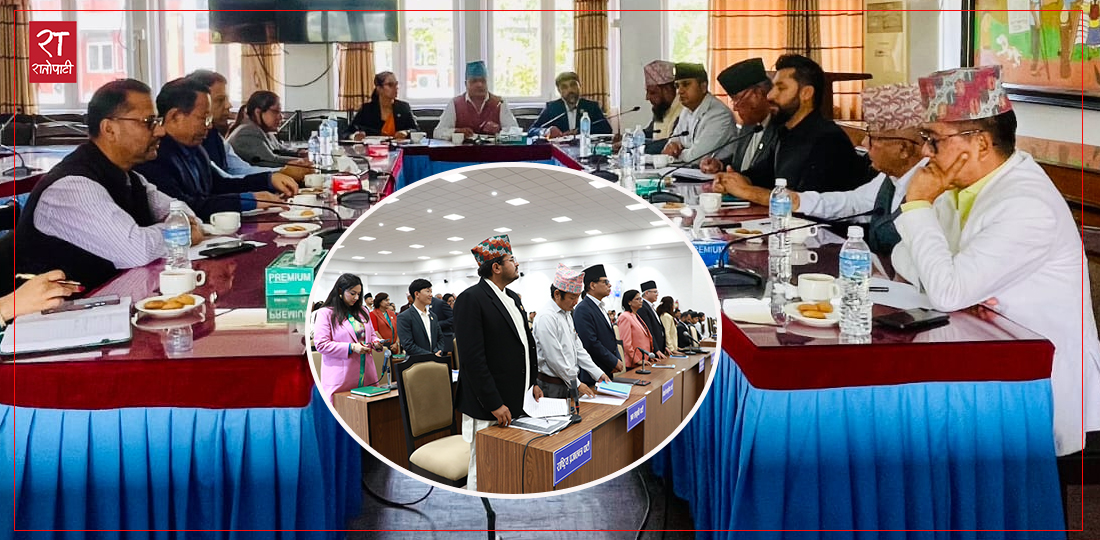
Kathmandu. Prime Minister Sushila Karki, who is set to complete her term and step down in a few days, is in a dilemma over whether or not to publicize the report from the commission led by Gauribahadur Karki. Even after receiving the report, PM Karki is struggling to reach a decision regarding the course of action.
However, PM's Press Advisor Ram Rawal stated that the Prime Minister is in close consultation with various stakeholders on how to initiate the process. "The Prime Minister is currently studying the commission's report," Rawal told Ratopati, "She will reach a conclusion on what to do only after completing the study."
The three-member commission led by Gauribahadur Karki submitted a 10,000-page report to the Prime Minister concerning the incidents of Bhadra 23 and 24, immediately after the elections concluded on Bhadra 24. After the report, prepared over nearly six months, reached the government's custody, the responsibility of whether to make it public or not, and whether to initiate action against those found guilty, now rests with the government.

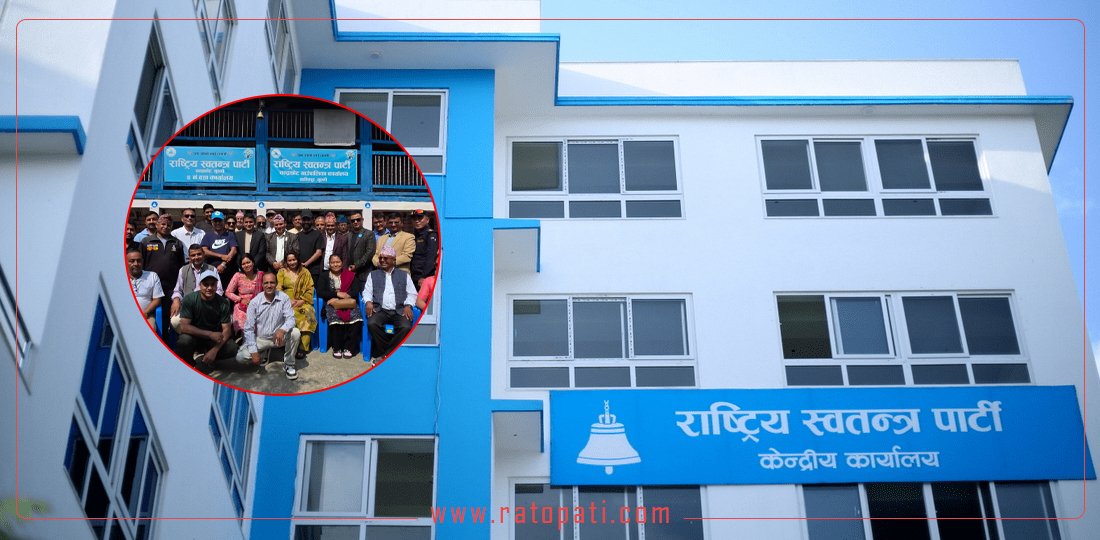
Following the National Independent Party (RSP) securing near two-thirds majority in the House of Representatives election held on Phagun 21, senior leader Balen Shah of that party is scheduled to be sworn in as Prime Minister on Chaitra 13. In a situation where a single-majority government is about to be formed, PM Karki is wavering between leaving the responsibility to the new government and departing only after initiating the process of implementing the report.
According to sources in Baluwatar, since Phagun 25, the Prime Minister has been in continuous internal consultation on whether to start the action process according to the report or leave it to the new government. "She is consulting with all stakeholders," a source from Baluwatar told Ratopati, "Mixed reactions are coming in."
PM Karki is hesitant because the report has recommended action against former Prime Minister KP Sharma Oli, former Home Minister Ramesh Lekhak, former IGP Chandrakuber Khapung, the then Chief District Officer of Kathmandu, high-ranking officials of the Nepali Army, and even some recently elected RSP-affiliated members of parliament.
_tDDJuKy7g7.jpg)
"In consultations with stakeholders, security chiefs and bureaucratic officials have suggested that it would be better to hand over the implementation of the report to the new government before leaving," said a source close to PM Karki. "This suggestion has primarily come from the Chief Secretary, Secretaries, and heads of security agencies."
They warned that publicizing the report during a transitional phase could make it very difficult to manage. "It is a kind of transitional phase even now. Publicizing the report in such a situation could be very difficult to manage," the source quoted a security chief's suggestion-laced question to the Prime Minister, "This is a matter that requires much thought and is serious. Why would you open a 'Pandora's Box' as you are leaving?"
Some leaders who are about to join the new government have also urged the Prime Minister to 'consider' the decisions and recommendations that will have long-term effects. However, Balen Shah, who is set to take the oath as PM on Chaitra 13, has not yet discussed this report with the Prime Minister.
In this situation, PM Karki and Home Minister Omprakash Aryal believe it would be better for the current government to implement the report and then depart, as two mandates have been received—the elections have been completed, and the commission's report has been received. Although the Prime Minister and Home Minister favor publicizing as much of the report as possible and initiating action based on the recommendations, it is reported that reaching a decision is difficult due to the suggestions going against the majority view.
_uT63EX331j.jpg)
When PM Karki met with leaders of various parties to thank them immediately after the elections, the issue of implementing the commission's report came up, and she tried to gauge their intentions. During that time, some suggested using 'their own discretion,' while others responded with, 'It's fine if you just make it public.'
Baluwatar's understanding is that leaders from Nepali Congress, UML, and others, while publicly demanding the report's implementation, have privately signaled against making it public. "The UML and Congress leaders have two different stances," a minister told Ratopati, "They challenge to make it public outside, but during private conversations, they show an inclination towards questioning why the rush is needed for sensitive matters."
According to Baluwatar sources, despite telling them this, leaders from UML, Congress, and CPN-Maoist Center are publicly demanding the report's release. The Nepali Congress, in its central committee meeting held just last Friday, decided to demand the immediate public release of the Gen-Z report. Other political parties have also continuously raised questions about the cause of the Bhadra 23 incident and the destruction on Bhadra 24.
_5t9kmdATKz.jpg)
Sources indicate that the commission has concluded that criminal offenses are applicable to some officials who were in the government at that time. The commission is reported to have suggested action regarding the Bhadra 24 incident based on the Bhadra 23 event.
Although no demonstrators died from police firing on Bhadra 24, most government and private properties were destroyed. On Bhadra 24, arson occurred at the Parliament Building, the President's Residence, the Prime Minister's Office at Singha Durbar, various ministries, the Supreme Court, and numerous government and private buildings.
Meanwhile, demonstrations are being held daily demanding that the truth of the Gen-Z movement be brought out and justice ensured. In this situation, if the government led by Sushila Karki does not make any decision regarding the report within the next three days, the responsibility for its implementation will fall on the shoulders of the Balen government.
This specific news has been automatically translated by AI. As a result, there may be some inaccuracies or language errors.