Timely Warnings Avert Disaster as Nepal's Early Warning Systems Prove Effective

Kathmandu. Last Friday, the sky suddenly turned overcast. A fierce windstorm threatened to lift the roofs off houses. The weather in the month of Chaitra was also cold. Hailstorms accompanied by lightning struck most parts of the country. Just two days prior, the Department of Hydrology and Meteorology had issued a forecast predicting heavy winds and rain.
This advance notice did not just remain a formal announcement; it became a practical means of effective precaution. Following the department's notice, schools immediately showed concern. Children in classrooms were sent home ahead of schedule. Parents became vigilant. Some carried umbrellas, while others went to school themselves to pick up their children. People heading to work left with raincoats. The promptness shown by the general public, keeping potential risks in mind, helped avert major accidents.
Based on the advance notice, decisions were made not to venture out unnecessarily, to postpone travel, and to stay in safe locations. This significantly mitigated major risks. As the windstorm began, incidents like electric poles falling and trees breaking occurred in various places. Electricity supply was also interrupted in some areas. However, despite these incidents, major human or significant physical damage was avoided. This event delivered an important message: with reliable advance information received in time, and a responsible reaction from citizens and institutions, the impact of a major disaster can be significantly reduced.
The Department of Hydrology and Meteorology issued a message from Bhadra 17 to 20, warning of heavy to very heavy rainfall in various parts of the country, with a risk of floods and landslides, advising people to stay safe wherever they were. Following this, other inter-governmental bodies began preparing for disaster management by following the department's information. The National Disaster Risk Reduction and Management Authority decided to halt the movement of long-distance and Kathmandu Valley-based vehicles for a few days due to the possibility of heavy rainfall in parts of Koshi, Bagmati, Gandaki, and Lumbini provinces during that period. This decision prevented loss of life for road travelers due to floods and landslides that time.
In Assoj of B.S. 2081, more than 35 people died when a passenger bus was buried by a landslide at Jhyaple Khola. When the landslide occurred at night, a microbus with license plate Lu 1 Ja 4578 departing from Butwal for Kathmandu, a bus with license plate Na 4 Kha 2270 heading from Gorkha to Kathmandu, and a microbus with license plate Ba 3 Ja 1345 traveling from Chitwan to Kathmandu were found buried by the landslide.
That year, the Meteorology Department issued an advance warning, urging people to avoid travel as much as possible due to the forecast of very heavy rainfall. However, other government mechanisms did not trust the department's information. The information was disregarded. Neither the passengers nor the vehicle owners believed the notice and suspended their vehicles for a few days.
On Asar 24, a flood occurred in the Lhende Khola on the Nepal-China border in Rasuwa. So far, 19 people have gone missing and seven have died, including both Chinese and Nepali nationals. According to flood expert Binod Parajuli, if there had been an early warning system for the flood that occurred due to the bursting of a supraglacial lake, the lives of the general public would not have been lost prematurely. "If we had received prior information about the flood in the Bhote Koshi River in Rasuwa, no one would have had to die prematurely," he says.
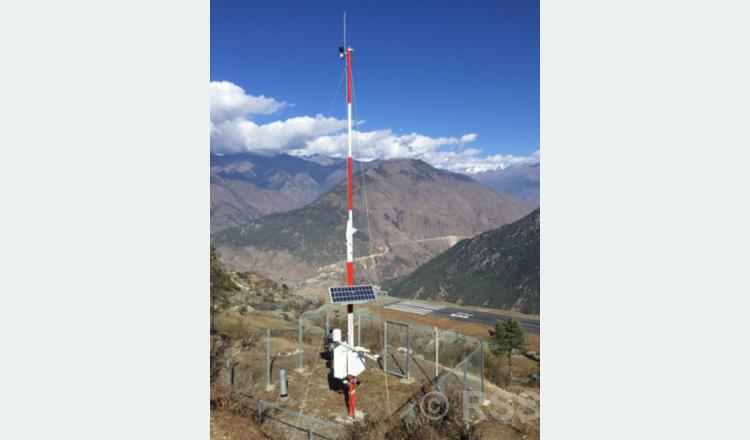
"Radar and bubbler sensors are installed around the river, the information about the rise and fall of the water level is collected in our data logger, and the information comes to our website through the communication model," says flood expert Parajuli. "Analyzing the possibility of a flood, we transmit information to the District Administration Office, police, army, Red Cross, and local disaster management committees and representatives of potentially affected communities."
Parajuli mentions that sometimes local residents, upon receiving advance flood warnings, flee towards the flood-prone areas. "To prevent locals from going where the floods are coming, we conduct training, seminars, and informational programs at the community level beforehand," he says. "Looking back at the past, there hasn't been a single year without floods in Nepal. Last year too, some parts of the Terai were hit by floods, but there was no human casualty in the areas where radar and bubbler sensors were installed."
Ten years ago, during the monsoon season, continuous rainfall from the sky caused a major flood in the Karnali River. The flood washed away the very existence of Rajapur in Bardiya. Sixty houses were swept away by the flood. But even with the major flood, it did not manage to sweep away the people there. There was property damage, but no human loss. Flood expert Parajuli states that the flood early warning centers and systems established by the government saved the people there. If those early warning centers and systems had not been established, the number of people who would have lost their lives prematurely due to the flood could have exceeded hundreds.
About 10 years ago, a major flood occurred in the Bheri River. That flood washed away the Jhamu market in Surkhet. In the blink of an eye, that market turned into a desert. About 26 people lost their lives prematurely. Many were orphaned, and many were disabled. They lost their homes, but the pain of losing relatives is still fresh for the residents there.
Now the question arises: why was there no human loss in Bardiya even though houses were washed away, but there was human loss in Surkhet? In Bardiya, an early warning center and system were installed to inform the general public that a flood was coming. Due to the flood early warning, the locals were able to move to safer areas. They succeeded in protecting their valuable belongings before the flood arrived. But in Surkhet, the technology to provide early warnings was not installed. If they had received prior warning that a flood was coming, as in Bardiya, 26 people in Surkhet would not have had to lose their lives.
In B.S. 2071, the Babai River experienced floods four times. Flood early warning technology was installed there. Therefore, people living in areas near the river moved to safer areas before the flood arrived. Because they moved to safe places, there was no human loss there.
Twenty years ago, new technologies for flood early warning had not been developed. At that time, the general public used to make predictions based on subterranean animals. They would guess that heavy rain might fall and a river flood might occur when snakes, frogs, and earthworms emerged from the ground. But this guess was sometimes right and sometimes wrong.
As time changed, tall towers were built just to watch when a flood might occur. People in the upper regions would climb the towers and watch the river. If the water level rose due to heavy rain, they would try to send warnings by shouting to the people in the lower regions. That too was not reliable.
It took time for information to reach the people in the lower regions after a flood occurred. And the general public could not manage to flee in time. Until 2008, the use of Human-Automatic Staff Gauges (water level measuring instruments) began. At that time, they would check the staff gauge to find out how high the water level in the river had reached and whether there was a possibility of a flood. If a flood was likely, local representatives were informed via Awaset. This technology was also not fast and efficient enough for people in flood-prone areas.
Developed countries started using radar and pressure bubbler sensors for fast and automatic early warning systems as early as 2000. After the United Nations conference held in Japan in 2005 suggested that flood-affected countries use radar and bubbler sensors to transmit flood early warning information quickly and easily, Nepal began using this technology from 2008.
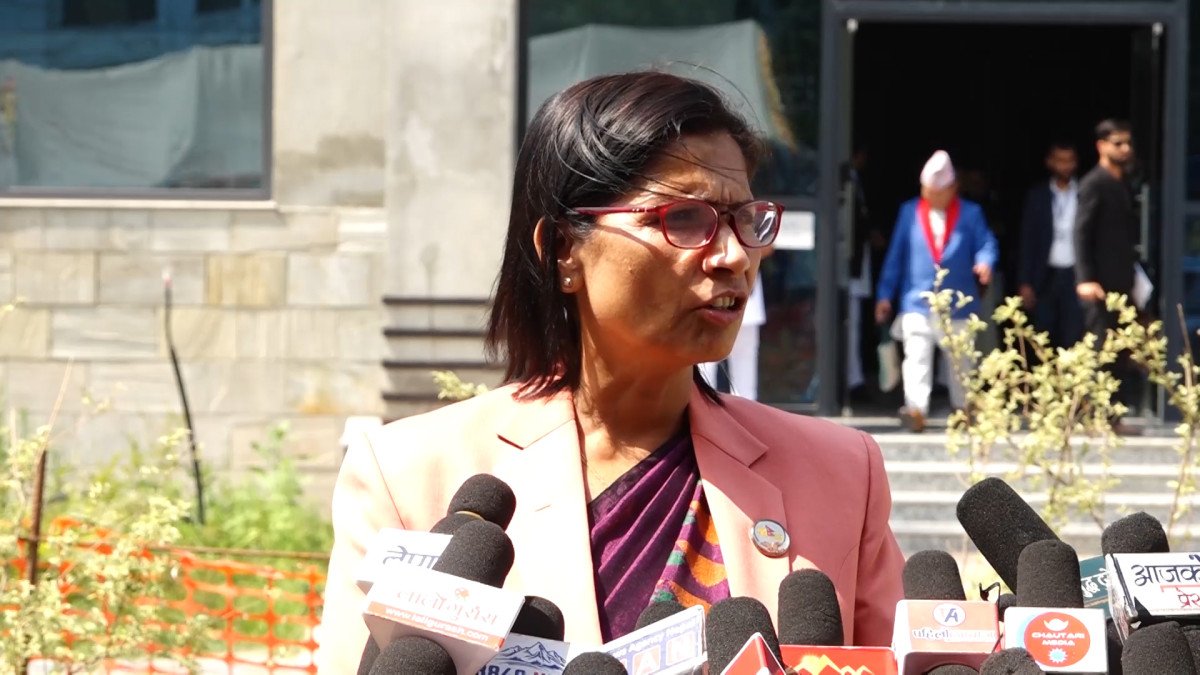
The Meteorology Department stated that it has increased its activity in disseminating timely early warnings to reduce human casualties from weather-related disasters. Dr. Archana Shrestha, Acting Director General of the Department, stated that reliable and timely information dissemination plays a significant role in risk reduction.
According to her, regular observation of hydrology and meteorology plays an important role in understanding the interrelationship between the Earth's water cycle process and the atmosphere. "This includes measuring indicators such as rainfall, temperature, humidity, wind speed and direction, and river flow," Shrestha said. "Based on such observations, weather forecasting, flood forecasting, and early warning systems are being operated. This is providing effective support, especially in managing monsoon-related disasters."
The Hydrology and Meteorology Policy 2081 mandates the systematic use of the latest technology, including the establishment and operation of measurement centers for water, weather, climate, and glaciers, as well as data and information collection, transmission, processing, and analysis.
According to Shrestha, the operation of over 500 weather measurement centers, over 200 hydrological measurement centers, snow depth measurement centers, glacier centers, aviation weather measurement centers, three weather radar centers, and one radiosonde center across the country plays a significant role in hydrological and meteorological observation.
Early Warning System to Become More Scientific
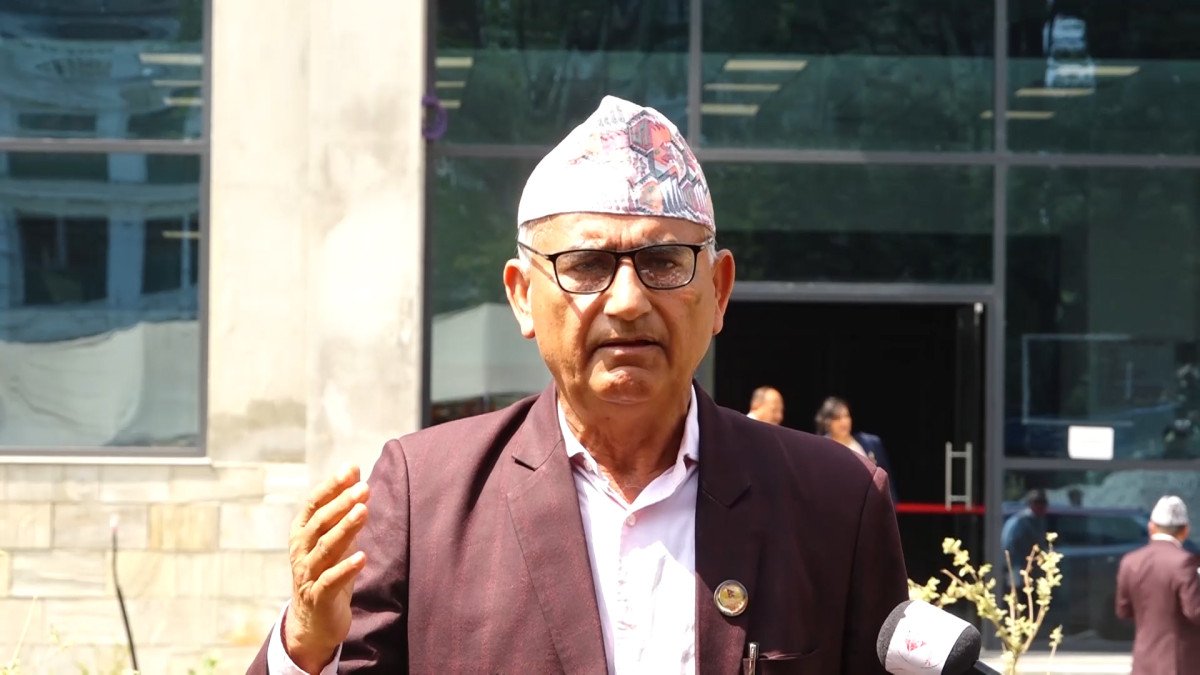
Minister for Energy, Water Resources and Irrigation Anil Kumar Sinha stated that the government plans to make the early warning system more scientific, effective, and accessible. Minister Sinha mentioned that for disaster risk reduction, timely information dissemination alone is not enough; its effective communication is equally necessary.
He pointed out that awareness can only be expanded to the community level if information is disseminated in the local language, emphasizing that enhancing public awareness is indispensable. "To make the early warning system effective, it is necessary to provide information in the language understood at the local level," he said.
Minister Sinha stressed the need to place special emphasis on research and the development and promotion of new technologies, informing that the government is committed to increasing investment in this sector. He stated that collaboration between government and non-governmental sectors is essential for strengthening disaster management and early warning systems.
Need for Landslide Early Warnings as Well
Although human and material losses due to floods have been decreasing due to early warnings, the development of landslide early warnings in Nepal has not been sufficient. Experts have pointed out the necessity of developing landslide early warning systems. Geologist Dr. Subodh Dhakal stated that if landslide early warnings can be developed, the damage caused by monsoon-related disasters can be reduced.
"In the case of floods, information is given about when it will rain and which river's water level is rising, which has reduced damage," he said. "But the difficulty with landslides is that one has to look at the water level to understand where the ground is moving. If there is sufficient water inside the ground and it comes out, we can estimate that a landslide might occur. Investment in landslide early warnings is necessary for this."
This specific news has been automatically translated by AI. As a result, there may be some inaccuracies or language errors.