PPR Vaccination Campaign to Target 250,000 Goats in Chitwan District

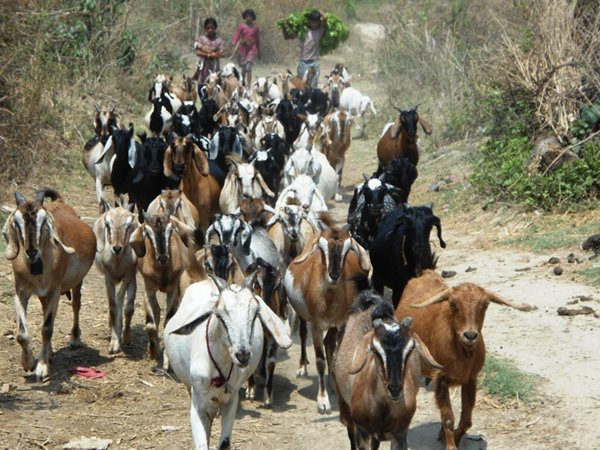
The 'PPR' vaccination campaign is set to commence in all seven municipalities of the district starting from the third week of this Chaitra. Under the campaign, a target has been set to vaccinate 250,000 goats. It is reported that there are currently three lakh goats being raised in the district.
According to Dr. Prabhat Neupane, Chief of the Livestock Service Office, this disease is caused by the 'morbillivirus'. He stated, "Once infected, 50 to 90 percent of goats die. Symptoms of this disease in infected goats include high fever, mouth sores, diarrhea, nasal and eye discharge, pneumonia-like symptoms, difficulty breathing, loss of appetite, and weakness, leading to rapid death."
Chief Dr. Neupane mentioned that the disease first appears in three to five days, and the goat can die within seven to ten days. The office has been administering vaccines against this disease in goats every year. Infection spreads through the saliva of sick goats, nasal discharge, eye secretions, and through fine particles containing the virus released into the air when the sick goat coughs or sneezes. Furthermore, contaminated drinking water, feed troughs, and used bedding can also spread the infection.
He advised commercial goat farmers to adopt biosecurity measures. To survive this disease, he explained that the tears, nasal discharge, and feces from an infected goat contain a large amount of the virus; therefore, the sick goat must be isolated from the herd to prevent the spread of infection.
Animals that die from the PPR disease must be buried or burned, and any materials that came into contact with the sick goat should also be burned or buried. To prevent this disease, all healthy sheep and goats over three months of age must be vaccinated against this disease every two years.
If new goats are to be brought into the farm, they must first be vaccinated against this disease. He urged that they be kept separate for three weeks and only mixed with the herd after being vaccinated against PPR.
This specific news has been automatically translated by AI. As a result, there may be some inaccuracies or language errors.