Nepal's Tuberculosis Control Chief Outlines Strategy to Combat Daily Deaths and Reach Underserved Patients

Kathmandu. The government aims to make Nepal tuberculosis (TB) free by 2035. However, current statistics show that 44 people still die daily from TB in Nepal, with over 190 new patients being added every day.
The reality that nearly 30,000 of the estimated 70,000 current TB patients remain outside the reach of health services poses a significant challenge to disease eradication. The National Tuberculosis Control Centre is currently running various campaigns to address this.
This is an edited excerpt from an interview with Dr. Bhuvan Paudel, Director of the National Tuberculosis Control Centre, focusing on the efforts and challenges in eliminating tuberculosis in Nepal:
- As you took the leadership of the National Tuberculosis Centre, Nepal is facing the alarming statistic of 44 daily deaths from TB. What is your primary 'vision' to prevent this?
The figure of 44 you mentioned is not just a statistic; it is the bereavement faced by 44 Nepali families every day. Tuberculosis does not kill suddenly; it wastes people away slowly. Many ignore it as a common cough or hide the disease due to social stigma. Despite our 90 years of institutional effort, we have not achieved the success we hoped for.
My primary vision is the simplification of technology and access. We will no longer wait for patients to come to the hospital. We will bring 'gold standard' technologies like AI-integrated X-ray and PCR directly to the doorsteps of the community. My main plan is to accelerate 'active case finding' by making the highest use of state resources. Our single goal is that no patient is left behind, and no one dies without treatment.
- It is estimated that about 30,000 patients are still outside the reach of the health system. What kind of 'aggressive' strategy is the Centre developing to bring those hidden patients into the treatment net?
Failing to bring 30,000 patients into the treatment system is a serious threat to public health because one active patient infects many healthy individuals in the community. To overcome this, we have put forward an 'Active Case Finding Strategy'. Our mobile teams will now reach every settlement.
For this, we are connecting two main forces. First—Female Community Health Volunteers (FCHVs), who are familiar with every household in villages and localities. Second—mobilization of youth and students. TB elimination is not solely the responsibility of doctors. We have a clear roadmap to remove social discrimination and bring suspected patients to health facilities through school education and youth networks. If anyone has symptoms like a cough lasting more than two weeks, evening fever, or weight loss, the community must play an active role in bringing them to treatment.
- Although medicines are free, more than 51 percent of patients face a huge financial burden (catastrophic cost) during treatment. How are you coordinating with other agencies to break this cycle of poverty?
This is a very bitter reality. Tuberculosis is not just an infection of germs; it is a problem linked to poverty and social backwardness. Even though medicines are free in hospitals, patients are forced to sell their assets because they cannot afford travel costs from remote areas or nutritious food.
To solve this, we have set a goal of 'Zero Economic Risk'. We have started arrangements in coordination with the Health Insurance Board to provide completely free insurance coverage, especially for patients with complex (multi-drug resistant) tuberculosis. Furthermore, policy facilitation is underway with local levels to provide transport and nutrition allowances for extremely poor patients. Partnerships with the private sector have also been strengthened so that patients visiting private hospitals receive the same concessions as government facilities.
- The goal of eradicating TB by 2035 seems impossible without the use of modern technology. How is it ensured that citizens in remote areas receive testing via AI and modern machines?
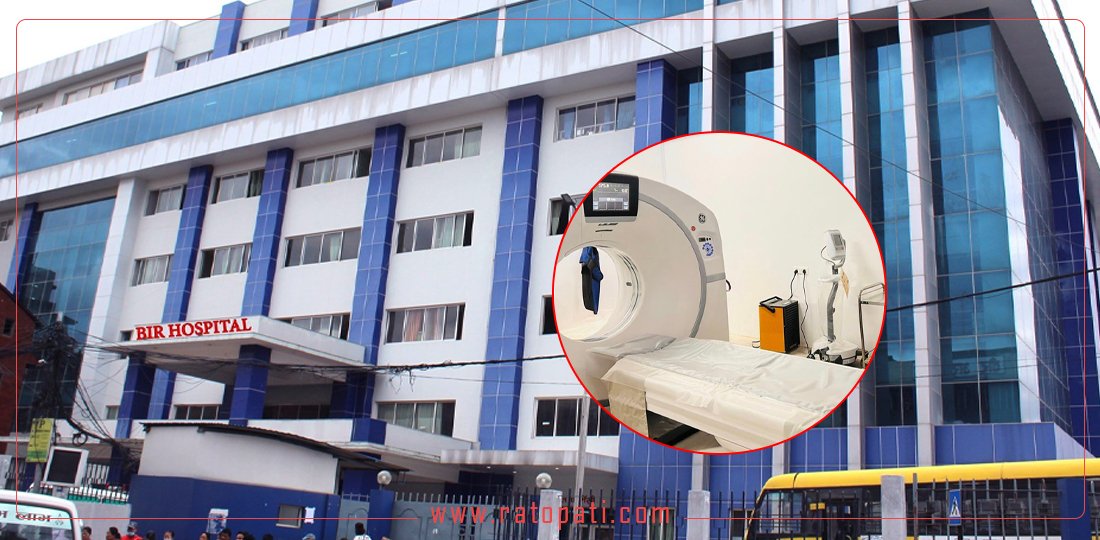
Technology is no longer a luxury; it is our essential weapon. We are decentralizing modern equipment, not limiting it to Kathmandu. 'Ultra-portable AI X-ray' machines are being deployed in all seven provinces, which can be taken to remote settlements.
Similarly, our goal is to expand PCR and GeneXpert machines up to district headquarters. A system has been arranged to collect sputum from places without machines, transport it to free testing centers, and send the results online immediately. Our objective is that no Nepali should have to harbor the disease due to a lack of technology.
- What is the role of local governments seen in the 'TB-Free Nepal' campaign? How is the Centre working in coordination with local levels?
The federal government provides policy, medicine, and technology, but the local government is the one that reaches the patient's home. Currently, this campaign is operational in about 150 local levels, but our goal is to make all 753 municipalities TB-free.
We are encouraging municipalities to prepare health profiles of their citizens and allocate separate budgets for tuberculosis. We have a policy to honor the municipality that performs excellently at the national level and provide it with additional resources. This goal will be difficult to meet unless the Ward Chairperson and Mayor take ownership by declaring, 'My ward is a TB-free ward.' Therefore, the local government is the real 'driver' of this campaign.
- What is your plan to involve youth and civil society in this campaign?
Medical science treats the disease, but society must uproot its cause. We plan to spread awareness about tuberculosis through the school curriculum and make students 'information carriers'. Active youth on social media will be mobilized as 'Champions Against TB'. They will act as a bridge to remove social stigma and spread public awareness. Without the energy of the youth force, meeting the long-term goal of 2050 is impossible.
- What message do you give to the general public to make the slogan 'Yes, We Will End TB' meaningful?
Tuberculosis is a disease to be won through treatment, not hidden. This slogan is not just words pasted on government walls; it is our shared national resolve. If you or someone in your neighborhood has suspicious symptoms, go to the nearest health facility without hesitation. Testing and medicine are completely free. Society should offer love and encouragement, not ostracism, to those affected by TB. Only when we unite can the dream of a 'TB-Free Nepal' be realized.
This specific news has been automatically translated by AI. As a result, there may be some inaccuracies or language errors.