Rastriya Swatantra Party's Deputy General Secretary Bipin Kumar Acharya Discusses Government Formation and Political Future on 'Talk Forward'


Kathmandu. Following its near two-thirds majority victory in the House of Representatives elections held on Falgun 21, the Rastriya Swatantra Party (RSP) is currently engaged in government formation efforts. Balendra Shah (Balen) is scheduled to take the oath as Prime Minister on Chaitra 13. There is significant public curiosity regarding whom the RSP will include in the government.
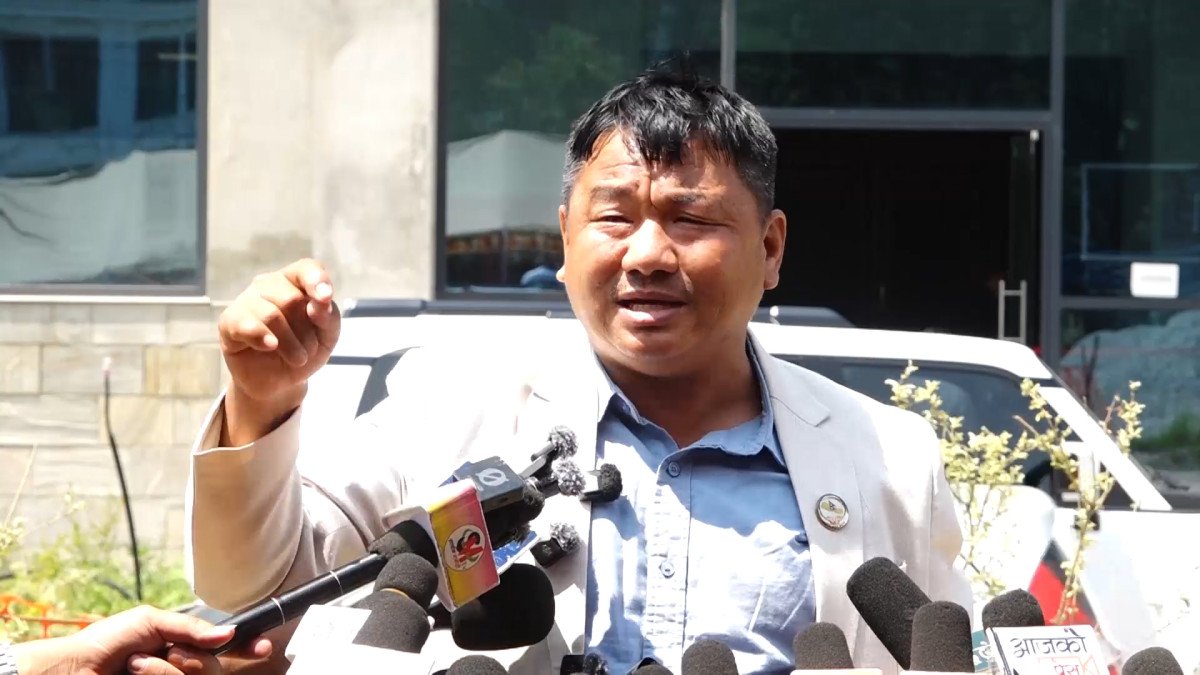
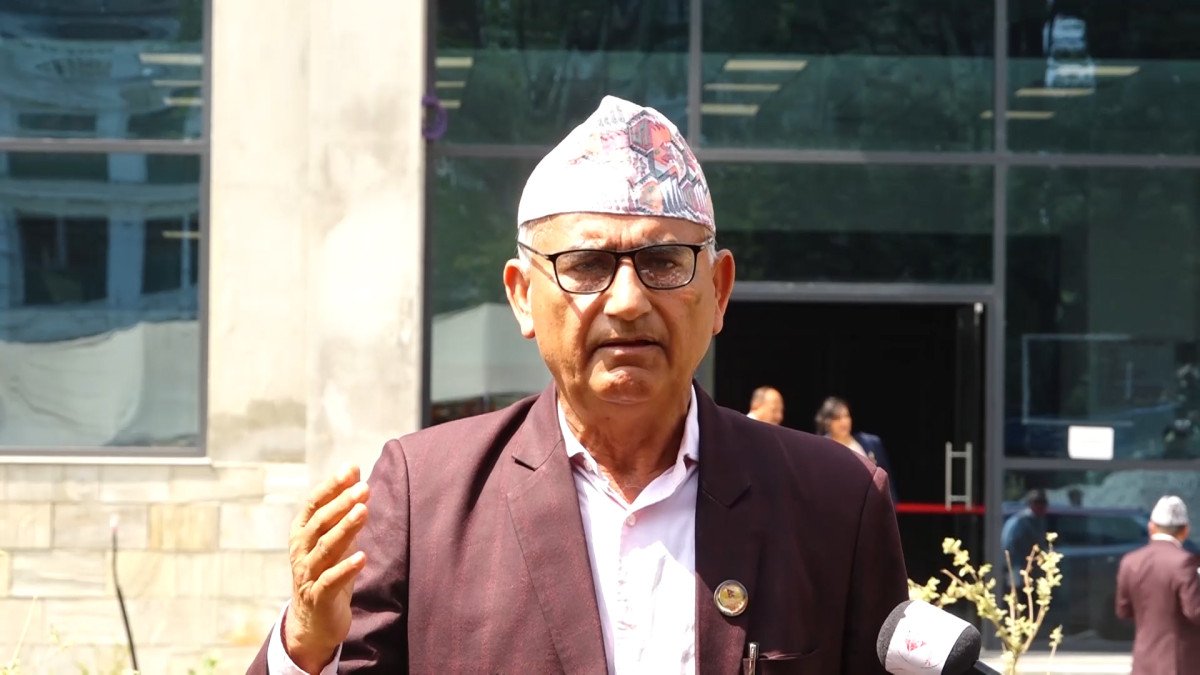
RSP Deputy General Secretary Bipin Kumar Acharya appeared quite busy when he came for an interview on the Ratopati podcast ‘Talk Forward’. Acharya, who secured his legislative journey by defeating CPN-UML General Secretary Shankar Pokharel by a massive margin (over 28,000 votes) in Dang Constituency-2, is considered very modest and soft-spoken within the RSP.
He was first asked: You defeated a leader considered a 'heavyweight,' CPN-UML General Secretary Shankar Pokharel, by a huge margin in the election. How challenging did you feel this constituency was when you initially chose it?
He gave a very meaningful reply: 'For me, the standard of a 'heavyweight' is not the years spent in politics. I always look at the impact a person has made on society or the country. Therefore, who is ahead of me never put pressure on me.'
Acharya believes that the focus should now shift from 'how the country will go' to 'how it should be taken.' 'We all entered politics understanding the problems and solutions. After five years, the public will evaluate our tenure based on the positive changes in economic and social indicators.'
On 'Talk Forward,' Acharya shared his reasons for entering politics, the RSP's plans for governing the country, public expectations, and a message to the older parties, alongside discussions on government formation efforts. Below is the edited excerpt of the interview (the full video can be watched and listened to):
You defeated a leader considered a 'heavyweight,' CPN-UML General Secretary Shankar Pokharel, by a huge margin in the election. How challenging did you feel this constituency was when you initially chose it?
For me, the standard of a 'heavyweight' is not the years spent in politics. I always look at the impact a person has made on society or the country. Therefore, who is ahead of me never put pressure on me. My main challenge was the complexity of suddenly coming to the 'front' as someone who always worked behind the scenes. The election result showed that citizens have extreme disillusionment with the old parties and a strong hunger for change.
The affection the people of Dang-2 showed me is a testament to my personal capability and belief in the agenda carried by the party. I hadn't expected such a large margin before the election, but I was confident of winning.
What is the role of Balen Shah (RSP Senior Leader, prospective Prime Ministerial candidate) in RSP's unprecedented victory?
There is no doubt that Balen Shah added great energy to our political journey. The sense of ownership citizens felt towards the election symbol 'Bell' was greatly triggered by the 'fusion' of Balen Shah and Rabi Lamichhane. Their arrival created a national wave that rekindled hope in politics among citizens.
The public has placed a huge mandate upon you. How prepared is the RSP for the responsibility ahead?
Citizens have given us such a clear mandate that we have no room to make excuses now. We do not have the luxury to say 'we lack numbers,' 'we lack capacity,' or 'we must align with others' like in the past. This is an 'unprecedented' mandate. If we act correctly, our political journey will be long; otherwise, this public wave can recede quickly. Our test now lies in government operation and delivery. RSP is neither panicked nor arrogant; we are simply conscious of our responsibility.
It is often said that the opposition must be strong in a parliamentary system, but the opposition parties are currently diminished. Are there voices from the public expressing concern that RSP might become arrogant?
The biggest opposition right now is the citizens themselves. They are closely monitoring our every move. The time for talk is over; the time for work has begun. The less the gap between our promises and our actions, the more public trust will be maintained. The shrinking of the old parties is not because we are the best, but because the public is tired of them. Therefore, we have no alternative but to keep improving ourselves.
At the recent orientation program in Gwarko, Lalitpur, Balen Shah's absence led to various 'conspiracy theories' or speculations. What is the reality?
There is no reason to harbor any doubt about this. He could not attend because of health issues. In our society, there is a tendency to spread negative rumors immediately if something goes wrong. But it was purely a health problem. There is no factionalism or misunderstanding within our party.
Party President Rabi Lamichhane delivered a balanced and very pragmatic speech at the orientation, which was praised. During that time, he instructed the party ranks 'not to join factions.' What is the meaning of this instruction?
No, this was merely a precautionary tone. Learning from history, we want to ensure that the maladies seen in older parties are not repeated here. As a guardian, he instructed the parliamentarians to be restrained and disciplined. The gravity of the words our parliamentarians speak is high, so he meant we should not be frivolous.
RSP is currently working on government formation. What will the upcoming cabinet look like? Is there a possibility of including experts from outside parliament?
Our main standard will be 'meritocracy.' The most capable individuals for running the ministries will come forward. As for outside experts, although it is mentioned in our manifesto, in the current context, the government is highly likely to be formed from within the 182 elected parliamentarians. We want to form a cabinet that makes citizens feel that 'the government has truly changed.'
RSP has a significant point in its manifesto: to initiate debate on changing the form of governance in favor of a directly elected executive. Now that a two-thirds majority has been achieved through this mixed electoral system, hasn't the old narrative been broken? Will this debate still be relevant?
It is too early to comment on this. However, our priority now will be on changing the current situation. For the common citizen, whether the country is moving in the right direction depends on how easy their kitchen budget is. We need to bring improvements to the daily livelihood of the people rather than focusing on macro factors. With a majority secured, delivery is now the main agenda.
There is a perception that RSP's stance on federalism and the provincial structure is unclear. Did the election attempt to clarify anything?
We were never against federalism. Our question is only about the structure of the Provincial Assembly and its expensive functioning. Our stance is that Provincial Assemblies should not become 'dumping sites' for managing leaders. Our responsibility is to preserve the current constitution and fix its flaws. Our path will be to first improve the condition of the citizens, raise economic indicators, and only then engage in serious debate about the constitutional structure.
You are a biotech engineer, someone who worked in television; how did you suddenly plunge into politics?
Two things are important in my life: creative ability and risk-taking. Seeing the disorder in the country, every citizen feels like 'this thing needs to be dismantled.' I had two options—to sit and curse the leaders, or to become a leader myself and bring change. I chose the second option. Politics for me is not a choice of interest but a compulsion. We want to do politics in such a way that tomorrow, no other expert or youth is compelled to enter politics out of necessity.
Politics is service, not a profession, but it has remained like a profession until now. One must also run their life. How will you transform politics from a profession to service?
The day politics becomes a profession, politics becomes corrupt. Politics must remain service. My life should be sustained by my non-political work. When I make politics a means to improve my standard of living, I become corrupt. Therefore, we view politics as 'service.'
Some RSP parliamentarians have announced they will not take salaries and benefits. Can this be considered a 'stunt' or not?
If an individual says they will 'contribute' without taking state benefits, it should not be viewed negatively. Many friends are successful and financially stable in their fields. If someone says they will use their remuneration for social work, that is their personal choice. The main thing is transparency—the 'source of income' must be clear.
How will the country move forward now? How will the expectations of the citizens be met?
Now we must focus on 'how it should be taken' rather than 'how it will go.' We have no escape route by saying we are trying. We all entered politics understanding the problems and solutions. After five years, the public will evaluate our tenure based on the positive changes in economic and social indicators.
I also urge the parties in the opposition: please become civilized and strong. Ask us questions based on facts. Only when the opposition is strong are we compelled to walk the right path. The environment should be created in the next election where citizens can choose not between 'right and wrong,' but between 'excellent and even more excellent' candidates. This will be the victory of our democracy.
Video/Photo: Manoj Khadka/Ratopati
This specific news has been automatically translated by AI. As a result, there may be some inaccuracies or language errors.