NRNA Proposes Three Ambitious Projects to Channel Expatriate Skills and Capital into Nepal's Development


Kathmandu. The Non-Resident Nepali Association (NRNA) has proposed three ambitious projects with the objective of mainstreaming the skills, capital, and technology of Nepalis residing abroad into the development of Nepal.
Senior Vice President and Head of the 'Trade and Investment' Department, Robin Sherchan, informed that three projects with far-reaching impacts on Nepal's health, education, and transportation sectors have been proposed. Sherchan stated that the meeting held for three days immediately following the NRNA's 12th Global Conference approved moving the projects forward. As per the mandate given by the meeting, the process to materialize the projects will be advanced through the department under his purview.
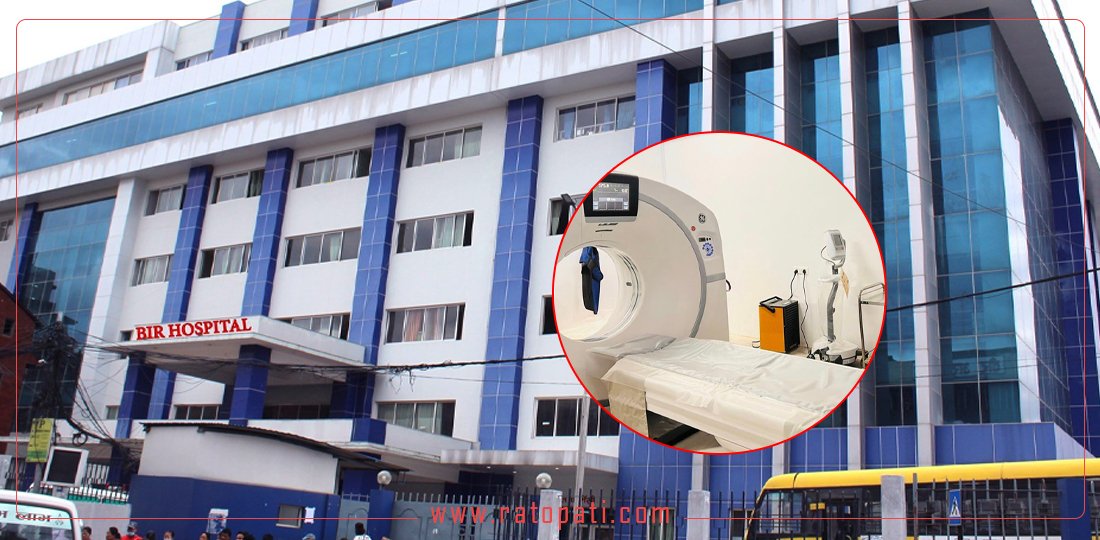
NRNA Hospital and Care Home
According to Senior Vice President Sherchan, the first and most significant project put forth by the association is the 'NRNA Hospital'. He mentioned that this will not just be a regular hospital, but an integrated 'Multiple Complex' featuring a retirement home, care home, and a safe environment for children to play and grow.
The NRNA believes this project will prove to be a milestone, especially for the care and support of the parents (father-mother) of Nepalis living abroad. Sherchan said, 'Many of our parents are alone at home. Keeping their health and safety in mind, we plan to build an international-standard hospital and care home.' It has been stated that not only Nepalis but also the general public will be able to receive services at this hospital. It is expected that this will add international standard services to Nepal's health system. The association also plans to bring in technology by coordinating with specialist doctors from abroad for the hospital.
Concept of NRNA School
Investment for this includes the preparation of a model for a NPR 10 billion NRNA Development Fund. Discussions are underway for this fund to have a partnership involving all types of NRNA investors, non-resident Nepalis, and the Government of Nepal.
The second important project is the 'NRNA School'. Sherchan stated that the plan is to establish this school to connect second-generation Nepali children born and raised abroad with the Nepali language, culture, and their roots. According to him, this project will help bring Nepali children scattered across various countries of the world onto a common platform.
It has been stated that this school will provide international-standard education alongside the Nepali curriculum. This will specifically connect the children of Nepalis residing abroad emotionally with Nepal and create an environment where they might choose to serve in Nepal in the future.
State-of-the-Art EV Double Decker Bus Service
The third project of the NRNA is the EV double-decker bus service to organize public transportation in the Kathmandu Valley. This project is claimed to be very effective in reducing increasing traffic congestion and pollution. According to Sherchan, the proposal is to operate these modern electric buses along the Ring Road and main urban areas of Kathmandu.
Discussions have already been held multiple times with the Kathmandu Metropolitan City and concerned bodies regarding this project. 'We have studied not only bringing the buses but also how to operate them and how to assist in traffic management,' Sherchan said. He stated that this project aims to increase public trust in public transportation and realize the concept of a green city.
Investment Model
Senior Vice President Sherchan stated that all three projects will be advanced through the 'NRNA Trade and Investment' department. It has been stated that the projects will be executed on a Public-Private Partnership (PPP) model, with necessary arrangements made to ensure all NRNS feel a sense of ownership. Sherchan added that the implementation of the projects will be done in phases. Accordingly, the first phase will involve coordinating with the government to resolve land acquisition, licensing, and legal hurdles. The NRNA states that since these projects are linked to the prestige of the entire Nepal, and not just an individual or organization, the cooperation of all parties is necessary for their success.
To attract investors to the fund, the association has decided to conduct a massive campaign. For this, the association has decided to organize a 'Road Show' program sequentially in its six regional structures: America, Asia, Oceania, Middle East/Malaysia, Africa, and Europe.
It is natural for legal and procedural complexities to arise when advancing any large project. Sherchan stated that attention will be paid to completing this work quickly within government policies and regulations. He said, 'The cooperation of the Government of Nepal and relevant bodies is indispensable for us to work. We are not just bringing investment; we are also trying to bring a work culture to Nepal.'
If these projects take shape in their implementation, they will directly create employment in Nepal's economy and are expected to further strengthen the 'Return to Nepal' campaign. The NRNA believes that positive cooperation will be received as the next government will be different from the previous one.
A model for a NPR 10 billion NRNA Development Fund has also been prepared for investment. Discussions are underway for this fund to have a partnership involving all types of NRNA investors, non-resident Nepalis, and the Government of Nepal.
Development Fund to be Launched Immediately
The newly elected executive committee has also decided to immediately launch the 'NRNA Nepal Development Fund' with a capital of NPR 10 billion with the objective of bringing economic investment into Nepal.
The statement issued by spokesperson Som Sapkotta mentioned that the association, chaired by Hemraj Sharma, has decided to request the government to arrange the necessary regulatory framework to fully operationalize the fund. He stated that through this fund, the capital of non-resident Nepalis will be mobilized in Nepal's projects.
To attract investors to the fund, the association has decided to conduct a massive campaign. For this, the association has decided to organize a 'Road Show' program sequentially in its six regional structures: America, Asia, Oceania, Middle East/Malaysia, Africa, and Europe. It is believed that these programs will inform Nepali investors abroad about potential projects in Nepal and inspire them to bring capital.
This specific news has been automatically translated by AI. As a result, there may be some inaccuracies or language errors.