China's Robotics Revolution: Automation Aims to Replace Factory Workers, Sparking Global Economic Shifts


Chen Liang, founder of Shanghai-headquartered Gucci Robotics, appears at first glance to be a calm and serious individual. At 40 years old, the tall, bespectacled Chen has a generally modest demeanor, but when he discusses the technology he has created or the future where robots will displace humans, a distinct enthusiasm and spark light up his face.
His company, Gucci, builds machinery for major Chinese car brands like BYD and Nio to install wheels, dashboards, and windows. The name 'Gucci' is derived from the Chinese word 'Guzhi,' meaning 'unwavering intelligence.' Interestingly, this name sounds similar to the Italian luxury brand Gucci, which has become an added attraction for Chen.
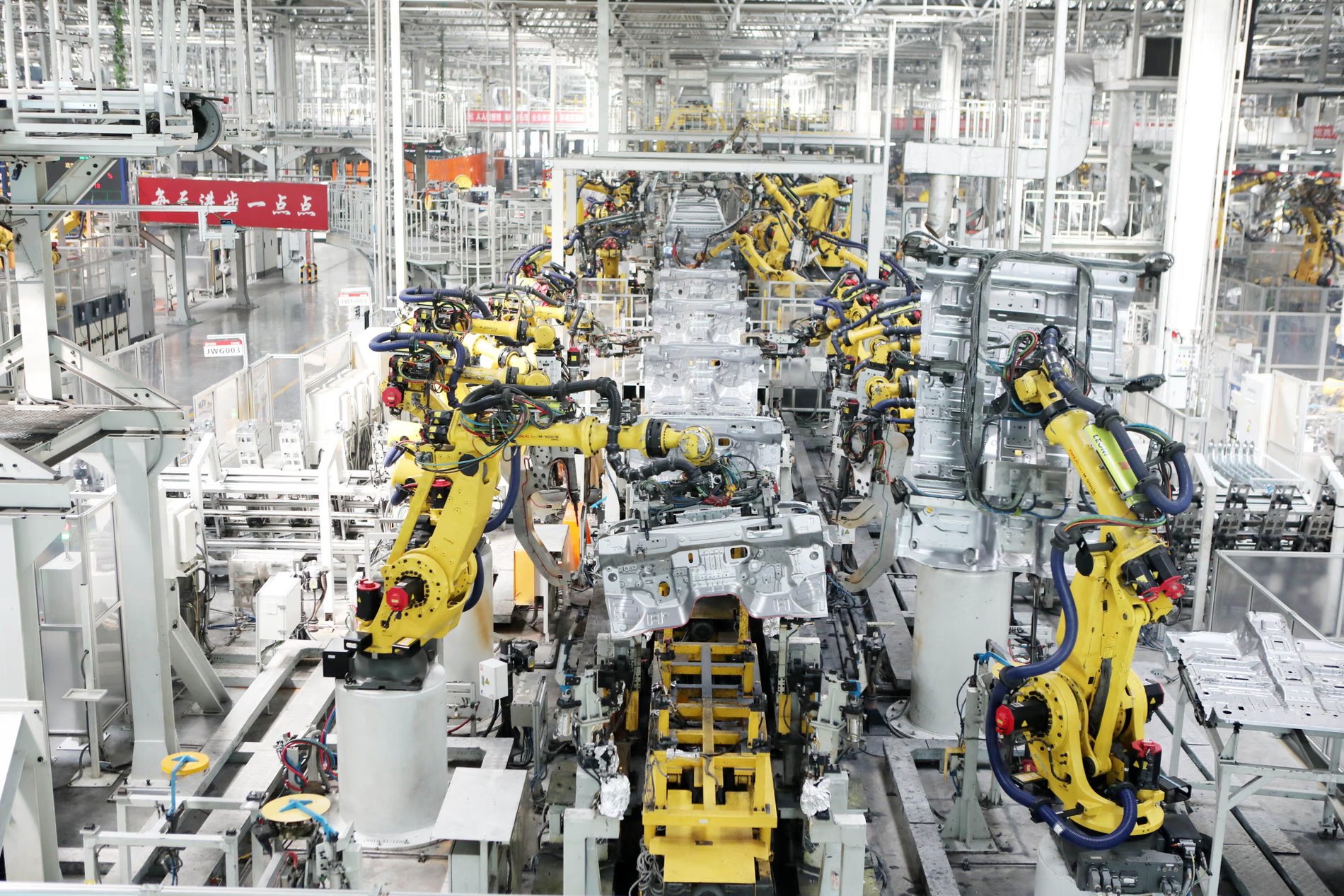
For the past two decades, Chen has been dedicated to solving one engineering problem: how to remove, or in his words, 'liberate,' as many workers as possible from car factories. When visiting the Gucci headquarters in the western suburbs of Shanghai late last year, engineers were busy modifying robots according to customer needs in the warehouses.
Chen founded Gucci in 2019 with the goal of automating the most difficult task in car manufacturing: 'final assembly.' This is the stage of production where dashboards, windows, wheels, and seats are installed. Currently, his robots can install wheels and windows without human assistance, but according to Chen, 80 percent of the final assembly work still needs to be automated.
- A New Era of AI and Robotics
Artificial Intelligence (AI) has become a part of daily life in China. However, what excites Chinese politicians and industrialists the most is the progress being made in the field of robotics. The combination of AI and robotics has the potential to completely transform the world of work.
Behind this revolution is 'Deep Learning' technology, which powers large language models like ChatGPT. Scientists believe that just as ChatGPT learned language, machines can learn to perform tasks in the physical world, not by following rules, but by absorbing vast amounts of data. The ultimate goal is to create humanoid robots that look and act like humans, capable of performing labor in factories.
China is investing heavily to achieve this goal. At the end of last year, China announced a fund of 100 billion pounds for strategic technologies such as quantum computing, clean energy, and robotics. Currently, about 140 companies in China are competing to build humanoid robots. These robots amazed the world by performing acrobatics and martial arts at the Lunar New Year Gala in February. While last year's robots were performing simple dances, this year they were doing 'parkour' and 'cartwheels.' The message was clear: robots are coming, and China will lead the way.
- The Irony of American Industry and Chinese Machines
In one of Gucci Robotics' warehouses, a team of General Motors employees was testing the wheel-installing machines before sending them to Canada. An American engineer named Jack (name changed) was met there, who works in GM's production optimization department.
Jack stated clearly, 'My job is to remove people from the production line.' General Motors sets targets for workforce reduction every year, and Gucci's machines will displace twelve workers in the same factory.
There is an irony here: although the Donald Trump administration talked about bringing industries back to America, many of the machines needed to 'Make America Great Again' come from China. More than half of the new factory robots installed worldwide are in China alone. Chen says, 'The capabilities of American and Chinese engineers are the same; the only difference is speed and cost. We might have 1,000 people to solve one problem; they only have 100.'
When the author asked Chen if Americans elected Trump to get their jobs back, Chen dismissed it as mere 'illusion.' According to him, young people today do not want to do the hard and monotonous work of factories. 'If young people in China are hesitant to do factory work, why would Americans do it?' he questioned.
- Galbot and Vision-Language-Action Models
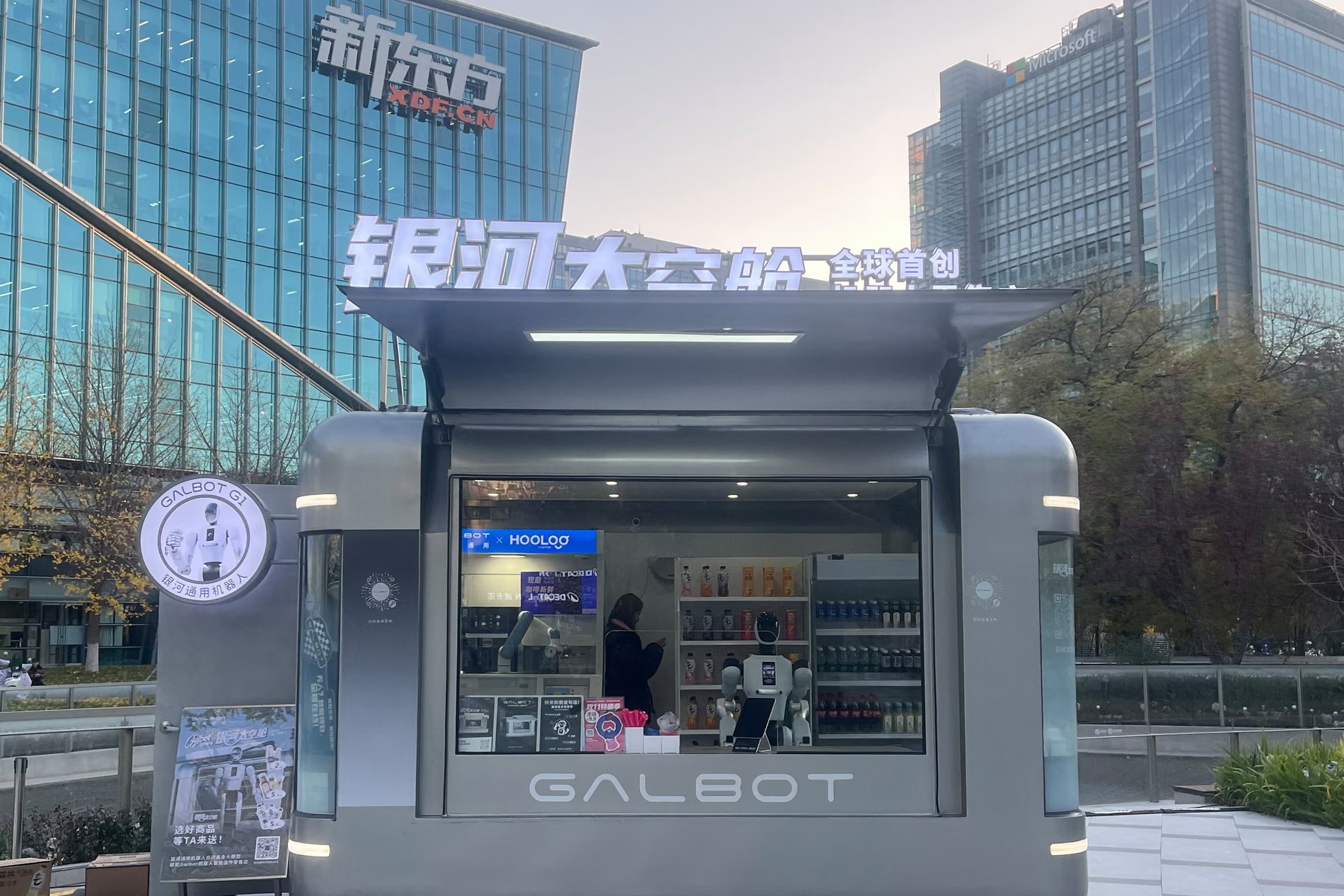
In Beijing, Chen took the author to the headquarters of a startup called 'Galbot.' While many companies focus on making robots dance or run, Galbot concentrates on simple but reliable tasks like picking up and placing items. According to its founder, Wang He, their robots are being used to dispense medicine 24 hours a day in Chinese pharmacies.
Older robots were coded for every movement. But now, through Vision-Language-Action (VLA) models, robots are learning to work in unfamiliar environments just like humans. Galbot aims to deploy 10,000 robots in retail and factory work within the next three years.
An interesting discussion took place between Chen and Galbot's engineers about how to teach a robot to tighten a screw. This is an easy task for humans, but for a robot, it requires making many subtle decisions, such as locating the hole, aligning the screw, and applying the correct pressure. They set a goal: for a robot to be useful in a factory, it must tighten a screw in less than 8 seconds.
- Unitree and the Power of China's Supply Chain
If you have seen videos of Chinese robots dancing or performing Kung Fu, it was likely made by Unitree. Last year alone, it sold over 5,500 humanoid robots, the highest number globally. Even Elon Musk has praised its progress.
The secret to Unitree's success lies in China's supply chain. Cities like Shanghai and Shenzhen have such a dense network of hardware suppliers that robot manufacturers can obtain necessary parts quickly. Work that might take weeks in Silicon Valley can be done in a single day in China. This is why 330 different types of humanoid robots are being built in China.
However, there is also a geopolitical shadow in this field. American lawmakers expressed concern after videos surfaced showing Unitree's robot dogs equipped with machine guns. Although the company claims it does not sell robots to the military, Chinese officials seem keen to keep this sector highly secretive.
- The Invisible World of Leju Robotics and Teleoperators
At China's largest robot training center on the outskirts of Beijing, Leju Robotics is training its robots. Here, humans called 'teleoperators' wear Virtual Reality (VR) headsets to control the robots' arms and teach them tasks like picking up potatoes, wiping tables, or pouring water.
About 100 young people work in these training centers. They come from villages and vocational colleges. Their job is to make the robot perform the same activity repeatedly all day so that the robot's AI can learn from that data. Although officials call this new vocational training, the work is very tedious and requires one to become machine-like. The irony is visible here: humans must become like machines to train a robot to become human-like.
These young workers earn between 6,000 and 10,000 Yuan per month. Are they the future robot operators or the last generation of workers to be displaced by robots? This question remains unanswered.
- Huawei Factory and the Reality of Final Assembly
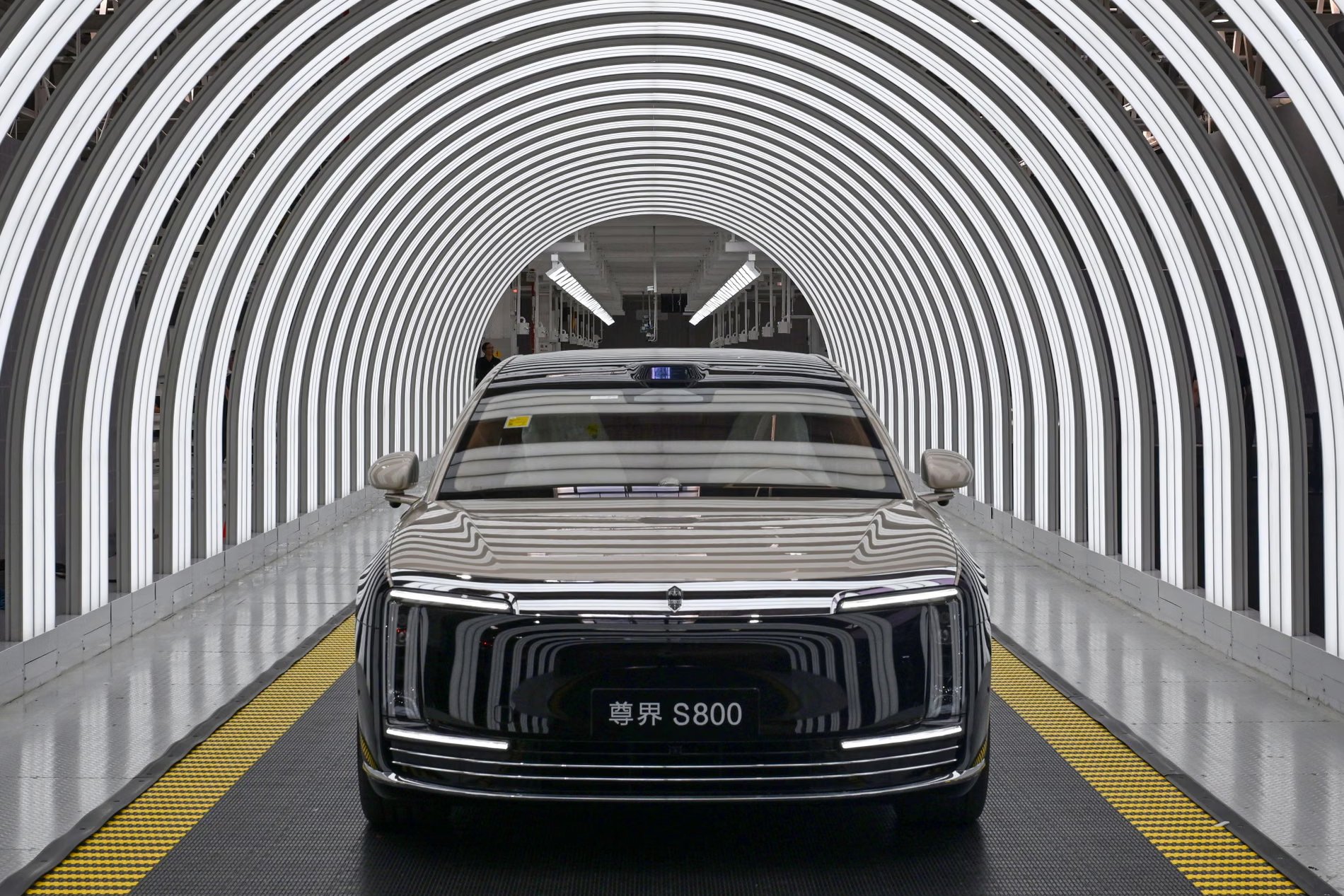
Many of Chen Liang's robots are deployed at Huawei's new factory in Hefei city. This factory is so advanced that it produces more cars than the American city of Michigan. Inside the factory, the task of installing dashboards is fully automated.
As Chen guided the author through the factory, he pointed out areas where people were still bending over to tighten screws. He said, 'This kind of work causes long-term spinal damage, so it is better to have robots here.'
Currently, there are 120 million workers in Chinese factories. Chen estimates that by the 2030s, most assembly work will be fully automated. When the author asked about the future of students currently undergoing vocational training, Chen replied confidently, 'They will certainly have to change their careers.'
- Challenges and the Path Forward
Although China's leap in robotics appears impressive, it has its own problems. China is currently experiencing rising unemployment and economic slowdown. Many people are asking: if robots do all the work, what will humans do? Intense competition in industries has led to a price war, making it difficult for companies to make a profit.
At the end of the report, there is a significant quote from Chen Liang. Despite talk of decoupling or separation between the US and China, in reality, both need each other. Chen admits that he learned discipline and quality control from American companies like General Motors. 'Working with Americans is no longer optional; it has become mandatory,' he said with a laugh, 'And another thing, Americans pay on time.'
China's robotics revolution is not just a technological development; it is a grand campaign to change the definition of labor and the structure of the global economy. On one hand, it promises to free humans from difficult and harmful work, while on the other, it raises fears of job losses for millions.
Visionary and bold industrialists like Chen Liang are bringing closer a future where machines will manage the fundamental structure of our society. However, the challenge of managing the social and economic tremors this change will bring remains.
This specific news has been automatically translated by AI. As a result, there may be some inaccuracies or language errors.