Balen Shah Stuns K.P. Sharma Oli in Jhapa-5, Shattering 'Impregnable Fortress' in Major Political Upset

Biratnagar. An era in Nepali politics has concluded, while a new one has dawned. Jhapa Constituency No. 5, long considered the impregnable fortress of CPN-UML Chairman K.P. Sharma Oli, has been demolished by Balendra (Balen) Shah, who carried the wave of change.
Former Prime Minister Oli, who had been continuously victorious since 2048 BS except for one election, was defeated in his own stronghold this time by a massive margin of 49,614 votes. He, who had been inflicting humiliating defeats on the opposition until yesterday, was forced to suffer an unexpected loss this time.
According to the final vote tally announced by the Election Commission, Balen Shah secured 68,348 votes, while UML Chairman Oli received only 18,734 votes.
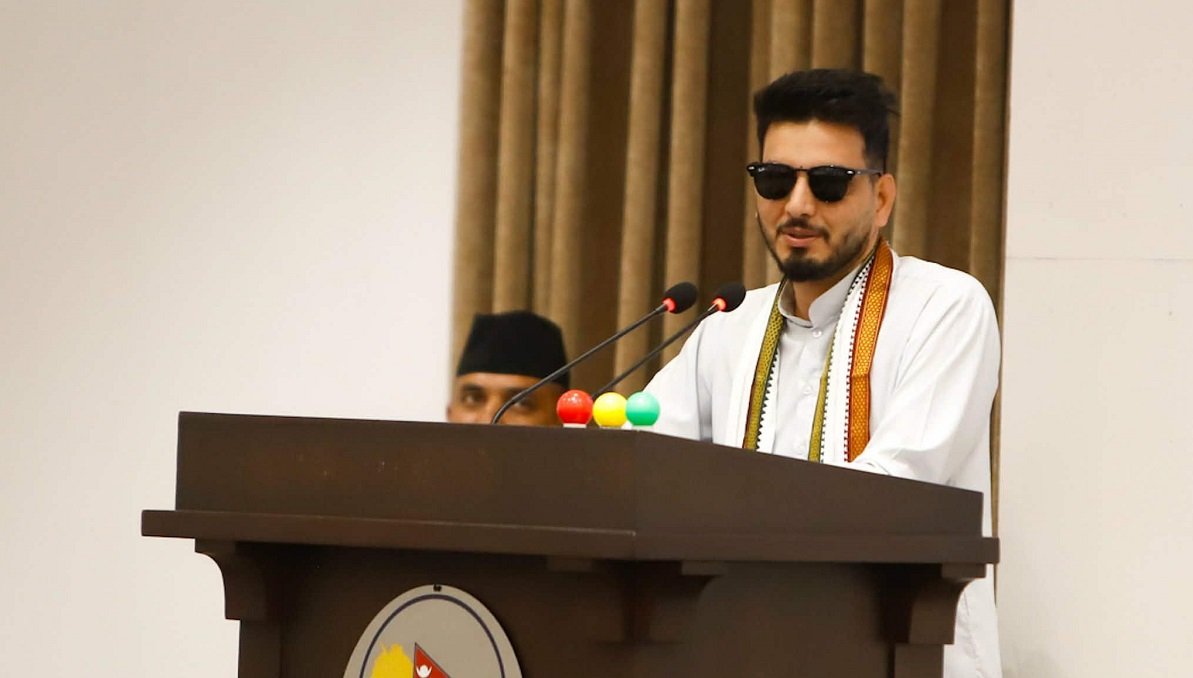
When Balen Shah, popular among the new generation, left the post of Mayor of Kathmandu Metropolitan City to contest in Jhapa-5 under the 'Bell' symbol of the Rastriya Swatantra Party (RSP), many considered it a 'risky move'. However, the result has stunned everyone. While many had predicted Balen Shah's victory in the final stages of the election, no one had imagined such a large margin of victory.
Oli's loss by a 'negative' margin of 49,614 votes this time proves to be the biggest shock of his political career, compared to his wins by margins of 28,000 votes in 2074 BS and 28,000 votes in 2079 BS.
Oli won from the then Jhapa-6 in 2048 BS by defeating Congress's Keshav Kumar Budhathoki by a margin of 4,587 votes. In 2051 BS, Oli again defeated the same Budhathoki by 4,459 votes.
In 2056 BS, Oli defeated Kashilal Tajpuriya by 5,393 votes. However, in 2064 BS, Oli was defeated by the then Maoist candidate Bishwadeep Lingden from Jhapa-7 by just 116 votes. This was Oli's first defeat.
After that, in 2070 BS, Oli defeated Congress's Suresh Kumar Yongya by 6,959 votes, and in 2074 BS, he defeated Congress's Khagendra Adhikari by 28,842 votes, and the same Adhikari again in 2079 BS by 28,576 votes.
The anger visible among the youth following the 'Gyanji' rebellion on Bhadra 23 and 24 last year proved fatal for Oli. Balen made the crackdown on that movement his main agenda. Thousands of new voters and youths in Jhapa trusted Balen's popularity over old talks of development.
Oli, who won by huge margins with the support of the Maoists in 2074 BS and the RPP in 2079 BS, was alone this time. RPP's Laxmi Prasad Sangraula and CPN's Ranjit Tamang contested as candidates themselves. Similarly, Samir Tamang of the newly formed Shram Sanskriti Party also chipped away at Oli's vote bank.
Balen succeeded in converting the public disappointment, stemming from the failure to meet expectations despite becoming Prime Minister multiple times and events like the dissolution of parliament, into a call for 'change'.
There were those who predicted an easy win for Oli after the Nepali Congress fielded its first female candidate, Mandhara Chimariya. However, statistics show that those who did not vote for Mandhara instead cast their votes for Balen instead of Oli.
Oli's defeat, despite the UML's strong organization and grassroots network in Jhapa-5, has caused an earthquake within the party. The leader who championed the slogan 'Prosperous Nepal, Happy Nepali' failed to retain the trust of the people in his own constituency. His defeat casts a shadow of uncertainty not only over his own future but also over the future political direction of the UML.
Oli, who became the pivot of national politics after taking charge of the party on Ashadh 31, 2071 BS, will remain outside the parliament this time. Political analysts conclude that despite his image as a development-lover and nationalist, Oli suffered a humiliating defeat in his own stronghold due to his failure to recognize the footsteps of time and the aspirations of the youth.
What did Oli do to ensure his victory?
K.P. Sharma Oli initiated a flood of development projects (infrastructure development) in Jhapa primarily to safeguard himself from political threats. Whether through planned projects or by accepting proposals from those requesting them, he poured state treasury funds indiscriminately. Furthermore, past actions clearly show that while in office, he prioritized individuals from Jhapa, especially his own constituency.
For this House of Representatives election, he included 27 candidates from Koshi Province in the 110-member proportional representation closed list he submitted. Among those, 9 were from Chairman K.P. Sharma Oli's home district.
Those included in the UML's proportional representation list from Jhapa are Narmadadevi Shiwakoti, Lata Prasai, Jit Bahadur Darji Gautam, Menuka Kafle, Bidyananda Singh Rajbanshi, Nita Ghatani, Binakumari Sah, and Anita Kandangwa. Som Portel, who was also placed on the proportional list, was made a National Assembly member after resigning from his position there.
Moreover, since being elected Chairman in the UML's 9th General Convention (2071 BS), K.P. Sharma Oli has provided as many opportunities as possible to UML members from his home district. Not only did he pour development budgets into the district while he was Prime Minister, but he also gave numerous opportunities to the people of Jhapa. The unstated condition for this was being a UML member and his supporter.
In the party's 11th General Convention, he ensured the victory of Hikmat Kumar Karki as Secretary from his panel from Jhapa. Seventeen individuals, from Devendra Dahal to Gyanji Elisa Gautam, were accommodated in the Central Committee.
In the 2079 BS election, Oli made Devraj Ghimire, elected from Jhapa-2, the Speaker. Oli backed the Jhapa native Ghimire when others were being discussed. When he became Prime Minister, he made Devendra Dahal from Jhapa the Minister for Physical Infrastructure and Transport.
Oli pays attention to Jhapa not only in the Federal Parliament but also in the Koshi Provincial Government and Provincial Assembly. The Chief Minister of Koshi Province, Hikmat Kumar Karki, is also from Jhapa. Among the five ministries secured by the UML, including the Chief Minister's post, the Ministry of Water Supply, Irrigation, and Energy was also given to Ekraj Karki from Jhapa. Currently, Tilchan Pathak from Jhapa of the UML serves as the Minister in that ministry.
In the 2079 BS election, the UML won 34 proportional representation seats in the Federal Parliament. Among them, Oli recommended four individuals from Jhapa. He made Amritlal Rajbanshi, Kaluram Rai, Sunita Baral, and Harkamaya Bishwakarma members of parliament. In the National Assembly election, he gave the opportunity to Devendra Dahal from Jhapa under the Koshi Province quota.
In the 2079 BS Koshi Provincial Assembly election, the UML won 15 proportional representation seats. Among them, three elected members were from Jhapa: Taradevi Dhakal, Kamala Thapa Magar, and Numberlal Dhimal. Furthermore, Oli made former Governor of Jhapa, Yubaraj Khatiwada, an ambassador and later the Finance Minister. He also made Agni Kharel from Jhapa the Attorney General. Kharel was also made the Minister of Law.
In the 2079 BS election, the UML won 3 direct seats in the Federal Parliament and 6 seats in the Provincial Assembly from Jhapa. The UML won in 7 municipalities. The UML secured 127,780 votes from Jhapa under the proportional representation category for the House of Representatives.
In comparison, the UML was even stronger in 2074 BS. The UML won 3 seats in the House of Representatives and 8 seats in the Provincial Assembly. They won in 7 municipalities. At that time, the UML received 160,639 votes under proportional representation from Jhapa. Looking at this data, it appears that while opportunities for the UML increased, the vote count decreased.
In Jhapa, which has one Federal Constituency No. 5 and one Provincial Constituency No. 10, after the 2079 BS election, there was representation of 12 proportional representation members in the House of Representatives, 2 in the National Assembly, and 20 in the Koshi Provincial Assembly, totaling 34, from the UML and other parties.
This time, however, Balen Shah, who set aside the dozen opportunities provided by Oli and descended from Kathmandu to contest, registered a spectacular victory in Jhapa.
This specific news has been automatically translated by AI. As a result, there may be some inaccuracies or language errors.
_iL3K2wYemS.jpg)