Government Concerned as 154 Children Found Among 2,409 Leprosy Patients; Pledges Inter-Agency Coordination


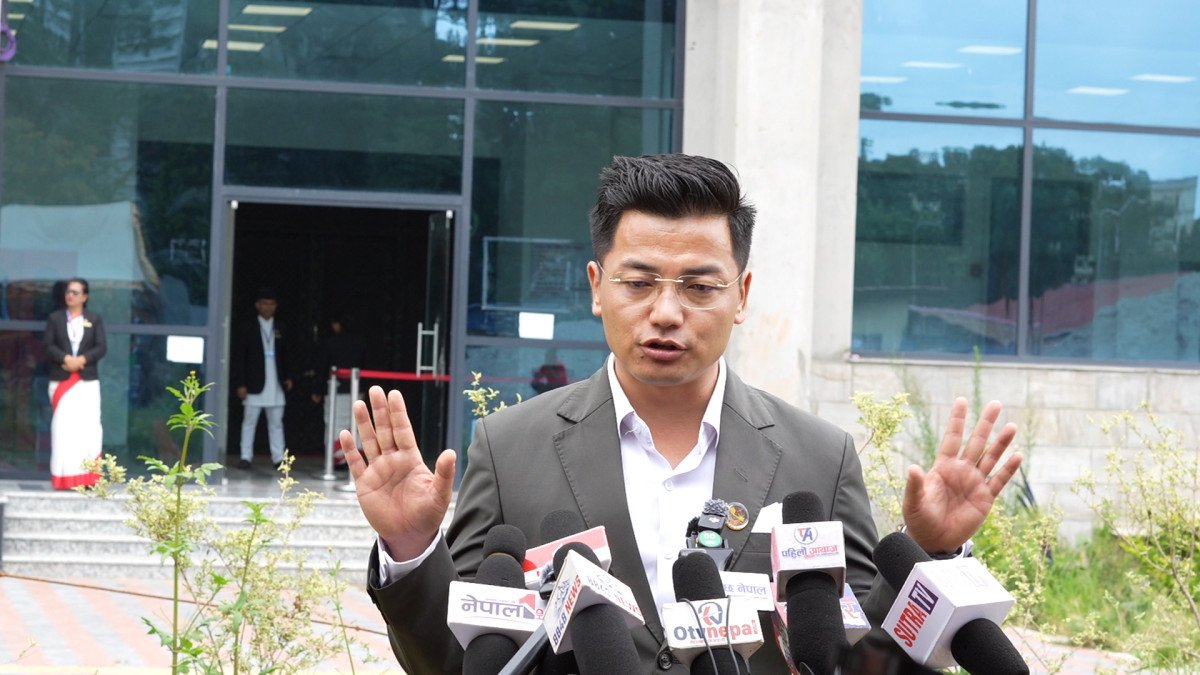
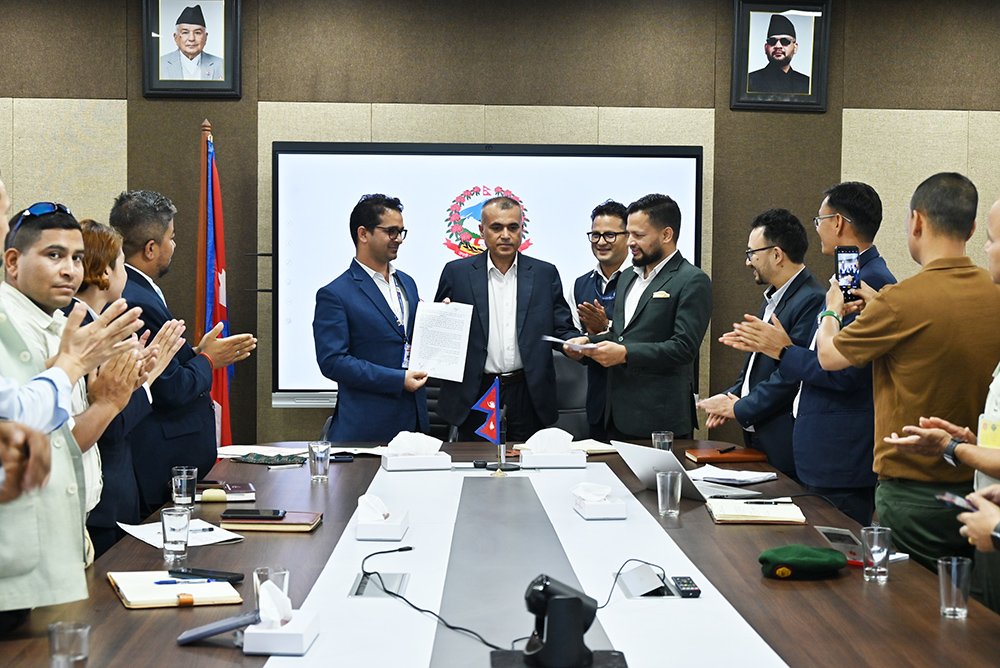
Government Concerned as 154 Children Found Among 2,409 Leprosy Patients; Pledges Inter-Agency Coordination The government has pledged to control leprosy by placing the risk among children at the highest priority. Following recently published data showing that 154 out of a total of 2,409 leprosy patients are children, the government has taken this seriously and committed to controlling it. Stakeholders stated that leprosy is not just a health problem but a serious issue linked to psychological, social, economic, and human rights aspects. They noted that although Nepal declared leprosy elimination in 2010, the outbreak has resurfaced in 16 districts. Stakeholders emphasized the need to place this issue at the national priority level, given the high infection rate among children. Experts believe that the weakness in the implementation of laws, despite their enactment, and social discrimination have added challenges to leprosy elimination. Speaking at an event organized by Nepal Law Society, Secretary of the Ministry of Law, Justice and Parliamentary Affairs, Parashwar Dhungana, stated that the detection of this disease in children is a matter of concern. He stressed the need to eradicate this disease from a human rights perspective. He mentioned that as we move towards the 21st-22nd century, Nepal must also control this disease, as many countries in the world and globally have already eradicated it from a human rights perspective. Stating that leprosy must be a national priority, he pledged that all government agencies would move forward in a coordinated manner. He said, 'Out of 2409 leprosy patients, 154 are children. Children are affected. If the situation is that children are getting infected, then it appears that controlling this needs to be prioritized. Moreover, from a human rights perspective, as we move towards the 21st-22nd century, we must eradicate this disease from a human rights perspective, as many countries in the world and globally have already eradicated it. This must be a national priority. For this, we pledge that all government agencies will move forward in a coordinated manner.' Secretary of the Ministry of Health and Population, Dr. Vikas Devkota, stated that a 'multi-sectoral' concept is necessary for leprosy elimination. He noted that while elimination was declared in 2010, the fact that more than one patient per 10,000 population is found in 16 districts is a matter of concern. He stated that the government should now adopt an 'equity approach' rather than a 'blanket approach' and intervene specifically where the problem exists. He attributed the high infection rate among children mainly to the late identification and treatment within the family. He stated that the tendency for people to hide the disease due to social discrimination and stigma still persists, causing the infection to spread in the community. Dr. Devkota stated that the government's main responsibility is to ensure quick identification and involvement in treatment. He said, 'This is in the context of having health-related laws. Because sometimes that issue arises in the context of negligence, and it seems this issue also arises in such matters. Why is leprosy included here? Perhaps because it is a subject deeply connected to the community, an issue linked to legal discrimination, behavior, respect, rights, and values, which seems to have influenced it. From the health perspective, I feel we need to focus more on three or four things from a multi-sectoral point of view. We say it is eliminated when there is less than one leprosy patient per 10,000 population. We achieved this in 2010. But looking around, it is more than that in 16 districts now. When we look at our thoughts, behaviors, and implementation methods, this also shows that instead of a blanket approach, we need an equity approach, intervening in specific places according to the specific problems there. Even in this century, discrimination and stigma exist in this developed society, and there is concealment of identity. That is why I feel we must be together. The issue of children came up earlier; the infection rate is high. If treatment is not given in the family or is delayed, it will spread to the children. Therefore, they did not come quickly, and there is also some social environment and community engagement seen in this. That is why we must be together. The presentation mentioned disability and physical impairment leading to late presentation. That is also why treatment started late. Looking at all these things overall, if we ensure quick identification in the community and quick involvement in treatment, our responsibility will be fulfilled, and we will move towards elimination, I think.' Former Chief Secretary, Eknarayan Aryal, also stated that leprosy should be viewed in an 'eco-cycle'. He emphasized the need for both legal and social aspects to be strong to reduce the serious impact it causes. He stated that leprosy is linked to psychological, social, and economic aspects. He stressed the need to focus on the implementation and effectiveness of the law rather than just the number of laws. According to him, simply adding more laws numerically does not solve the problem; the correct implementation of existing laws and necessary amendments are key. Aryal suggested that societal discrimination and issues of respect should also be brought under the legal framework. He said, 'It is a psychological and social issue, also related to health, connected to human rights, linked to an individual's future, and if we look at its eco-cycle, it is a small issue intertwined with psycho-social-economic aspects, but it has a serious impact. Should we create a separate law or amend the existing law? This is one issue we need to discuss. There is no definite assurance that effectiveness will be maintained just by making laws numerically or by making a separate law. We see how many laws are there; perhaps a situation has arisen where we need to make an act to repeal various laws by making a single law, which currently holds no significance.' Supreme Court Justice Til Prasad Shrestha stated the bitter reality that Nepal has many studies and action plans, but the implementation aspect is always weak. He mentioned that while many things are incorporated into Nepal's constitution and laws, they are difficult to translate into practice. He noted that many action plans are made, and there is a pervasive idea that everything should be included, which prevents priority setting. He stressed the need to ensure necessary structure and resources for implementation, not just making laws. He added that there are many cases in the court, but the lack of implementing bodies and resources adds challenges to the dispensation of justice. He said, 'We have many such studies here. But when it comes to implementation, we disappear. If we are to implement it strictly, we also make an implementation plan. How do we make action plans? A word about 'priority setting' came up earlier. We make so many action plans that we try to include everything we know, like the current constitution. I call the constitution that connects the nation to the entire world the best constitution. So many things are crammed in there that people don't even know what's inside. If amendments are needed again, 2-3 hundred articles will be added. The US constitution with 25 articles has been running for 2-3 hundred years. We have made 3-4 constitutions in 40-50 years. We keep putting everything we know into this constitution, reducing the dignity of the constitution itself. We talk about fundamental rights. We have included all fundamental rights that do not exist in the world. I say the dignity of fundamental rights has also diminished. Which one is a fundamental right and which one is a directive principle of state policy, we have written that in the constitution. We have also stated that the court cannot hear cases on this. It has become difficult to distinguish between directive principles and fundamental rights here. Therefore, the important points raised here today are significant. At this program of Nepal Law Society today, the Health Secretary, the Law Secretary, and the Law Minister related to this subject are all here. If we are talking about making laws, perhaps the two of them from two different agencies have a more important role. We might be able to do something about this. But the problem, as the gentleman talking about masks mentioned earlier, I also bring cases to the court, Your Honor is here. Your Honor is here. What kind of cases? The Children's Act came in 2048 BS, and we talked about making a Juvenile Court. That was repealed, and we brought another act in '75, but the Juvenile Court was not established. The case went to the Supreme Court three times. The Supreme Court ordered, 'Establish the Juvenile Court, do it according to your law.' In the latest instance, the Law and Justice Minister, who is here, and my bench issued an order. It needed to be written a bit sternly. It also included words like, 'If you don't do it now, I will hold you in contempt.' Furthermore, the Chief Justice said that you should be the chairman of our Central Child Justice Committee there. I said, 'I won't, sir, I don't feel I can do this area.' He insisted, 'If not you, then who?' So what could I do? They appointed me again. I felt like, 'It would be great if we could establish a Juvenile Court,' and I pursued it again and again. Eventually, the government even agreed, saying, 'We will do it.' They agreed, published it in the gazette, but didn't provide a single penny or anything. What to do? I ended up collecting donations myself. I went around visiting local municipalities. Some gave 1 million, some 5 lakh. The court was established by collecting such funds. Now there is only the court, but we have a Juvenile Reform Home. When I went to meet the children, they said, 'Sir, please transfer us to a prison.' It is not permissible to send them to prison, and the Juvenile Reform Home cannot provide facilities equivalent to a prison. Such are our conditions. We are all experts in this situation; it's not something we don't understand. Therefore, first, making laws is difficult. After making the law, implementation is difficult. We have many cases. One group says, 'We need to make laws.' Another says, 'The law was made, sir, but this aspect was missed.' Another says, 'The law was made, sir, but the structure wasn't created.' Another says, 'The structure was created, but no money was allocated.' Where can the honorable judge of the court look into all this? And such honorable judges get burdened, working day and night, and the number of cases has reached 28,000. Last time the court was set on fire, we had brought it down to 22-23 thousand; when will it be set on fire next time? How high will it go again, 40-50 thousand? The situation is like this.' Interim Government's Minister for Law, Justice and Parliamentary Affairs, Anil Kumar Sinha, speaking at the event organized by Nepal Law Society, stated that leprosy should not be viewed merely as a small issue. According to him, this is a matter linked to an individual's future and human rights. Speaking about lawmaking, he argued that effectiveness does not increase just by making laws numerically. Minister Sinha emphasized that the effectiveness of a law should be measured based on its implementation and its impact on society. He said, 'It is a psychological and social issue, also related to health. It is related to human rights, linked to an individual's future. And if we look at its eco-cycle, it is a small issue intertwined with psycho-social-economic aspects, but it has a serious impact. Another question is: should we create a separate law or amend the existing law? This is one issue we need to discuss. There is no definite assurance that effectiveness will be maintained just by making laws numerically or by making a separate law. We see how many laws are there; perhaps a situation has arisen where we need to make an act to repeal various laws by making a single law, which currently holds no significance.' Other experts participating in the program stated that the statistics on leprosy are alarming and that there should be no delay in controlling it. They noted that 154 children among the total 2409 infected indicate the severity of the infection. They expressed that it is shameful from a human rights perspective for citizens to suffer from such a disease even in the 21st century and urged all government agencies to commit to moving forward in a coordinated manner. The consensus among participants was that work must be done on a war footing by placing leprosy elimination at the national priority list to eradicate the disease from the country.—News Agency Nepal
This specific news has been automatically translated by AI. As a result, there may be some inaccuracies or language errors.