Election Commission Confirms All Preparations Complete for Upcoming Polls; Urges Voter Participation

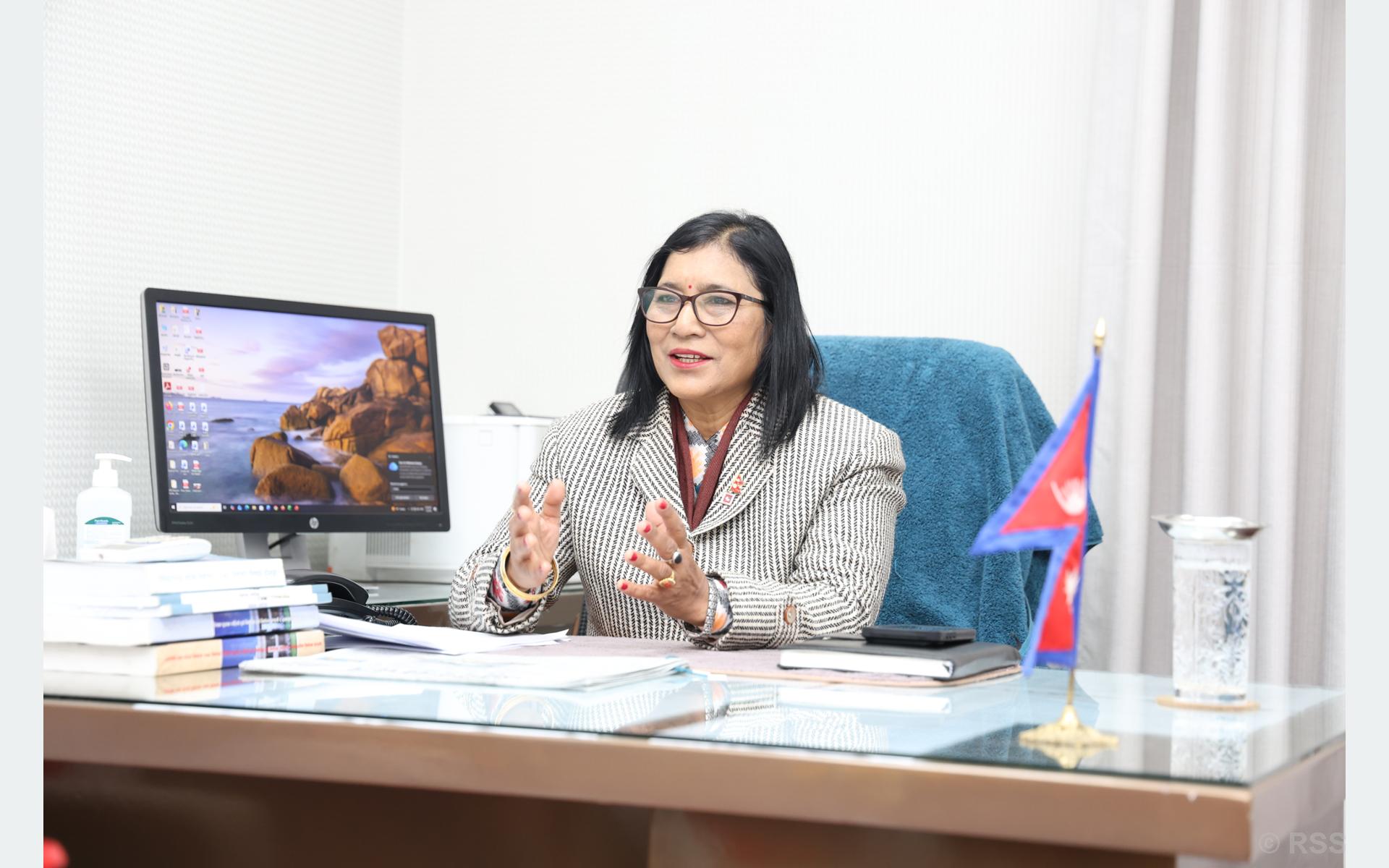
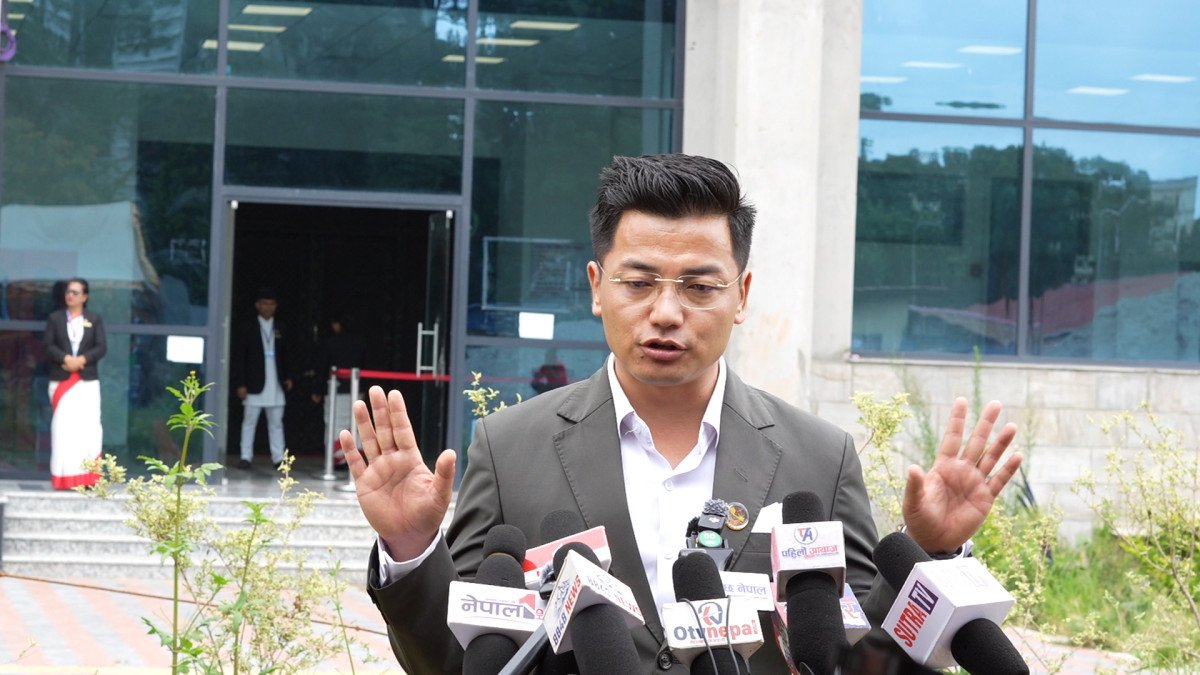
Kathmandu, February 14: Following the 'Janjg' agitation in the last week of Bhadra, the House of Representatives was dissolved and a new government was formed. Immediately after, the Nepal government and the Election Commission geared up for the House of Representatives elections. Since the primary focus of the current government is to hold the House of Representatives elections, the Election Commission became a key facilitator for this priority task. In accordance with the constitutional provision requiring elections to be held within six months of the dissolution or completion of the term of the House of Representatives, the election date was set for February 21st. With only a few days remaining until the election, the Nepal government and the Election Commission have stated that all election-related processes are complete, and only voting remains. Therefore, the Election Commission has urged citizens to vote confidently and without fear to elect their representatives. Below is an edited excerpt of an interview conducted by Ekraj Pathak, Deputy Chief of the News Desk and Head of the Election Desk at RSS, with Election Commissioner Dr. Janaki Kumari Tuladhar, focusing on the preparations and process for the upcoming elections.
Question: With only a few days left until the upcoming election scheduled for February 21st, where do the preparations stand, and how is the work progressing?
Look, just 10 minutes before you asked me this question, our 'system' called to inform me that ballot papers have reached all districts. I believe this news clearly indicates the status of the election preparations and the work accomplished. All staff, including the Chief Returning Officers, have just finished their training and are starting to head to their respective workplaces. They will all reach their assigned locations within one or two days. The first priority of the current government was the election, and the Election Commission worked at the same pace. Therefore, you and all citizens understand that reaching this stage was possible because of that effort. We prepared for the election at a wartime pace. Now, I believe only procedural work necessary for voting on the 21st remains; all other work is finished. In terms of security or any other aspect, no election-related tasks are pending. State resources, including security, have already been mobilized for election purposes through the Election Commission.
Question: After the 'Janjg' agitation in the last week of Bhadra, the country was in a state of turmoil. Recalling that time, holding elections within six months seemed unlikely. Political parties were also unprepared. How was it possible to bring the country to this stage and hold the elections on time?
Yes, as you mentioned, recalling the situation back then, holding elections within six months seemed impossible. Sensitive bodies and organs of the state, including administrative offices and even the Supreme Court, were engulfed in turmoil. On the other hand, at that time, nobody, not even the political parties, was willing to participate in the elections if the topic was raised. Looking at the situation then, the state was in a state of lawlessness. There was fear and terror everywhere, and frankly, the country was in a state of anarchy. Even in that state of near silence across the country, we had to conduct the elections because the government had already announced the election date for February 21st.
After that, we initiated dialogue, met with political parties and all stakeholders, listened to their concerns, and worked to prepare everyone to move towards holding elections democratically and restoring the constitution, regardless of what happened in the past. We kept the government and political parties together and facilitated continuous dialogue. We focused on creating an environment for the election with the presence and consensus of the parties participating in it. When the leaders of political parties remained in constant talks and dialogue with the government, security agencies, and the Election Commission, a positive atmosphere gradually developed. Following that, the preparation for the election also slowly gained momentum.
Furthermore, having existing materials such as ballot boxes and other necessary supplies from the past also helped in preparing for the election in a short time, I believe. Looking at it this way, the Election Commission received support from the government, political parties, all state security agencies, and all stakeholders. That is why it was possible to complete this election on the scheduled date, i.e., in a short time.
Question: Not many days are left for the election, but there are still rumors circulating in some places that the election might be postponed. What is your view on this matter?
Since you mentioned 'rumors' in your question, this is indeed just a rumor. Therefore, one should not pay attention to such rumors. Given that ballot papers and other necessary materials have reached polling centers in various districts, and officials including the Chief Returning Officers have started reaching the 'field,' I don't think there is any room to even discuss postponing or delaying the election. The Election Commission, the government, or anyone else has no option but to conduct the election on February 21st as scheduled. The constitution mandates elections within six months of parliament dissolution, so neither the government, the Election Commission, nor anyone can evade or shy away from this election. I don't need to elaborate on how much the Election Commission struggled and worked hard to bring the country from that situation six months ago to the current election status; everyone is aware of it. Therefore, I believe everyone should understand the importance of this election. Regarding security, the government has been stating that all situations are under control. Just yesterday, our high-level security committee meeting was held, and they assured us that there are no security challenges. Regarding the voting process, only procedural work for voting remains. Therefore, no one should harbor any suspicion or fear that the election will not happen in this situation. No one should follow such baseless rumors.
Question: Voter education is also a crucial task during elections. How is the Commission providing voter education for this election?
In accordance with Nepal's Constitution, prevailing election laws, the Voter Education Policy, and the Election Education and Voter Education Directive, 2078, the Election Commission has prepared a 'Voter Education Special Program' with the objective of providing voter education and election publicity. Accordingly, for the upcoming election, the Commission has been providing voter education through volunteers in all 6,743 wards across the country from Falgun 3rd to 17th. The Commission has also prioritized and mobilized Female Community Health Volunteers (FCHVs) as voter education volunteers. They are providing voter education by visiting voters' doorsteps.
Question: How did the concept of prioritizing and mobilizing Female Community Health Volunteers for voter education come about?
In every election, the task of informing and educating voters becomes quite complex. Identifying honest volunteers who can reach voters' doorsteps and are integrated with the general public is also challenging. Female Community Health Volunteers have significantly contributed to the success of health services by supporting the government's programs in public health in our rural areas. Their contribution in this sector is immense. They are individuals who can reach every household in their working villages and settlements. Therefore, they started being entrusted with the responsibility of providing voter education since the general election of 2079 BS. This time too, they have been given the responsibility for this purpose. I have also taken personal initiative in this matter. We established the criterion or principle of promoting them.
Question: How are they currently carrying out the task of providing voter education?
The objectives of voter education are to inspire general voters to participate in voting, provide information about elections and voting, ensure the election is conducted in a clean, free, impartial, reliable, and economical manner, create informed voters, and ensure meaningful public participation in the election. Furthermore, the objectives also include increasing the participation of eligible voters in voting, reducing invalid votes, making them understand the value of their precious vote, and assisting in electing worthy representatives. Voter education volunteers are vigorously teaching voting by visiting voters' doorsteps and showing them sample ballot papers. They are also providing information about the official social media accounts of the Commission. They are informing people about how to view voter education-related content being disseminated through the Commission's social media. The voter education volunteers are also informing about the election code of conduct, resolving voters' queries, and submitting daily reports. Looking at the history of elections in Nepal, the number of invalid votes has always been a challenge. We conducted various programs to reduce and minimize this number, and providing voter education is one of the major tasks among them. Through this, assistance was provided in reducing invalid votes in the previous election. Even now, we are prioritizing the task of providing voter education. I believe this will help in reducing invalid votes in the upcoming election as well.
Question: The Election Commission has included the concept of 'Green Election' in the code of conduct this time. What is this Green Election, and why was this provision made?
Green Election is conceptualized so that the election process causes minimal damage to the environment and environmentally friendly practices can be encouraged. The goal of conducting elections in an eco-friendly manner existed before, but this time, we are trying to bind it by law. The environment was always a priority for us in the past. However, this time, we have included Green Election in the code of conduct by writing it into the regulations for the first time. As there is a campaign everywhere to replace plastic, the Commission included Green Election in the code of conduct because we felt this issue needed to be emphasized at the policy level.
The code of conduct stipulates that environmentally friendly materials must be used for election publicity, rallies, processions, or door-to-door campaigns; digital publicity should be prioritized for election promotion; measures to reduce noise, water, or air pollution must be adopted during election publicity, rallies, or processions; plastic or polythene-like non-biodegradable materials must not be used during election publicity, rallies, processions, or door-to-door campaigns; electric or renewable energy-operated vehicles should be prioritized when using the specified number of vehicles for election publicity programs; and after the completion of election publicity programs such as rallies, processions, or door-to-door campaigns, the concerned party or candidate must compulsorily collect all used materials and manage them in an eco-friendly manner.
Question: The code of conduct also includes a provision requiring political parties and candidates to publish annual progress reports on their election manifestos. What kind of provision is this, and why was it necessary?
A provision has been made requiring political parties and candidates participating in the House of Representatives election to publish an election manifesto. According to this provision, political parties or candidates must publish their election manifestos and conduct their campaigns based on them. Political parties must submit the manifesto to the Commission, and candidates must submit it to the respective election office. Political parties or elected candidates must publicly disclose a progress report on the implementation of the work mentioned in the election manifesto every year for public information.
The relationship between general voters and citizens with political parties and candidates is centered around the election. Once the election date is announced, they participate in the publicity campaign with their entourage, acting like servants of the people. They visit doorsteps. They make emotional appeals. They compete to make promises that will never be fulfilled. They express old promises using new words. It is often found that after the election, many forget the promises they made. The relationship between candidates and voters can be made intimate and trustworthy only by conducting a 'public audit' of the matters mentioned in the manifesto. The Commission has made this new arrangement so that if political parties and candidates respect the voters, they must clearly present the implementation status of the previous election's manifesto or pledge document to the voters every year.
Question: Finally, you mentioned that only the voting process remains. As an Election Commissioner today, what message would you like to convey to all Nepali citizens?
My first request to all voter sisters and brothers is to exercise their sovereign right to the maximum extent by using their right to vote. We must all work together to ensure the election is conducted in a clean, free, impartial, and fearless manner. I believe this election will help establish the rule of law and continue the constitutional process. Therefore, I urge all Nepali sisters and brothers to vote confidently and elect their representatives. I request everyone to understand the fact that the Election Commission is going to complete the election in a short time with great effort while operating within the difficult constraints created by the circumstances. You all already understand that this election was made possible through dialogue and consensus among the country's political parties and all stakeholders, understanding that situation and context. Understanding this situation and context, I reiterate my appeal to all Nepalis to participate actively in the election and vote to select their representatives.
---
This specific news has been automatically translated by AI. As a result, there may be some inaccuracies or language errors.
_iL3K2wYemS.jpg)