Political Parties' Manifestos Dominated by Promises to Address Farmers' Fertilizer Shortages Ahead of Elections

Kathmandu. The country is immersed in election fervor. Only seven days remain until the House of Representatives elections. Candidates are adopting various campaigning styles to woo voters. Some are visiting farmers' fields, posting pictures of themselves assisting farmers on social media while soliciting votes. Meanwhile, almost all political parties and candidates have released their manifestos. Parties and candidates are seeking votes by showcasing the plans included therein.
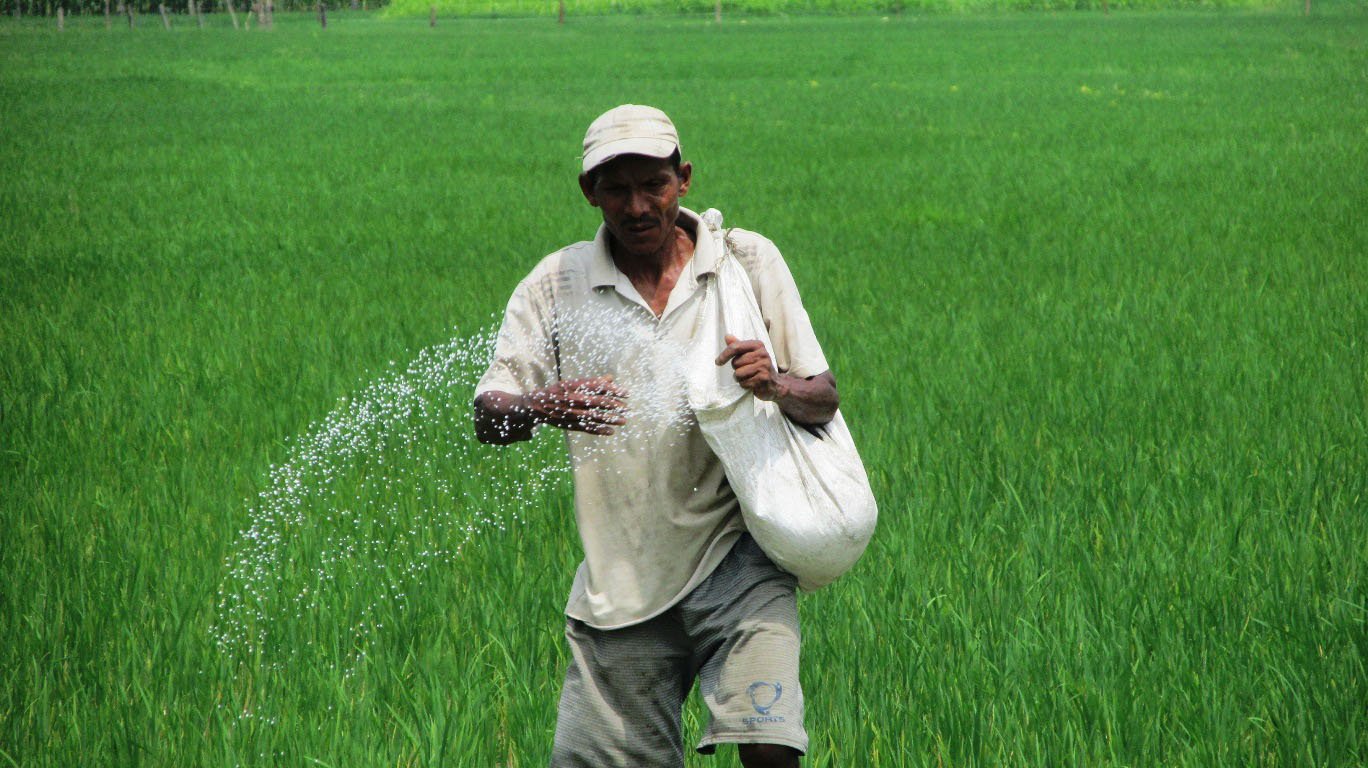
Fertilizer is one of the perennial problems faced by farmers every year. Currently, most parties have prioritized this issue. Looking at the manifestos, they are full of fertilizer promises. The Nepali Congress states in its manifesto, “We will arrange the policy, structure, process, and technology to provide farmers with fertilizer according to demand, at the desired time, in the required quantity, at the state-set price, and at a convenient location.” This is something Congress repeats every time, yet it has not been implemented. The compulsion for farmers to come to the federal capital Kathmandu every year during the planting season to demand fertilizer still exists. Farmers are still forced to stage sit-ins at Maitighar demanding fertilizer. Congress had included the matter of ensuring supply at the time fertilizer is needed by creating a calendar for the fertilizer procurement process in the manifestos for the 2064 and 2070 Constituent Assembly elections, and the 2074 and 2079 House of Representatives elections.
In its 2079 manifesto, Congress had stated, “Full irrigation facilities will be provided in the eight districts of Madhesh Province. Priority will be given to irrigation in all districts of the hills, and where irrigation has reached, agricultural centers will be established, and arrangements will be made to maximize the benefit from water facilities for farming.”
Similarly, Congress had included in its election manifesto commitments such as identifying fertilizer needs based on data and arranging sufficient resources, resolving problems in fertilizer purchase, sale, and distribution, and establishing fertilizer factories in the Terai region to produce fertilizer in Nepal by utilizing surplus electricity production when domestic demand is exceeded, among others. None of these have been implemented.
The Congress claims that the liberalization policy introduced after the 2046 change encouraged private investment and commercial farming in the agricultural sector, and that the leading role in the expansion of open and medium-scale irrigation projects improved agricultural productivity, while subsidies and easy loans in agriculture facilitated the entry of private investment in tea, coffee, cardamom, and dairy businesses. In practice, however, farmers are unable to get chemical fertilizers even by paying the price on time, let alone organic manure.
Farmer activist Rajkumar Shah stated that although all political parties have repeatedly promised during elections not to let fertilizer shortages occur for farmers, implementation has not happened.
On the eve of this election, the Udayaka Ujyalo Nepal Party has committed to sending subsidies directly to farmers' accounts through a ‘Digital ID’ in agriculture, making 50 percent of the agricultural sector organic within five years, and ensuring purchase by adding 20 percent to the cost of production. The Loktantrik Samajwadi Party Nepal has made ambitious commitments in its manifesto, stating, “Arrangements will be made to test soil, seeds, and agricultural produce at the doorsteps of farmers by arranging mobile agricultural labs.”
The CPN (UML) has also committed through its manifesto to achieve economic growth of seven to nine percent through leaps in agricultural productivity growth, electricity production capacity, mineral and industrial production, information technology, and physical infrastructure construction, aiming for an economy size of 100 trillion rupees in five years and 200 trillion rupees in 10 years. The party stated, “We will modernize agriculture and transfer the surplus labor force in this sector to the industrial and service sectors through education, skills, and technology development.”
The CPN (Maoist Centre) has also committed to achieving self-sufficiency in paddy, wheat, maize, vegetables, fruits, sugarcane, milk, meat, and fish within two years, declaring Nepal hunger-free within two years, expanding irrigation facilities to 80 percent of arable land within five years, and installing 10,000 solar irrigation pumps. Furthermore, agendas such as free registration and five years of tax exemption for startup enterprises have been introduced.
The Janata Samajbadi Party (JSP), Nepal, focusing on the agricultural sector, aims to create 5 million jobs in five years by promoting ‘Vertical Farming’. The Rastriya Swatantra Party has mentioned in its manifesto the promise to re-establish the uncertain agricultural sector as a respectable profession and prepare a strong foundation for the overall economy. RSP stated, “Without limiting it only to the issue of agricultural production and trade balance, we will move it forward as a primary sector by linking it to national goals such as food security and nutritional security, ensure productivity growth and greater welfare of farmers in agriculture, create necessary infrastructure for investment friendly to the private sector, and allocate sufficient budget.”
These parties have been making similar declarations since the past, and although some of these parties have had the opportunity to lead the government multiple times, these issues have not received priority. Therefore, the issue of not getting fertilizer remains a perennial problem for farmers. Farmers are suffering due to the shortage of basic necessities for agricultural production, such as fertilizer, seeds, and pesticides. Therefore, Rajesh Yadav, a farmer from Saptari, feels that leaders saying they will provide fertilizer is merely an excuse to solicit votes. Farmers in the Madhesh region, who did not get fertilizer for wheat, pulse, and oilseed cultivation, are disheartened, saying the time has come for them to wander around without fertilizer for paddy cultivation as well.
This specific news has been automatically translated by AI. As a result, there may be some inaccuracies or language errors.
_iL3K2wYemS.jpg)