WHO Analyzes Nipah Virus Risk in India; Regional Threat Remains Low


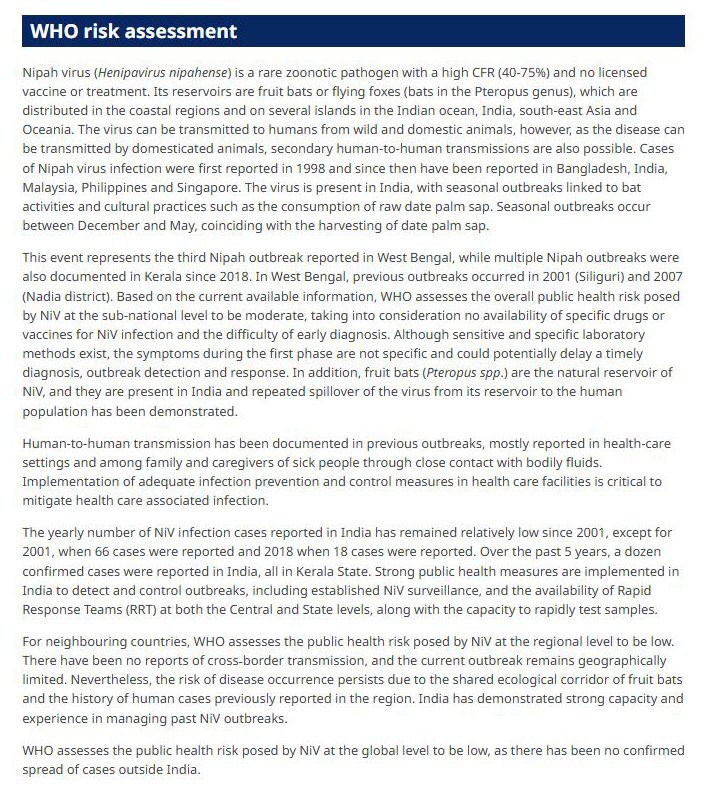
Kathmandu. The World Health Organization (WHO) has published a new analysis regarding the Nipah virus infection observed recently in India and its associated risks. This rare and dangerous virus, which can transmit from animals to humans, has a fatality rate of 40 to 75 percent among patients, yet there is currently no official vaccine or treatment available against it.
Primarily transmitted by fruit bats, this virus appears seasonally in various states of India. This marks the third time it has been detected in West Bengal, India, while repeated outbreaks have been observed in the state of Kerala since 2018.
According to the WHO, the risk is particularly high in India between December and May, especially for those who consume raw date palm sap and in areas with high bat activity. The risk is further complicated by the fact that initial symptoms are often mild, making timely diagnosis difficult, and the lack of a specific medicine.
Despite the infections seen in India, the WHO has stated that the regional risk for neighboring countries, including Nepal, remains low. Officially, there is no evidence that this virus has crossed the border into another country yet.
However, the risk is not entirely eliminated due to shared natural corridors used by bats for movement and the history of past infections. Since this virus can also spread from person to person, caution is necessary as transmission can occur through contact with the patient's bodily fluids while caring for them in hospitals or at home.
As the infection has not spread outside of India so far, the global risk is assessed as low. The WHO concludes that the regional threat is not significant partly because India has improved its infection control and testing capabilities through its central and state-level Rapid Response Teams (RRTs).
Nevertheless, delays in initial diagnosis can hinder outbreak control, so it is advised that infection prevention measures be strictly implemented in health facilities.
This specific news has been automatically translated by AI. As a result, there may be some inaccuracies or language errors.
_iL3K2wYemS.jpg)