
CPN-UML Leader Binda Pandey Discusses Elections, Women's Representation, and Political Culture

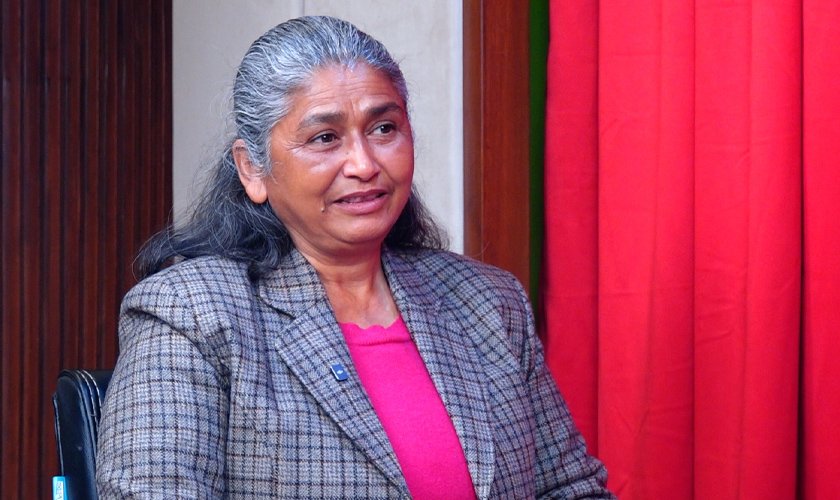
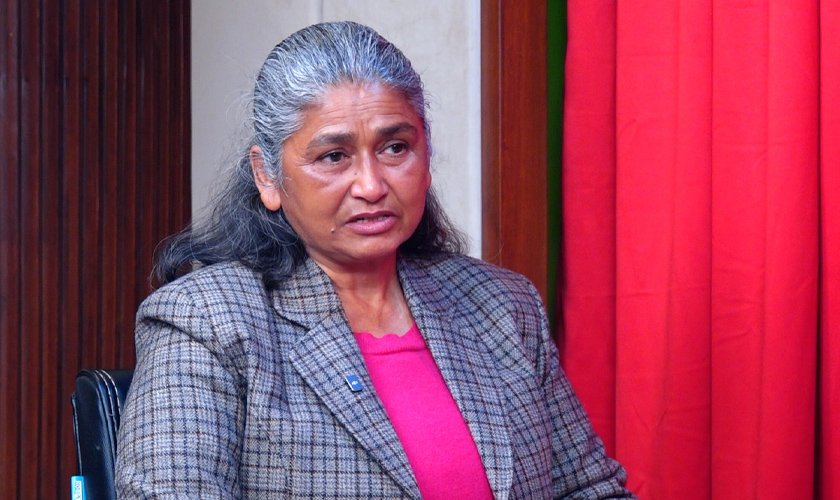
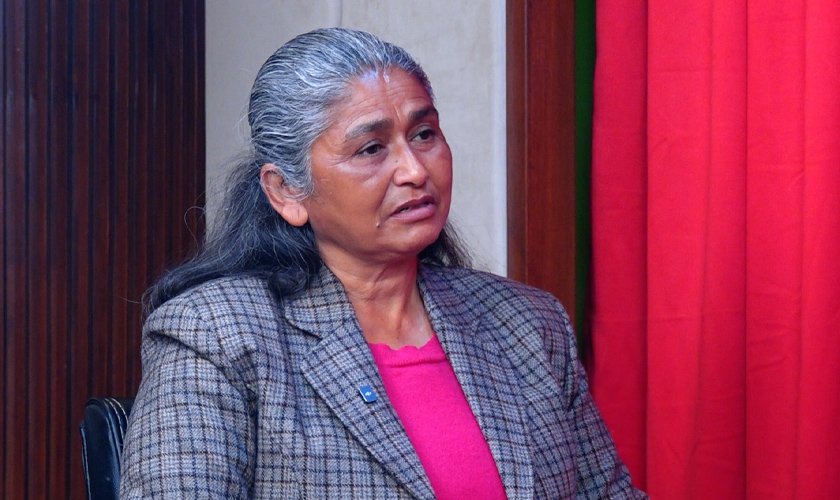
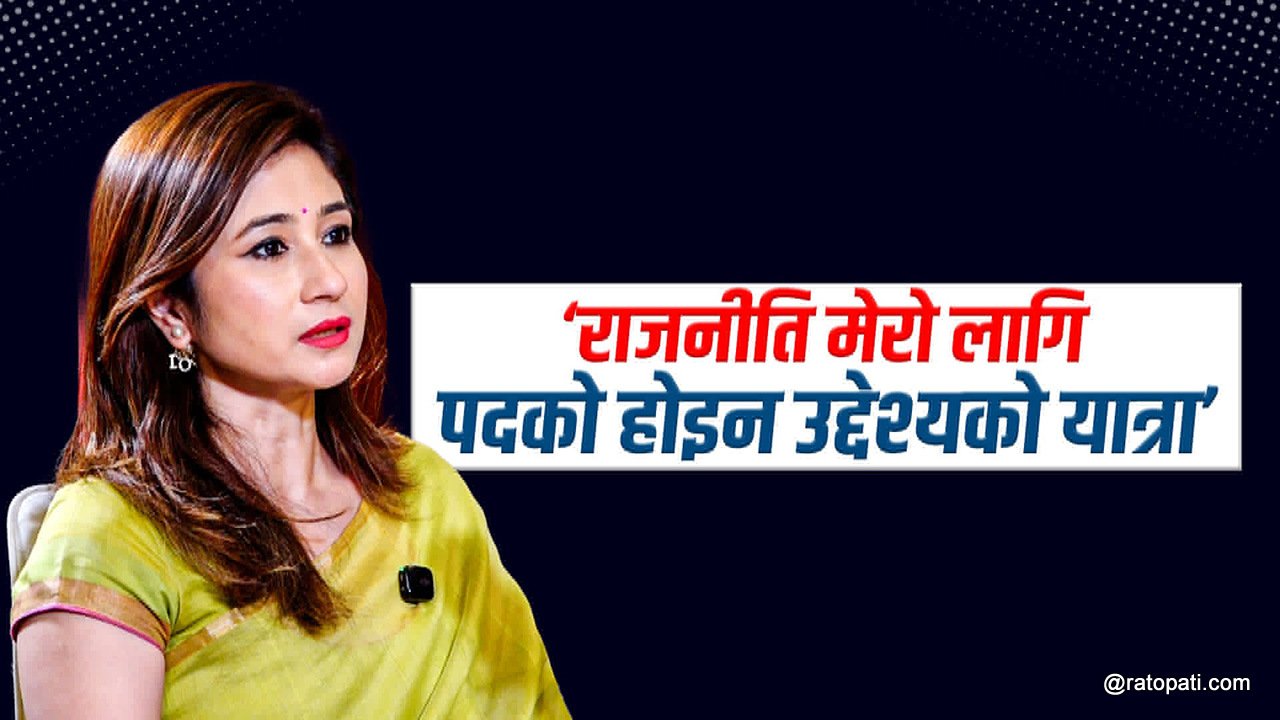
Binda Pandey is active in Nepali politics, a labor rights activist, and a leading advocate for the women's movement. Pandey has extensive experience studying and analyzing issues of inclusion, labor rights, and political participation. She has played an active role from the streets to the parliament throughout the political journey from the People's Movement to the establishment of the republic, and has published half a dozen books. Her recently published book, 'Bhuinmanchhe' (The Ground Dweller), is gaining significant attention.CPN-UML leader Dr. Binda Pandey spoke with Ratopati about the elections and other issues. This is an edited excerpt of the conversation with Pandey—(See the detailed video of the conversation)
The country is immersed in election fever. The party is also focused on the elections. Have the elections touched you?
–They have touched me moderately.
Why, because the party hasn't given you a responsibility?
–The question of whether someone has responsibility is for those who only do the work assigned by others, isn't it? For someone who is inherently responsible, whether they are given responsibility or not doesn't make a difference.
What are you currently engaged in?
–We were campaigning with the objective of challenging the narrative that women do not want to contest direct elections. That has yielded some results. As we move into the next election campaign, we are urging women from all parties to engage in leadership roles where they are visible. After all, provincial and local elections will be due in about a year and a half. These are common tasks. Now, for the second task, I reside in Kathmandu Constituency No. 2. I am also involved in the campaign as required for Constituency No. 2.
There is an allegation that the faction defeated in the General Convention has not been active in the elections!
–I am not sitting idle. I am busy with programs. Primarily, we are focused on women's agendas and how to establish a better political culture. Going into elections for us is not about becoming a leader by abusing others; it is about carrying our own issues forward. The person who can explain things well to the citizens is the one who will get the votes. Therefore, our stance is that this political culture, which currently involves a lot of verbal abuse, needs transformation, and elections should be fought based on issues. We are working towards establishing two things: one, establishing issues, and two, establishing a harmonious culture for the election campaign.
You have long raised the issue of women's empowerment. But among the 165 direct seats in your party, only 10 have women candidates. Has your hard work gone to waste?
–We advocate for moving forward with a Marxist analysis. The idea is that as quantitative development progresses, it will eventually make a qualitative leap at a certain stage. In the past, there was a narrative that women were afraid to contest elections; now, we have reached a stage where women are saying, 'I am ready to contest the election.'
My question is, why hasn't the pace of development increased?
–The leadership that had the idea of needing to field five percent women candidates in the 2048 (Bikram Sambat) election is still in decision-making positions.
You told others not to back down from competition, but you yourself stepped back from the election?
–I haven't stepped back. I just said that I will not ask for a ticket anymore.
Why?
–I didn't strongly claim a ticket in 2070 (Bikram Sambat). I claimed it in 074. I didn't get my share. I claimed it again in 079. At that time, the leadership did not want to give it. First, I didn't get my share; later, they didn't want to give it. Now, I don't hold the belief that one person should keep demanding until they get it. So, I have stated two things. First, I will not go for proportional representation anymore. Second, I will not go asking for a ticket for myself.
So, you won't contest the election at all?
–If the party requires me to contest the election due to necessity, I will not run away saying I cannot contest then.
The upcoming parliament seems like a turning point in Nepal's history. Are you concerned that you might miss out on that opportunity?
I don't feel that way because I was also new when I went in 2064 (Bikram Sambat). That was also a turning point and a very important responsibility. Now, there is another turning point. If we look at turning points, 2048 (Bikram Sambat) was one. With all the experience I have gained and what I have learned, I can certainly share it with the friends who go there.
The party has given you good opportunities. But why did you distance yourself from the leadership? Why might the leadership not have trusted you?
–Well, that needs to be asked to the leadership. Perhaps the angles of our thinking didn't align well.
You are currently visiting various districts. What do you think the parties should be doing?
–This is the time when voters genuinely want to listen to political parties. What is the party's policy? What is its ideology? What are its procedures? What is its action plan? What is its development model? Who are its target communities? What are its programs for those target communities? There is the current issue of inclusion. Policy, procedure, methodology, issues. At this time, leaders should be conducting mass education for the general public on all these aspects.
Has the CPN-UML, the party you belong to, done that?
–It is not enough for the voters to only understand the party I am in. If the voters also understand the competing parties, a situation arises where they can compare and vote based on issues.
What is the current mindset of the voters?
–The generation that used to vote for a particular symbol for life, saying, 'I voted for that sign once, I can never leave it,' is gone. A generation has arrived that votes by looking at their issues, their work, their speech, their style of expression, and whether they are delivering on what is possible afterward.
Before, people would listen to your appeal and vote for you. Who listens now?
–There is no alternative other than self-reflection on where we went wrong and moving forward with corrections.
To correct things, one must first realize what is wrong. If one doesn't feel that something is wrong, is there room for correction?
–So far, there has been no realization at a whole institutional level that we have gone wrong. The debate at the level of how and where to correct things has not taken place.
Can any assessment be made about the CPN-UML's election results?
–I don't think the result will be one that warrants extreme disappointment. There is still some time left until the election. I feel we should try to make some corrections based on what citizens have expressed in the meantime. If not, we will review the results after they come out.
Why is CPN-UML trying to disrupt the elections?
–Disrupting where? Please don't say unnecessary things. Currently, our Chairman is the most focused on the election; he is the busiest.
Is the practice of announcing the Prime Ministerial candidate beforehand correct?
–I view the announcement of the Prime Ministerial candidate positively. But it shouldn't be like in 2056 (Bikram Sambat). Once someone is announced as a Prime Ministerial candidate, the language they use, the message they convey, and the plans they present must influence all 165 constituencies. Because the government is not formed by them winning alone.
Your reaction to RSP (Rastriya Swatantra Party)? Balen Shah is competing against your own Chairman.
–They are competing against everyone. Our candidates are in 164 constituencies, and RSP's candidates are also in 164 constituencies. RSP, Nepali Congress, and CPN-UML are competing in all constituencies. I don't know exactly how many constituencies CPN (Maoist Centre) has candidates in right now. One thing is certain: no one should underestimate anyone else when going into an election.
This specific news has been automatically translated by AI. As a result, there may be some inaccuracies or language errors.



_XRgO2ypobQ.jpg)


