US and EU Reach Trade Agreement, Setting 15% Tariffs on European Exports

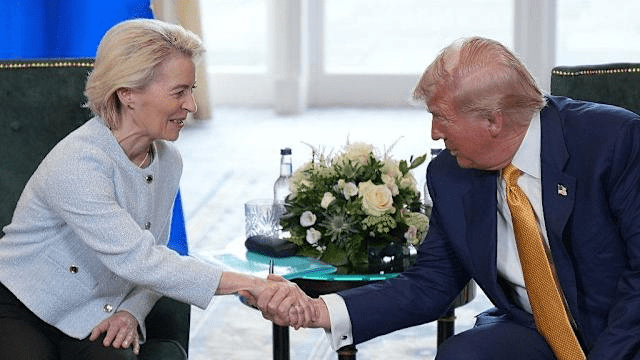
The United States and European Union have finalized a trade deal, resolving a months-long dispute between two of the world's largest economic powers.
Following high-stakes negotiations between President Donald Trump and European Commission President Ursula von der Leyen in Scotland, the two leaders agreed to impose a 15% U.S. tariff on all EU goods—half the 30% rate Trump had previously threatened. In return, the EU will eliminate tariffs on certain U.S. exports.
Von der Leyen praised the agreement, stating it would provide much-needed stability for both economies, which together account for nearly a third of global trade. Trump, who has aggressively used tariffs to reshape global trade dynamics and reduce the U.S. trade deficit, called the deal a "win for everyone."
Key Elements of the Deal
-
15% U.S. tariffs on EU goods (down from threatened 30%)
-
Zero tariffs on select U.S. exports to Europe
-
$600 billion in EU investment in U.S. industries, including defense
-
$750 billion in EU energy purchases (LNG, oil, nuclear fuels) to reduce reliance on Russian supplies
-
Exemptions for aircraft, chemicals, and some agricultural products
-
No change to existing 50% tariffs on global steel and aluminum
Mixed Reactions from Europe
While the deal averts a full-blown trade war, some EU leaders criticized its terms. France’s European Affairs Minister Benjamin Haddad called it "unbalanced," despite exemptions for key French sectors like spirits.
Germany’s Chancellor Friedrich Merz acknowledged the risks of a trade conflict but stressed the importance of **stable transatlantic trade relations