Karnali Province Faces Persistent Debate Over Small-Scale Projects Amidst Calls for Strategic Investment
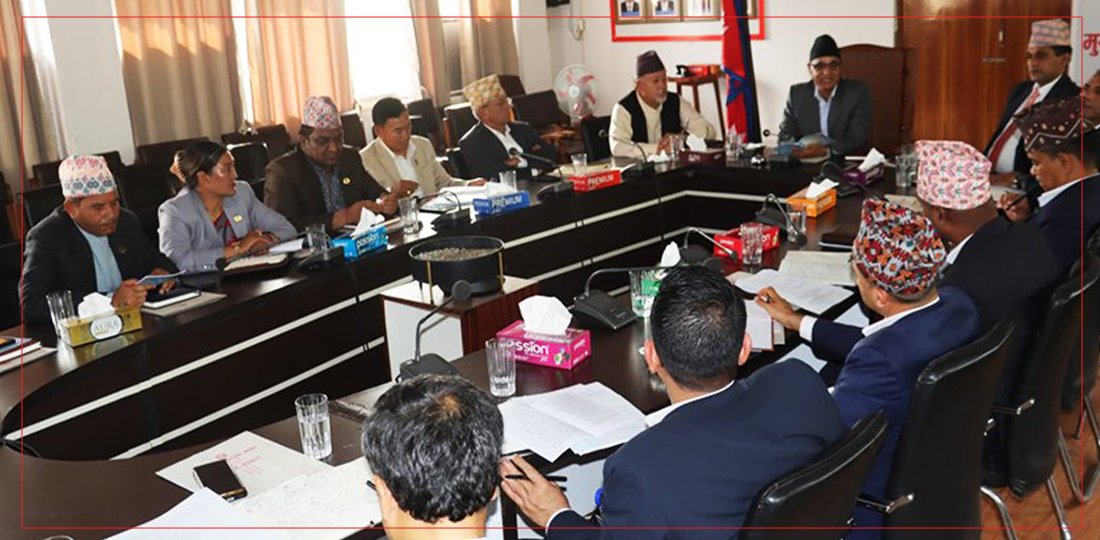
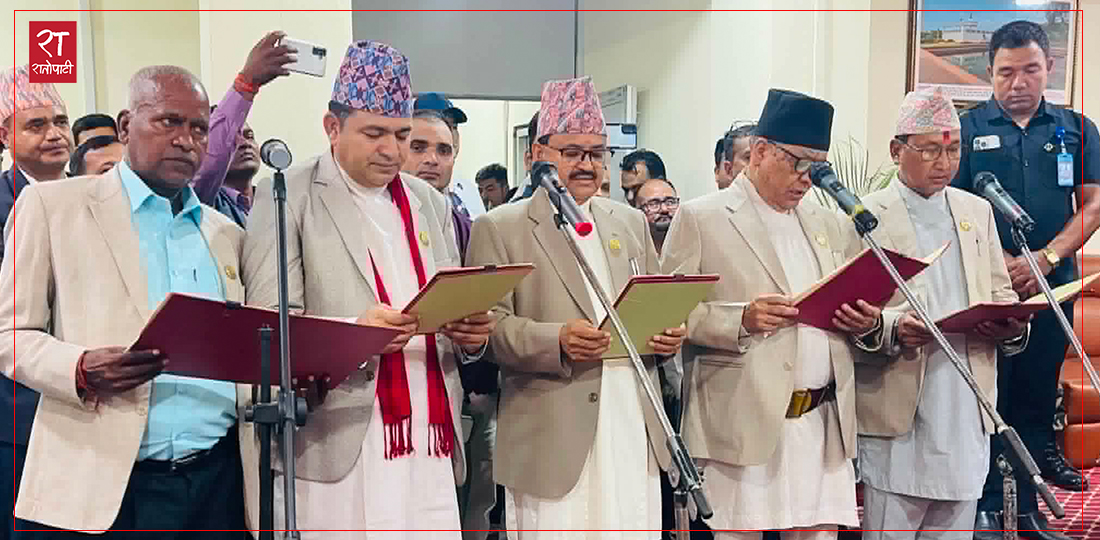
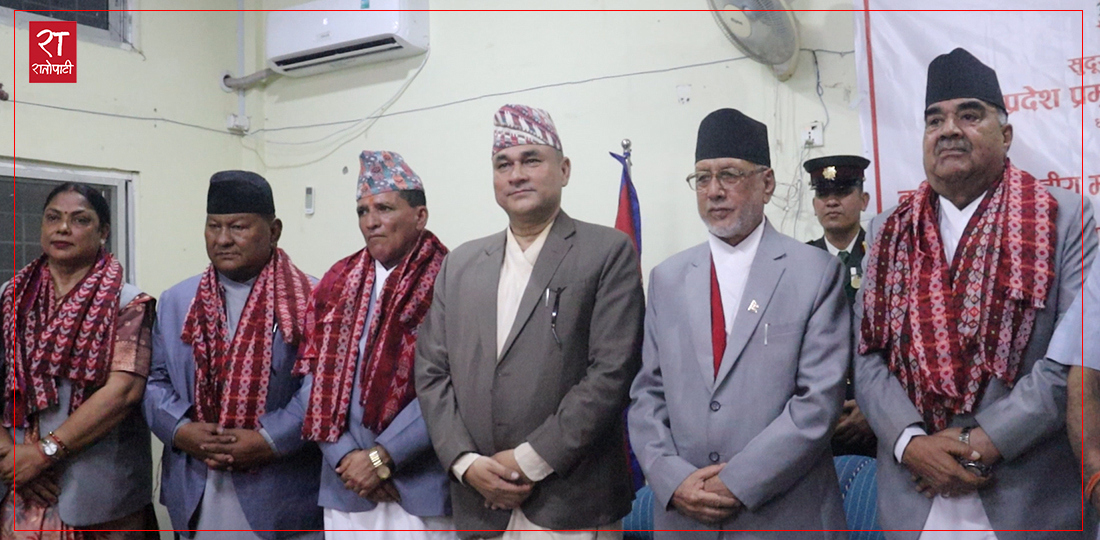
Surkhet. The debate over controlling fragmented projects in Karnali Province has been ongoing since the first term. After the 2079 provincial assembly elections, agreements were repeatedly made between the ruling and opposition parties not to implement fragmented projects.
The initiator of this debate was Yamlal Kandel, who is currently the Chief Minister.
In Asar 2080, the then-opposition CPN-UML opposed fragmented projects, stating they yielded no results and led to irregularities. They even obstructed the passage of the budget through the parliament. Subsequently, projects with budgets less than 1.5 million were prohibited from implementation, with a limit of 3 million set for road and building projects.
Later, UML came to power. The then-opposition Congress obstructed parliament again, demanding the implementation of already selected fragmented projects. While this continued, Chief Minister Yamlal Kandel introduced the 'Project Selection Procedure' to eliminate irregularities in projects.
Currently, the second year of the procedure's implementation is underway. The procedure could not be fully implemented in the first year due to its late formulation. Under the revised procedure, the provincial government has set a limit of 5 million for road infrastructure projects and 2 million for others. Small irrigation projects have been excluded from this limit.
The procedure specifies criteria for project proposals, including contributions to the province's rapid economic growth, priority or comparative advantage areas, and achievement of sustainable development goals.
Chief Minister Yamlal Kandel has also been instructing ministers to focus on large and strategic projects.
However, with only a few days left for the upcoming fiscal year (2083/084) budget, it has been observed that most MPs and ministers in Karnali are pressuring for the inclusion of old-style fragmented and unproductive projects in the budget. According to the Provincial Planning Commission, there are 12,746 projects recommended from districts with budgets less than 5 million. Additionally, 3,445 projects exceeding that amount have been certified by the project bank.
The provincial government has adopted a policy of mandating the entry of projects costing more than 5 million rupees into the project bank system.
However, sources indicate that MPs and some ministers are pressuring to allocate budgets for projects related to embankments, school fencing, and Kul Devta shrines, and temples, rather than essential, strategically impactful projects.
'While MPs say in parliament and public programs that fragmented projects should be controlled, investment in unproductive sectors should be stopped, and attention should be given to strategically impactful and historically significant projects,' says a source from the Ministry of Finance, 'but during budget formulation, they distribute lists of small projects in those unproductive sectors.'
An official from the ministry states that MPs remain attached to fragmented projects and pay no attention to large and strategic ones. Due to the policy of controlling fragmented projects, projects are being prepared according to the procedure's limits. However, ministry officials say there has been no significant change in the trend of prioritization and fund misuse.
In the current fiscal year, disregarding the Chief Minister's directives, ministers allocated millions of rupees to temples, Kul Devta shrines, and places of worship under pressure from their party cadres and associates. The budget details of the Ministry of Industry, Tourism, Forest, and Environment included over 70 such projects. In some cases, the province even provides budgets for the Kul Devtas of specific clans.
Furthermore, significant amounts of the provincial government's funds are also allocated to establishments and parks named after leaders. After the public release of the current year's budget, the provincial government faced widespread criticism. However, sources indicate that MPs and ministers are still focused on similar projects and are pressuring for their inclusion accordingly. An official estimates that many such projects will be included in the upcoming budget as well.
An official from the Ministry of Tourism states that it is not good to spend public funds on personal deities, shrines, temples, or for political gain. 'But when such things come from the political leadership, the bureaucracy cannot stop them,' he says.
A minister says, 'The same MPs who criticized and opposed fragmented projects and unproductive budgets in the provincial assembly now bring and recommend such projects.'
That minister states that the focus is on fragmented and non-profitable projects rather than large and strategic ones coming from the districts.
'MPs and even ministers are not focused on transformative projects,' he says. 'In my experience, large infrastructure projects related to tourism can be undertaken, but the MPs' recommendations are not like that; they recommend small fragmented projects, projects that appease cadres by forming consumer committees and involving them.'
According to him, under the guise of tourism, budgets go to Kul Devtas and shrines. In the Ministry of Water Resources and Energy, recommendations are mainly seen for small projects like embankments and irrigation canals. In social development, instead of school infrastructure construction, projects like leveling courtyards and fencing are recommended, and in agriculture, projects like creating gardens are recommended. The objective is for such projects to be implemented through contracts and built by consumer committees.
'That is why MPs' thinking is focused on such projects,' he says. 'But when speaking in parliament, they give speeches about the need to focus on large and strategic plans.'
Ministers Themselves Say – Both Are Necessary
Ministers of the provincial government themselves state that both fragmented and large projects are necessary, referring to them as projects originating from the public. When asked about the prioritization of large strategic projects versus fragmented ones by the provincial government, Minister of Agriculture and government spokesperson Binod Kumar Shah says – both are necessary depending on the need.
However, he states that the government has been maintaining the principle of undertaking somewhat strategic projects. But now, based on the public voice from below, demands, and various other factors, many fragmented projects have been recommended, he said.
'For example, if a school fencing project is made, it will be good for students and everyone,' says Shah. 'Otherwise, it's not good for cows, goats, and bulls to enter while students are studying. That must be stopped.'
Social Development Minister Ghanshyam Bhandari also said that based on public needs, there is a demand for all types of projects, small and large, such as fencing.
There seems to be a mismatch between the statements of MPs and ministers and the objective of the procedure they themselves created. In speeches, MPs and ministers alike state that small projects should be undertaken by local levels, and large, strategically impactful projects should be undertaken by the province.
Minister Shah says that the government's thinking is to provide somewhat transformative projects. CPN-UML has been making efforts to control fragmented projects since the beginning, and agreements were made even when in opposition. Even when creating procedures now, fragmented projects could not be controlled.
Spokesperson Shah says, 'This habit, acquired from childhood, does not go away so quickly. Therefore, we have made gradual improvements.' He further adds, 'The project bank has been created, the procedure has been made, but public pressure is a difficult issue.'
He states that if that is not addressed, elected representatives from the public will face problems. 'That issue must also be addressed,' he adds.
This specific news has been automatically translated by AI. As a result, there may be some inaccuracies or language errors.