Republic Era Sees Rise in Corruption Cases in Nepal
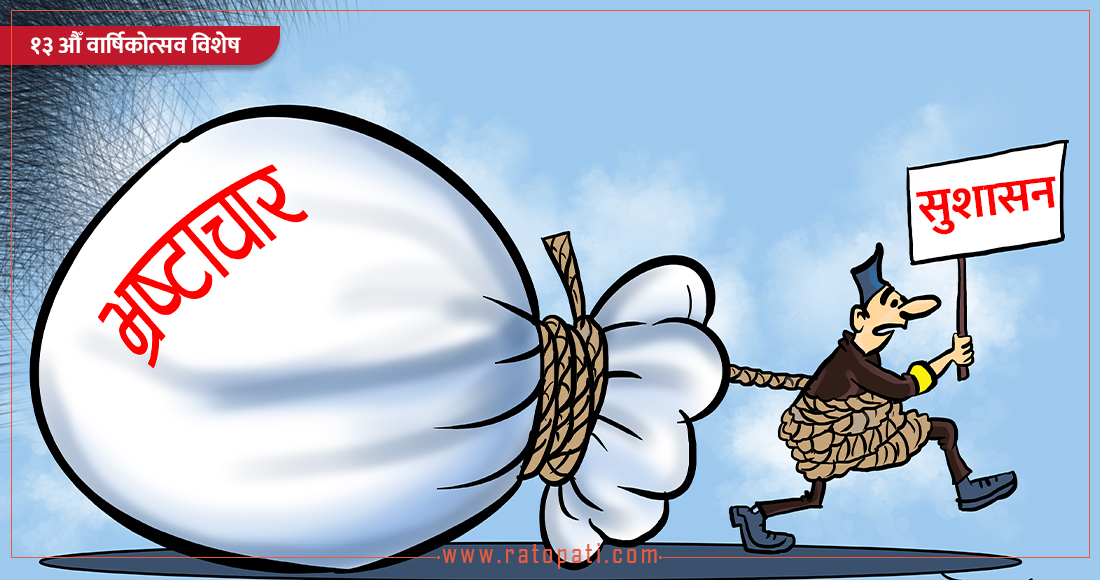
Kathmandu. Looking at the statistics of the last five years of the Commission for Investigation of Abuse of Authority, the number of corruption complaints and cases filed by the commission in court has increased every year. These statistics lend credence to the suspicion that corruption, rather than decreasing, has been increasing since the establishment of the republic in 2065 BS.
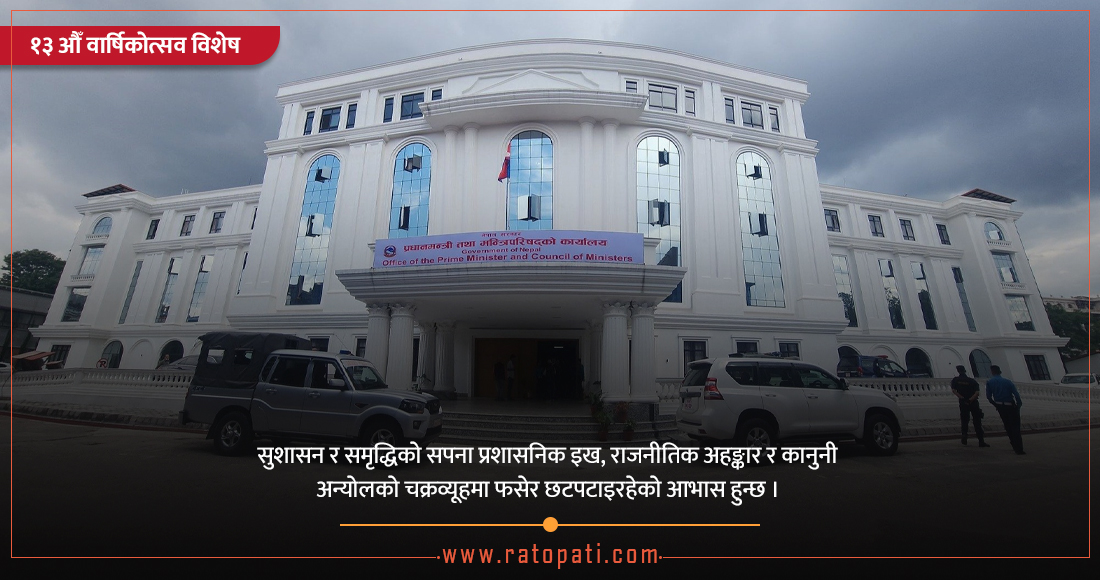
The case of misappropriation of 143 ropanis, 6 annas, 3 paisa, 3 dam of land within the 'Lalita Niwas Camp' in Baluwatar is one of the major corruption cases that have come to light since the achievement of the republic. In the Lalita Niwas case, a case of 'forgery of documents' was filed based on the police investigation report, while the CIAA filed a corruption case.
The incident where the defendants prepared another land ownership certificate and transferred and sold the government land in the Prime Minister's residence Baluwatar area has been recorded as a major corruption scandal in Nepal's corruption history. The police investigation concluded that 238 people were involved. The case is currently sub-judice in court.
Along with the Sudan scam and the fake Bhutanese refugee case, there have been more than a dozen major corruption cases in the country since the achievement of the republic. What are the major corruption scandals since the achievement of the republic? Let's discuss the 12 major cases.
1. Fake Bhutanese Refugee Case:
_AZs3xl5j8x.jpg)
The refugee case is the most talked-about and serious case to date. In this case, crores of rupees were defrauded in the name of sending Nepali citizens to America as Bhutanese refugees. High-ranking officials including former Home Minister Balkrishna Khand, former Deputy Prime Minister Top Bahadur Rayamajhi, and former Home Secretary Tek Narayan Pandey were implicated in the fraud.
Former Deputy Prime Minister Rayamajhi and former Secretary Pandey, among other officials implicated in the case, are in prison for pre-trial detention. However, the scandal they caused has paralyzed the republic, and the citizens are ashamed.
2. Lalita Niwas Case:
This incident, where land belonging to the Prime Minister's residence was privatized by collusion between land mafias, land revenue office employees, and cabinet members, was another major corruption scandal.
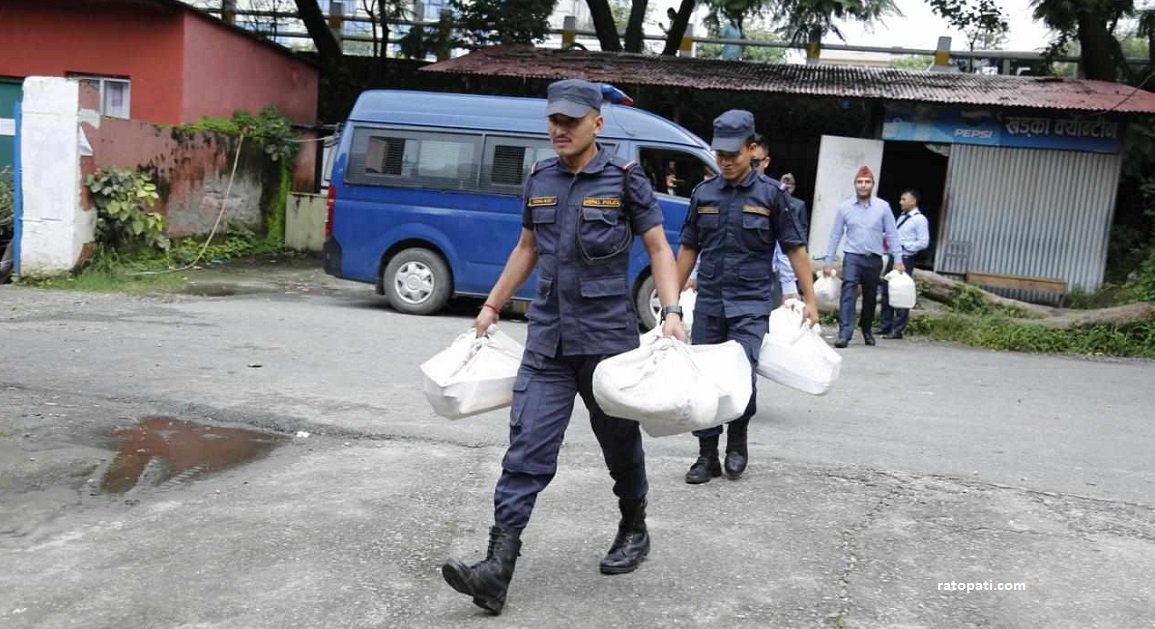
In Bhadra 080, CIB investigated and arrested those involved. The Lalita Niwas case caused a major stir in political and administrative circles. Police also took statements from former prime ministers and the then chief secretary.
This case brought the collusion between politicians and the bureaucracy to the surface. The case is currently sub-judice in court.
3. Sudan Scam:
The scam in the purchase of Armored Personnel Carriers (APCs) for the police deployed in Darfur, Sudan, under the United Nations peacekeeping mission, is a major case since the achievement of the republic. Three former Inspectors General of Police, along with 34 police personnel and two contractors, were implicated.
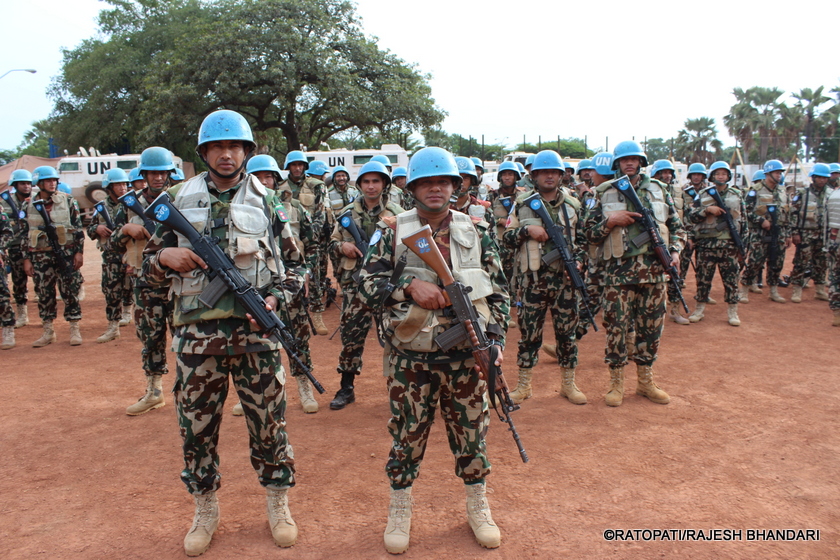
The CIAA investigated and filed a case in that incident. The court even sentenced former IGPs involved in this to prison. This exposed high-level corruption within the security agencies.
4. Widebody Case:
The parliamentary Public Accounts Committee determined that there was a corruption of 4.35 billion rupees in the purchase of two widebody aircraft (Airbus) by Nepal Airlines Corporation.
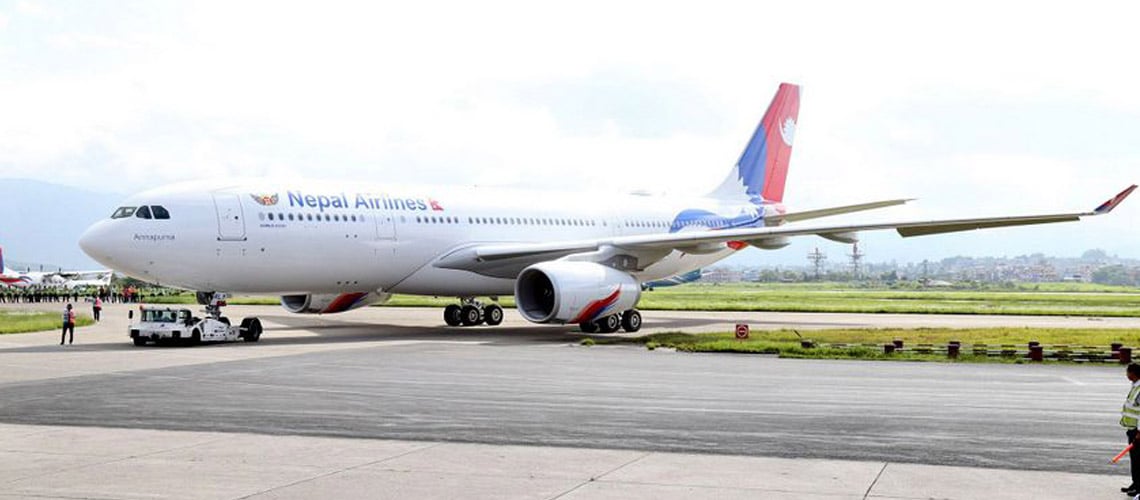
The CIAA concluded that the then General Manager of the corporation Sugatratna Kansakar and other high officials were involved and filed a case in the Special Court. The case is currently pending in the Supreme Court.
5. Security Printing Press and Tax Evasion Case:
The incident where an audio recording of the then Communication Minister Gokul Baskota negotiating a 700 million deal with an agent for the purchase of a security printing press became public was a very high-profile case. He resigned following the incident. The CIAA has not yet concluded its investigation into the matter.
6. Health Supplies Procurement Scam:
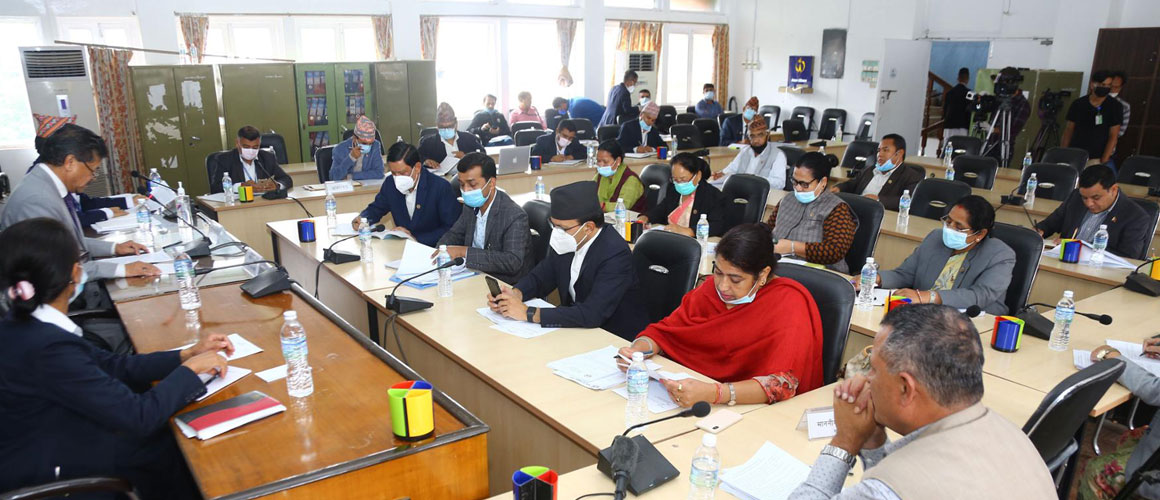
The incident of corruption in the procurement of supplies from the Omni Group at inflated prices during the COVID-19 pandemic was a very high-profile case of that period. Ministers and high officials of the then government were implicated in this. The case remains unresolved to date.
7. Tax Settlement Commission Scam:
The CIAA's investigation concluded that the officials of the Tax Settlement Commission, formed in 071 BS, granted undue tax exemptions to large industrialists and businessmen, causing billions in losses to the state. In this case, considered a major corruption scandal of the republican era, the CIAA filed a case against former joint secretary Chudamani Sharma and others.
8. Gold Smuggling Case:
The incident of smuggling 60 and 33 kg of gold through Tribhuvan Airport is a high-profile case of the republican era. Investigations revealed that police administration and political leadership were involved in the smuggling.
_XEidLVIZlI.jpg)
Former Speaker Krishna Bahadur Mahara was linked to the VAPE case. The case against Mahara is sub-judice in court. The CIAA has also filed corruption cases against officials of the Tribhuvan Airport Customs Office in the VAPE case. However, many people are questioning why the informant is being prosecuted in the VAPE case.
The investigation commission raised questions against CIB officials for errors in the investigation of the 60 kg gold smuggling case brought from Hong Kong hidden in the 'brake pads' of motorcycles and scooters by 'Ready Trade Pvt. Ltd.'. The commission had recommended action against former AIG Kiran Bajracharya and other officials of the Central Investigation Bureau. However, no action was taken against them.
The commission's investigation concluded that there were connections between the investigating officers and gold smugglers and responsible individuals of Waldo Casino. It was found that Chinese gold smuggler Alex used to pay for gold through 'Hundi' transactions via Waldo. It was also found that the Central Investigation Bureau had given immunity to Waldo's accounting chief, Chinese national Terence, after taking his statement 'on paper'.
9. Bansbari Leather Shoe Factory Land Case:
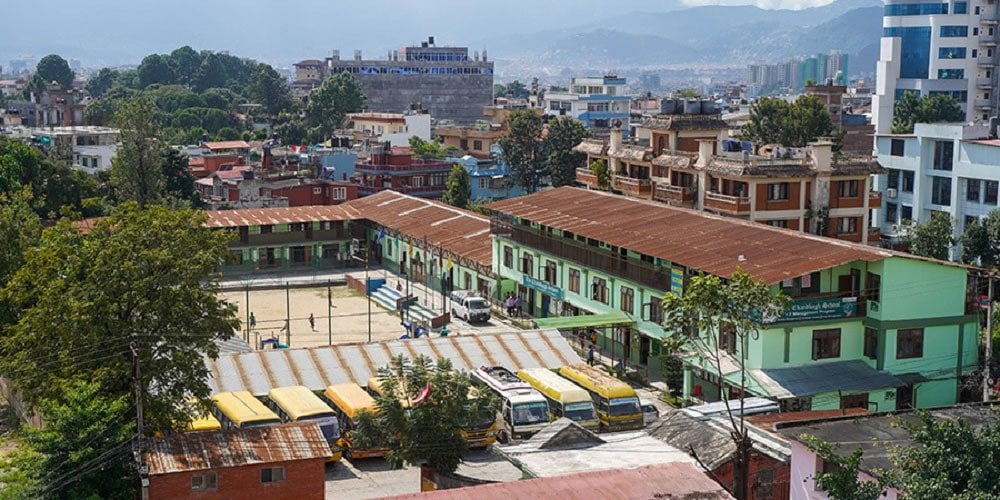
CIB investigated the case where Chaudhary Group privatized 10 ropanis of land belonging to the government-owned Bansbari Leather Shoe Factory. Following the investigation, the government recovered the land from Chaudhary Group. The case gained significant attention in Chaitra 080. The case has now subsided after the land was recovered.
10. Red Passport Case:
The Red Passport scandal was also a very high-profile case in Nepali society at one time. In 067 BS, the Central Investigation Bureau (CIB) of the police found that lawmakers were involved in the 'business' of selling passports. Then-lawmakers BP Yadav, Gayatri Shah, Naradmuni Rana, and Shivpujan Yadav were arrested and prosecuted.
At that time, CIB had prepared a list to arrest at least 20 lawmakers. However, officials who worked at CIB at the time say that the investigation had to be stopped due to political pressure.
11) Pokhara Airport Case:
_qazHerPETK.jpg)
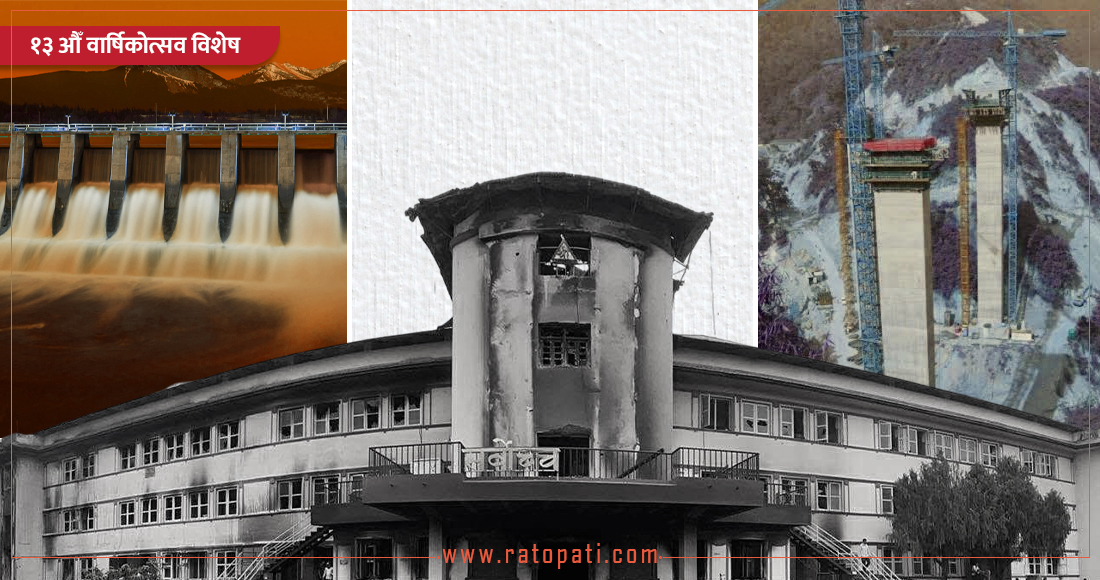
The corruption in the Pokhara Regional International Airport is one of the major corruptions of the republican era. The CIAA's investigation concluded that there was a corruption of 8.36 billion, 73 million, 55 thousand rupees during the construction of the airport. More than 56 high-ranking government officials and contractors, including 5 former ministers, are implicated in the case. The CIAA's investigation concluded that former ministers Ramsharan Mahat, Bhim Acharya, Deepak Amatya, Ramkumar Shrestha, and the late Post Bahadur Bogati were involved in the case. The CIAA has filed 3 cases in the Special Court regarding this case. This airport case is sub-judice in court.
12) Melamchi Water Supply Project:
Three former secretaries were implicated in the corruption in the Melamchi Water Supply Project. In February 080, the CIAA filed a case against 15 people, including 3 former secretaries, as defendants. The CIAA's investigation concluded that there was a corruption of 850 million rupees in the case.
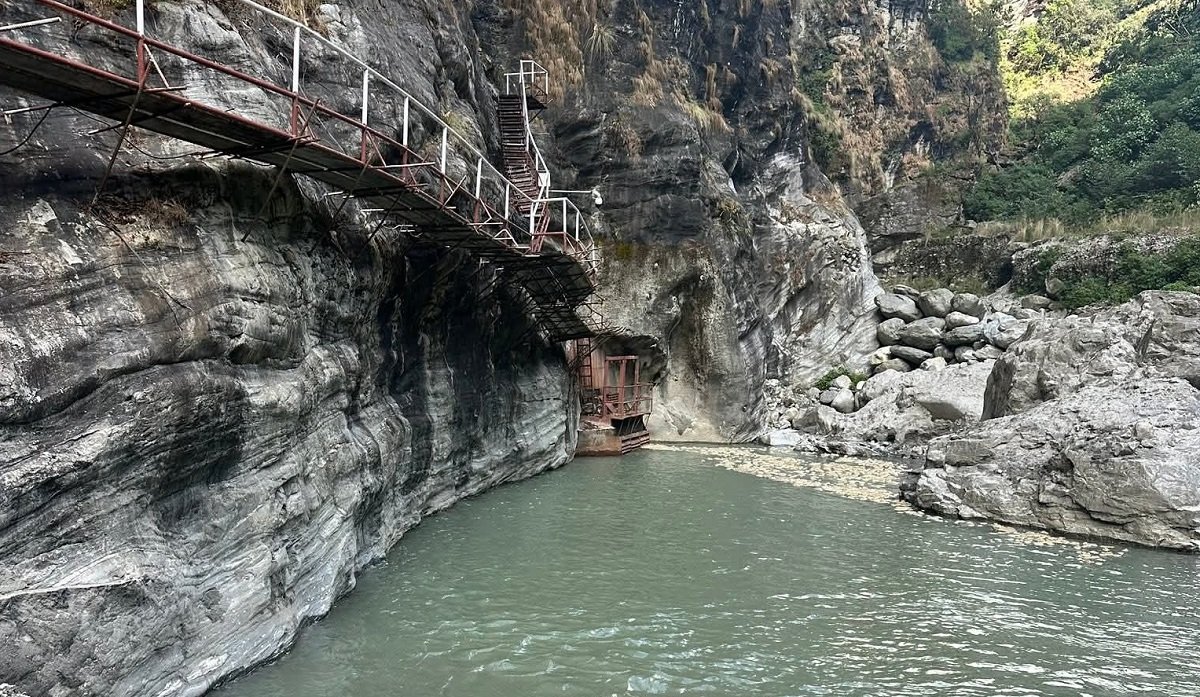
Former secretaries Dr. Sanjay Sharma, Bhimprasad Upadhyay, and Gajendra Thakur were implicated while working as Chairman of the Melamchi Water Supply Development Committee. Besides these, the Giri Bandhu Tea Estate land case and the Gokarna Resort lease case are also examples of major corruptions of the republican era. Experts believe that such cases are making a mockery of the country's good governance.
- How to Stop Corruption?
According to the CIAA's statistics, the rate of complaints has been increasing in the last five years. The rate of case disposal has also increased. CIAA officials say that the number of disposals varies each year because complaints not settled in one fiscal year are carried over to the next fiscal year.
In the current fiscal year, the highest number of 36,026 complaints have been registered with the CIAA. In the current fiscal year, CIAA investigation officers have completed detailed investigations into 947 complaints. Following the investigation, 137 corruption cases have been filed in court as per the commission's decision.
The CIAA stated that suggestions were written for 105 complaints as per the commission's decision and sent to the concerned ministries. The CIAA has stated that 794 complaints have been shelved and 10 complaints have been put on hold.
Complaints for which evidence is insufficient are shelved with the possibility of further investigation if more evidence is found later. Complaints for which cases are sub-judice in court are put on hold by the commission to be 'held' until the court's decision.
Data Source: Commission for Investigation of Abuse of Authority
As corruption continues to rise, voices from the public demanding its control are growing louder. On August 23 and 24, 082, GenZ youth organized an anti-corruption movement to establish good governance. It was the strength of that protest that led to the downfall of the KP Oli-led government and the formation of a new government in the country.
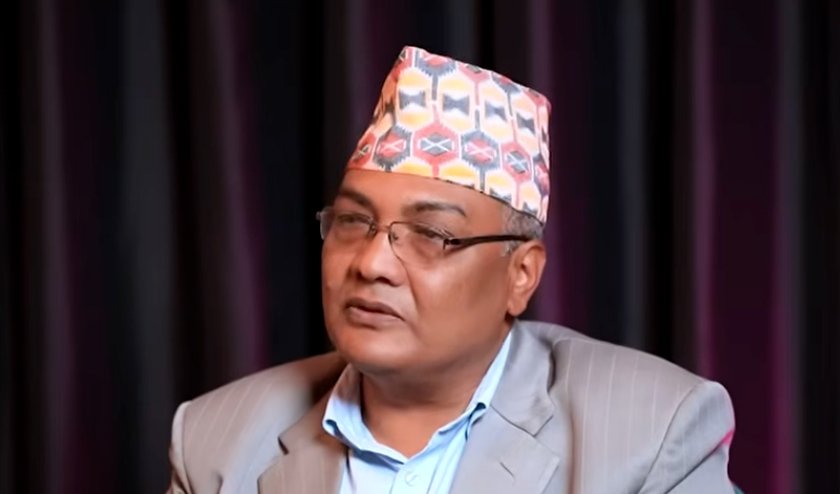
Dr. Deepak Bahadur Adhikari, an associate professor at Tribhuvan University, said that after the GenZ movement, people have hopes that corruption will decrease. Dr. Adhikari, head of the 'Public Policy, Good Governance and Corruption Prevention Study Program' at TU, said, 'To reduce corruption, zero tolerance must be implemented, and if investigations are also tightened, corruption can be controlled.'
According to those involved in the anti-corruption campaign, corruption in Nepal also occurs for livelihood. Such corruption occurs in small amounts in various offices, courts, and government offices. Due to the mentality of giving a small amount of money to service recipients to get their work done quickly, small-scale corruption in government offices and courts has not stopped. Experts say that citizens themselves need to be aware of this.
A former commissioner from the CIAA says, 'Legal reform is necessary because there are loopholes even at the policy-making level.'
Five countries in Northern Europe are among those with the least corruption worldwide. Dr. Deepak Bahadur Adhikari says that in those countries, corruption is viewed with disdain. He said, 'If ethical education can be imparted at the basic level here as well, perhaps corruption could be controlled?'
This specific news has been automatically translated by AI. As a result, there may be some inaccuracies or language errors.