Secretary Krishna Hari Pushkar Detained for Sending Direct Message to Prime Minister
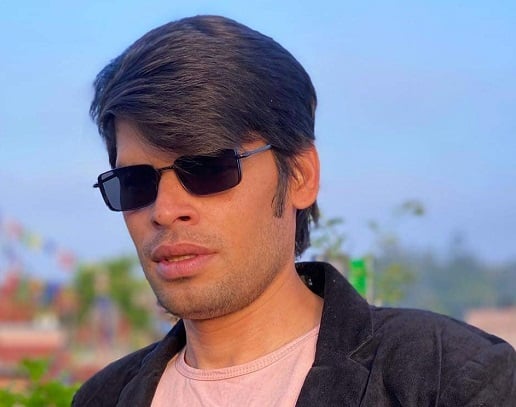

Kathmandu. On Jestha 21, Secretary Krishna Hari Pushkar, working at the Vice President's office, was briefly taken into police custody for questioning due to breaking the 'chain of command'. On the orders of the Prime Minister and Council of Ministers' office, the Valley Crime Investigation Office, Teku, took him into custody from his residence in Kopan. Secretary Pushkar was accused of sending a personal message to Prime Minister Balendra (Balen) Shah. He, a permanent resident of Mahottari, the ancestral home of Balen, had sent a direct message to the Prime Minister with aspirations of becoming Chief Secretary or Ambassador. He was released after about 7 hours of detention as no basis for prosecution was found.
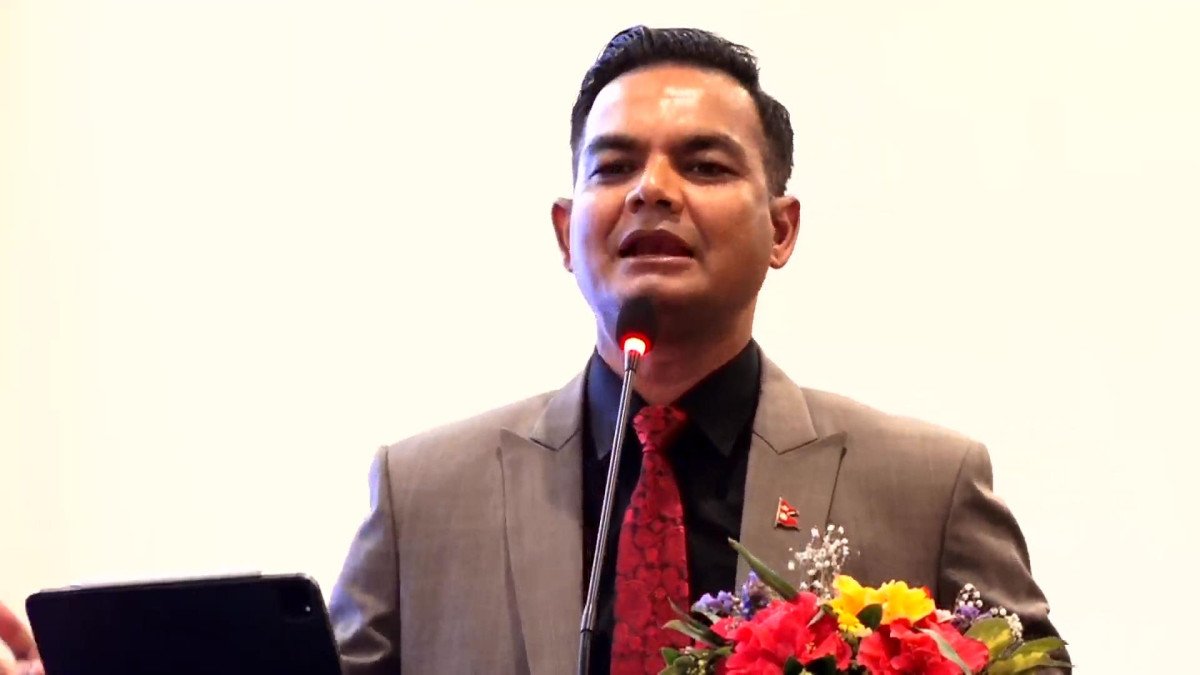
This incident has completely shaken the administrative circles. Some have analyzed this incident as a tendency to secure positions of profit by staying close to power centers, including Prime Ministers, ministers, and influential leaders of political parties, with changes in government, as in the past. Some have stated that it is wrong for the state to take a high-ranking civil servant into custody merely for sending a message to the Prime Minister.
Former Prime Minister Jhalanath Khanal accused the current government of moving towards a dictatorial path. He stated that it is not appropriate to arrest a civil servant merely for sending a message.
“The government has gone down a dictatorial path. A secretary can send a message to the Prime Minister using technology. If a secretary is arrested just for sending a message, will the Prime Minister not be arrested if they send a message?” Khanal questioned the government's move, adding, “If there are activities against laws and regulations, there are various ways to seek clarification internally and issue warnings.”
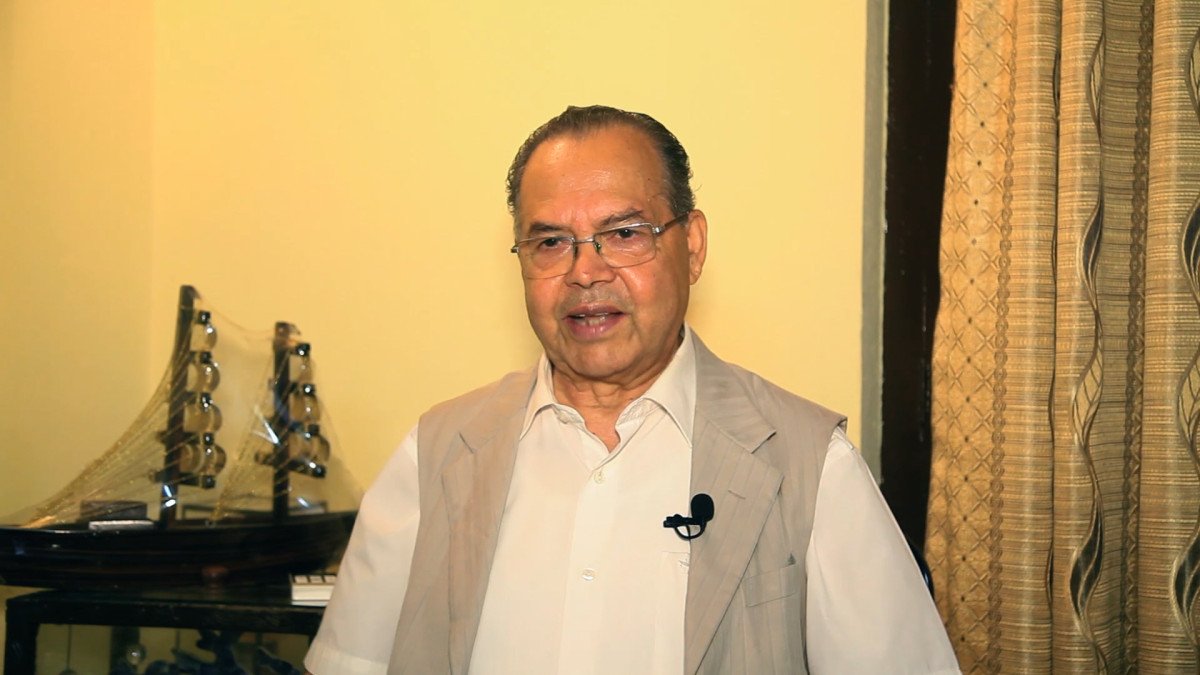
Khanal argued that it is not appropriate to call it an opportunistic character to send a message by meeting directly or using technology when in trouble or expecting something.
Former Chief Secretary Dr. Bimal Koirala stated that both the tendency of the Prime Minister to send a direct message and the secretary to disregard the chain of command and send a message, and the government to take the secretary into custody based on the message, are not right.
_owrqJovre3.jpg)
“It is not good to write a direct message to the Prime Minister and to interrogate the secretary by deploying the police based on the message,” Koirala said.
The practice of approaching power centers to expedite transfer and promotion files in the bureaucracy, considered the permanent government, is not new. Earlier, former Chief Secretary of the Government of Nepal, Dr. Somlal Subedi, retired from government service in Asar 2074 BS while still in service and went on to become Deputy Executive Director at ADB in Manila, Philippines.
Another Chief Secretary, Shankar Das Bairagi, also retired from service in Jestha 2080 BS while still in service and became National Security Advisor. Former Secretary Prem Kumar Rai was appointed as the Chief of the Commission for Investigation of Abuse of Authority in 2077 BS. The then government led by KP Oli was accused of appointing officials to important constitutional bodies unconstitutionally by dissolving the parliament. However, the Supreme Court's Constitutional Bench ruled in favor of the government's decision based on a majority.
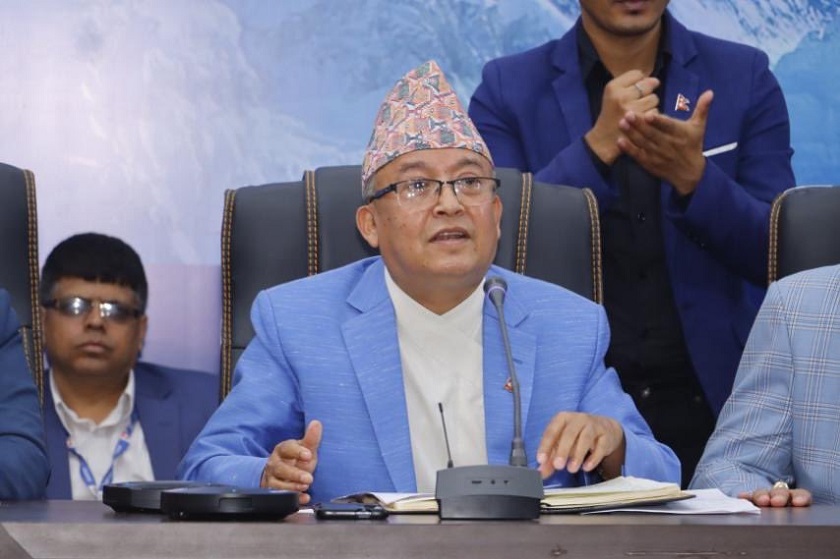
Former Secretary of the Ministry of General Administration, Dinesh Chandra Thapaliya, resigned from his service and was appointed as the Chief Election Commissioner. Former Additional Attorney General Padam Prasad Pandey resigned from his post and became the Secretary-General of the Federal Parliament Secretariat in Magh 2080 BS.
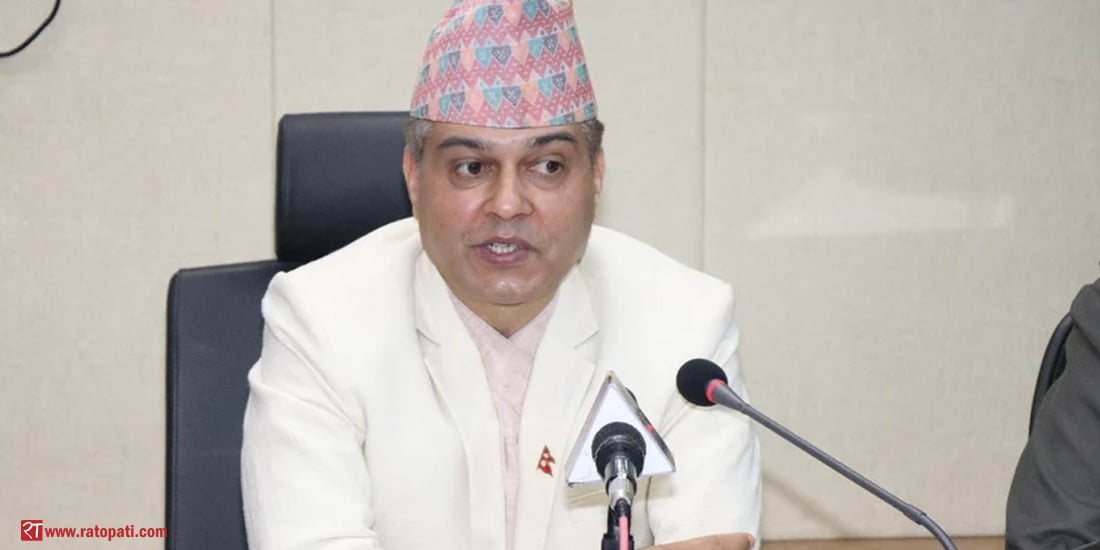
Former Home Secretary Teknarayan Pandey was arrested on charges of being involved in sending Nepali citizens to America as fake Bhutanese refugees with the backing of power centers. While he was the secretary at the Vice President's office, he was arrested in Baishakh 2080 BS. Pandey, along with former Deputy Prime Minister Top Bahadur Rayamajhi, former Home Minister Balkrishna Khand, and other high-ranking officials and political office bearers, were arrested. Cases against them are sub-judice in court. Not only high-ranking civil servants but also high-ranking security officials, politicians, social activists, and administrators who benefit by staying close to power centers are abundant.
To end this very tendency, a 'cooling-off period' was included in the Civil Service Bill registered in parliament during the tenure of the Prachanda-led government. Allegations arose that high-ranking officials, including former Chief Secretary Ek Narayan Aryal and Federal Parliament Secretary-General Padam Prasad Pandey, were actively involved in removing that provision.
In February, the Rastriya Swatantra Party-led government, which secured nearly a two-thirds majority, published 100 agendas related to governance reforms to end the anomalies seen in the judiciary and administration. The Balen-led government, showing signs of moving ruthlessly in favor of good governance and prosperity, brought various ordinances and abolished political appointments. By bringing an ordinance related to the Constitutional Council, the government broke the tradition of continuous appointment of the Chief Justice of the Supreme Court.
_sczC1S0U8s.jpg)
Sharma, who has a background as a lawyer, was appointed as an additional judge of the High Court in 2070 BS. His position was lost after the new constitution was promulgated in 2072 BS. However, in 2076 BS, Sharma succeeded in becoming a judge of the Supreme Court through the quota of then Chief Justice Cholendra Shumsher. He was appointed Chief Justice on Jestha 5, surpassing three senior judges ahead of him.
The above are just representative examples. From the democratic movement of 2007 BS to the Gen Z movement last August, the 'mouse tendency' has not disappeared.
Whether it was the interim government led by Khilraj Regmi, who became the Chairman of the Council of Ministers while serving as Chief Justice in 2069 BS, or the interim government led by former Chief Justice Sushila Karki formed with the strength of the Gen Z movement, the tendency has not changed despite the change in the system and characters.
In the recent House of Representatives elections, most of the candidates who received tickets from Rastriya Swatantra Party, leaving behind old parties like Nepali Congress, CPN-UML, CPN-Maoist Center, Bibeksheel Sajha, and Madhesi parties, have won the election.
After the end of the autocratic Rana regime in 2007 BS, individuals with the same tendencies benefited by being close to the palace and the Congress. When the then King Mahendra overthrew the elected government and implemented the Panchayat system in 2017 BS, some prominent figures in the administrative and political sectors became close to the palace. After the restoration of the multi-party system in 2046 BS, the prominent figures of the Panchayat system benefited by staying close to the Congress and the Communists.
After the fall of the government led by CPN-UML Chairman Manmohan Adhikari in 2052 BS, Nepali Congress leader Sher Bahadur Deuba became the Prime Minister. Deuba formed the government with the support of Rastriya Prajatantra Party, which was the third largest party in parliament. Kamal Thapa, who was the Minister of Law, Justice, and Parliamentary Affairs in the Deuba government, was active in forming a government under the leadership of Lokendra Bahadur Chand at that time. With Thapa's active involvement, a government under Chand's leadership was formed in 2053 BS. In that government, Thapa served as Foreign Minister and Minister of Housing and Physical Planning. Due to internal party conflicts, he joined the Surya Bahadur Thapa faction and worked to bring down the government. It was based on this tendency of Thapa that Lokendra Bahadur Chand coined the term 'mouse tendency'. Chand sarcastically referred to the tendency to shift allegiance wherever power and authority lay.
Kamal Thapa, who became the Foreign Minister in the government led by Surya Bahadur Thapa in 2054 BS, served as Home Minister in the government led by then King Gyanendra in 2062 BS, Deputy Prime Minister, Minister of Local Development, and Foreign Minister in the government led by KP Oli in 2072 BS. He successfully became Deputy Prime Minister in the government led by Prachanda in 2073 BS and in the government led by Sher Bahadur Deuba in 2074 BS.
This specific news has been automatically translated by AI. As a result, there may be some inaccuracies or language errors.