Nepali Congress Passes 15-Point Dhanagadhi Resolution for Accountable Local Governance


Kailali. The Nepali Congress's Sudurpaschim Province-level gathering has passed the 15-point Dhanagadhi Resolution with the objective of making local governments more accountable and good-governed.
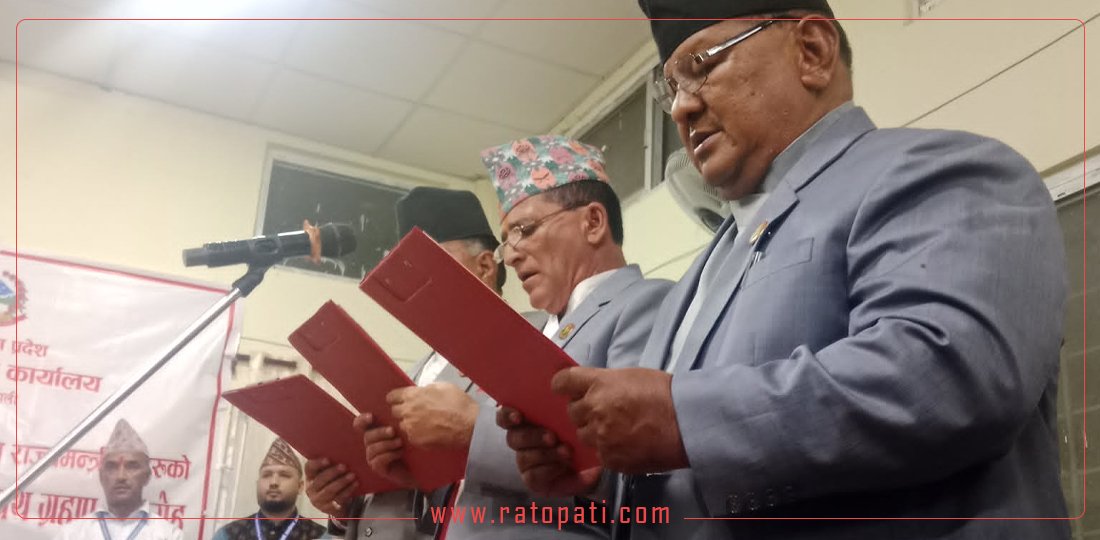
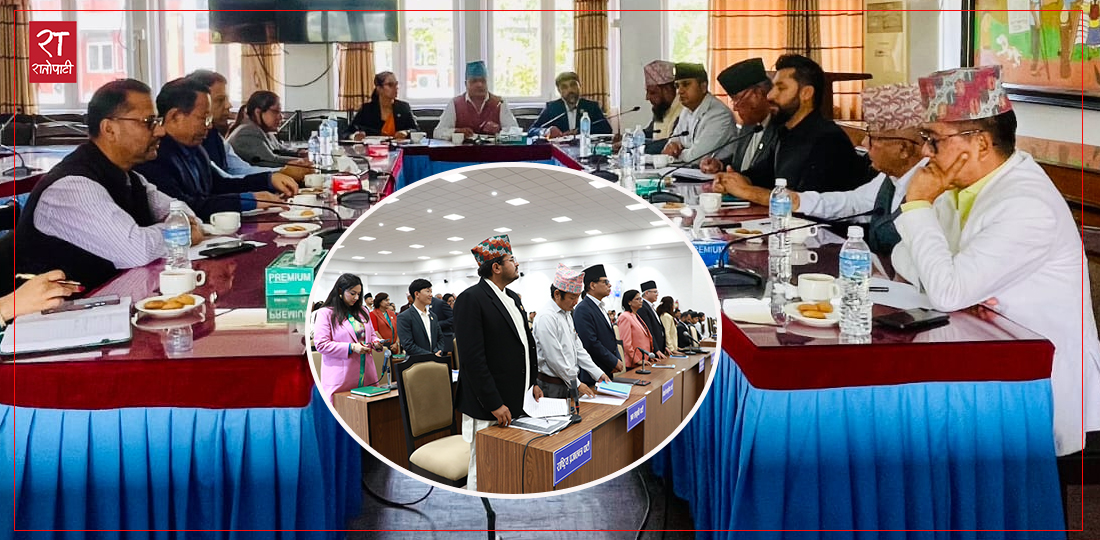
This resolution was made public after detailed discussions between local government representatives from the province and party leadership during the two-day gathering held in Dhangadhi.
The gathering, determining that the development of villages and towns is the main foundation of a prosperous Nepal envisioned by the Congress, has pledged to provide effective services on matters directly concerning citizens. The main priorities of the resolution passed by the gathering are the protection of citizens' freedom and the creation of an accountable government.
The Congress has pledged that all decisions made by local governments under its leadership will be based on procedures, and that the human aspect will be kept at the center when implementing laws. The resolution states that services will be further simplified, and 'doorstep services' will be organized for persons with disabilities, the elderly, pregnant women, and disadvantaged communities. Similarly, the goal is to create audio-visual materials of good practices by local levels and inform the public, and to improve managerial weaknesses.
The resolution includes submitting the budget by June 10, completing the seven stages of plan formulation, and selecting plans only through a 'Project Bank'. Emphasizing results-oriented work over fragmented plans, the gathering decided not to invest public taxes in unproductive sectors and to make special efforts to achieve zero audit irregularities. Plans will be made in consultation with local party committees and experts, and a party-government coordination mechanism will meet every two months.
The gathering has also put forward important plans in the areas of employment and social security. Policies have been adopted to make women and youth returning from foreign employment self-employed through programs like 'Employment Bank' and 'Entrepreneur Mother'. The resolution mentions increasing internal investment in health and education, including all citizens in health insurance, and implementing special programs for diseases like sickle cell anemia. The Congress has stated that it will take initiatives for data collection and distribution of land ownership certificates to solve the problems of landless Dalits, squatters, and unorganized settlers, and will bring livelihood programs for freed Haliyas and Kamaiyas.
A pledge has been made to play a leading role in controlling Chhaupadi, child marriage, witchcraft, and caste discrimination, and to preserve local languages and cultures. Furthermore, drawing the attention of the federal and provincial governments to remove legal obstacles in employee management and federalism implementation, the gathering has appealed to move forward based on the principles of coordination, cooperation, and coexistence.
These are the 15 Resolutions
The main foundation of a prosperous Nepal envisioned by the Nepali Congress is the prosperity of villages and towns. Recognizing that the responsibility to provide immediate services on matters directly concerning citizens lies with the local government at their doorstep, as per the constitution,
Fully embracing the Constitution of Nepal, the Local Government Operation Act, the resolutions and pledges of the Nepali Congress party, good governance standards, and accountability and responsibility towards the people, the leadership of local governments led by the Nepali Congress, through its policies and programs, commits to making the activities of local governments more citizen-friendly, good-governed, and results-oriented,
The Nepali Congress, organized by the Central Policy Research and Training Academy, held a dialogue, thematic discussion, and detailed interaction on Baishakh 26 and 27, 2083, in Dhangadhi, Sudurpaschim, between local government representatives and local and district-level party leadership of Sudurpaschim. Based on this, the leadership of local governments in Sudurpaschim and the party leadership at this gathering make the following 15 resolutions.
Resolutions
1. Protecting the freedom and rights of citizens granted by the constitution, and working more effectively as an accountable and responsible government through citizen-centric policies.
2. Recognizing good governance, procedures, and accountability as integral parts of each other, remaining firm in the principle of making decisions based only on procedures, and committing to work by keeping humanity at the center while implementing laws, and drawing the attention of the federal government towards this as well.
3. Reaffirming the belief that receiving easy, accessible, and timely services from local government is a citizen's right, further simplifying public service delivery. Efforts to provide doorstep services to persons with disabilities, the infirm, the elderly, pregnant and postpartum women, citizens with chronic illnesses, and disadvantaged communities will be made more organized and effective.
4. Informing citizens point-by-point about the public welfare works and good practices undertaken since the formation of local governments by creating audio-visual materials. Good practices from one local level will be adopted by other local levels. Identifying managerial weaknesses during this period and focusing attention and efforts on their resolution.
5. Committing further to mandatorily present the budget to the budget assembly by June 10 as per constitutional provisions, and formulating the budget according to policies and programs. Ensuring that plan formulation is realistic, fact-based, and results-oriented by mandatorily completing seven stages. Expenditure will be made only according to the work procedure with a spending standard. Special attention will be paid to financial discipline. Special initiative will be taken for local levels to achieve zero audit irregularities.
6. Strictly implementing the selection of plans only through a 'Project Bank'. Further commitment to selecting plans that yield results rather than fragmented plans.
7. Mandatorily consulting and seeking suggestions from local party committees, the general public, civil society, and experts from various fields while formulating plans, and embracing those suggestions. Making the party-government coordination mechanism effective by holding regular dialogues every 2 months.
8. Remaining firm in not investing public tax revenue in unproductive sectors. Not making or allowing any decisions or work to be made arbitrarily outside the specified plan and allocated resource limits in an opaque or irresponsible manner. Implementing a tax system that is friendly to tax and business based on public service and public interest.
9. Creating an environment for entrepreneurship and employment through 'Employment Bank', 'Enterprise Development Center', and 'Enterprise Fair'. Implementing provisions for tax concessions for the use of local raw materials and job creation. Operating programs like 'Entrepreneur Mother' to increase women's participation in productive sectors and self-employment, and to connect women's traditional skills and knowledge with entrepreneurship. Operating the 'Labor to Enterprise Program' to facilitate entrepreneurship using the skills of individuals returning from foreign employment.
10. Local levels have significant responsibilities in basic matters like education, health, and drinking water, which are fundamental rights of citizens. Prioritizing internal investment in education and health, not limited to conditional and federal programs, with creative programs to improve quality education and giving special priority to health services, taking special care of citizens' health through universal health insurance and home-based services. Taking joint initiatives to promote tourist destinations in the Sudurpaschim Province and connect them with provincial prosperity. Connecting the youth generation through arts and sports.
11. Taking initiatives for data collection, verification, land measurement, and distribution of land ownership certificates to solve the problems of landless Dalits, squatters, and unorganized settlers residing within the Sudurpaschim Province, in accordance with the law. While managing landless Dalits, squatters, and unorganized settlers, prioritizing citizens' self-respect and resettling families of citizens residing in risk-prone areas in safe locations. Operating special livelihood programs for freed Haliyas, freed Kamaiyas, and the Vadi community.
12. Launching 'Doorstep Service' for services like birth registration, death registration, health insurance registration and renewal 'online or from the doorstep', and basic health check-ups at home. Making the health insurance program, brought about by the initiative and leadership of the Nepali Congress, effective by 'branding insurance'. Operating 'Sickle Cell Special Program' for citizens and communities affected by sickle cell anemia and thalassemia.
13. Playing a leading role in controlling domestic violence and violence against women, untouchability, caste-based, gender-based, and social discrimination, child marriage, Chhaupadi, witchcraft, and other social evils and superstitions, and creating social harmony and equality. Prioritizing the regulation and control of social vices such as smoking, alcohol consumption, and drug abuse. Leading the preservation and promotion of local languages, scripts, and cultures.
14. Drawing the attention of the provincial and federal governments to coordinate with local levels during the formulation of laws, plans, and budgets, to expedite employee transfers, and to end the situation of vacant positions in remote areas. Urging the federal government to amend laws that hinder the implementation of federalism, enact necessary laws, and clarify the shared rights under Schedule 9.
15. In accordance with the spirit of federalism and the constitution, this gathering pledges to move forward on the path of prosperity based on the 'Three Cs' of coordination, cooperation, and coexistence, and appeals to the federal and provincial governments, while dedicating itself to this endeavor.
This specific news has been automatically translated by AI. As a result, there may be some inaccuracies or language errors.