Nepal's Internal Revenue Department Focuses on Anti-Money Laundering Efforts Amidst FATF Grey-List Concerns


Nepal is on the Financial Action Task Force (FATF) grey-list for anti-money laundering. Being on this list has not only changed the international perception of Nepal but has also led to problems such as increased costs and delays.
Nepal was most recently placed on the grey-list on February 21, 2024 (Falgun 9, 2081 BS). Although the goal was to be removed from this list within six months, a year has passed without progress.
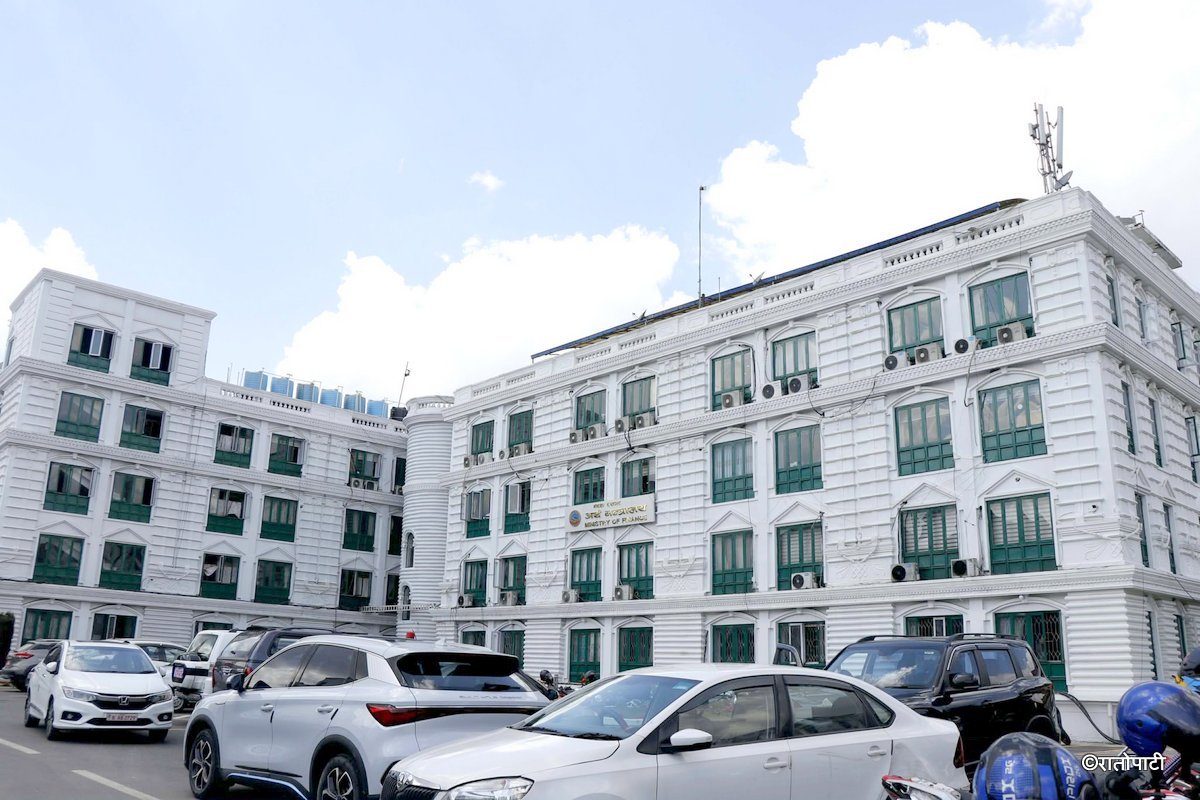
The Department of Inland Revenue is one of the key bodies responsible for anti-money laundering efforts. Specifically, this department handles work related to entities involved in the trade of precious metals (DPMS).
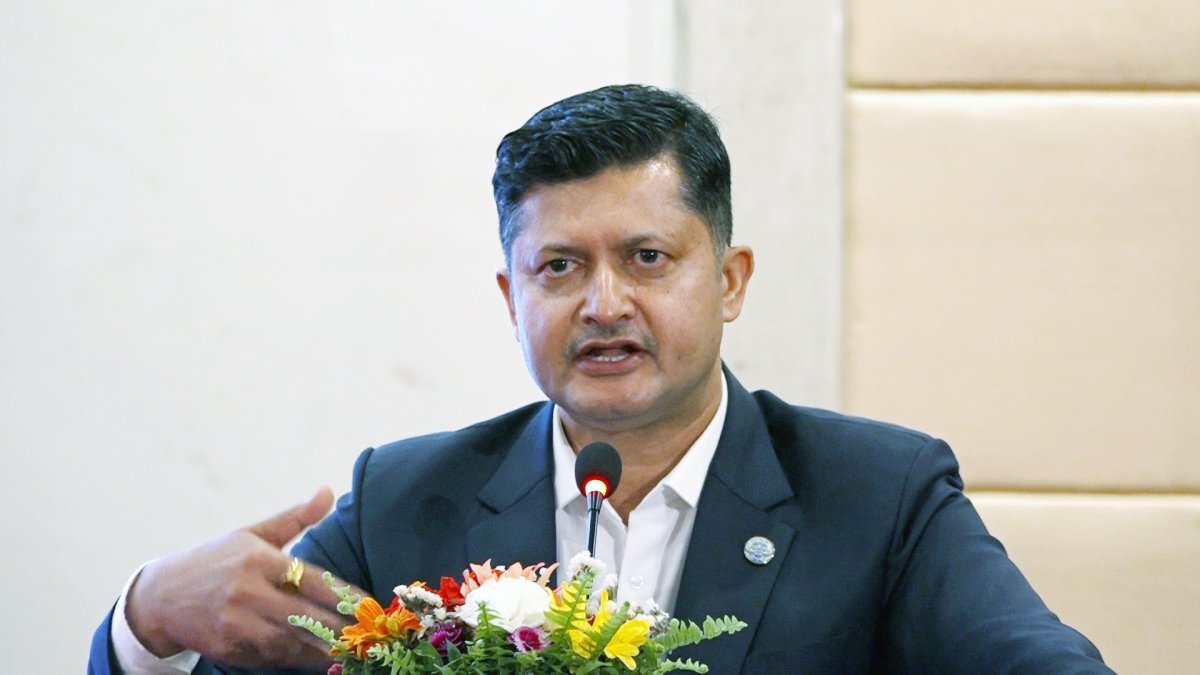
In this context, an interview is presented focusing on the efforts and achievements of the department, as well as the impact of the recent amendment ordinance to the Anti-Money Laundering Act, with Rishi Ram Pokharel, Director of the department.
- Nepal is currently on the Financial Action Task Force's grey-list. The government is making efforts to get off this list, but is not succeeding. As a responsible body in this effort, how is the Department of Inland Revenue moving forward?
Getting off the grey-list is not just a technical matter, but a measure of Nepal's overall financial security, international reputation, and transparency. Therefore, we have taken the task of getting off this list as a matter of national prestige.
Our department is moving forward with various strategies and action plans within its mandate.
We are currently working based on the 'Elaboration of Rapid Remedial Activities-2082 BS' and the National Strategy and Action Plan (2081-2085 BS).
As the responsibility of regulating businesses involved in the trade of precious metals or goods is clearly assigned to us, we are focusing more on this. For this, we have already issued clear directives and guidance on identifying the Ultimate Beneficial Owner. The 'Guidance on Monitoring-2082 BS' is also in effect to make monitoring effective.
We have not only issued directives but have also emphasized capacity building for them. In the current fiscal year alone, we have conducted 30 different training and interaction programs, with approximately two thousand businesspersons and stakeholders directly participating.
Regarding these activities, we used to submit monthly reports. From this month, we have started submitting progress reports on a fortnightly basis.
- What kind of money laundering activities are being observed in the trade of precious metals? There is also a lot of talk about fake bills and incorrect reporting in the market?
In reality, the department's scope of work is very broad. It includes not only the trade of precious metals and goods but also issues related to income tax, value-added tax, and excise duty.
The National Risk Assessment 2020 has classified the trade of precious metals as a medium-high risk sector. The main reasons for this risk are cash-based transactions and the easy movement of precious goods.
As for fake bills and incorrect reporting, we are taking it very seriously. We are conducting detailed investigations based on intelligence received from the Anti-Money Laundering Investigation Department and the Financial Intelligence Unit.
In many cases, there is a tendency to hide actual transactions and show them only on paper. To control this, we have mandated businesses with an annual turnover of more than 200 million rupees to join the Computerized Billing System (CBMS). This has helped bring transparency to the system.
However, the problem still exists. The fact that the Suspicious Transaction Report (STR) is still zero, even though more than 1100 businesses joined the 'goAML' system in the previous fiscal year, forces us to think: either the businesses do not recognize suspicious transactions, or they are deliberately hiding information.
We are working to inform those lacking financial and technical knowledge for reporting through various programs and to hold accountable those who do not report despite this.
- The issue of money laundering is interconnected with various bodies. The Anti-Money Laundering Investigation Department, Nepal Rastra Bank, Nepal Police, and all bodies are responsible for this. How is the coordination with these bodies and businesses?
Yes, anti-money laundering is a multidimensional and interconnected issue. No one can reach the destination by walking alone. Therefore, we are working hand in hand with the Nepal Rastra Bank, the Financial Intelligence Unit, the Anti-Money Laundering Investigation Department, and various law enforcement agencies.
We also give equal importance to our relationship with businesses. We are in constant dialogue with umbrella organizations such as the Federation of Nepal Gold and Silver Dealers' Associations, the Federation of Gems and Jewelry Associations, and the Handicraft Association.
Our main objective is not to intimidate businesses but to make them responsible. We have strengthened the practice of information exchange and joint monitoring. Unless all state organs and the private sector move forward with the spirit of being passengers on the same boat, it will be difficult to meet international standards.
- You mentioned 'zero suspicious reporting' earlier. Is the reason for businesses not providing information due to not knowing how to report, or is it done intentionally?
Both aspects are involved here. Looking at the background of precious metal businesses in Nepal, most come from traditional and family businesses. Modern accounting systems and complex legal procedures can be somewhat difficult for them to understand.
They often lack the technical capacity to identify who is buying gold, what their source of income is, or whether they are a Politically Exposed Person (PEP). We can call this ignorance or lack of capacity.
However, there is another side to it. There is a large gap between the demand for gold in the market and the import quota set by the government. Currently, only 25 kg can be imported daily, while the demand is much higher. In such a situation, there is a possibility that businesses use smuggled gold to sustain their business and conduct 'off the record' transactions to hide it.
When transactions are hidden, there is no reporting of suspicious activities. Therefore, it appears that information is also being deliberately hidden to some extent. Businesses need to improve both their understanding and their intentions. We also have to bring this under the scope of regulation and investigation.
- The government recently made some amendments to the Anti-Money Laundering Act through an ordinance. How has this changed the department's working style and authority?
This ordinance has made the investigation and prosecution process much clearer and more powerful. The amendment to the Anti-Money Laundering Act, 2064 BS, has further specified the responsibility of investigating financial crimes such as market manipulation or insider trading in the securities market.
Most importantly, there is now a clear provision regarding which public prosecutor's office to file a case with after the department completes its investigation. This has ended jurisdictional disputes and made it easier to turn investigation reports into concrete results. We feel that this has made us more responsible and accountable.
- What should be the way forward for reforms in 'DPMS', or the precious metals sector in Nepal? What would you like to say to businesses and stakeholders?
What we need to understand is that there are more than 26,000 registered businesses in this sector in Nepal. This is a vast network.
In this situation, for improvement, businesses must first learn to assess the risks of their own operations. Conducting transactions without verifying who the beneficial owner is and where the money comes from is risky.
Second, the use of technology is indispensable. Businesses should understand that joining goAML is not just a formality but a tool to secure their own business. Businesses should also adopt transparency in activities such as refining or pawning gold and silver.
A transparent business is a sustainable business. Paying taxes and complying with legal procedures is not only a duty towards the state but also a security shield for one's own business. Only if we all work together can we get Nepal out of the grey-list and build a clean and transparent economy.
This specific news has been automatically translated by AI. As a result, there may be some inaccuracies or language errors.