Rastriya Swatantra Party Chairman Rabi Lamichhane Directs MPs on Parliamentary Practice and Future Direction


Kathmandu. Challenging the established narrative of politics, Rastriya Swatantra Party (RSP), which has made a strong presence in parliament in a short time, is currently undergoing a deep learning process of parliamentary practice.
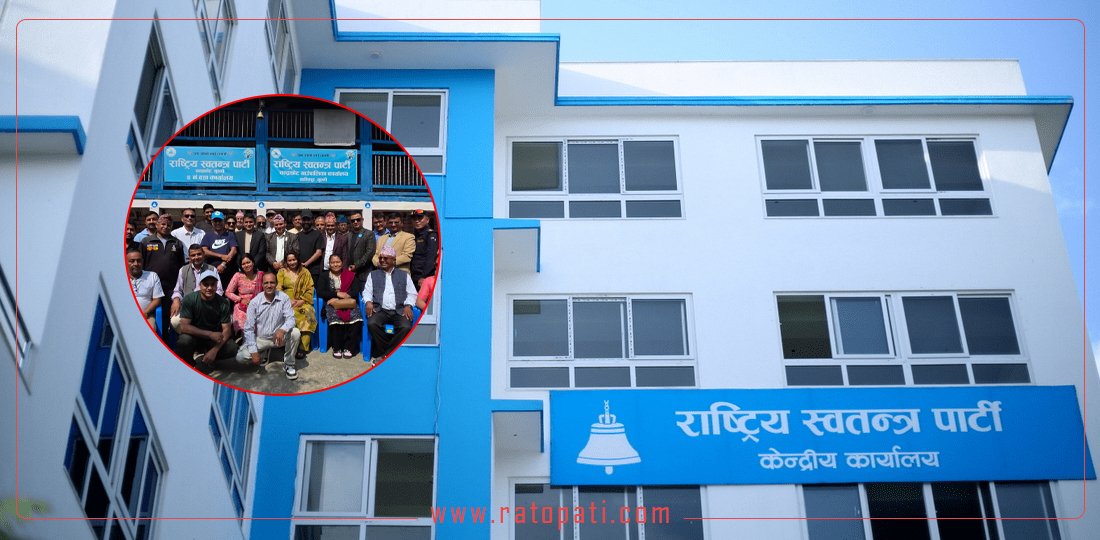
RSP organized a two-day intensive training program in Lalitpur to educate its newly entered MPs, who have just entered politics, about parliamentary etiquette, the law-making process, and the seriousness of politics.
Addressing the closing ceremony of the program organized by the parliamentary party and the party's training department, party chairman Rabi Lamichhane gave various directives to his MPs and party ranks. This was not just a formal speech but also the future political direction, ideological clarity, and roadmap for governing power of RSP.
In his address, Chairman Lamichhane clarified his respect for old political parties, awareness of the immaturity of his MPs, strong criticism of the trend of going viral, and the resolve to build the nation. Highlighting the reality that the process of learning and teaching continues throughout life in politics, he declared RSP's journey as a journey to write 'history', not to write a 'biography'.
- The 'Easiest Revolution' and Respect for Old Parties' Sacrifices
In Nepali politics, old established parties—Nepali Congress, CPN (UML), Maoist Center, etc.—are often considered RSP's main competitors and, in some contexts, targets of criticism. However, at this training program, Chairman Lamichhane openly acknowledged the sacrifices, penance, and struggles of the leaders of the old parties in bringing about this system.
'The struggles of leaders of Nepali Congress, CPN (UML), or Maoist were not ordinary. They left their families, children, risked their lives, and struggled. While fighting against Panchayat for 30 years, they didn't even know if the system would change or not. We stand today on the foundation of those parties and leaders who plunged into the struggle even when their heads were priced,' Lamichhane said.
He termed RSP's political rise as the 'easiest revolution' in world history. Reminding his MPs of the suffering of past revolutionaries, Lamichhane said, 'How easy is our revolution! We leave home after eating a hot meal, everyone greets us on the street, the media invites us for interviews, and there is no risk to our lives. If we, having come through such an easy path, cannot build the country and change the condition of the people, then no one is more incompetent than us.'
His statement made RSP MPs realize the heavy responsibility on their shoulders and inspired them to understand politics not just as 'glamour' but as a serious responsibility.
- Strict Directive to Abandon the Craze for Going Viral: Don't Act as Soon as You See a Camera
Many RSP MPs have risen through the strength of social media and the media. Their strong and aggressive statements in parliament and parliamentary committees also receive good coverage in the media. However, Chairman Lamichhane expressed strong dissatisfaction with this trend. He clarified that the main job of an MP is not to gain cheap popularity or go 'viral' but to make laws and bills.
Lamichhane targeted his MPs, saying, 'I know that when many cameras are seen in a parliamentary committee, the blood rushes. You feel like speaking loudly thinking it will reach your voters, but is that your emotion or an act? You have to come out of the viral world now. Our main job is to discuss clauses in bills and make laws, not to stunt in the media.'
He urged them not to forget the humility shown when reaching out to the people before the election. Hinting at the tendency to complain about not getting to be a minister or the chairman of a parliamentary committee, he said that the role of an MP is more important than the position.
'The MP's logo worn on the corner of a coat is not just a piece of ordinary metal; it is a heavy responsibility that carries the future of the country. If you are only chasing positions and limelight, then we have taken the wrong path, please 'U-turn' from there,' was his strict directive.
- Resolve to Write History, Not Biography
Lamichhane presented the philosophical basis of RSP's presence in politics, stating that they have not come to write stories of personal success.
Praising the capabilities of his MPs, he said, 'You are all so excellent in your respective fields that if you write books yourselves, they can become bestsellers. Your biographies are excellent in themselves. But we are not here to write biographies; we are here to write the history of the country. In the journey of writing history, one must sacrifice the temptation of petty positions and personal ambitions.'
His statement clearly carries the strategic objective of discouraging potential greed for positions and factionalism that might arise within RSP.
- 'Don't Foster the Illusion of 'Ravi and Balen Factions''
As any political party grows, the emergence of factions and sub-factions is an old malady of Nepali politics. Rumors of various factional activities have also surfaced within RSP from time to time. In particular, some have tried to find factions within RSP by linking the ideological or political polarization between Lamichhane and Prime Minister Balendra Shah (Balen).
Lamichhane strongly attacked this issue for the first time. He issued a stern warning to those who harbor divisive thoughts within the party like 'I am from this side and I am from that side.'
'Today I will reveal something. Some friends talk about Balen-Ravi, Ravi-Balen, meaning I am from this side and that side. The Prime Minister and I laugh a lot hearing this. I have not made ministers of those friends who entertain such illusions and play factional games. If anyone plays the game of factionalism, they will not even get a ticket in the next election,' Lamichhane clarified.
Recalling the reality that the country has lagged behind for the past 70 years due to the old parties splitting and fighting amongst themselves, he asserted that there is no room for any kind of division or factionalism within RSP. He emphasized that the destination seen by the leadership and the destination seen by the workers must be the same. 'We are moving forward with the focus of an Arjun; we don't have time to look left or right,' he said.
- Squatter Problem and Government's Steps: Balance of Emotion and Law
The issue of removing squatter settlements that has emerged recently in the Kathmandu Valley and various parts of the country has heated up national politics. RSP and Home Minister Lamichhane himself have also faced criticism on this issue. However, during the training, he strongly defended the government's actions.
Lamichhane claimed that the squatter problem was not created by RSP but has been nurtured for years by old parties as a vote bank. He presented a clear policy of giving land ownership certificates to genuine landless people but not sparing those who encroach on riverbanks and public land.
'We will not back down until we give rights to the genuinely landless. But the step to remove those who illegally occupy riverbanks and those living unsafely by drains is correct. There is no point in those who have nurtured this problem for 30 years protesting today. You go to your constituencies and say with confidence—we will not make anyone homeless, but we will not condone illegal activities either,' Lamichhane instructed.
He expressed commitment that if anyone wants to protest the government, they have the freedom to burn effigies and shout slogans of condemnation, but the state will enforce the law.
- Defense of the Judiciary and Constitutional Appointments
Recently, some constitutional experts and legal practitioners had criticized the government regarding the recommendation made by the Constitutional Council for the appointment of the Chief Justice. Chairman Lamichhane rejected the accusation that the recommendation was against the spirit of the constitution.
He claimed that the recommendation was made based on the system and procedure stipulated by the constitution. 'If this was unconstitutional, why were the names of six judges shortlisted? If the constitution only stated to recommend the seniormost, then the Constitutional Council meeting wouldn't have been necessary. How did the recommendation made through a voting process within the options given by the constitution become unconstitutional?' he questioned.
He emphasized that the judiciary should not be made a subject of street debate and controversy. He stated that the judiciary should be kept impartial and dignified because the common citizens' hopes and trust are placed in it.
'We may have been wronged in the past, we may have wanted to shout and speak, but we came out of the court's door and said we have faith in the court. We want the victim to be able to say 'I will meet you in court', not the perpetrator,' Lamichhane said seriously.
- National Budget and Country Development: The Entire Nepal is Our Constituency
In Nepal's parliamentary practice, the tendency of MPs to scramble to bring budgets to their own constituencies is not new. The psychology that another election can only be won by pouring budget into the constituency from which one has won is prevalent in Nepali politics. However, Lamichhane directed his MPs to rise above this narrow thinking.
'Do not knock on the doors of ministers for your constituency's budget. We have to make the budget for the entire Nepal, not just for 165 constituencies. Whether I win the next election in Chitwan-2 is not a big issue; the main issue is whether the country's generation wins or not. Therefore, we are working to end the practice of distributing budgets based on influence,' he said.
He clarified that the ordinances brought by the government were also introduced to remove the policy vacuum in the country and to accelerate development construction. He assured the MPs that the government would not make any decisions that would harm the country and its citizens.
- Open Welcome to Media and Criticism
Generally, after coming to power, leaders tend to become intolerant towards the media and critics. However, Lamichhane termed the criticism leveled against RSP by the media and analysts as a 'sweet song' and gave it an open welcome.
"You have been writing critical articles about us continuously. We are reading them. We want you to point out our shortcomings even more pointedly and sharply. So that before we take even one wrong step, your article and headline jolt us. Your vigilance is what keeps us awake and guides us on the right path," Lamichhane said.
He also urged not to perceive the occasional mistakes made by some RSP MPs due to their immaturity as the character of the entire party. 'Some friends may slip while walking, they may fall. But we will recover, get up, and reach the right destination. Our character is to strengthen democracy and the constitution,' he added.
'It has not even been a month and a half since we formed the government. But we are in the campaign to establish order. The country will not run as it has been running. This mandate is not for the continuation of old things, but for a break from the past,' Lamichhane proclaimed.
This specific news has been automatically translated by AI. As a result, there may be some inaccuracies or language errors.