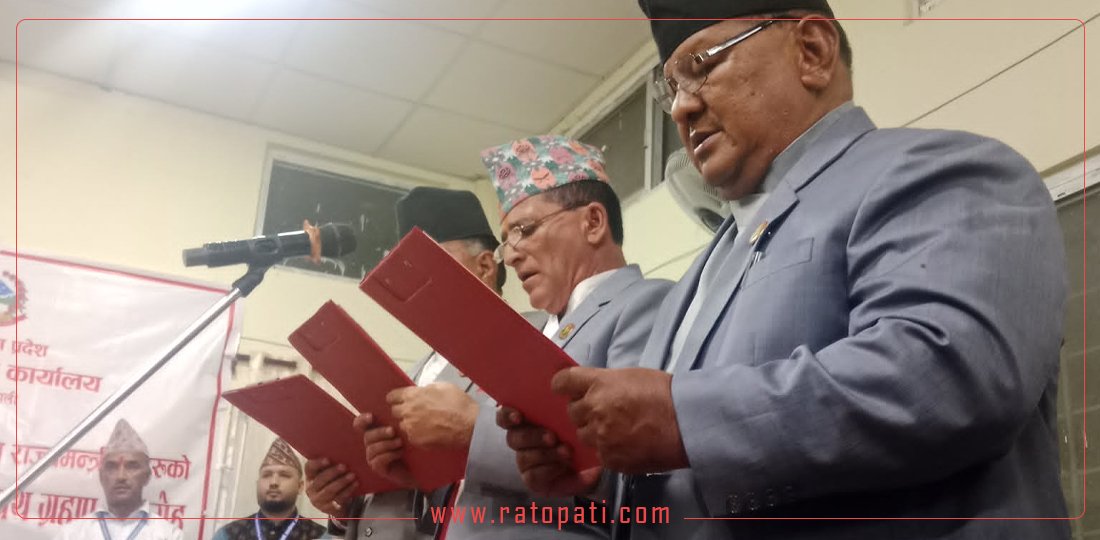
Constitutional Council's Recommendation Sparks Conflict Between Executive and Judiciary

Kathmandu. A clash between the executive and judiciary is imminent after the Constitutional Council meeting recommended the appointment of the Chief Justice by bypassing seniority. The council meeting held on Thursday evening recommended Dr. Manoj Sharma, who is fourth in seniority, for the appointment of Chief Justice with the written dissent of two members.
The recommendation was made by bypassing Sapana Pradhan Malla, who is first in seniority and currently the acting Chief Justice, Kumar Regmi, who is second in seniority, and Hari Phuyal, who is third in seniority. Council members, National Assembly Chairman Narayan Prasad Dahal and the leader of the main opposition party Nepali Congress's parliamentary party, Bhishma Raj Angdembe, registered their written dissent to the appointment recommendation.
The opposition parties, Nepali Congress, CPN-UML, Nepal Communist Party, Shram Sanskriti Party, and Rastriya Prajatantra Party, have protested the decision, which was primarily made at the behest of Prime Minister Balen Shah. Although Rubina Kumari Thakur, who became the Deputy Speaker from the Shram Sanskriti Party, supported the decision, the party has protested.

While the opposition parties were protesting, Acting Chief Justice Pradhan also indirectly protested the recommendation for the appointment of Chief Justice at a program organized on the occasion of Law Day on Saturday. At the program held at Rastriya Sabha Griha, Malla said, 'An attempt may be made to lay the foundation for unequal application of the judiciary and the rule of law.'
Stating that no one can be above the constitution, Malla questioned whether attempts were being made to use justice as a mask to protect personal interests instead of making it the final destination. 'Questions are arising whether attempts are being made to use justice as a mask to protect personal interests instead of making it the final destination,' she said.
She added, 'Questions are arising whether efforts are being made to create a compliant judiciary by weakening and paralyzing the foundations and guarantees of constitutional supremacy, independence, and the sovereignty of justice in the name of using authority and procedures.'

Meanwhile, the main opposition party, Congress, is preparing to raise the issue of judges in parliament and the parliamentary hearing committee. 'If we registered a written dissent in the Constitutional Council, we will definitely raise our strong voice in the parliament and the parliamentary committee about the violation of laws and procedures,' said Angdembe, leader of the Congress parliamentary party, to Ratopati. 'We are preparing on how to raise this and protest the decision.'
The government and the judiciary are showing signs of a rift due to this decision of the Constitutional Council and the public statement of the acting Chief Justice.
Former Attorney General and senior advocate Upendra Kesari Neupane believes that the statement of Acting Chief Justice Malla came after she was not recommended for the post of Chief Justice. He stated that one should not go beyond limits while holding the post of acting Chief Justice.
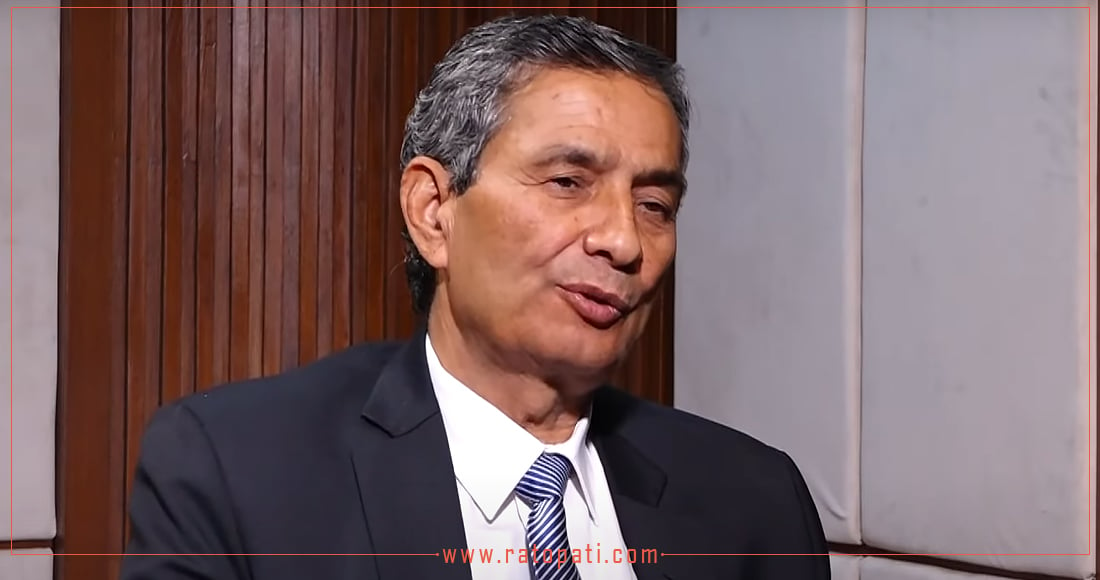
'The acting Chief Justice's statement on Saturday could be due to frustration over not being recommended,' said senior advocate Neupane to Ratopati. 'It is not considered appropriate to engage in political activities while holding that post. One must maintain the dignity of the position. One should not go beyond limits.'
Neupane states that the government, which has secured nearly a two-thirds majority, should not be taken aback by changes in every sector within the framework of the constitution and laws. He mentioned that such changes also occurred in 2007, 2015, 2047, and 2062/63 BS.
'People do not feel that the current government has a nearly two-thirds majority. The changes made by a clear majority government within the framework of the constitution and laws, whether in the judiciary or any other sector, should not be taken otherwise,' said Neupane. 'The majority governments formed after the movements also made such changes. In 2015 BS, when Congress secured a two-thirds majority, judges were changed. In 2007 BS, changes were also made. In 2047 and 2062/63 BS, judges from the King's era were not continued in the Supreme Court.'
Neupane argues that the government's actions should be examined to see if they conflict with the constitution and laws. He asserts that the government should be allowed to act in accordance with the constitution and laws.
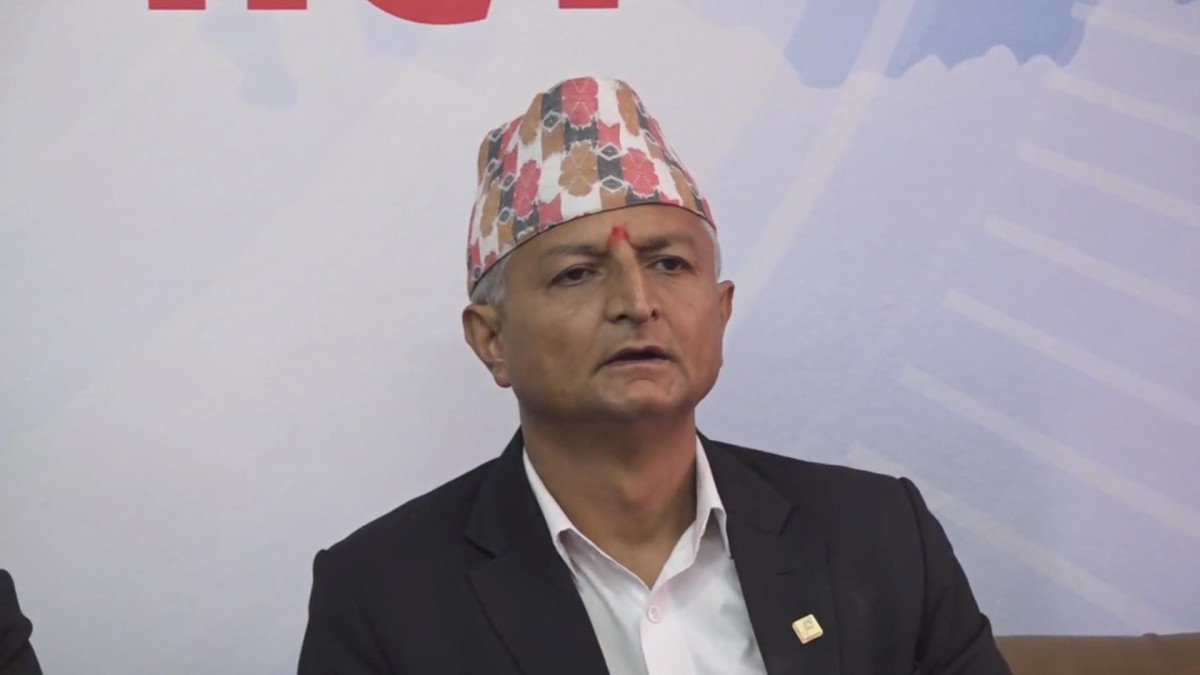
The opinion of Professor Dr. Vijay Prasad Mishra, Chairman and Senior Advocate of the Nepal Bar Association, is somewhat different. Professor Dr. Mishra responded that he understood Acting Chief Justice Malla's statement as a message from the judiciary to the executive to stay within its limits and adhere to judicial values and norms.
'The executive wants to keep the judiciary under its control. With a two-thirds majority government, efforts are made to further weaken the judiciary, suspend principles, disregard laws and regulations, and establish its supremacy,' said Professor Dr. Mishra to Ratopati. 'An attempt is made to sow the seeds of one extremism in the name of controlling another. As the government is currently heading in that direction, the judiciary, from its side, is an institution that operates not by a two-thirds majority, but by its own conscience, the constitution, and tradition. I understand this as a message not to interfere in the judiciary under the guise of the Constitutional Council, not to reach hasty conclusions by analyzing the number of cases each judge has disposed of, and not to interpret the sent roster as a recommendation.'
Former Bar President Sher Bahadur KC also appears to agree with Mishra's statement. 'In a democracy, one can express what they feel in their heart. Acting Chief Justice also expressed her views as part of that,' said KC.
Former Supreme Court Justice Balram KC expressed concern about the potential conflict between the executive and the judiciary. 'A state of conflict can arise between the executive and the judiciary. But, this must be stopped,' he said.
Constitutional expert Bipin Adhikari asserts that the appointment recommended by the council is constitutionally valid in terms of procedure and there is no question of its legality. He said, 'However, when bypassing a senior, the council must clearly state the reason. If we are making a new recommendation by breaking tradition, what was the significant reason for bypassing the senior? The council must be able to show that to the general public.'
He stated that the evaluation of judges' capabilities is not solely based on the number of cases resolved. He said, 'The main thing is, how qualitative is the opinion or verdict given by any judge? How much has their verdict strengthened Nepal's laws and system, the interpretation of the constitution, and the independent judiciary? That is important. The Chief Justice is a leadership position, not just an automatic promotion.'
Adhikari expressed hope that this incident would be limited to a single 'case' and the discussions would gradually subside. However, he clarified that if the practice of dismissing someone from the past as 'political' and then bringing in someone from one's own camp as 'independent' today is established, that would also be extreme politicization.
He stated that the party currently leading the government received public approval before the election by including 'We will free state institutions from politicization' in its manifesto, but this has not been reflected in practice.
'The tendency to bypass seniority poses a risk of making the judiciary fearful and committed to the executive'
Edited excerpts of a conversation with constitutional expert Bipin Adhikari on the independence of the judiciary, the role of the Constitutional Council, and its future impact in this context:
_oJycNmNuyk.jpg)
- Recently, the conflict between the executive and the judiciary seems to have surfaced following the recommendation for the appointment of the Chief Justice. The statements of the former Prime Minister and the Acting Chief Justice also indicate the same. How do you view this?
Specifically, what the Constitutional Council has done constitutionally is its right. The power of appointment is essentially the executive power of the Prime Minister. However, the Constitutional Council was formed with the leader of the opposition included so that the Prime Minister does not make arbitrary appointments and impartial individuals are appointed. The basic spirit of the constitution is that the council should 'moderate' the Prime Minister's wishes and ensure a good candidate.
However, due to the politics of power-sharing, if other members do not understand the Prime Minister's executive authority, and if the Prime Minister cannot say, 'As long as I provide good candidates, others should not interfere,' the laws related to the Constitutional Council have been amended repeatedly. The initial concept was that the Prime Minister should have the executive power of appointment, but there should also be a system of taking consent from others to control arbitrariness. But no one went in that direction; they were content with power-sharing and manipulation.
- The appointment recommendation made by the Constitutional Council might be constitutional, but how natural is it to bypass the seven-decade-old tradition of seniority?
The appointment recommended by the council now is constitutionally valid in terms of procedure, and there is no question of its legality. But the question arises: when bypassing a senior, the council must clearly state the reason.
How qualitative is the opinion or verdict given by any judge? How much has their verdict strengthened Nepal's laws and system, the interpretation of the constitution, and the independent judiciary? That is important.
With the exception of one instance, the tradition of accepting seniority in every appointment has been in place for the past seven decades. This long tradition is not only ours but also a tradition across South Asia, including India, Bangladesh, Pakistan, and Sri Lanka. If we are breaking that tradition and making a new recommendation, what was the significant reason for bypassing the senior? The council must be able to show that to the general public.
- Is the argument that the decision to bypass seniority is based on the case disposal rate also coming out?
Such things are being reported in the media. However, the Supreme Court is a constitutional court. The capabilities of its judges are not evaluated solely on the quantitative basis of 'how many cases were resolved.' Cases can be resolved mechanically as well.
The main thing is, how qualitative is the opinion or verdict given by any judge? How much has their verdict strengthened Nepal's laws and system, the interpretation of the constitution, and the independent judiciary? That is important. The Chief Justice is a leadership position, not just an automatic promotion. The capability of a person reaching a leadership position must be evaluated from various aspects. In that way, an overall evaluation should have been done to say, 'The senior judge is ineligible for this reason, and another person is eligible,' which is not seen now.
The party currently leading the government received public approval before the election by including 'We will free state institutions from politicization' in its manifesto. However, this has not been reflected in practice.
- Is it also heard that the judge who is ahead in seniority is being bypassed due to her past political background? What is your opinion on this?
Expert: Speaking about Sapana Pradhan Malla, from my perspective, she is good and qualified in every respect. However, the biggest criticism against her is that when she was brought to the Supreme Court, she was a Member of Parliament from the then CPN-UML, having retired from the Constituent Assembly. The accusation against her is that she played a role as a Member of Parliament politically and gained entry into the Supreme Court through the UML quota.
However, the serious question here is: even if she was brought in through a party quota in the past, if the party with the majority now holds a grudge, and if this series is repeated every time, our court could transform into a judiciary committed to political parties. If the current incident is limited to a single 'case,' these criticisms might gradually subside. But if the practice of dismissing someone from the past as 'political' and then bringing in someone from one's own camp as 'independent' today is established, then that is also extreme politicization!
- So, how much truth do you see in the public apprehension that the judiciary will now completely fall under the 'grip' of the executive?
The party currently leading the government received public approval before the election by including 'We will free state institutions from politicization' in its manifesto. However, this has not been reflected in practice. We all said that the senior judge has a good track record and it would be good to make her the Chief Justice. But the government was not ready to think that way.
If this incident remains here and becomes the final case, it will be gradually forgotten. But if it marks the beginning of a new trend, it can instill fear in the entire judiciary. Our judiciary has its problems, but it has established its independence, impartiality, and fearlessness so far. Such acts of bypassing seniority carry a great risk of transforming our independent judiciary into a 'fearful judiciary' in the future.
This specific news has been automatically translated by AI. As a result, there may be some inaccuracies or language errors.