R.N. Kao: The Architect of India's External Intelligence


May 10, or today, 1918, Banaras. No one thought that a child born into a Kashmiri Pandit family would change the geopolitical map of South Asia. This is not just the story of a person's ups and downs, but a chronicle of strategic upheavals, tactical maneuvers, and the past footsteps of a person at the pinnacle of power and might. A story that forced a review of India's security strategy and laid a new foundation. That person's name is Rameshwar Nath Kao. Or, the founder of 'Research and Analysis Wing', established to conduct counter-espionage outside India for India.
Establishment of 'RAW'
The defeat against China in the 1962 war fought in the Himalayan region forced the then establishment of India to think. It was a time when then Prime Minister Jawaharlal Nehru's 'idealism' clashed with Chinese 'realism' and was shattered. India analyzed the defeat in the war as a terrible weakness in the Intelligence Bureau's (IB) information gathering and analysis. In the 1965 war with Pakistan, India felt this need even more deeply. By this time, those at the center of Indian power were thinking one thing – we need a strong intelligence agency that prioritizes strategic information gathering outside the country. Against this backdrop, on September 21, 1968, the 'Research and Analysis Wing', or 'RAW', was established. Prime Minister Indira Gandhi chose a person to lead it who was calm in nature, strategic in action, and persistent in dedication. His name is R.N. Kao. After taking charge of the organization, Kao started 'RAW' with 250 employees, including those from the intelligence service. Within three years of the organization's establishment, it had already started showing its work.
'RAW' in the Creation of Bangladesh
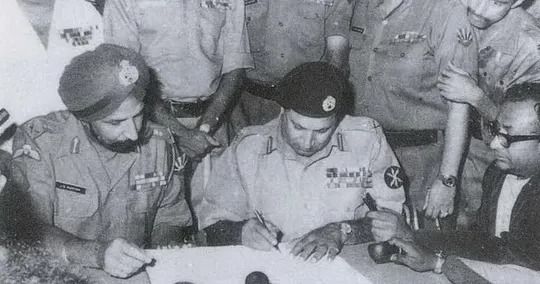
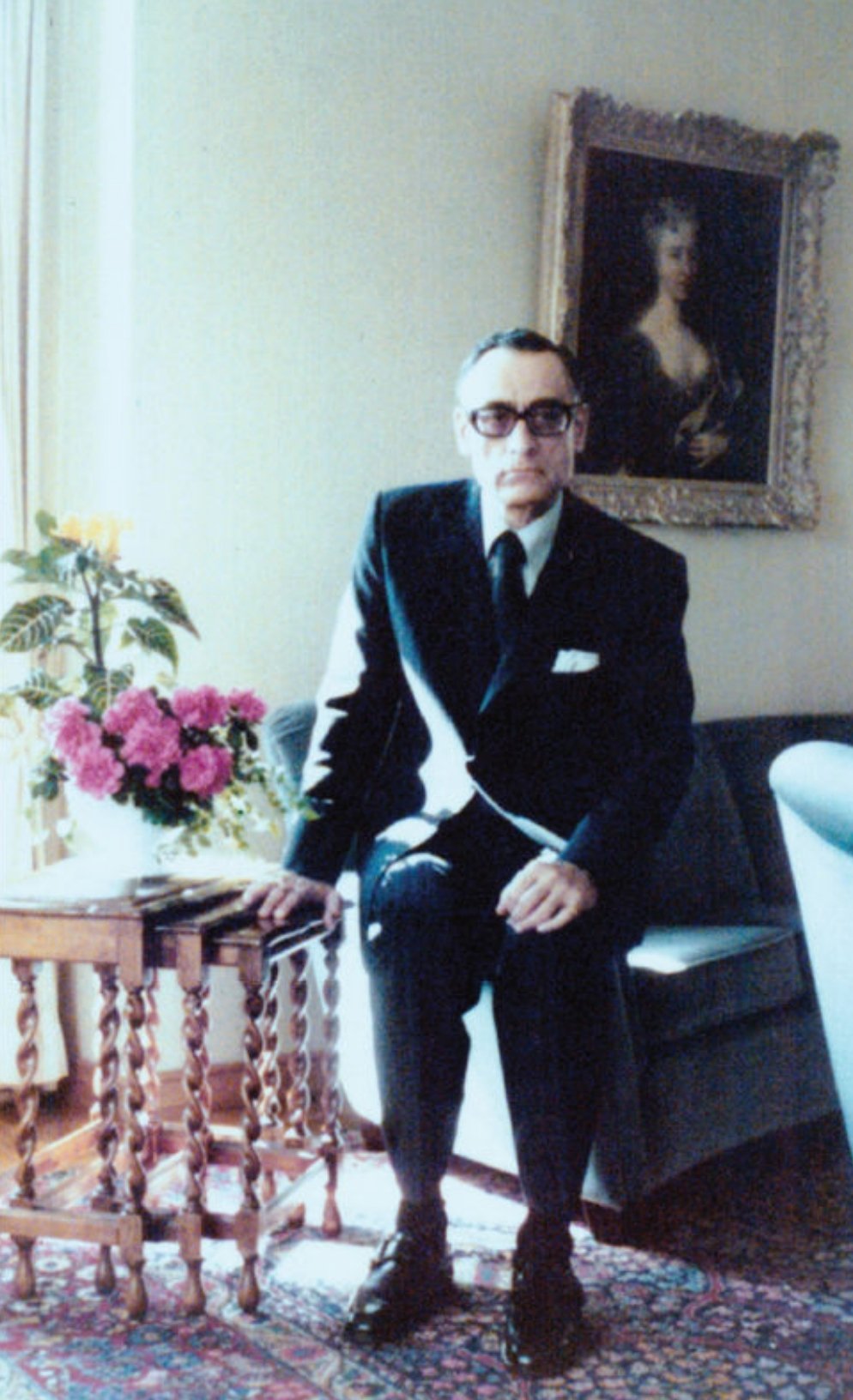
R.N. Kao was no ordinary intelligence chief. He was a meticulous planner. He lived a 'low-profile' life and often avoided being photographed in public. Although not seen anywhere, his network was so vast that with just one phone call, he could create ripples in international capitals. The boys who worked for Kao were called 'Cowboys'. In fact, former US President and former Central Intelligence Agency (CIA) chief George Bush Sr. gifted Kao a statue of an American 'Cowboy'. From then on, his team began to be called 'Cowboys'. Kao's professionalism was put to the biggest test in 1971. He saw India's strategic interest in escalating the rebellion brewing in East Pakistan. Therefore, Kao is considered the 'Architect of Bangladesh'. Under his leadership, 'RAW' covertly trained the 'Mukti Bahini' and 'Mujib Bahini' in East Pakistan. He prepared 'militant forces' to rebel against the Pakistani government and provided them with weapons. Not only this, but he also helped in producing 'propaganda' materials to legitimize the rebellion in the international diplomatic arena, from intercepting Pakistani military plans. Behind all this was Kao. As a result, Pakistan was disintegrated in 1971, and a new country emerged on the world map as Bangladesh. The division of East Pakistan and the emergence of Bangladesh are considered the most successful 'covert operations' in the history of modern intelligence.
Annexation of Sikkim
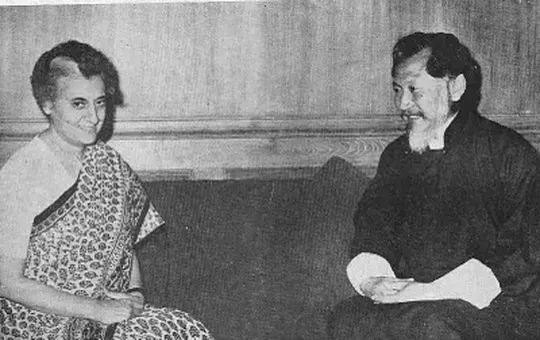
Another major success of Kao's professional life was the annexation of Sikkim into India. Sikkim, which was on the world map as a sovereign country until 1975, suddenly disappeared from the world map as a victim of Kao's strategy and was added as the 22nd new state of India. The task of merging a whole sovereign country into India was completed without shedding a drop of blood. Kao organized the local political forces there and created a public opinion that paved the way for Sikkim's merger into India through a process that appeared democratic, displacing the monarchy. This was a covert operation mixing 'soft' and 'hard intelligence'. The act of erasing a country's existence became the biggest pillar of his success. This placed him among the world's top intelligence chiefs. In 1982, when asked about the five best intelligence chiefs of the world in the 70s, Count Alexandra de Merench, head of France's external intelligence agency Directorate General for External Security (DGSE), also named Kao. The King of Sikkim, Chogyal, wanted to extend his reign in Sikkim and was lobbying internationally to sustain it. However, Indira Gandhi, as the Prime Minister of India, was thinking about how Sikkim could be managed. Gandhi asked Kao, the head of 'RAW', what could be done about Sikkim. P.N. Banerjee, a Joint Director at 'RAW', drew up a strategic plan in just four days and presented it to Gandhi. According to the strategy, opponents of the Chogyal were to be weakened gradually by providing them with financial and material support, and the anti-monarchy movement was to be united. As a result, the movement intensified, demanding a referendum, and finally, on May 16, 1975, Sikkim was merged into India. In fact, Kao and his team were already working in Sikkim before Indira Gandhi asked. Everything that happened was part of 'RAW's strategy.
Attempted Assassination of Chinese Prime Minister
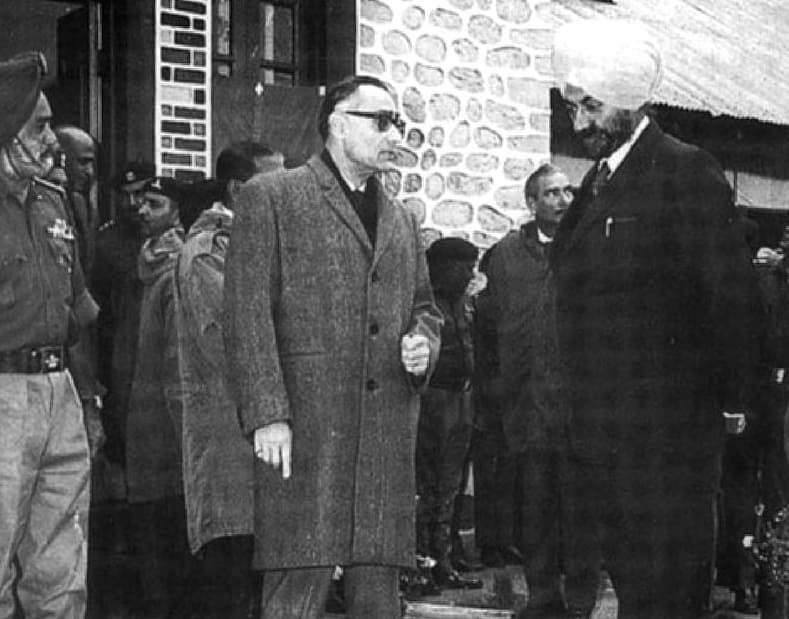
It was 1955 when a conference was organized in Bandung, Indonesia. It was a conference of non-aligned nations, not affiliated with any bloc. It was led by India and China. At that time, 'Hindi-Chini Bhai-Bhai' was widely discussed. Prime Minister Nehru sent a special aircraft to take Chinese Prime Minister Chou En-lai to Indonesia. It was a Lockheed Martin L-749 aircraft made in America. The aircraft designated to take Chou En-lai was named 'Kashmir Princess'. On April 11, 1955, the Kashmir Princess crashed in the South China Sea. Many citizens of China and India lost their lives in this incident. The aircraft was made in America, sent by India, and took off from Hong Kong, then a British colony. High-ranking officials from China's diplomatic sector were on board the aircraft, and the crash occurred in Indonesia. That is, five countries were involved in a single incident, and intelligence agencies from all five countries were involved. The Chinese Prime Minister was scheduled to travel on the same aircraft, but he did not go because he suddenly had diarrhea. However, the aircraft he was about to board crashed. This incident exposed India's security weaknesses. To uncover the mystery of such a major security lapse, Kao was sent to China by India. Kao was working in the IB at the time, and this was his first mission in the field of international intelligence. From Beijing, he went to Hong Kong and began his investigation. The investigation revealed that the Kuomintang government of Taiwan was behind the conspiracy to blow up the aircraft. After completing the mission, Kao returned to India. After this, in the 1950s, he also helped in forming Ghana's intelligence agency at the request of Prime Minister Jawaharlal Nehru.
Questions Raised About Kao
Whenever any intelligence agency in the world becomes extremely powerful and opaque, the risk of institutional decay increases. The question arose whether the organization, in recent decades, has maintained the same values for which R.N. Kao laid the foundation of 'RAW' in the national interest. The book 'Mission RAW' by former RAW official R.K. Yadav has brutally attacked that serious question. The book explores the dark sides and internal contradictions of the organization after its success. The 'chemistry' between Kao and Indira Gandhi not only strengthened the organization but also set a wrong precedent – excessive proximity to the ruling power. Evidence of 'RAW' being used to suppress and spy on opposition during the 1975 emergency shows that 'RAW' became a tool for the ruling power not only outside the country but also inside. Therefore, when the government changed in 1977, Morarji Desai, considering 'RAW' as 'Indira's personal tool', reduced its power and budget by more than 60 percent. The point to be noted here is that the politicization of the organization is the biggest contradiction in the history of 'RAW'. Kao resigned from his post in 1977 after serving as the head of 'RAW' for nine years. He was investigated but coincidentally found innocent. After retirement, in 1981, Indira Gandhi appointed him as National Security Advisor. Subsequently, to tackle future security challenges, he formed the 'Policy and Research Staff' (PARS). PARS advises the government. Not only that, after 'Operation Blue Star', Kao played an important role in the formation of the National Security Guard (NSG) in 1986 to tackle terrorism.
Kao's Legacy
Rameshwar Nath Kao, before his demise in 2002, had recorded some tapes, which are believed to contain secrets related to Bangladesh, the annexation of Sikkim, and the assassination of Indira Gandhi. He had instructed that those recordings be opened only after 2025. However, they have not all come into the public domain yet. Perhaps those tapes will further clarify many acts staged behind the scenes of Indian politics and the 'deep state' active in India. The conflict between the grandeur of Kao's personality and the institutional stench shown by R.K. Yadav is the real story of 'RAW'. Kao gave India a strategic power, but he left behind an organization that completely lacks transparency. How to prevent institutional corruption and political misuse in the guise of national security is the institutional challenge for 'RAW'. Kao, the father of India's intelligence agency 'RAW' and a distinguished spymaster, breathed his last on January 20, 2002.
This specific news has been automatically translated by AI. As a result, there may be some inaccuracies or language errors.