Cambridge University World's Top University


The University of Cambridge in Britain is considered one of the world's most prestigious and oldest universities. Many Nepali students dream of studying here. Founded in 1209, Cambridge is renowned for its quality of education and research. This university, established 817 years ago by a group that left the University of Oxford, ranks seventh in Time magazine's 'Top Universities of the World 2026'.
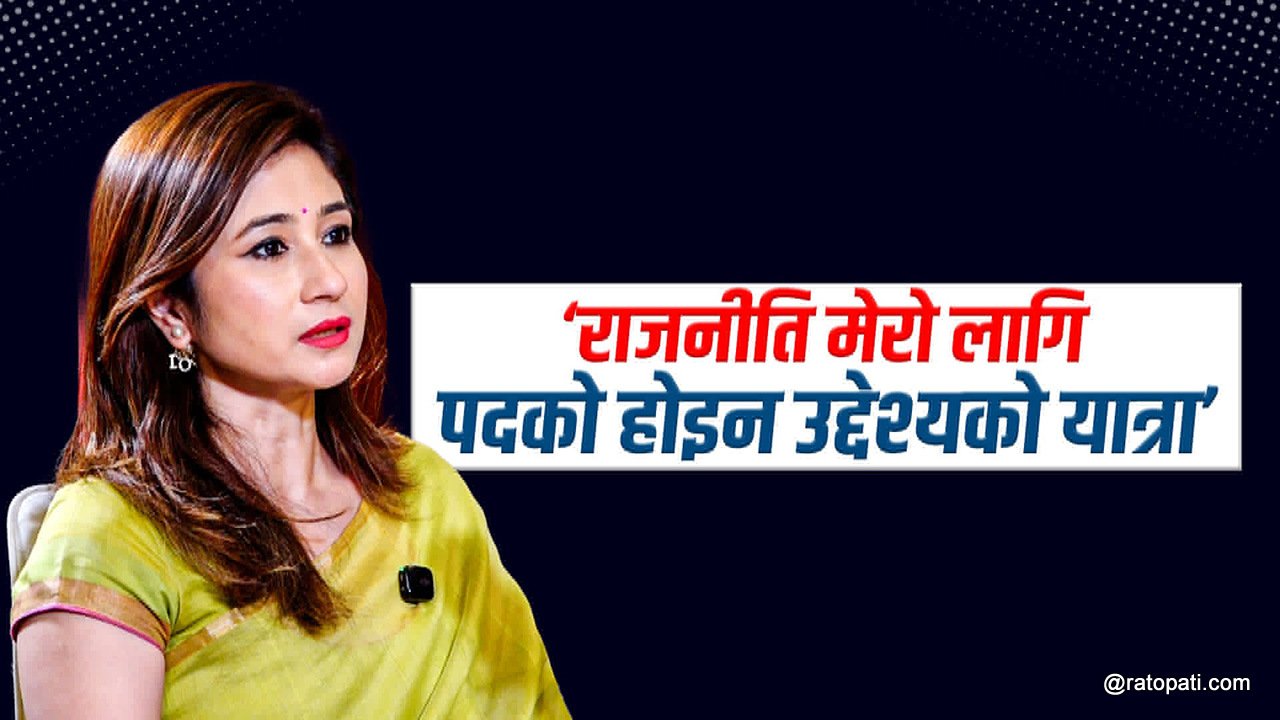
In 2020, Nepali student Astha Dahal was elected president of the Cambridge University Student Union. She set a record by being elected president under postgraduate studies. Astha, who completed her MPhil in Criminology from Cambridge University in 2014, also holds a PhD in Criminology.
The Nepali government's decision to abolish party-affiliated student organizations and the Free Student Union (FSU) from school and university premises sparked widespread discussion and criticism. How justified is this decision? How do student unions in Britain operate? In this regard, Narendra Raula of Ratopati conducted a detailed interview with advocate Astha Dahal.
- The government has decided to abolish the Free Student Union, especially party-affiliated student organizations, from universities. What are your thoughts on this decision?
In my understanding, it means abolishing party unions but maintaining a body or structure to represent students. The government's proposal suggests names like 'Student Welfare Council' and removing the word 'Union'.
The essence of what a student union should do doesn't seem to be lost, as universities exist for students. There must be a mechanism for student representation and voice to reach the university; otherwise, the university ceases to exist.
Unfortunately, I haven't seen party unions functioning as student unions in Nepal. I studied at Law Campus myself. During my time, there was an FSU election. Looking at the activities of the unions, they were clearly party-affiliated. They would say their first priority was to expand the party's interests and only then work for students. This surprised me. Shouldn't they at least work for the students! The unions had lost their existence to this extent. Therefore, perhaps the call is to abolish party unions now.
_X8H4b5UR4y.jpg)
Party unions seem to function like party soldiers. They are not seen speaking up for students' rights and welfare. Even if party unions are abolished, an independent student union within the university is necessary. Such unions must be truly independent. The administration or professors should not interfere; it should be a body that raises the independent voice of students. Whether the name is 'Union' or something else is not important, but keeping the name 'Union' is good because it has a global background and represents everyone. 'Student Welfare Council' sounds like something from a school. Whatever the name, the union must be given independence.
- What exactly should an independent student union be like?
Most importantly, the union must understand that it exists for the students and is the voice of the students. What should a student union do? Let's look at the context of Nepal. Tribhuvan University is the largest university in Nepal, with 400,000 students. Students come from all over the country. What do they need? They need accommodation. We have very few hostels. Not enough. The canteen facilities are not good. The library doesn't open after 5 PM. There's no facility to study 24 hours a day. It is said that the university has 2,000 ropanis of land for sports, but most of it is encroached upon. We should have world-class sports facilities. Laboratories should be good. There should be computing facilities. The union must raise the students' voice to the administration to provide holistic education. If the administration doesn't listen to the students' voice and doesn't cooperate, the union must speak for them.
As far as I can see, the union sometimes seems to forget its jurisdiction. The university student union is raising issues related to schools. Student unions can show interest in school matters because they have a stake in the education system. However, they should show solidarity on school issues, not fight on the front lines themselves. Issues of Plus Two are not for the elected university union to raise. They should show solidarity to the elected representatives there. But the university union should not be active on the front lines. There is a tendency to be vocal about schools, private colleges, or Plus Two, but to be unconcerned about even minor issues within their own university.
Which hostel does my student live in? If a female student comes to Kathmandu from Siraha, Saptari, Dadeldhaura, or Solukhumbu, how will she find a place to rent? The university doesn't pay attention to this. How to find a room? House rents in Kathmandu are sky-high. Landlords don't even agree to rent to single women. Students have to live in low-quality conditions in expensive areas. Where is that support system for them? There should be hostels in the university. Should the union go begging to landlords in Kathmandu to find rooms for students coming from outside Kathmandu? I haven't heard student unions raising the issue of why there are no hostel facilities in the university during my lifetime.
_veHetvqUsZ.jpg)
- Specifically, where are the independent student unions failing? Where are the weaknesses?
In my opinion, independent student unions are deriving their mandate more from political parties than from students. For example, I recently saw a post from a union president that read, 'Now that the government is going to abolish unions, the mother party must speak up.' Saying the mother party must speak up means that its entire scope of work and direction comes from the party.
The party is bringing the children of the poor into the university and engaging them in contract work. Instead of providing higher education and quality education, they are creating soldiers for contractors and small contract jobs. This is deception by the parties. And this deception is not even realized within the union as 'I am being cheated as a student.'
Our thinking hasn't broadened. Our university primarily has Nepali students. International students should come to the university. Only when international students come will they learn about the country and the world. Our vision has become narrow. I became the president of the Cambridge University Student Union as a Nepali student. Many newspapers in Nepal published this. Many took pride in it. Today, if the president of the Tribhuvan University Student Union were British, would we accept it? We should accept it! Academia is global. We lack that liberality. Why don't we accept it? Students are friends with each other, but the party says 'no.' The party directs the student organizations, and the party's scope is limited. This shows that the party is using student unions for its own interests, not for the benefit of students.
Another thing is that unions also lack resources. To do any work, there must be resources! What is the budget of student unions? This is not transparent at all. What is the responsibility towards the university union? The Cambridge University Student Union receives a budget from the university every year. 60% of the union's budget comes from the university, and 40% is raised by the union itself.
After the university provides the budget, auditing also takes place. Transparent accounts must be shown regarding how much money was spent under which head. But to spend, one must have resources! If they only have volunteers and have to ask political parties for resources or beg from someone, then the union becomes completely directed and dependent on political parties. Moreover, the vision hasn't broadened. Due to all these reasons, I have observed internal challenges within the unions.
- How do you analyze this relationship between student organizations and political parties, especially leaders? How can it be removed?
In my opinion, one thing is that the quality of education in Nepali universities must be improved. The current education is too easy. Students shouldn't be able to pass by reading guidebooks during their undergraduate studies. When students study for SLC, they seem completely independent when they come to university. However, they should be working harder at the university.
In terms of party affiliation, if a union member goes to meet a leader, they must be accountable to the union upon return. They don't show whose interests they were representing when meeting the leader. Their connection is only with the leaders. If party unions are kept, how can party interference be removed?
When I talk to leaders of various unions or see their posts, they say, 'We are allowed to have political beliefs, we are allowed to form societies.' This is allowed at the university, but you are not allowed to take the mandate for the overall representation of students from a party leader. How to break the relationship with party leaders? First, they must stop being dependent on parties for resources. The university itself must provide them with a budget to stand on their own feet.
Second, their financial audits must be conducted. Annual expenses must be audited. Third, structure must be brought into their work. When I returned from Cambridge, various student unions invited me to share my experiences. That's a good sign because they want to learn. My first question to them would be, 'How many committees do you sit on?' They would be surprised. They wouldn't even have an idea of how many committees are in the university. When asked, 'How many committees do you sit on?' they would say, 'Maybe two,' without being certain.
A union is the representation of students in every university decision-making process. Therefore, our union leaders must know how many committees there are and start seeking seats in every committee. At least, they should seek voting rights. There are voting rights in the union's decision-making process. If such things start happening, union members will be busy. They will be running from committee to committee. When I was at Cambridge, our elected team of 8 people sat on 80 committees.
_SFXFlc60FR.jpg)
Hundreds of pages of documents would come from every committee. We had to read them, or we would look foolish in front of the professors. This way, they wouldn't have time for other political work. They would have to lobby for student interests. Therefore, those involved in student unions must be kept busy with meaningful work.
- What should student organizations do to establish their importance?
Currently, they are running to parties saying that party unions should not be abolished. If unions were truly working, they should be running among students. That's the difference. Where does their scope and power come from? Not from party leaders; their power comes from their voters, i.e., students. If the union is about to close, who should they go to? To the students. If a labor union is about to close, they shouldn't go to party leaders saying 'keep the union open,' but to the workers saying 'we need a union.' Therefore, their voter is different. Their power comes from the party; that is not a union. It is becoming something else.
- How can student unions be improved?
In my opinion, we need to prioritize two or three things. If I were running a union, the first thing I would do is end the system of serving students through a grilled window. A student getting entry into the university administration office – what kind of university is that? Handing over papers through a cramped grilled window? Where does the student's dignity go? If the administration people are not satisfied, they just walk away. Students should be treated with dignity in the administration office; this is the smallest thing.
Second, unions must pay attention to student accommodation. We bring students from all over the country. Good students don't come to colleges with weak unions. There are students who have struggled to reach here from villages. Are we providing them with an environment to study?
An environment for studying is not just within the classroom. I am always worried about my accommodation. If there is no water at home, I have to go with a bucket, the landlord nags me, the door is locked when I return from evening studies, and the rent is increased every two months – how can I study? If there were university accommodations, with so much land, at least students could study without stress.
Another thing is about studies. We don't have subscriptions to journal articles in universities. We don't even have international books when we do research. Nowadays, what happens is that professors at Tribhuvan University publish books, their quality is not properly tested, and they are imposed on students.
I have even heard them say, 'If you buy my book, I will add 5-10 marks to your annual exam.' In such a situation, shouldn't the union intervene? The curriculum is not being updated. Unions are not speaking up at all. Not speaking up means some people within the union have spoken, but a collective voice has not been raised.
When will the elections be held? That also needs to be certain. When going for elections, a manifesto must be presented. During the last general election, people said the manifesto should be looked at. Where is the manifesto for student elections? It should come in one or two pages, stating what they intend to do and how much they will accomplish.
Furthermore, there should be extracurricular and sports activities for students in the university. We play sports like football, volleyball, chess, table tennis, etc., in school up to grade 10, as much as the school's resources allow. But once students go to university, all these activities stop. The reason for organizing these activities in school is to ensure they receive a holistic and balanced education. This principle applies to the university as well.
Once they go to university, what hobbies can they pursue? Do they have the resources to go to university? If a student wants to go swimming today, they have to go to an expensive hotel in Kathmandu. Why isn't there a swimming pool within the university to encourage students? Why aren't there inter-university sports facilities? Why isn't there a drama club?
When we were at Cambridge, there were student newspapers within Cambridge. Students did such good investigative journalism in these newspapers that students working there later got jobs in prestigious newspapers like The Guardian.
_HjjEYKtTmg.jpg)
There are societies for all areas imaginable. The student union hosted over 500 student societies. For example: country-specific – India Society, Nepal Society, Pakistani Society; cultural – Islamic Society, Christian Society, Buddhist Society; human rights – Amnesty International, Human Rights Watch groups; sports and recreation – Badminton, Table Tennis, Football, Cricket, Chess, Sailing, Fishing societies were operational. This means that students from various disciplines can interact with each other and pursue their hobbies.
Students involved in the Cambridge University theatre later became Oscar-winning actors. A university is a training ground for everything. In such a situation, the university cannot establish societies based on student hobbies. Teachers don't establish them. Students themselves should establish them. Unions should facilitate this. Unions should be responsible for raising funds for the university, building infrastructure, registering them, and creating portals to inform students.
- Where are the independent student unions failing? Where are the weaknesses?
The unions in Nepal have completely failed. No creative work is seen. It seems to be due to a lack of ideas because it's a matter of exposure. 98% of the teachers and students in our universities are from within this system. There has been no exposure. And those who try to bring exposure from outside are kept outside by not giving them equivalence or imposing various restrictions.
- After completing your PhD from Britain and returning to Nepal, you had to face great difficulty in getting your equivalent certificate. Why was a simple process made so complicated?
I returned from Cambridge. I had great affection for Law Campus. I went there and said, 'Sir, I wish to teach at Law Campus too, because I have studied so much.' They directly said, 'Come with your equivalence.' They didn't even ask, 'You are an alumnus here, what did you study, how was your experience?' Isn't this our own student returning? Don't we have some goodwill towards our own students? They said, 'First, bring your equivalence.' I said, 'Okay,' and applied.
After that, my file was not looked at for two years. Then someone said, 'Try.' I had already submitted all the documents, so I submitted them again. Then I received a call saying, 'You paid Rs 1,000 for MPhil, and the processing fee for PhD is Rs 4,000.' I had paid the amount shown on the website. They said, 'Your Rs 1,000 is short, come and pay the rest.' I said, 'I paid Rs 1,000, I will pay Rs 3,000,' but they insisted, 'No, you must pay Rs 4,000.' When I asked, 'Where does that Rs 1,000 go?' they said, 'It goes into the system.'
Then, out of anger, I wrote a status on Facebook, 'The government should not take even a single paisa from the public, let alone Rs 1,000. Where did that money go? Where will that accounting go tomorrow?'
When it became too much, I wrote on social media, 'I don't need your equivalence.' That went viral, and Nepalis inside and outside the country said, 'I am facing the same problem.' Later, we also conducted a survey. Nepalis who had obtained degrees from world-class universities had returned to the country. They had returned with the intention of 'contributing to the country.' 50% of them have already left the country for not getting equivalence. Who will compensate for this irreparable loss in this country?
Employees at Tribhuvan University used to say, 'We don't care about Oxford, Harvard, Cambridge; only Tribhuvan University matters here.' After everyone united and lobbied, the then Vice-Chancellor issued a directive stating that those with degrees from the top 500 universities in the world would be easily granted equivalence. This issue was also raised in parliament. Now, the law regarding the power of equivalence has been passed. And it has gone to the University Grants Commission. It has been removed from Tribhuvan University, and within this year, the University Grants Commission must bring a policy and implement it. This has been possible through a joint movement from within and outside Nepal.
I didn't try too hard for equivalence; it took me 5-6 months, but I still haven't been given full equivalence. My equivalence mentions PhD, but it doesn't specify 'PhD from the Faculty of Law.' Why should the Faculty of Law be mentioned? Because if I have to go into specialized legal services tomorrow or enter the Faculty of Law at Tribhuvan University, that degree must be clear. What does it mean for it not to be clear? Why is it difficult for them to clarify that, who is having trouble? It is clear in the policy; now the Faculty of Law might have trouble.
- How did student unions in Britain operate, and how did they earn money?
We were in the poorest union of the richest university. Because our university's funding and portfolio funding were less compared to other unions, even though our university was many times richer than others. There used to be jokes in our union, 'The poorest union of the richest university.' Then they would say, 'That's why they became rich.'
Other unions had up to four nightclubs, bars, and cafes. They also have bookstores. This way, unions had 'paid services.' They were even allowed to run 'paid businesses.' Unions had a business portfolio, a commercial portfolio. What I liked about this was that it was training for us personally, for future leadership, that a union must also look after finance and budget. I also had to look after the commercial portfolio and the union's sources of income.
During my tenure, I had started a negotiation at the end. A very good building was being constructed at the university. I was negotiating, 'Your building operates only from 9 AM to 5 PM; can you give us the space of that building after 5 PM?' Because it wasn't needed for studies after 5 PM. If my union could run it, we could operate a cafe there, run societies. It was a beautiful building by the sea. The space upstairs could be made into a lounge. We were elected to the union, and we also had full-time staff, like the government.
Elected ministers and civil servants are full-time; we had full-time staff. I even had a CEO. The CEO was interested in commercial matters. I was his line manager. I had to motivate him to work in my organization, consider his interests. Working with him, I realized he was interested in this. So, I started taking him to those meetings, saying, 'Go, get into this, let's negotiate the building, you can plan the commercial aspect.' He also became very enthusiastic.
This is how money is generated with creative thinking. The university grant is used for a few things. A major part of the union is the 'Student Advice Centre.' The Student Advice Centre provides advice to students if they face any problems. The union pays for it, and they have full-time professional staff there. Suppose a student fails, cannot pass the annual exam, and the university is about to expel them; an appeal has to be made. Lawyers don't come; lawyers are very expensive. Union staff would help them with university procedures for free. If a student needs to postpone an exam due to mental health reasons, how to fill out the paperwork, how to appeal, how to present the case – the union paid for it, but they advised students one-on-one. That advice was not even shared with the union; it was completely confidential.
In addition, distribution of contraceptives (condoms) and pregnancy kits also took place. To ensure student safety, unions distributed these materials for free. If the university distributed them, it would create privacy issues for students. Similarly, for transgender, gender, and sexual minority students, we used to provide necessary equipment for gender transition, pre-surgery supplies, etc., from the union.
Drug purity testing was also done. Drug abuse occurs in any university. Drug use causes health problems, but impurity of drugs causes even bigger problems. Kits to test whether drugs bought on the street are pure or not, from a public health perspective, were also discussed for the union to provide. Thus, it was based on student demand.
- Did the unions also run their own media?
The union also had its own publication. It wasn't in very high circulation. But within the university, there was a student journalism newspaper called Varsity. Varsity was considered quite prestigious. The union did not interfere with it, but the union had to provide some funds to it, and it facilitated it. Students were very active in journalism. They did tremendous investigative journalism, including major whistleblowing within Cambridge. We also took their help when needed. They have helped us a lot.
- How much interference was there from professors and administration in the student unions?
From the university's side, a senior professor from the administration was an overlooking person for the student union. A meeting with him meant we had to be fully accountable. We had to go prepared for an intense Q&A session with him. After that, there were professors who had a soft corner for the union. We sat on so many university committees. We would find professors aligned with our side and lobby in committees.
Let me give you an example: Cambridge University has an investment portfolio of £3.5 billion. They invest money, and thus universities become rich. Where is the investment? In things like oil, petroleum, and fossil fuels, which are currently contributing significantly to climate change.
_tX542YTEa9.jpg)
Students protested at Cambridge for 10 years to remove this investment. Universities like Cambridge invest in large oil companies, fossil fuel companies, while the climate is currently devastated. After 10 years, a committee at the university senate level decided that Cambridge University would withdraw all its oil and fossil fuel investments. The decision made in 2020 was to withdraw by 2030.
This was the world's first leading university to announce the withdrawal of such investments. We need voting rights even in such investment-related decisions. We need to vote within the Senate. Therefore, we would lobby professors who would vote along our ideological lines, along our student lines.
The US Embassy in Nepal has been running a Youth Council for a long time. Similarly, the Chinese Embassy has recently launched the Youth Pioneer Program, which are youth-targeted programs. How appropriate is it to open these? How do you view them?
I think it is appropriate to open them. Because some people call it CIA training or something similar. We are aware that intelligence agencies recruit from our universities. They go to intelligence agencies, get recruited from universities like ours. These small youth councils are generally not units of intelligence agencies. It is a normal program.
But we need to look at why this program exists. Why does this program exist in Nepal? Because universities in Nepal are not providing student leadership training. If our student unions truly provided training in universities, if we trained people in student unions to be able to handle their responsibilities with confidence when they become ward chairpersons tomorrow, why would these programs be needed? They wouldn't come.
Because universities have left that void, they are coming. What is our internal program? If we can make the student union good, that is our training ground. Therefore, this is necessary, but it should draw power from students, not from party directives.
This specific news has been automatically translated by AI. As a result, there may be some inaccuracies or language errors.