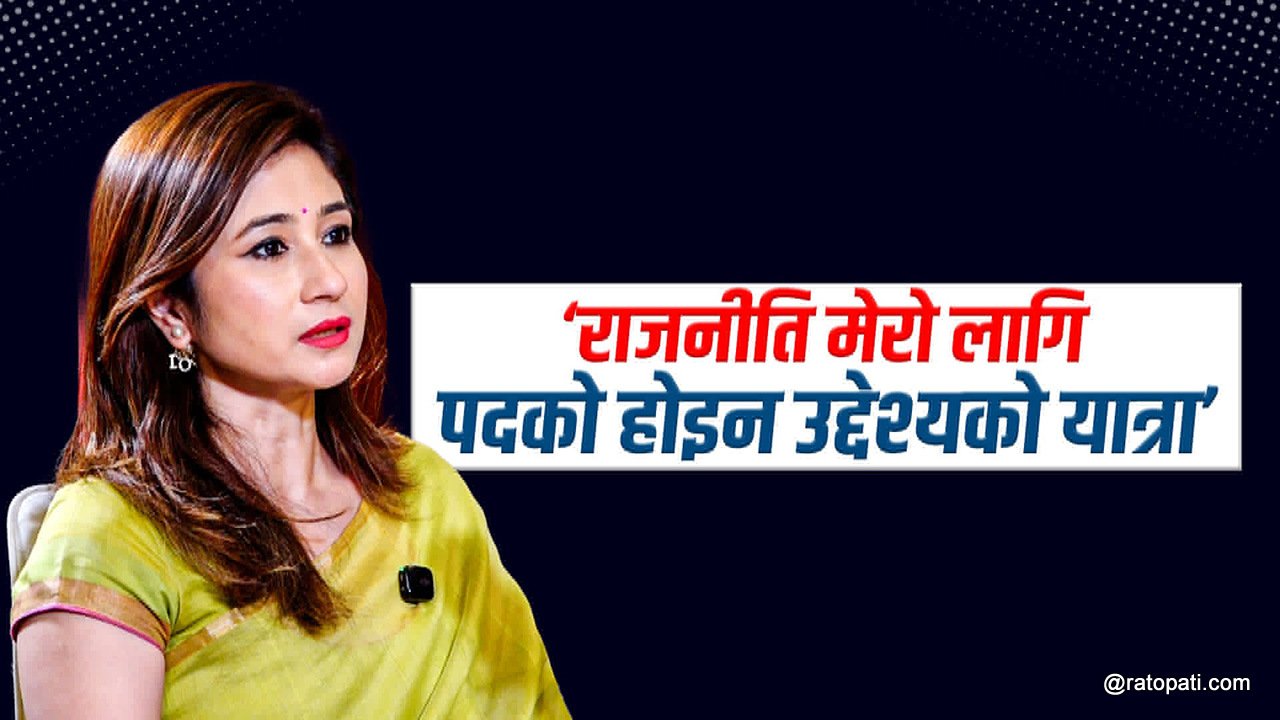
Senior Advocate Baburam Dahal Discusses Chief Justice Recommendation


Kathmandu. The recommendation of Justice Dr. Manoj Kumar Sharma, who was ranked fourth, as the Chief Justice has created debate in legal and political circles. Some have called it a step against the independence, professionalism, and established norms of the judiciary, while others argue that the Supreme Court's 'setting' has been broken.
Independent individuals claim that the recommendation was made in accordance with Article 129, Sub-article three of the constitution, and therefore cannot be called unconstitutional. They argue that capable and qualified individuals like Sapana Pradhan Malla, Hari Phuyal, and Kumar Regmi became 'victims' due to the wrong 'setting'.
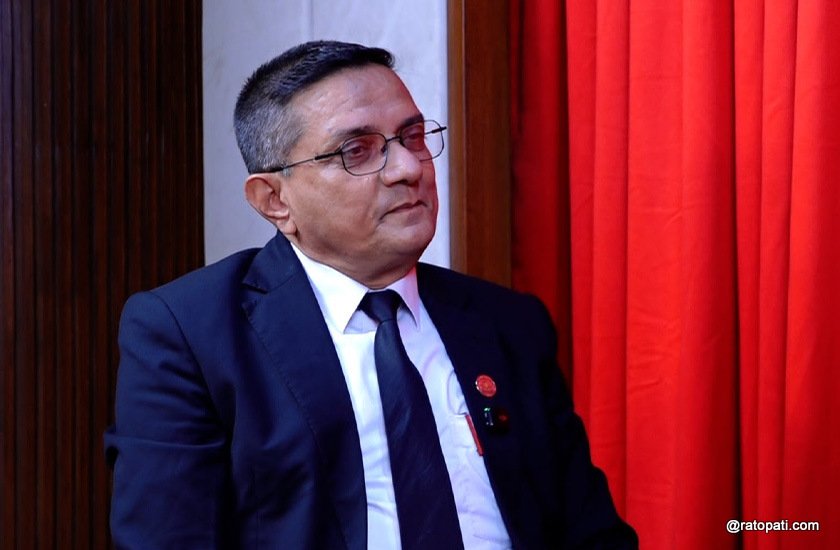
What could be the strong reason for the government to break tradition and long practice? Is it a sign of the executive dominating the judiciary? Why was Dr. Manoj Sharma recommended as Chief Justice? What are the challenges for the future Chief Justice? Focusing on these issues, here is an edited excerpt of the conversation with Senior Advocate Baburam Dahal in Rato Pati's 'Warpar' (the full video can be watched and listened to):
The Constitutional Council recommended Dr. Manoj Kumar Sharma, who is ranked fourth in seniority, as Chief Justice. How expected or unexpected was this decision for you?
This needs to be viewed from two perspectives. If we only look at the tradition and practice that has been followed in Nepal's judiciary until now, this decision is completely unexpected. Because for a long time, seniority has been the main basis for selecting the Chief Justice. However, if we look at the new government, its working style, policies, and the changes they want to bring in the judiciary, and more importantly, Article 129, Sub-article (3) of our constitution, then this is an expected, constitutionally sound decision.
But isn't the judiciary an institution that should run on tradition, procedure, and established precedents? Doesn't violating seniority affect its prestige?
Look, when we talk about tradition and precedent, we must not forget our constitution. Look at Article 129, Sub-article (3) of the current constitution. It clearly states that anyone who has been a justice in the Supreme Court for at least 3 years is eligible for the position of Chief Justice. There were 6 such eligible justices at the moment. When the constitution itself deems 6 people eligible, and the names of all 6 have reached the Constitutional Council, how can the Constitutional Council's selection of one among them be unconstitutional?
The constitution doesn't say not to appoint the senior, does it?
We cannot ignore the provisions of the constitution by applying the 'layer' of seniority. If seniority were the only basis, the constitution might have the language 'the seniormost justice shall be appointed'? Therefore, this recommendation is fully in line with the constitution. Opposing it is, in a way, opposing the constitutional provision itself.
But Sapana Pradhan Malla was number one. No one questions her capability. What is the meaning of going to the fourth position, leaving her behind?
When talking about capability, all 6 are capable. If we talk about seniority, Justice Til Prasad Shrestha, who is ranked sixth, is the most senior. Based on his education, service period, and experience, he is even more senior than the other 5. But he was brought to the Supreme Court late. Why was he brought? Because there was no 'power' to speak for him. He reached this point through his own capabilities while still in service.
There is a claim that the process was violated?
Currently, in terms of seniority, Sapana Pradhan Malla is number one, Kumar Regmi is two, Hari Krishna Phuyal is three, Manoj Sharma is four, Nakul Subedi is five, and Til Prasad Shrestha is six. The constitution considers everyone equally eligible. Therefore, it is not logical to say that the rule of law has been overturned when the Constitutional Council chooses one among them.
You hinted at 'setting'. Was there the influence of a specific interest group in this seniority?
Yes, I want to say something serious here. Until 2093 BS (1936 AD), it was almost 'fixed' who would become the Chief Justice in Nepal's judiciary. This was a setting where, at the time of appointment, a schedule was made based on their birth date and service period, indicating who would move to Baluwatar (the official residence of the Chief Justice) and when.
What went wrong with this?
Consider this: we overthrew the tradition of becoming king before being born by bringing in a republic. But the setting that continued, where a person appointed by the Congress would become Chief Justice, then one appointed by UML, could not be democratic or professional under any circumstances. The current decision has destroyed that setting that existed until 2093 BS.
There are also complaints that capable justices became victims when this setting was broken?
I am personally very saddened. Justice Sapana is a capable woman who came after studying at Harvard. Justices Kumar and Hari are equally capable. Capable individuals like them had to become victims today due to this setting. They are not bad in themselves, but the 'system' through which they were brought has made them 'victims'.
Now, after this, how did it become bad that he is certain to become Chief Justice?
Once it was certain that one would become Chief Justice with 'guarantee' in the judiciary, there would be no room for reform. The thought of 'I will become Chief Justice whether I work or not' would not allow the judiciary to become professional. This also created discrimination between justices and their families. Those who were in line to become Chief Justice received special treatment, while those who were not were treated as second-class citizens.
Wasn't Justice Manoj Sharma part of that setting?
Justice Manoj Sharma would not have been within that line until 2093 BS. Although he was in the line of succession for Chief Justice, due to his age, he would have retired before the senior justices' terms ended. He was seen as a 'second-class justice' who could become a member of the Judicial Council but not the Chief Justice. Therefore, he and his family never received that 'sweet-and-sour' hospitality. Now, by selecting him, the Constitutional Council has sent a message that 'settings' do not always work.
The opposition parties allege that this recommendation has attacked the concept of an independent judiciary and increased executive interference. How do you see this?
There are two reasons behind this opposition. One is opposition for the sake of opposition, because the opposition must speak when the government does something. The second and main reason is the pain of seeing their 'set' individuals bypassed, whom they had favored in the past.
Shouldn't the court be independent?
There is no disagreement that the court should be independent. But the notion that the 'setting' of party quotas should be protected under the guise of 'independence' is wrong. When using provisions written in the constitution made by UML, Congress, and Maoists, how does it destroy the judiciary? If this system was wrong, why wasn't the constitution amended?
Has Rastriya Swatantra Party's influence increased in the court?
Regarding the influence of the Rastriya Swatantra Party (RSP), people are saying that when RSP had a majority, it brought its own person. But I assert with confidence that Manoj Sharma was never close to RSP. He probably didn't even know he was going to be Chief Justice until just before the meeting.
A serious question, there is talk that after Justice Manoj Sharma became a high court judge around 2070 BS (2013 AD), he went to UML's then party office in Balkhu and thanked them. Wasn't he close to UML?
A video of a group of judges going to Balkhu in 2070 BS had surfaced. That was wrong, and we opposed it at that time. But I cannot say with certainty whether Manoj Sharma was in that group. However, one thing is true: many judges were party members at some point. But I am not aware of Manoj Sharma being an official member of UML. If anyone can prove he was a member, I am ready to correct myself. But I don't think the current recommendation happened because he is a 'special' person of RSP or UML. Rather, it appears the government has put him forward to break the established setting.
Now, what should the remaining three senior justices whose seniority has been violated do? There is talk that they should resign?
This is entirely their personal decision. We lawyers or the general public cannot tell them to resign or not. The constitution states that their positions are not lost. They are capable justices.
Wouldn't it be a bit uncomfortable to work when someone junior to you becomes Chief Justice?
Such a feeling might arise. But if coordination and mutual respect remain among them, working together will benefit the judiciary. However, if internal factions emerge and communication stops, it will affect judicial proceedings. Therefore, I believe they will use their discretion to make a decision.
Based on this recommendation, what challenges do you see for Manoj Sharma? Can he reform the judiciary?
There are mountains of challenges before him. The first challenge is to dispel the doubts raised by this recommendation. He must show through his work that he is not the Chief Justice of any party, but of the entire judiciary and the people. The court must be completely freed from politics.
What needs to be done for that?
The main route for politics to enter the judiciary is through the partisan elections of the Bar Association. The Chief Justice must have the courage to abolish the partisan organizations of lawyers and employees or take a stand against them interfering in the administrative work of the judiciary. The 'setting' facilitators and middlemen must be eliminated. For that, there are some lawyers and judges within the judiciary who always hover around centers of power. He must keep himself open. A mechanism should be created where any victim can directly complain to the Chief Justice with evidence.
The reports of Srihari Aryal and Harikrishna Karki contain clear roadmaps for reforming judicial anomalies. He is going to serve for 6 years, so he must show the courage to implement those reports verbatim. The judiciary has only 0.45 percent of the total budget. Court buildings are collapsing, and employees don't have money to buy stationery. He must be able to demand the rights and budget of the judiciary with his head held high from the executive.
Will Manoj Sharma, who was recommended despite being junior and is about to become Chief Justice, be able to restore public trust in the court?
The public is concerned with justice, not seniority. The court's treatment between a poor person and a rich person must be equal. If Justice Manoj Sharma breaks the setting and creates an environment of impartial justice, the public will forget that he came from the fourth position. But if he also becomes 'the same old stuff', history will not forgive him.
Video/Photo: Manoj Khadka/Rato Pati
This specific news has been automatically translated by AI. As a result, there may be some inaccuracies or language errors.