International Experts Weigh In on Nepal's New Government Led by Balen Shah


Kathmandu. The world's attention has been drawn to the government led by Balendra (Balen) Shah, formed after the Janji movement held on Bhadra 23 and 24. Experts say that the success achieved by the Rastriya Swatantra Party in the elections held in Falgun and especially the rise of Balen Shah in national politics have been viewed with great interest by the world. It is being seen from both perspectives of hope and apprehension.< p>
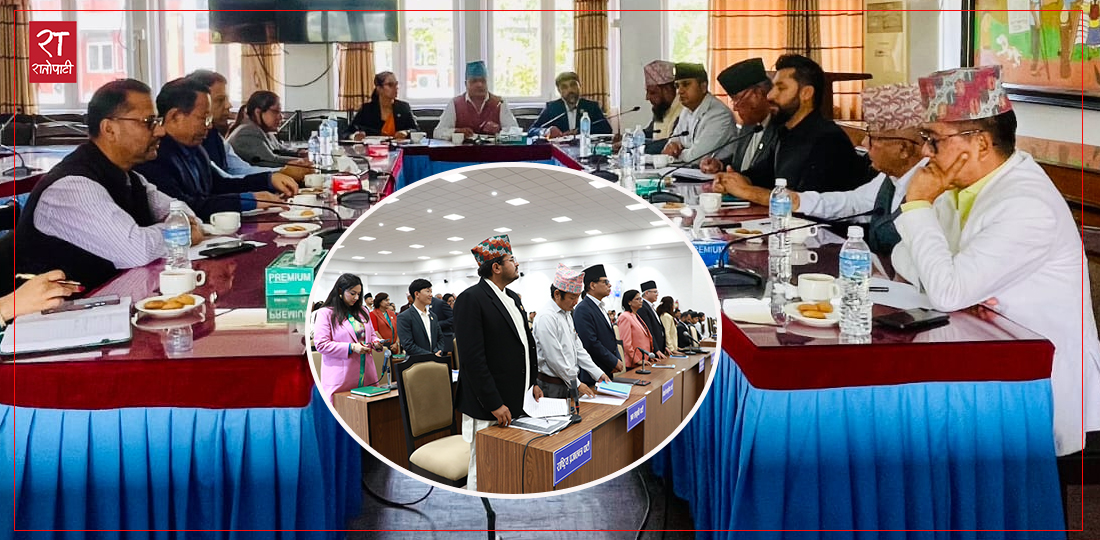
Various experts from different countries participating in a virtual interaction program recently organized by the Nepal Institute for International Cooperation and Engagement have praised the working style of Nepal's Prime Minister Balen Shah, but they have also expressed doubts about whether this momentum can rise above individual leadership and become institutional. They are interested in whether the new government can maintain balanced diplomatic relations with development partners and fulfill the expectations of the people.< p>
America, India and China's Interest
Dr. Rob York, Director of the Pacific Forum in America, suggested prioritizing long-term stability over short-term political maneuvering. Acknowledging Nepal's approach of maintaining balance between China and India as a practical necessity, he stated that the US maintains active interest and engagement with Nepal despite geopolitical complexities.< p>
Dr. Zhang Jiadong, an expert on international affairs from China, analyzed Nepal's Janji movement as a domestic governmental crisis. Stating that China has taken the Janji movement very neutrally and practically, he interpreted Nepal's leadership as a symbol of youth power and national change.< p>
Emphasizing China's continuous support for Nepal's sovereignty and stability, Jiadong expressed confidence that the Balen government will be able to bring positive change. He stressed the need to advance projects like BRI, cross-border roads, energy cooperation projects, and people-to-people relations between the two countries.< p>

Former Deputy National Security Advisor of India, Pankaj Saran, said that the results of the elections held on Falgun 21 are a new beginning for Nepal. Mentioning that this is a new phase after the post-monarchy transition, he said that the Janji movement has transformed into elections and a young prime minister has emerged, displacing the old generation.< p>
He said that the fact that not only the Prime Minister but also the members of parliament and other ministers are young has generated hope and high expectations.< p>
Pankaj claimed that India was not a factor in the elections held in Falgun, stating that Nepal is facing economic and social challenges due to external crises such as the Iran and Ukraine wars, and the new government will have to solve these challenges.< p>
He said that Nepal and India need to sit down immediately to resolve the remaining old issues and shape ambitious relationships with new ideas.< p>
Former Indian Ambassador to Nepal, Manjeev Singh Puri, said that the increasing aspirations of social media and the youth generation have made political transformation possible in Nepal. Emphasizing that the India-Nepal relationship is uniquely based on shared civilization, geography, culture, and deep people-to-people relations, he clarified that this relationship is not just political but much more than that.< p>
Model Country in South Asia
Dr. Aamna Khan, an independent researcher from Pakistan, said that Nepal is seen as a peaceful and friendly nation in Pakistan. She said that discussions are often held about Nepal's independent foreign policy and its balanced relations with large neighbors like India and China.< p>
Stating that Nepal is seen as a model country in South Asia for regional cooperation and diplomatic balance, she said that Pakistan evaluates the Nepali government based on stability, economic performance, and concrete results rather than ideology.< p>
Khan emphasized the need to deepen bilateral relations, stating that Nepal's digital modernization and inclusive development have further increased its attraction in Pakistan.< p>
Dr. Sahab Iman Khan, Executive Director of the Bangladesh Center for Indo-Pacific Affairs, also praised the government formed under Balen's leadership after the elections. Mentioning that Balen's personal integrity and public aspirations have turned into reality, he commented that the current government appears to be overly dependent on platforms like Facebook, lacks formal institutional practices like regular meetings, and has a lack of ideological foundation.< p>

Saoson Sharif, an expert on international affairs from Maldives, said that Nepal's leadership in Maldives is seen as youth-inspired and focused on reform-oriented work. While mentioning that the youth generation is playing an important role in determining political outcomes, she pointed out the political risk due to Nepal's weak institutional framework and the greater individualistic thinking in leaders rather than strong systems. She said that it will be a challenge to sustain such reforms due to the difficulty of continuously fulfilling the high expectations of the people in this situation.< p>
Doubts About Long-Term Sustainability
George Cook, founder of the Averleg Asian Institute, Colombo, Russia, said that Nepal's situation is similar to the political upheavals seen in Sri Lanka and Bangladesh. While stating that public anger has brought political change, it is difficult to sustain it for a long time, and that not only leadership change but also deep and long-term institutional transformation is necessary for meaningful reform.< p>
She said, 'A major obstacle is the rigid and resistant bureaucracy and deeply entrenched corruption, which cannot be removed immediately after the elections.' Emphasizing the need for a change in mindset of both leadership and bureaucracy for reforms to be successful, she warned that resistant or corrupt elements must be addressed, otherwise old problems may reappear.< p>
Joël Hivonnet, former Deputy Head of the European Union Delegation to Nepal in Brussels, said that despite the significant changes in Nepal recently, there are major challenges. He said, 'Due to corruption, nepotism, and lack of employment, people, especially youth, are disappointed, leading to a large number of people migrating abroad. Nepal's economy runs on remittances, which is not sustainable.'< p>
He said that although social media has fueled public frustration and demand for change, it seems difficult to fulfill public aspirations quickly, which will lead to further public disappointment.< p>
Dr. Wonduck Cho of the Korea National Diplomatic Academy, South Korea, also said that sustainable reform cannot be achieved with a single electoral victory. Clarifying that democracy must be defended by each generation and Nepal's new government faces the serious challenge of institutionalizing its reform agendas, he commented that the past struggles like Korea's should not be repeated.< p>
However, he stated that the Korean media has praised the changes in Nepal, describing the recent changes as a 'storm in Nepali political history.'< p>
Dr. Cho said that from a Korean perspective, the quick resignation of Nepal's Home Minister due to financial irregularities and the Labor Minister due to nepotism cited a trend seen repeatedly in Korea since 1987.< p>

Professor Dr. Hebatallah Adam of Horizon University College, UAE, said that Nepal's current leadership is different from the traditional political and elite class. He said that such leadership has succeeded in attracting the world's attention, especially by expanding public participation and promoting more inclusive, accountable governance.< p>
Mentioning that international media has given positive messages about Nepal, he said that this change will help in a broader debate about future expectations from the government.< p>
China's Growing Influence in Nepal
Fela Satoru Nagao of the Hudson Institute, Japan, expressed a slightly different opinion about Nepal's politics. He said that China's growing economic and strategic presence in Nepal is a matter of concern for Japan. He said that due to Nepal's geography and historical relations naturally keeping it close to India, any tilt towards China would be unnatural from a geopolitical perspective.< p>
He said that Japan wants to see Nepal maintain a balanced and cooperative relationship, especially with India, and Japan itself is pro-India and working for stability in South Asia. He also suggested that increased Chinese involvement could lead to risks such as corruption and strategic pressure.< p>
Cynthia Petrig, former UN Peace Advisor to Nepal, praised the role played by Sushila Karki as Prime Minister after the Janji movement. Similarly, Fernanda Vazquez-Vela of the Metropolitan Autonomous University Mexico said that there is a lack of continuous reporting about Nepal in the Mexican media coverage.< p>
Describing the rise of young, reform-oriented personalities like Balen as governance focused on citizen engagement, she said that international awareness will increase in Nepal's changing political landscape, and it will also be an inspiration for countries like Mexico facing similar governance and modernization challenges.< p>
Dr. Patricio Mateo Carmody, an international relations expert from Argentina, said that Nepal's recent political developments are seen as a strong example of social reform in Latin America. Comparing Nepal's changes with Argentina's experiences in democratic processes and peaceful political transitions, he said that Nepal's transformation will teach important lessons.< p>
Lukas Meyer, Senior Program Officer at the Center of Excellence for Southeast Asian Studies, Germany, said that the Russian invasion of Ukraine has led to changes in global development policy, and countries like Germany are prioritizing defense and support for Ukraine. He described Nepal's recent political development, driven by youth engagement and the rise of outsider leaders, as a transformative and anti-corruption movement. However, he said that the current government may face difficulties in meeting expectations due to structural challenges.< p>
Dr. Darko Trifunovic, Director of the Institute for National and International Security, said that Nepal's current political system reflects a change towards more responsible and citizen-centric governance. He said that the real test for Balen, who was successful at the local level, has begun, and expressed doubt whether this momentum can bring long-term reforms.< p>
Nepal in International Media
Liana Dashyan, an expert on international affairs from Armenia, said that Nepal's current political development is similar to Armenia's 'Velvet Revolution.' She said that public anger towards traditional parties also led to widespread protests and the rise of new leadership in Armenia, and although changes in Nepal received limited coverage in the Armenian media, international media such as Bloomberg and Reuters have highlighted these developments.< p>
Dr. Suthikarn Kingkaew from Thailand shared his views on Nepal's political transformation and potential future cooperation between the two countries. He said that the youth generation in both countries is trying to change the nature of governance, and Nepal has presented a prime example of this. However, he also advised the youth generation to be aware that running a country will not be easy.< p>
Petro Burkovsky, Executive Director of the Ilko Kucheriv Democratic Initiatives Foundation in Ukraine, said that information about Nepal in Ukraine is mostly obtained through major global media such as Reuters, Bloomberg, and the Financial Times.< p>
He suggested that Nepal should build good relations with international media, and said that the Ukrainian media has presented Nepal's new Prime Minister Balen as a young, anti-corruption leader.< p>
Barbara Kratiuk, an international expert from Poland, said that European countries, including Poland, are interested in cooperating with Nepal in digitalization and strengthening economic relations. She said that the formation of a majority government is seen as a positive step to end the political deadlock, but expressed doubts about achieving ambitious goals such as reaching a GDP of 100 billion dollars by 2031. She said that the new leaders have limited foreign policy experience, and if results do not come quickly, the political momentum driven by Janji may slow down.< p>
Dr. Hadja Min Fadhli Robbi of Universitas Islam Indonesia said that Balen's youth, engineering background, and commitment to clean governance are unusual but promising for accelerating bilateral relations between Indonesia and Nepal. He also demanded the upgrading of Indonesia's Consulate in Kathmandu to a full embassy.
This specific news has been automatically translated by AI. As a result, there may be some inaccuracies or language errors.