Elected Lawmaker Ashika Tamang Slams Local Units Over Joint Statement on Resource Exploitation and Illegal Levies


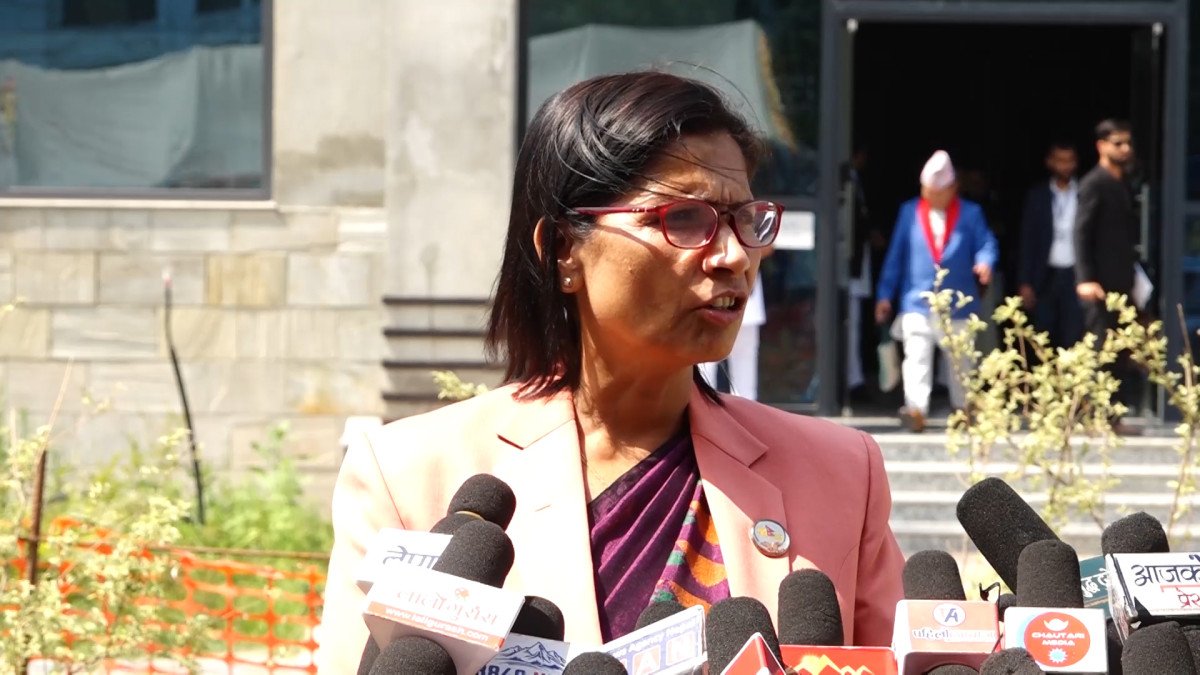
Kathmandu. Ashika Tamang, elected as a member of the House of Representatives from Dhading Constituency No. 1, has expressed serious concern over the joint statement issued a few days ago by 13 local levels. She stated on her Facebook page on Friday that she was drawn to the statement.
She asserted that local autonomy is not a 'license for natural resource exploitation and illegal collection'.
She stated that while the statement cited Article 232 (1) of the Constitution, referring to 'cooperation and coordination,' this coordination is being used to blatantly challenge existing laws and Supreme Court orders.
She urged everyone to work together to build a prosperous Dhading, establish good governance, and make the district corruption-free. She affirmed that since the Constitution does not allow anyone to stand above the law, she will always remain steadfast in protecting citizens' property and natural resources.
She clarified her constitutional and legal stance on this matter:
1. Coordination is not 'Setting' (The Spirit of Article 232)
Article 232 (1) of the Nepal Constitution states that the relationship between the federal, provincial, and local levels shall be based on cooperation and coordination. However, this does not mean turning a blind eye to 'exploitation' that violates federal laws, disregards environmental standards, and extracts the heart of rivers. Local autonomy does not mean an 'independent state'; it is merely the right to serve the people within the scope of the Constitution.
2. Illegal Tax Collection and Article 228:
Article 228 (1) of the Constitution clearly states: "No tax shall be imposed or collected except in accordance with the law." The fee collected for vehicles using public roads, termed 'road usage fee,' violates the 'Inter-Governmental Fiscal Management Act, 2074'. Such collections, which fall outside the jurisdiction of local levels, are loot committed in the name of good governance.
3. Supreme Court Order and 2077 Standards:
The government attempted to relax standards by reducing the distance requirement for crusher industries in 2079, but the Supreme Court issued an interim order on Ashar 9, 2079, to halt the implementation of that decision. Therefore, the 'Standard for Excavation, Sale, and Management of Stones, Gravel, and Sand, 2077' remains effective. Do the crushers near highways and settlements in Dhading fall under this standard?
Technical Standards regarding Distance (2077) are as follows:
Dense Settlement: 2 kilometers
Riverbank: 500 meters
Highway: 500 meters
Educational and Health Institutions: 2 kilometers
Archaeological and Religious Sites: 2 kilometers
National Parks and Wildlife Reserves: 2 kilometers
International Border: 2 kilometers
High Tension Power Transmission Line: 200 meters
If the above standards are not met, they are all illegal, and protecting them is contempt of court.
4. Environmental Justice and 'Ecocide'
The Supreme Court has termed the environmental destruction related to the exploitation of the Trishuli and Malekhu rivers as 'Ecocide' (environmental murder). The 'right to a clean and healthy environment' granted to citizens by Article 30 of the Constitution cannot be superseded by the 'revenue' of local governments.
She also questioned, "Does the right to collect taxes permit violating the Constitution?"
She stated, "Can the order of the respected Supreme Court be disregarded? I am happy that all 13 of you local heads have united to speak against and counter me. Now, you all should unite in the same way to develop Dhading and make Dhading corruption-free."
She urged them to unite to ensure farmers receive timely fertilizers, seeds, and agricultural materials, and get fair prices for their produce, adding, "The delay in paving district roads is causing hardship for the public. Unite to solve this."
She urged local representatives and regulatory bodies to measure the distance of illegal mines and crushers operating within their areas rather than viewing the administration's letters as a restriction.
She stated that following existing laws and court directives is a constitutional obligation, not something that requires her instruction.
Previously, Tamang had stated that the collection of 'periodic tax' or similar illegal levies on any highway within her constituency would not be acceptable. The local bodies had protested this stance.
This specific news has been automatically translated by AI. As a result, there may be some inaccuracies or language errors.