Rabi Lamichhane's Push for 'Right to Recall' Sparks Debate on Accountability in Nepal's New Party
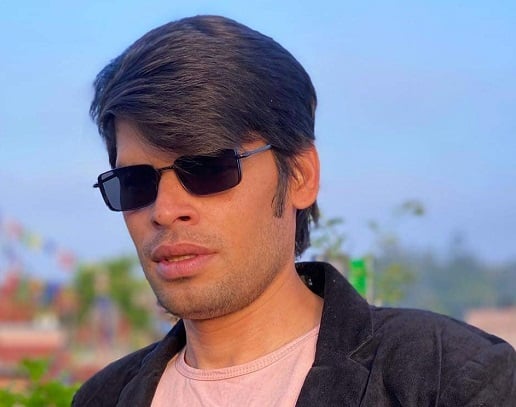

Kathmandu. A new debate has begun following the statement by Rabi Lamichhane, Chairman of the Rastriya Swatantra Party (RSP), that the party's constitutional provision for 'Right to Recall' will be strictly implemented. While addressing the orientation program for the newly elected RSP members of parliament on Wednesday, he warned that strict action would be taken according to the statute to prevent anarchy within the party.
'Whether we have a two-thirds majority or not, the party will strictly enforce the 'Right to Recall' provision. A balance must be maintained between freedom and discipline. Freedom can be exercised, but it must be within the bounds of discipline,' he stated.
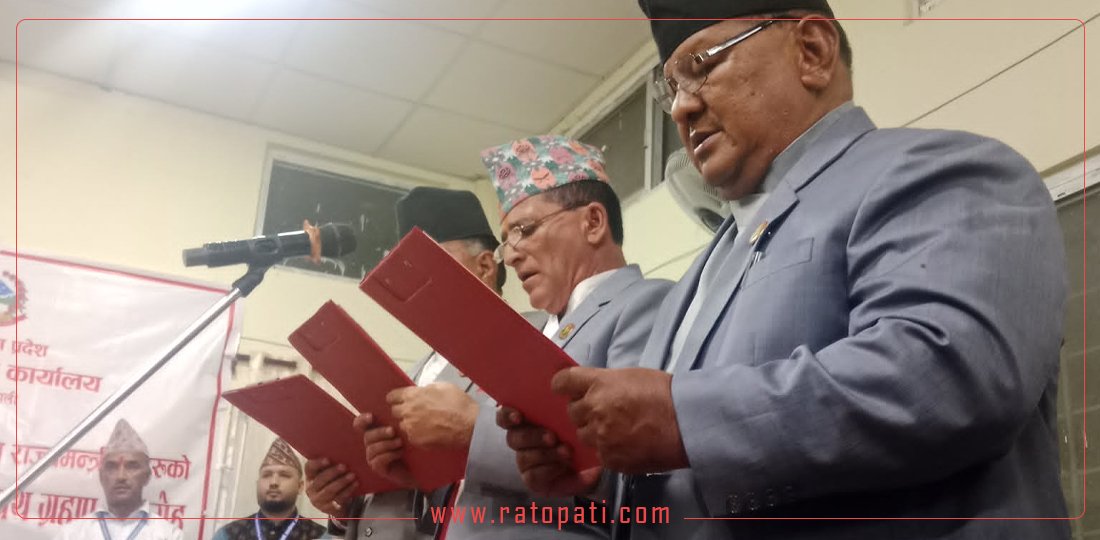
Rabi instructed the members to act responsibly, given the immense trust the public has placed in the RSP. He warned that if any member felt they could continue operating in the old style even after reaching a responsible position, they had the option to resign their parliamentary seat and leave.
In the House of Representatives election held on Falgun 21, the RSP is preparing to form a government with nearly a two-thirds majority, securing 182 seats. When the party was established on Asar 7, 2079 BS, provisions regarding the right to recall elected representatives were included in Article 69, Sub-clauses (1) and (2) of the statute.
Sub-clause (1) states: 'Members of the party belonging to the concerned constituency shall have the right to recall their elected representative if they are not satisfied with their work. If the general members of the concerned constituency decide by a certain number or percentage according to the regulations to be framed by the Central Committee, the Central Committee shall initiate the process of disqualification of the concerned representative's post.'
_HaRbFDRtuv.jpg)
Sub-clause (2) provides for the Central Committee to recall proportional representation representatives if they act against the party's interests or based on performance evaluation.
The statute states: 'If the proportional representation representatives of the party act against the party's interest or based on performance evaluation or for other reasonable cause, the Central Committee may recall them. The Central Committee shall proceed with the disqualification of the representative's post according to the regulations.'
However, the statute does not explicitly mention the provision for first-past-the-post elected representatives. RSP's newly elected MP and advocate, Yagyaman Neupane, asserted that both directly and proportionally elected representatives can be recalled.
'All representatives must adhere to the parliamentary party and party whip. The term 'whip' is not only used in voting. It also concerns which ideology to adopt,' he said. 'Although the current law does not have a provision to recall elected representatives, there are many precedents where action has been taken against those acting against the party's interest. Since every parliament frames its own rules, the upcoming parliament will amend them to include some provision.'
Citing precedents of action taken against proportional representation MP Dr. Dhakal Kumar Shrestha and Sadbhavana Party leader Sarita Giri in 2079 BS, Neupane clarified that the party has the authority to recall elected representatives as per the party statute. He stated that the upcoming parliament will amend the regulations to allow for the recall of directly elected representatives if they act against the party's interest.
Section 3 of the Representative Assembly Election Act, 2074, outlines the electoral system. For the 275 members of the House of Representatives, there is a provision for the first-past-the-post and proportional representation electoral systems. The first-past-the-post system is for 165 seats, and the proportional representation system is for 110 seats.
However, the 'Right to Recall' provision is not present in the Constitution of Nepal, the House of Representatives Regulations, or any other existing law. Section 28 of the Political Parties Act, 2073, provides for issuing directives (whip) to members. Sub-clause (1) states that the whip of the parliamentary party can issue a directive to the members of the federal parliament or provincial assembly to vote for or against a proposal in the following matters:
(a) Motion of confidence or no-confidence in the government,
(b) Approval of the government's policy and program,
(c) Passing the annual budget,
(d) Any other matter of national or public importance.
Sub-clause (2) clearly states that every member of the parliamentary party must comply with the directive issued under Sub-clause (1), and the whip must report the details of the member who fails to comply with the directive under Sub-clause (1) to the central committee of the concerned party.
Bipin Kumar Acharya, Joint General Secretary of the RSP, stated that the 'Right to Recall' provision was implemented as part of electoral reforms while drafting the manifesto for the 2079 elections. He informed that homework is being done on how to implement the provision enshrined in the statute.
_1NbuYLESsm.jpg)
'Our discussions are ongoing regarding how to implement the Right to Recall within the three years of party operation. There are legal aspects to it as well. When we implement the Right to Recall, there were questions about what the parliament's mechanism or other factors would do,' he said. 'I conceptualized and moved forward with the Right to Recall bill with the belief that if it could be taken into that contest, it would open up pathways. I had also stated that if I became a member of the House of Representatives, one of the bills I would draft would be on the Right to Recall.'
Acharya stated that the Right to Recall is even more necessary in the current context. 'Since the general public has high expectations from the RSP, no one has the liberty to compromise on the promises we made when going to parliament,' he said. He emphasized the need to adopt a scientific method for recalling elected representatives.
'They cannot be recalled just because someone feels like it. We are currently working on its framework. The process of recall must be more scientific,' Acharya said.
_N4XQj2pmAC.jpg)


He informed that work is underway to end the situation in Nepali politics where, once elected, a representative is accepted by society for five years even if they do nothing. 'This has brought frustration to an extreme level. It is a check imposed by saying that if we do not fulfill the commitments we have made, you will be recalled at any time,' he said. 'Whether that is for two and a half years for direct representatives, or whether that person is removed and some other method is adopted, multifaceted aspects remain to be examined.'
Arguing that no one would disagree with the notion that wrong individuals should not be kept in office, Acharya clarified that the elected House of Representatives will handle how to legally reconcile this, what amendments to introduce, and what procedures to follow.
Meanwhile, former National Assembly member and senior advocate Ram Narayan Bidari argued that elected representatives cannot be recalled unless the Constitution itself provides for it. He stated that even if such a provision were included in the Political Parties Act, it would conflict with the Constitution.
'The Right to Recall provision must be included in the Constitution to be implemented. Elected representatives cannot be recalled merely because it is stated in a party's statute,' he said. 'If it is included in the Political Parties Act, it may face legal challenges later if it conflicts with the Constitution.'
Bidari clarified that while the Right to Recall cannot be implemented in the current situation, the law already provides for the concerned party's central committee to take action against elected representatives for activities against the party's interest.
This specific news has been automatically translated by AI. As a result, there may be some inaccuracies or language errors.