RSP Leader Ravi Lamichhane Warns Against Factionalism Amidst Reports of Power Struggle with Balen Shah

Kathmandu. The Rastriya Swatantra Party (RSP), which secured nearly a two-thirds majority in the recently concluded House of Representatives election, appears busy with the process of forming a new government. Amidst the process of forming a powerful government by displacing traditional political parties within three years of its establishment, rumors have surfaced about a power struggle between party chairman Rabi Lamichhane and senior leader Balen Shah.
The relationship between the two leaders has been further questioned after Balen did not attend the orientation and introductory program for the newly elected members of parliament. RSP had organized a two-day residential orientation program in Gwarko, Lalitpur. The objective of the program was to clarify parliamentary procedures, lawmaking, policy analysis, and the role of people's representatives to the newly elected MPs; to help the MPs become effective, responsible, and result-oriented representatives; to clarify the party's strategy, vision, and policy priorities; and to enable them to establish effective coordination between the parliament, the government, and their constituencies.
However, while the chairman Rabi's name was included in the agenda prepared by the party itself, the name of Balen, who is set to lead the future government, was not included. Chairman Ravi was the only one to attend the closing ceremony on Wednesday. In his closing address, he warned that the UML and Congress could not be defeated by forming factions. Ravi stated that if it is found that anyone is involved in vested interest groups and collusion, they could be removed from their responsibilities.
'The Nepali people waited 35 years for the old political parties. They are not ready to wait 36 months or even 36 days for us. Be absolutely sure of this,' he said, 'Now your race is not to the houses of vested interest groups. You cannot defeat the Congress and UML by forming factions, friends. No faction can be formed. We can all fit under the bell. The bell has that much power.'
_dbwfyG4BBX.jpg)
Rabi warned that the situation could become worse than that of the old political parties if one could not move beyond 'me'-centric politics such as 'What will be my position? Where will I be? What is my status in the party? What is my status in the parliament and government?'
'The country's politics has been person-centric until today. There are mothers of martyrs here. Whenever you have tea with any middleman, remember the martyrs. There is a rampant presence of middlemen in this country. If we cannot unite, if we become prisoners of self-interest, then problems will arise. If you reach a responsible position and still say you will operate in the old style, you can be removed,' he said.
He urged caution against various vested interest groups and middlemen who might try to create rifts within the party's relationships. However, he did not comment on the absence of the senior leader at the program. Ravi had reached a 7-point agreement with the former Mayor of Kathmandu Metropolitan City, Balen, on December 29 regarding party and government operations to revitalize the party, which had been weakening after the Gen Z movement.
No one seems to disagree that the agreement between the outgoing Rabi and the introverted Balen has brought the party to this height. However, after the election results were published, political circles have become suspicious due to the ambiguous answers given by responsible leaders, including Deputy Chairman Dol Prasad Aryal and Secretariat Member Hari Dhakal, regarding making Balen the Prime Minister. Balen also did not attend the Secretariat meeting held at the party's central office, Ghanti Ghar, on Sunday, where Ravi addressed virtually.
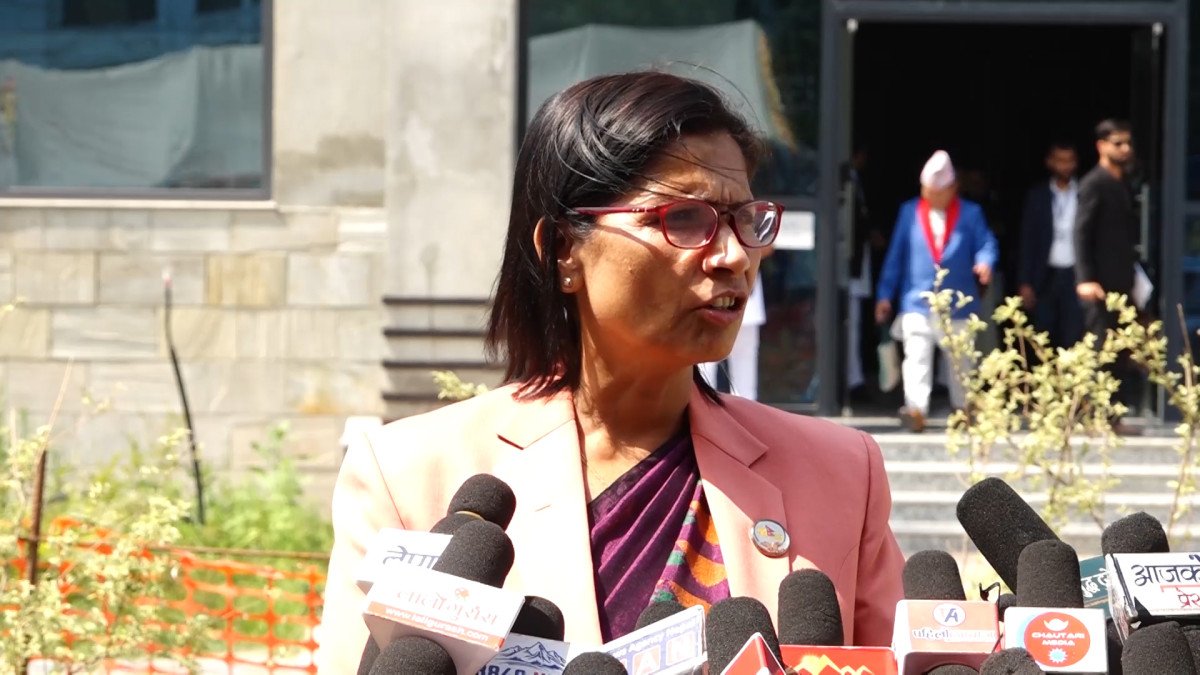
Spokesperson Manish Jha claimed that Balen did not attend the orientation program because he was unwell. Speaking to journalists outside, Jha clarified that there was no need to read any political meaning into this.
'At this stage, he needs to recover and rest, so there is no need to read any political meaning into this. This is a practical and physical matter. The chairman participated because the presence would be weak if both did not attend,' he said.
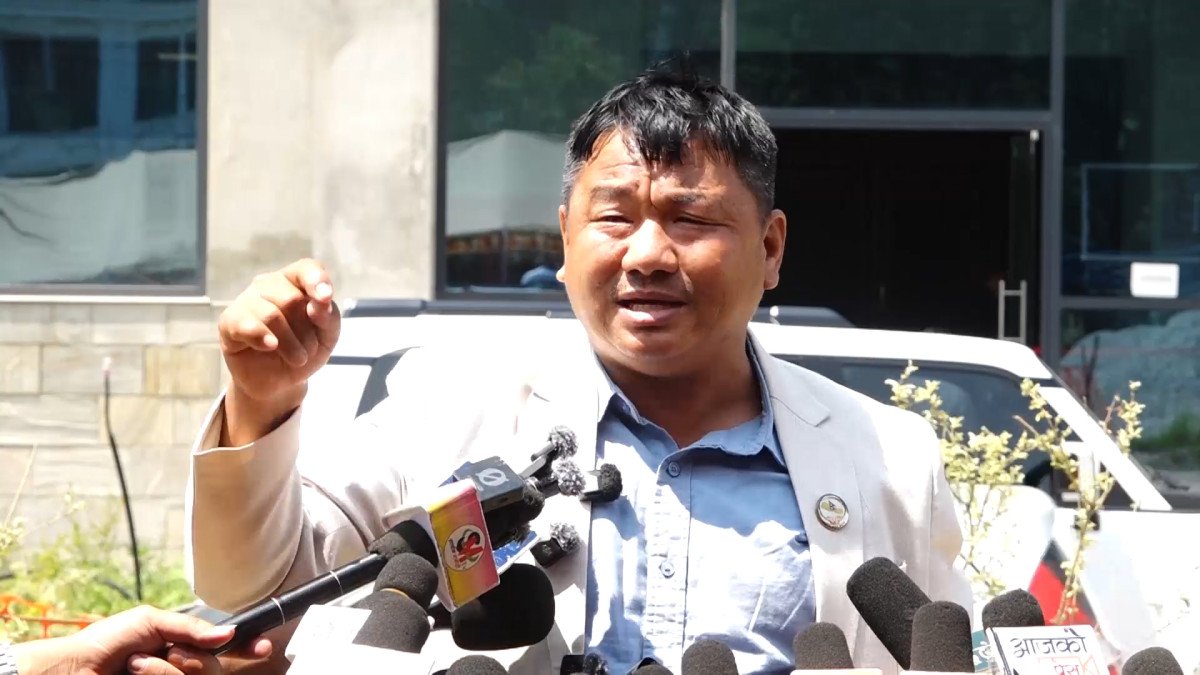
Secretariat Member Ganesh Parajuli also asserted that Balen did not attend due to his health condition. Parajuli clarified that Balen did not attend because strategy needed to be formulated for running the government, besides recovering from illness.
'First, there is a health problem. Second, it is natural to strategize as responsibilities are coming onto our shoulders,' he said.
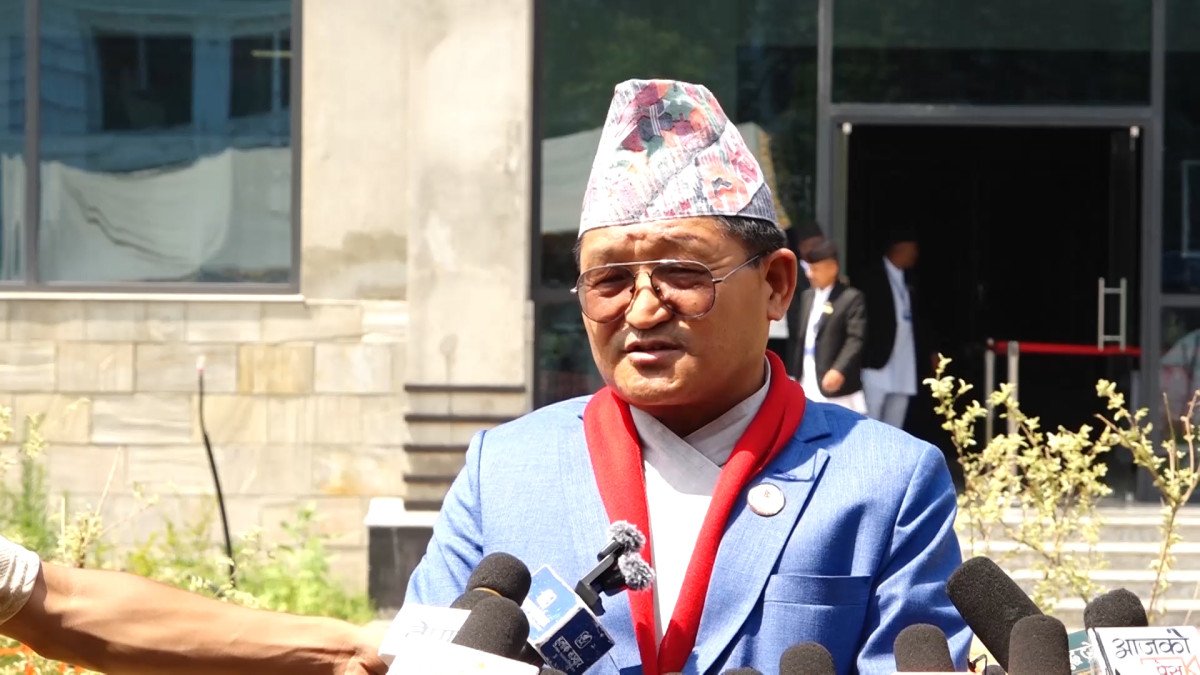
Co-General Secretary Bipin Kumar Acharya claimed that there is no rift in the relationship between Ravi and Balen as reported outside. Acharya stated that the party leads alternative politics because traditional political parties failed to perform.
_HaRbFDRtuv.jpg)
'There is no question of internal power balancing as the party is one. No discussion has taken place regarding ministry responsibilities. There is no dispute visible either,' he said, 'Various rumors may circulate to weaken the party and create rifts in the relationship. But there is no truth in such rumors.'
RSP was established three years ago with the confidence that alternative power could be brought into the mainstream of politics in Nepal, as a replacement for traditional political parties. RSP participated in the 2079 general election just five months after its establishment and established itself in the mainstream of politics by winning 21 seats with over 1.13 million popular votes. RSP, which started with a small team at its inception, has now become a large party by uniting with Bibeksheel Sajha, the Balen group, Tharuhat/Tharuwan, and various Gen Z groups.
The number of people who won the election after joining the party just before the election from Congress, UML, Maoist, RPP, and Madhesi parties is substantial. Recently, it is understood that Chairman Ravi, Deputy Chairmen DP Aryal, and Dr. Swarnim Wagle's group are active at the office-bearer level. Analysts suggest that maintaining the unprecedented public trust given by the people might be difficult due to the party lacking a long political background and mature leadership.
Professor Krishna Pokharel suggests that problems may arise if the relationship between the party and the government cannot be managed. He cited examples from 2015 BS, 2051 BS, and 2056 BS when the Congress government fell due to the failure to manage the relationship between the party and the government. 'In 2015 BS, there was the government of BP Koirala of the Nepali Congress. But while there was internal strife within the government and the party, King Mahendra dismissed the government in 2017 BS,' he said.
'Congress also got a majority in 2048 and 2056 BS. But the government also fell, and the party split because the relationship between the government and the party could not be managed. Similarly, in 2074 BS, the CPN received nearly a two-thirds majority. That government also fell, and the party split due to the failure to manage the relationship between the party and the government,' he said. Pokharel analyzes that it is challenging for RSP, which has no political background and was formed by various vested interest groups after receiving a majority mandate, to manage and move forward with them.
'Political parties based on ideology, politics, and principles could not perform. RSP, which has no political background, is made up of various vested interest groups. It would be good if Ravi and Balen can manage and move forward with them,' he said.
This specific news has been automatically translated by AI. As a result, there may be some inaccuracies or language errors.