Election Commission Officials Express Satisfaction After Successfully Concluding Parliamentary Elections Amid Skepticism


Kathmandu. Three months ago, journalists never failed to ask the Election Commission officials and spokespersons, 'Will the election really happen?' Even in the commission's press conference the day before the election, the question of whether a peaceful election would be held in all polling stations was raised, albeit not with extreme seriousness.
To such questions, the response from Acting Chief Election Commissioner Ramprasad Bhandari, the commissioners, and senior officials was always the same: 'Rest assured, the election will happen. There is no alternative to elections to bring the country back on track. We ask for your cooperation from your respective positions as well.'
It is true that there were voices suggesting that the commission should be fully constituted before holding the election, as the commissioners appointed by the previous government before the 'Jana Andolan' (People's Movement) remained in office while the Chief Commissioner post was vacant. However, the commission's leadership appears satisfied that success was achieved because they worked systematically from the beginning.
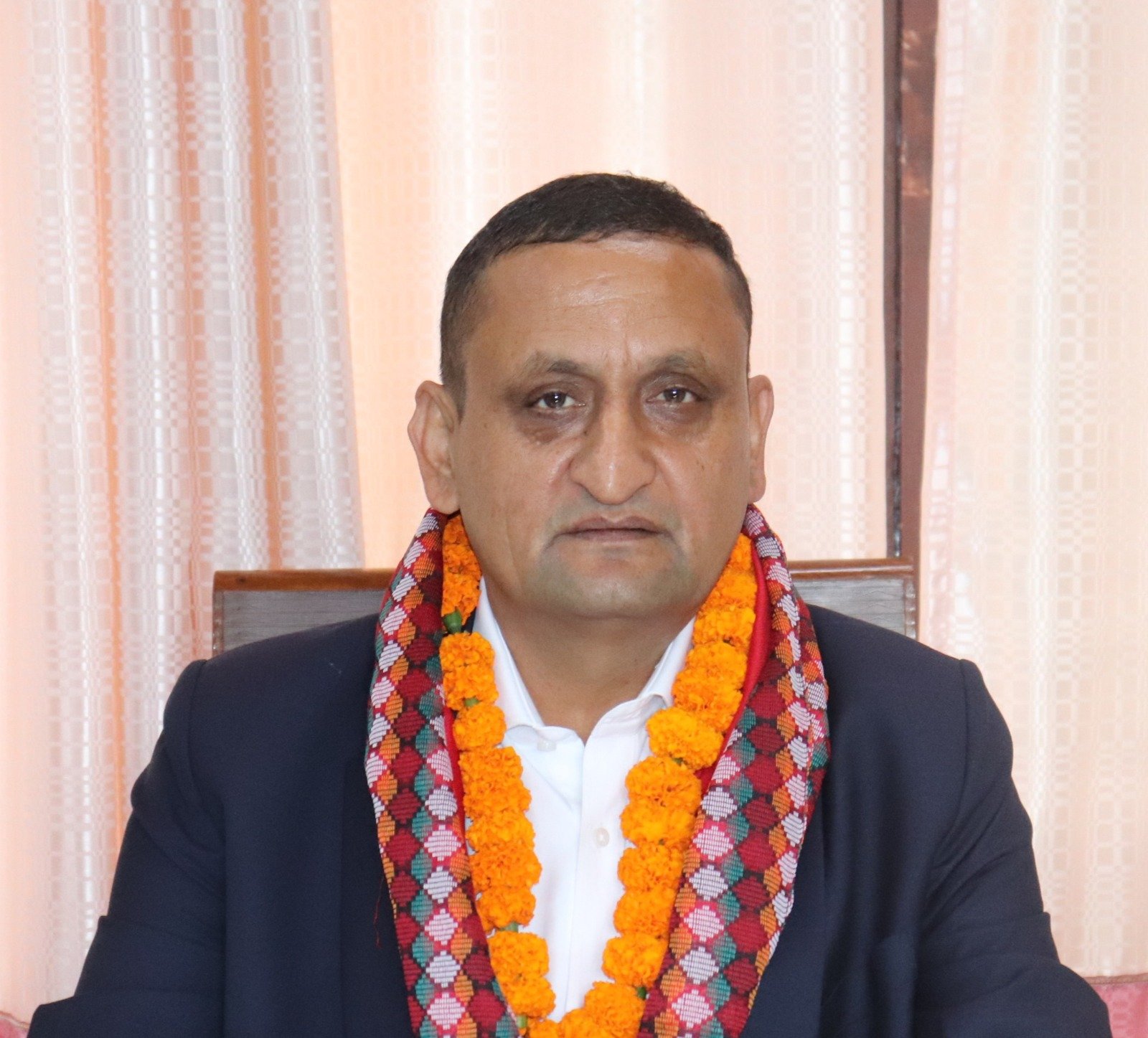
"I was committed from the start that there is no alternative to elections and that it must happen. Many internal action plans were kept secret while working. We succeeded by working this way," said Acting Chief Election Commissioner Bhandari. "I never doubted that the election would happen. There were pains from questions, doubts, and numerous challenges, but we never wavered."
Acting Chief Bhandari, who is preparing to submit the report to President Paudel on Chaitra 5 after the completion of the elections, reflected on the past six months, evaluating it as an opportunity where a citizen in a position of responsibility fulfilled their duty for the nation.
"I had a firm stance from the beginning that elections must take place. My dedication to the election was absolute. This was the only option to bring the rampant indiscipline in the country back on track. The election has been completed, and we trust that the country will now return to order, procedure, and rhythm," he said. "There was pressure and influence at every date and moment of the election schedule. In the midst of that, we conducted the election without any greed."
Even the Prime Minister and government ministers frequently asked, 'Will the election happen?' when the new government was formed after the Jana Andolan and the then House of Representatives was dissolved, and a date for the new House of Representatives was announced. Following the appointment of former Chief Justice Sushila Karki as Prime Minister on Bhadra 27, the House of Representatives was dissolved upon her recommendation, and President Ramchandra Paudel announced the election date for Phagun 21, after which the government and the commission mobilized for preparations.
The Government of Nepal facilitated the necessary work from its side, including budget allocation, security preparations, and creating a conducive political environment, while the commission began the administrative work.
Chief Election Commissioner Dinesh Kumar Thapaliya's term ended on Baisakh 5 of this year, while Election Commissioner Ishwari Prasad Paudel retired on Falgun 4, 2079 BS. After their farewell, only three commissioners remain in the five-member commission. Currently, Commissioner Dr. Janaki Kumari Tuladhar and Sagunshamsher Jabara are working alongside Acting Chief Commissioner Bhandari.
Krishna Bahadur Raut is the Secretary of the Commission. The House of Representatives election this time was conducted peacefully under their leadership. Successfully completing the House of Representatives election, considered the backbone of democracy, amidst political instability and various challenges, is viewed as a significant achievement in itself.
The fact that the election was completed without any polling station being suspended or any violent incidents seems to have satisfied Prime Minister Karki as well. She said, "I want to give 50 percent credit for the completion of the election to the Election Commission. The contribution made under the leadership of Acting Chief Election Commissioner Ramprasad Bhandari and the three commissioners will not be forgotten by history. Even though the commission should have five officials, three people accomplished such a great task. As Prime Minister, I want to thank all three officials and the entire commission. I want to thank everyone who made the election successful."
According to Acting Chief Commissioner Bhandari, the election was comparatively economical as well. Out of the approximately seven and a half billion rupees allocated by the government for the election, the work was completed within about five billion rupees, and the detailed report is yet to come.
Article 246 of the Constitution of Nepal mandates the Commission, under the Constitution and Federal Law, with the responsibility to conduct, supervise, direct, and control the elections of the President, Vice President, members of the Federal Parliament, members of the Provincial Assembly, and members of the local level. The Commission is also responsible for preparing the voter list and conducting referendums on matters of national importance as per the Constitution and Federal Law.
The Commission also decides on any questions raised regarding the eligibility of a candidate when the nomination for the President, Vice President, members of the Federal Parliament, members of the Provincial Assembly, or members of the local level has been registered but the election result has not yet been declared.
This specific news has been automatically translated by AI. As a result, there may be some inaccuracies or language errors.

_XMWxUklnsu.jpg)